
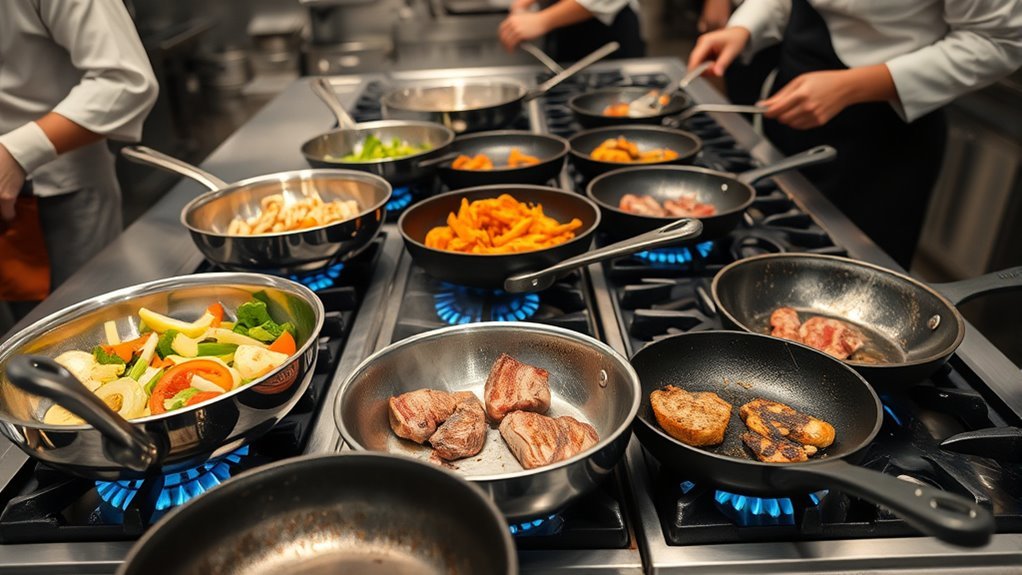
What if the right pan could transform your cooking? In professional kitchens, chefs rely on specific pans to elevate their dishes. Stainless steel offers durability and excellent heat distribution, while cast iron excels in heat retention. Non-stick surfaces provide ease for delicate foods, but when should you reach for each type? Understanding these nuances can greatly impact your culinary creations. Discover which pans might just become your new favorites and why they matter.
What Every Chef Should Have in Their Kitchen
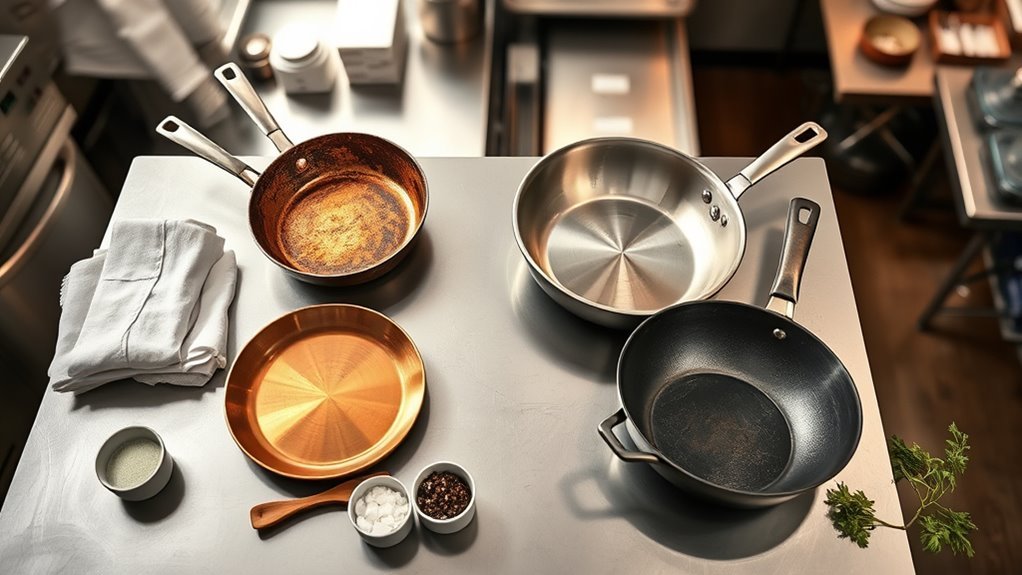
When you step into the kitchen, having the right tools can make all the difference in your cooking experience. A high-quality chef’s knife is your best friend; its precision for cutting, chopping, and slicing transforms your ingredients into culinary masterpieces.
A high-quality chef’s knife transforms your cooking, making cutting, chopping, and slicing a true delight.
Pair that with durable stainless steel pans, perfect for searing and sautéing, ensuring even heat distribution that elevates your dishes.
Don’t forget a sturdy cutting board, which safeguards your knife’s edge while maintaining hygiene. A heavy-bottomed saucepan is essential for creating rich sauces, soups, and stocks, preventing scorching and ensuring even cooking.
Finally, consider investing in an immersion blender, a game changer for blending soups directly in the pot, simplifying cleanup while keeping flavors intact. Equip your kitchen with these essentials, and you’ll release your inner chef, crafting meals that truly inspire.
Why Chefs Prefer Stainless Steel Pans
Equipping your kitchen with the right tools isn’t just about having a chef’s knife or a cutting board; it’s also about choosing the right cookware. Chefs swear by stainless steel pans for their unbeatable durability.
These pans can handle high heat and heavy use without warping or scratching, making them a staple in any kitchen. Their non-reactive nature means you won’t alter the flavors of your dishes, especially when cooking with acidic ingredients like tomatoes or vinegar.
With excellent heat distribution, stainless steel guarantees even cooking and browning, essential for techniques like searing and sautéing. Plus, the lightweight design allows for easy maneuverability, perfect for fast-paced cooking.
Cleaning is a breeze, as the non-porous surface keeps your cookware hygienic and looking brand new. When it comes to versatility and performance, stainless steel cookware is a chef’s best friend.
When to Use Non-Stick Cookware
While you might reach for stainless steel pans for high-heat techniques, non-stick cookware shines when it comes to preparing delicate dishes. This everyday pan is perfect for cooking eggs, pancakes, or anything that requires a gentle touch. The non-stick surface allows for easy release, ensuring your culinary creations come out perfectly without sticking.
Non-stick cookware excels at delicate dishes, ensuring easy release for perfect results every time.
For healthier frying and sautéing, non-stick pans require less oil or butter, making them a smart choice for low-fat cooking. They also excel with sticky ingredients like cheese or caramel, where preventing sticking is essential for success.
Just remember to keep the heat low to medium; high temperatures can damage the non-stick coating and diminish its effectiveness.
Cleaning is a breeze, too—often, a gentle wipe with a sponge is all it takes. Embrace the ease and versatility of non-stick cookware, and elevate your everyday cooking experience.
Comparing Non-Stick and Cast Iron: Which Is Better?
When you’re choosing between non-stick and cast iron pans, each brings its own perks to the kitchen.
Non-stick pans shine with their easy food release and quick heating, perfect for delicate dishes.
On the other hand, cast iron offers unmatched durability and heat retention, making it a go-to for high-heat cooking and flavor enhancement over time.
Non-Stick Cookware Advantages
If you’re looking for a hassle-free cooking experience, non-stick cookware might just be your best friend. It excels at easy food release and quick cleanup, making it perfect for delicate dishes like eggs and pancakes, which can be tricky in cast iron. Plus, you’ll need less oil, promoting healthier meals without sacrificing flavor.
Here’s a quick comparison:
| Feature | Non-Stick Cookware | Cast Iron |
|---|---|---|
| Cooking Surface | Easy release | Requires seasoning |
| Oil Requirement | Minimal | More needed |
| Weight | Lightweight | Heavier |
| Lifespan | 12-20 months | Generational |
Cast Iron Durability Benefits
Cast iron pans stand out for their remarkable durability, offering a lifetime of culinary adventures when cared for properly. Unlike non-stick alternatives that wear out or scratch easily, a cast iron pan can last for generations.
Its ability to withstand extreme temperatures makes it versatile for oven use, stovetop, or even open flames. Over time, a well-seasoned cast iron pan develops a natural non-stick surface, enhancing the flavors in your dishes.
This resilience allows you to restore your pan through seasoning, making it a sustainable choice for your kitchen. Embrace the liberation of cooking with cast iron; it’s not just a pan, but an investment in quality and longevity that transforms your culinary journey.
Cooking Techniques Comparison
Cooking with the right pan can transform your culinary experience, and comparing non-stick and cast iron options reveals their unique strengths.
Non-stick pans are perfect for delicate dishes like eggs and pancakes, requiring less oil and ensuring easy cleanup.
However, if you’re aiming for a perfect sear, a cast iron skillet shines, retaining heat beautifully and developing a natural non-stick surface over time.
While non-stick cookware is lighter and more convenient, cast iron is incredibly durable, lasting generations with proper care.
Plus, the depth of flavor achieved by frying and baking in cast iron is unmatched, thanks to its ability to create a delicious fond.
Ultimately, your choice depends on your cooking style and what you want to create.
Why Carbon Steel Is Gaining Traction in Professional Kitchens
As chefs increasingly seek tools that enhance their culinary prowess, carbon steel pans have emerged as a top choice in professional kitchens. These pans boast exceptional heat retention and respond quickly to temperature changes, making them perfect for high-heat cooking techniques like searing and stir-frying.
When seasoned properly, carbon steel develops a natural non-stick surface, allowing for easy food release and improved flavor over time—plus, they’re lighter than cast iron.
Chefs love the versatility of carbon steel; it works beautifully on various cooktops, including induction, and can shift seamlessly from stovetop to oven. Their durability withstands the rigors of busy kitchens, with many chefs enjoying a lifespan exceeding a decade when cared for properly.
Compared to stainless steel, carbon steel offers superior heat distribution, ensuring even cooking results that are essential for precision in every dish. Embracing carbon steel means embracing culinary freedom.
Specialty Pans Chefs Use for Unique Cooking
When you step into the world of specialty pans, you’ll find tools that elevate your cooking techniques to new heights.
From the precision of copper pans to the even heat of cast iron skillets, each piece serves a unique purpose that can transform your dishes.
Explore how these versatile options can enhance your culinary creations and open up a domain of possibilities.
Unique Cooking Techniques
While many chefs rely on standard cookware, specialty pans open up a world of unique cooking techniques that elevate your culinary creations.
Carbon steel pans are a go-to for high-heat methods like searing and stir-frying, thanks to their excellent heat retention and natural non-stick surface.
Woks, with their high sides, excel at quick cooking, allowing you to stir-fry and deep-fry with minimal oil.
For precision tasks, copper pans offer superior heat conductivity, making them ideal for delicate sauces.
Cast iron skillets shine in versatility, perfect for frying, baking, and roasting.
Specialty pans like paella dishes or fish poachers enable you to create authentic flavors, ensuring your meals are as unique as your culinary flair.
Specialty Cooking Equipment
Specialty cooking equipment, like woks and paella pans, can transform your culinary game, allowing you to explore unique flavors and techniques.
A wok’s high sides and heat retention make it perfect for quick stir-frying, giving meats and vegetables that coveted sear. Imagine the vibrant colors and aromas as you toss ingredients in this versatile pan.
On the other hand, a paella pan, with its shallow, wide design, guarantees even cooking and ideal rice texture, letting you achieve that perfect golden crust.
Both tools invite creativity, whether you’re crafting a fragrant stir-fry or a traditional Spanish dish. Embrace these specialty pans, and release your culinary potential!
Versatile Pan Options
Exploring the world of versatile pans opens up a wealth of culinary possibilities. The sauté pan, with its high, straight sides and ample surface area, allows you to brown meats and reduce sauces effortlessly. It’s a staple for any kitchen, enabling you to tackle a variety of dishes with finesse.
Then there’s the cast iron skillet, revered for its heat retention and even cooking. Whether you’re frying or shifting from stovetop to oven, this pan enhances flavors through seasoning, making every bite memorable.
For those large gatherings, a griddle pan shines, cooking pancakes or burgers evenly. With these versatile options, you’re equipped to release your culinary creativity like never before!
How to Choose the Right Pan for Your Cooking Style
Choosing the right pan can transform your cooking experience, allowing you to express your culinary creativity. Here’s how to select the ideal cookware tailored to your style:
- Material: Stainless steel cookware offers durability and even heat distribution, while non-stick pans excel in food release.
- Cooking Techniques: For high-heat methods like searing, choose heavy-duty pans that resist warping.
- Versatility: Opt for multi-purpose pans like sauté pans and skillets that tackle frying and simmering with ease.
- Handle Design: Ergonomic, heat-resistant handles improve comfort and safety during longer cooking sessions.
- Weight and Size: Lightweight pans are easier to maneuver, especially beneficial for those with physical limitations, while larger pans are perfect for batch cooking.
Caring for Your Chef-Preferred Cookware for Longevity
While you might be tempted to toss your cookware in the sink after a long cooking session, caring for your chef-preferred pans is essential for maintaining their performance and appearance.
Start by cleaning your stainless steel pots immediately to prevent residue buildup. Use non-abrasive sponges to avoid scratching their surfaces, ensuring they stay in top shape.
Avoid drastic temperature changes—don’t place a hot pan in cold water—as this can warp your cookware. Regularly check around the handles and rivets to keep grime at bay, preserving your pans’ functionality.
When using your chef’s knife for meal prep, remember to preheat your stainless steel pots properly and choose oils with high smoke points. This enhances cooking results and protects your pans from damage.
With a little care, your chef-preferred cookware can serve you delicious meals for years to come.
Frequently Asked Questions
What Cookware Do Most Chefs Prefer?
Most chefs prefer stainless steel, cast iron, and carbon steel cookware.
These cooking materials excel in heat conductivity, allowing for even cooking and high-temperature techniques.
Stainless steel’s durability and non-reactive nature make it a go-to for sautéing, while cast iron offers exceptional heat retention for versatile dishes.
Carbon steel pans are lightweight and develop a natural non-stick surface, perfect for stir-frying.
Choosing the right cookware empowers your culinary creativity!
Which Cookware Do Professional Chefs Use?
Did you know that over 80% of professional chefs prefer stainless steel cookware for its durability and excellent heat distribution?
When you’re mastering frying techniques, cast iron pans are your go-to for retention and versatility.
For delicate dishes, nonstick cookware makes life easier.
Copper pans offer precise temperature control, while carbon steel provides lightweight functionality.
These essential tools not only enhance your cooking experience but also guarantee food safety, allowing you to create culinary masterpieces effortlessly.
What Are Gordon Ramsay’s Favorite Pans?
Gordon Ramsay’s favorite pans include ScanPan and All-Clad for their durability and excellent heat distribution.
For Ramsay’s frying, you’ll love the non-stick surfaces that make flipping eggs effortless.
When it comes to Ramsay’s sautéing, he swears by heavy-bottomed pans to guarantee even cooking and prevent warping.
Don’t forget cast iron skillets—they’re perfect for retaining heat and versatile enough for various methods.
Investing in quality cookware lets you unleash your culinary potential!
What Pans Do Michelin Star Chefs Use?
Michelin star chefs use cast iron skillets for their unbeatable heat retention and nonstick pans for effortless food release.
You’ll find them searing meats to perfection and flipping delicate fish with ease. They embrace high-quality stainless steel for precise control and copper for rapid temperature adjustments.
Each pan serves a purpose, elevating your cooking experience. When you choose the right tools, you liberate your culinary creativity and transform your kitchen into a masterpiece.
Conclusion
In the culinary world, the right pan can elevate your cooking game. For instance, imagine a chef perfectly searing a steak in a stainless steel pan, achieving that beautiful caramelization while ensuring even heat distribution. By understanding the unique benefits of each type of cookware, you can make informed choices that suit your style and elevate your dishes. So, whether you’re sautéing, frying, or simmering, choosing the right pan will transform your cooking experience.