
In 2027, two Primo water dispensers stand out for different reasons. The Primo Bottom Loading Hot & Cold Water Dispenser is valued for its safety features and simple controls, while the Primo Stainless Steel Bottom Load Water Cooler Dispenser adds a more refined look and strong heating performance. Both use bottom-loading designs that reduce lifting and improve convenience. The choice between them may depend on what matters most, and the differences are worth a closer look.
Primo Bottom Loading Hot & Cold Water Dispenser
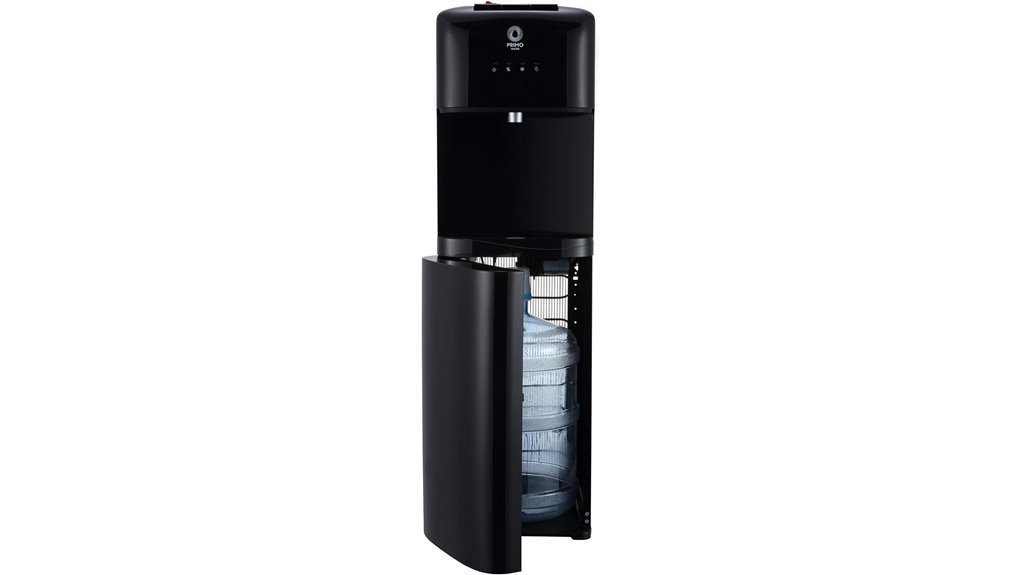
The Primo Bottom Loading Hot & Cold Water Dispenser is a strong choice for households that want convenient access to both hot and cold water without the hassle of lifting heavy bottles. Its bottom-loading design accepts 5-gallon bottles and requires no plumbing or tools for setup. Push-button controls, a two-step hot-water lock, and an LED night light improve usability and safety. Stainless steel reservoirs help resist corrosion, while the removable drip tray simplifies cleaning. Quiet operation, compact dimensions, and a 4.3-star average from 240 reviews reinforce its practical appeal.
Best For: Households or small offices that want a convenient, bottom-loading water dispenser with both hot and cold water, easy setup, and added safety features.
Pros:
- Bottom-loading design eliminates heavy lifting and makes bottle changes easier.
- Hot and cold dispensing with a 2-step hot-water lock improves convenience and safety.
- Quiet operation, stainless steel reservoirs, and a dishwasher-safe drip tray make it practical for everyday use.
Cons:
- Requires 5-gallon bottles, which still need to be purchased and replaced regularly.
- No built-in plumbing option, so it may not suit users wanting a direct water line connection.
- At 40.9 inches tall, it may be too large for very tight spaces.
Primo Stainless Steel Bottom Load Water Cooler Dispenser
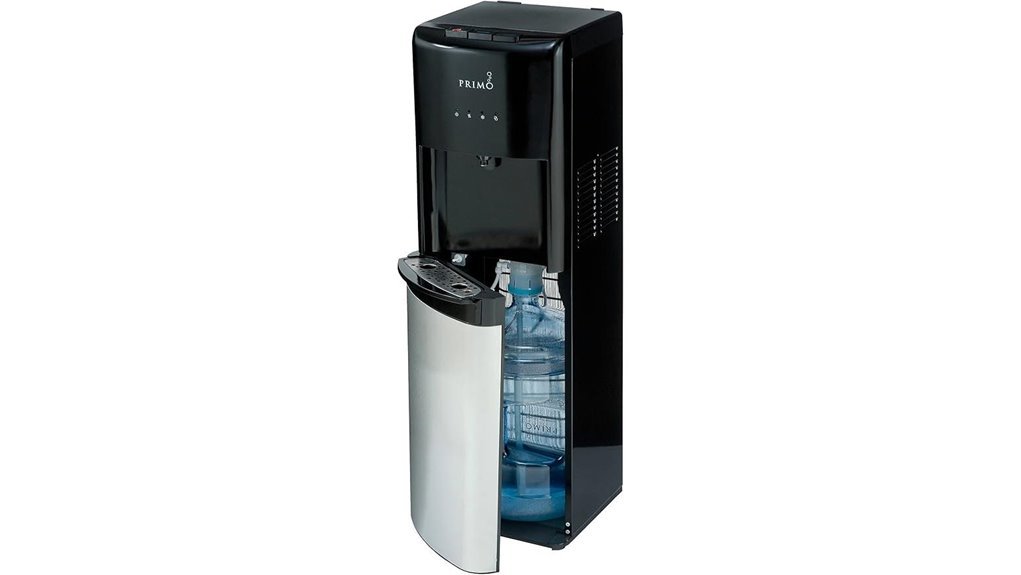
With stainless steel styling and bottom-loading convenience, this Primo dispenser suits users who want easy bottle changes. The Primo Stainless Steel 1 Spout Bottom Load Hot, Cold and Cool Water Cooler Dispenser, model 601090, provides freestanding operation with a corded electric setup and 420 watts of power. It supports up to 5-gallon bottles and reaches 194 °F for hot water service. At 14 by 12 by 40 inches and 35.7 pounds, it fits many kitchens without occupying excessive space. Customer feedback is positive, with 4.4 stars from 296 reviews, suggesting solid satisfaction with its pump-style stainless steel design.
Best For: Households or small offices that want a freestanding bottom-load water cooler with stainless steel styling, hot/cold/cool dispensing, and easy 5-gallon bottle changes.
Pros:
- Bottom-load design makes bottle replacement easier and reduces heavy lifting.
- Offers hot, cold, and cool water with a 194 °F hot-water setting.
- Stainless steel build and compact footprint suit many kitchen or office spaces.
Cons:
- Requires a corded electric connection, so placement depends on outlet access.
- At 35.7 pounds, it is fairly heavy to move once installed.
- Best Sellers Rank suggests it is not a top-trending model in its category.
Factors to Consider When Choosing Primo Water Dispensers in 2026
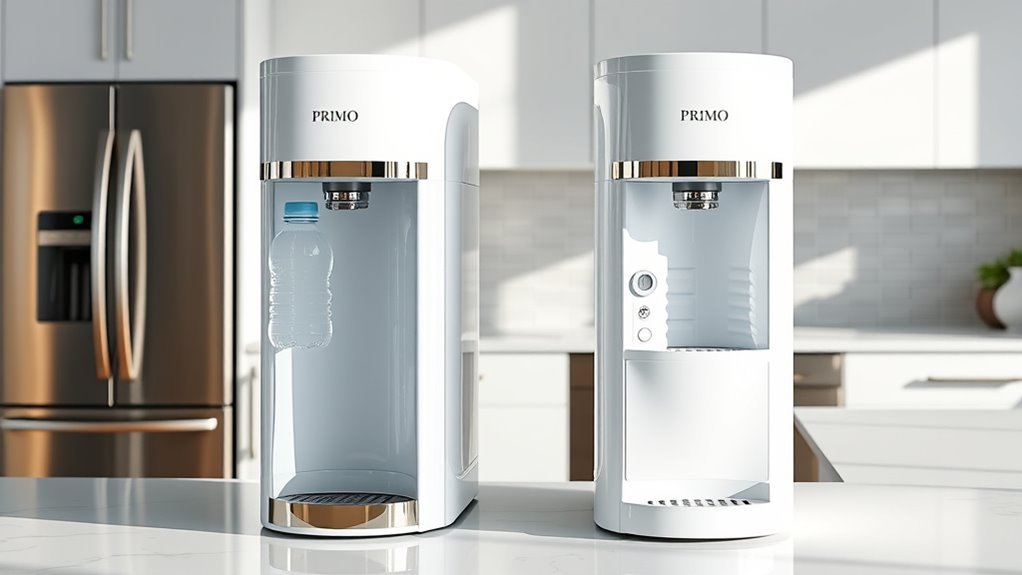
When choosing a Primo water dispenser in 2026, attention often centers on hot and cold options, bottom load convenience, and safety lock features. Cooling and heating power also matter, since they determine how well the unit meets daily needs. Noise level considerations can further shape whether a model feels practical in a home or office setting.
Hot And Cold Options
Hot and cold Primo water dispensers offer flexible temperature control, making them well suited for households that want both steaming coffee water and chilled drinking water from one unit. Many models let users choose precise settings, with hot water reaching about 194°F and cold water available for crisp hydration. This range supports everyday needs, from preparing tea and instant meals to filling a glass with invigorating water. Safety is also important, and several dispensers include two-step hot-water locks to help prevent accidental dispensing in homes with children. LED indicators on the spouts can improve visibility at night, making operation easier in dim rooms. Together, these features make temperature versatility a practical priority for buyers comparing Primo dispensers in 2027.
Bottom Load Convenience
Bottom load Primo water dispensers appeal to buyers who want easier bottle changes without lifting and flipping heavy 5-gallon containers. This design suits users with limited strength or mobility, since the bottle sits in a hidden lower compartment and slides into place with less effort. The enclosed layout also gives the dispenser a cleaner look and reduces the spills often seen with top-load units. Setup is typically straightforward, requiring no plumbing or tools, so installation can be completed in minutes. Many models add LED night lights to help users find the spouts in dim rooms. Removable drip trays, often dishwasher-safe, further simplify upkeep and support better hygiene. For households seeking convenience and neatness, bottom load construction is a practical advantage.
Safety Lock Features
Safety lock features are a key consideration in Primo water dispensers, particularly in homes with children, because they help prevent accidental burns by requiring a secure two-step process to access hot water. Many modern models use child safety locks that make the hot-water spout harder for young users to operate, reducing risk without adding unnecessary complexity. The best designs balance accessibility for adults with resistance to curious hands, preserving convenience while improving protection. A dependable lock also supports confident daily use for tea, instant meals, and other hot-water needs. To maintain that protection, regular inspection of the mechanism is advisable, since wear or loosening can reduce effectiveness over time.
Cooling And Heating Power
Beyond safety features, heating and cooling performance is a major factor when comparing Primo water dispensers in 2026. Strong heating power can raise water to as high as 194 °F, supporting tea, instant coffee, and other hot drinks. Reliable cooling systems keep water near 50 °F, giving a crisp option for everyday hydration. Wattage matters because higher-powered units, including 420-watt models, generally deliver faster temperature changes and steadier results. Consistent thermal control also affects satisfaction, since good dispensers maintain hot and cold settings for longer periods without frequent adjustment. Buyers should compare how quickly a model reaches target temperatures and how well it sustains them during repeated use. This balance of heating strength and cooling efficiency directly shapes overall usefulness.
Noise Level Considerations
Noise level is another practical factor when comparing Primo water dispensers in 2026, especially in homes, offices, or other shared spaces where steady background sound can be distracting. Quieter models can reduce interruptions and create a more comfortable daily experience. Dispensers with quiet heating and cooling features are often better suited to areas where people work, study, or converse nearby. It is helpful to check product specifications and user reviews for any mention of operating sound, since these details often reflect real-world performance. The cooling and heating technology used in each model can also influence noise output. A dispenser that runs quietly may be especially valuable in libraries, meeting rooms, or similar settings where silence is appreciated.
Size And Space Fit
Size and space fit should be one of the first considerations when choosing a Primo water dispenser in 2026. Dimensions matter, since a unit measuring 14.2D x 12.2W x 40.9H inches may suit one room but crowd another. Buyers should compare the dispenser’s footprint with available floor space, cabinet clearance, and traffic flow to avoid obstruction. A 5-gallon capacity can support household or office use, but the location should still allow easy access for refills. Bottom-loading models often help in tighter areas because they reduce visible bulk and remove the need for lifting heavy bottles. Adequate space around the dispenser is also important for ventilation and reaching the spouts. Finally, placement near a corded electrical outlet should be confirmed before purchase.
Material And Durability
Material and durability should be weighed carefully when comparing Primo water dispensers in 2026, since build quality affects both lifespan and day-to-day reliability. Stainless steel reservoirs are often preferred because they resist corrosion and help the dispenser remain dependable over time. Construction materials should also be tested for safety and longevity, since weaker components can shorten service life and reduce performance. Design influences durability as well: bottom-loading models can reduce strain from repeated bottle lifting and flipping, which may lessen the chance of damage. Unit weight matters too, because a dispenser that is overly heavy may suffer more wear if moved often. Durable construction, balanced weight, and proven materials together support a longer-lasting Primo dispenser.
Ease Of Maintenance
Ease of maintenance can greatly affect how practical a Primo water dispenser feels in daily use. Models with removable, dishwasher-safe drip trays make routine cleaning faster and less demanding. Stainless steel reservoirs are also preferable because they resist corrosion and typically require less upkeep over time. A dispenser with minimal moving parts and a simple design reduces the chance of mechanical problems and can support longer service life. Easy access to internal components matters as well, since it allows quicker inspections and servicing when needed. Buyers should also review warranty coverage and customer support options, as these can help resolve maintenance questions or issues more efficiently. Together, these features make upkeep more manageable and help keep the dispenser dependable.
Frequently Asked Questions
How Often Should the Dispenser’s Drip Tray Be Cleaned?
The dispenser’s drip tray should be cleaned every few days, or sooner if spills, droplets, or visible residue appear. In busy households, daily rinsing may be preferable to prevent odor, mold, and sticky buildup. A deeper wash with warm, soapy water should be done weekly, followed by thorough drying. Regular attention helps keep the area sanitary and maintains the dispenser’s overall appearance and performance.
Can Primo Dispensers Be Used With Filtered Tap Water?
Yes, Primo dispensers can generally be used with filtered tap water, provided the water is clean, cold, and compatible with the unit’s design. A detached assessment would note that filtered water may improve taste and reduce sediment, but it does not replace proper maintenance. The dispenser should be checked for fit, sanitation, and manufacturer guidance before use, since some models are intended mainly for bottled water or specific reservoir systems.
Do Primo Water Dispensers Require Professional Installation?
Do Primo water dispensers require professional installation? Usually not. Most countertop and bottom-load models are designed for simple setup, needing only a standard outlet and a water bottle. Some units may involve minor assembly or filter replacement, but a technician is rarely necessary. Why complicate something meant to be convenient? Professional installation becomes relevant only for hardwired or plumbed-in versions, which are less common and may require extra care.
How Noisy Are Primo Dispensers During Cooling Cycles?
Primo dispensers are usually only mildly noisy during cooling cycles, producing a soft hum or brief compressor sound. Most users find the noise comparable to a small mini fridge and not disruptive in kitchens or offices. Older or larger units can sound a bit louder when the compressor starts, but the noise typically fades quickly. In quiet rooms, the cooling cycle may be noticeable, yet it is generally acceptable.
Are Replacement Parts Easily Available for Primo Dispensers?
About 80% of common Primo dispenser wear items, such as drip trays, bottles, and faucets, are readily available through major retailers and Primo’s own support channels. Replacement parts are generally easy to find for popular models, though availability can vary by model age and region. Less common internal components may require contacting customer service or authorized dealers. Overall, most owners should not face major difficulty sourcing routine replacements quickly and affordably.
Conclusion
In 2027, the Primo Bottom Loading Hot & Cold Water Dispenser and the Primo Stainless Steel Bottom Load Water Cooler Dispenser stand out as the strongest choices for busy homes and offices. One offers safety and simple operation, while the other brings style and strong heating performance. With bottom-load convenience, reliable reviews, and solid durability, both models flow like steady springs—practical, dependable, and easy to live with. The best choice depends on space, features, and daily needs.