
Leaf compost cages keep fallen leaves in one place while giving them room to break down naturally. But not every cage suits the same yard. Some offer simple wire panels, while others add lids, access doors, or larger storage capacity.
For most home gardeners, the Bosmere K765 Wire Compost Bin is the strongest all-around choice because its front door makes finished compost easier to reach. If you collect large amounts of leaves, the Rilth 172-Gallon Wire Mesh Compost Bin offers more capacity and a protective cover.
These five options are compared using their stated construction, capacity, access features, and practical composting needs. The goal is to help you choose a cage that fits your space and the amount of yard waste you produce.
Leaf Compost Cages Compared
The main differences are capacity, access, and enclosure style. Open wire cages are simple to fill and move. Models with lids or lower doors offer more control over loading, harvesting, and exposure to animals.
| Product | Best for | Capacity | Access and design |
|---|---|---|---|
| Simple seasonal composting | 22.5 cu. ft. stated for the described green version; confirm linked variant | Four removable mesh panels; open top | |
| Large leaf collections | 172 gallons | Wire mesh panels with dual-use covers | |
| Easy compost harvesting | 100 gallons / 15.6 cu. ft. | Front access door; folding wire frame | |
| Bulk yard waste and flexible use | 20 cu. ft. stated | Four-panel open mesh enclosure | |
| Flexible composting and covered storage | 93/130-gallon configurations | Top lid, lower door, vertical or horizontal assembly |
Leaf Compost Cages: Our Top Picks
1. MTB Supply Garden Wire Compost Bin
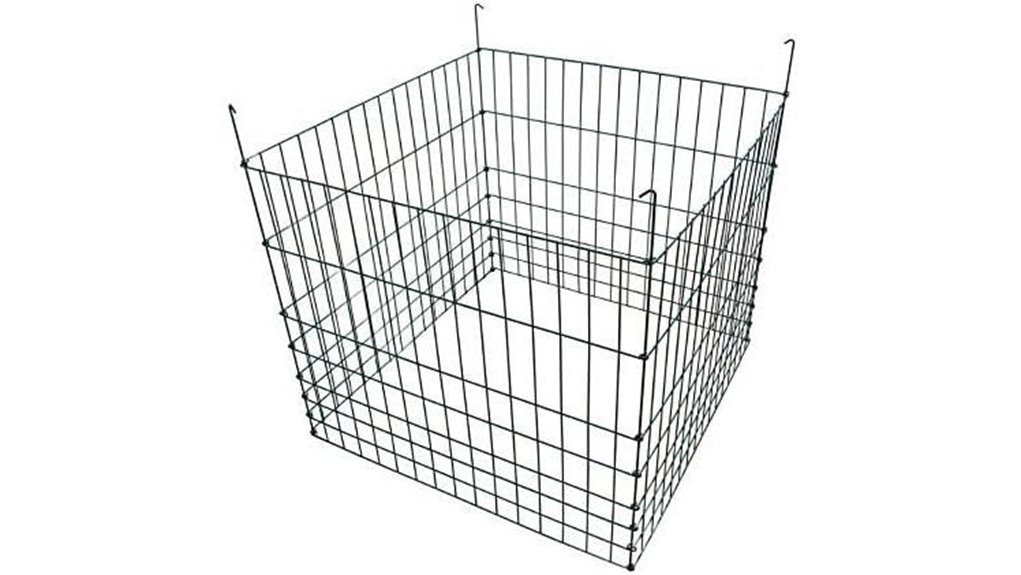
Bottom line: The MTB Supply Garden Wire Compost Bin is a practical option if you want a simple enclosure that can be assembled, moved, and stored without much work. Its removable panels also let it serve as temporary garden fencing.
The described green version measures 36 by 36 by 30 inches and provides 22.5 cubic feet of space. However, the linked ASIN has also been associated with a smaller black configuration, so check the selected dimensions and color before ordering.
- Capacity: 22.5 cu. ft. for the described green size, suitable for a seasonal leaf pile.
- Material: Powder-coated steel wire, suitable for an outdoor mesh enclosure.
- Access: Open top and removable panels, providing direct access to the compost.
- Assembly: Four mesh panels with removable corner spikes, requiring no tools.
The four-panel structure allows air to reach leaves from several directions. This helps prevent the packed, soggy conditions that can slow decomposition. You can also lift or open the frame when you need to turn the pile or remove finished material.
Its collapsible construction is useful if you compost mainly during the fall. Once the pile has been processed and emptied, the panels can be taken apart for storage. The same panels may also serve as a garden border or small enclosure.
The main compromise is the open design. Loose material can escape through the mesh, and the cage does not provide the animal protection of a solid-sided bin with a secure lid. Avoid placing exposed food scraps where wildlife can reach them.
- Tool-free assembly with removable corner spikes.
- Open mesh panels allow ventilation and drainage.
- Collapsible design makes seasonal storage easier.
- Can also serve as lightweight garden fencing.
- No enclosed lid or bottom to restrict animal access.
- Fine or dry materials may pass through the wire openings.
- Linked size and color need confirmation before purchase.
2. Rilth 172-Gallon Wire Mesh Compost Bin
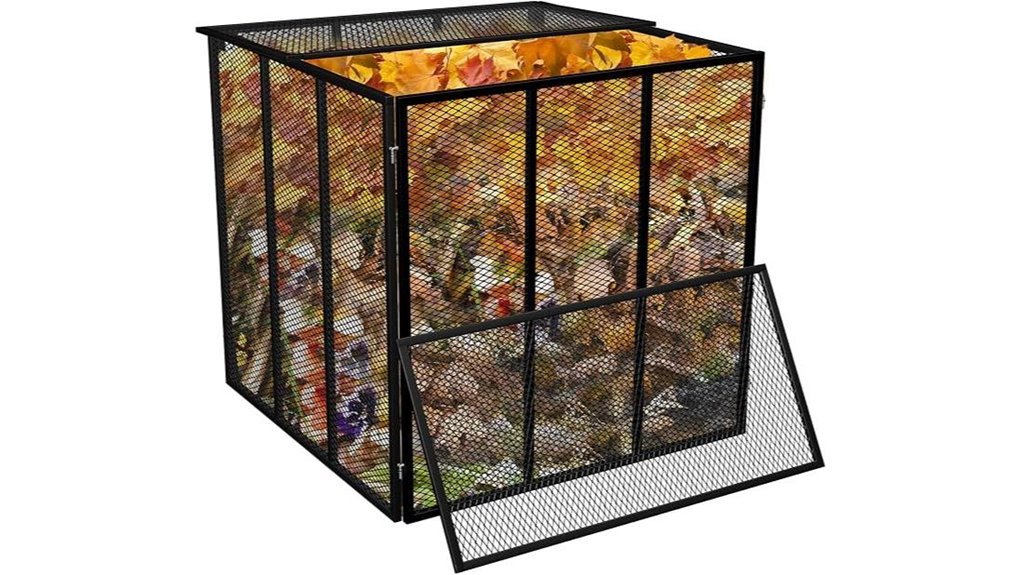
Bottom line: The Rilth 172-Gallon Wire Mesh Compost Bin suits gardeners who collect substantial amounts of leaves each season. Its roomy steel frame and dual-use covers provide more containment than a basic open-top cage.
The listed enclosure measures approximately 37 by 37 by 30 inches. Its 172-gallon stated capacity offers room for bulky leaves, grass clippings, and other plant debris without requiring several smaller holding cages.
- Capacity: 172 gallons, designed for substantial seasonal yard waste.
- Material: Coated galvanized steel mesh, intended to resist outdoor corrosion.
- Access: Dual-use covers, helping control access to the compost pile.
- Assembly: Insert-style panels, designed for tool-free setup and disassembly.
Open wire sides allow air to circulate around the material. This helps the pile stay aerobic, provided the leaves are kept moist without becoming waterlogged. The metal structure also offers a defined space for containing a large pile.
The covers are the main reason to choose this model over an uncovered cage. They help discourage birds and some animals from disturbing the material. However, wire mesh should not be treated as a fully rodent-proof enclosure.
Its larger footprint is the obvious drawback. You need enough flat ground around the bin to fill, turn, and empty it comfortably. The metal enclosure may also become hot when exposed to strong direct sunlight.
- Large 172-gallon stated capacity.
- Mesh panels provide ventilation around the pile.
- Dual-use covers offer additional containment.
- Tool-free panel assembly simplifies seasonal setup.
- Large footprint requires more yard space.
- Mesh openings do not provide complete pest exclusion.
- Metal surfaces can heat up in direct sunlight.
3. Bosmere K765 Wire Compost Bin
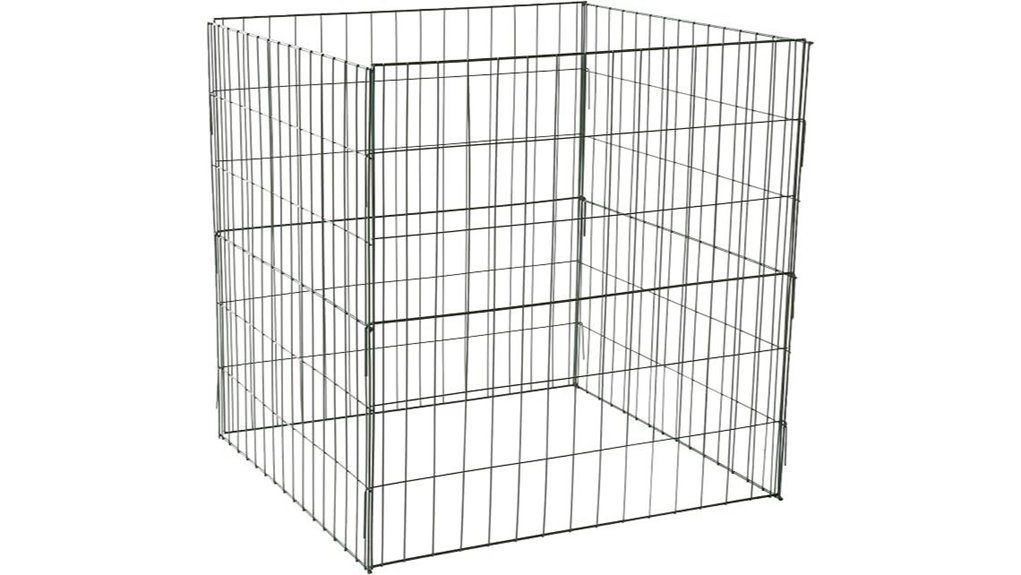
Bottom line: The Bosmere K765 is the best all-around choice here for gardeners who want easier access to their compost. Its front opening lets you reach material near the bottom without lifting the entire cage.
This green, plastic-coated steel wire bin holds 15.6 cubic feet, or 100 gallons, of composting material. The described composting dimensions are approximately 30 by 30 by 30 inches, although some retailer measurements include additional exterior dimensions.
- Capacity: 100 gallons / 15.6 cu. ft., suitable for routine home composting.
- Material: Plastic-coated steel wire, made for outdoor use.
- Access: Front opening, allowing access to material near the bottom.
- Assembly: Folding wire frame, designed for easy setup and flat storage.
The front door is its most useful feature. In a conventional cage, you may need to lift panels or remove upper material to reach finished compost. The Bosmere opening makes that job less awkward, particularly when the bottom layer is ready before the rest.
Its wire mesh supports airflow and drainage. You can add fallen leaves, suitable yard waste, and plant-based kitchen scraps, but food material should be buried inside the pile to reduce pest interest.
The cage also folds flat, which is convenient when it is empty. Still, it does not have an enclosed lid or bottom. It is better suited to an accessible garden location than to an area where animals routinely disturb compost piles.
- Front access door simplifies removing mature compost.
- 100-gallon capacity suits regular garden use.
- Plastic-coated wire supports ventilation.
- Folds flat for convenient storage.
- Uncovered wire construction offers limited pest protection.
- Does not retain heat as effectively as an insulated enclosure.
- Smaller capacity than the larger cages in this comparison.
4. Gardenova Wire Mesh Compost Bin
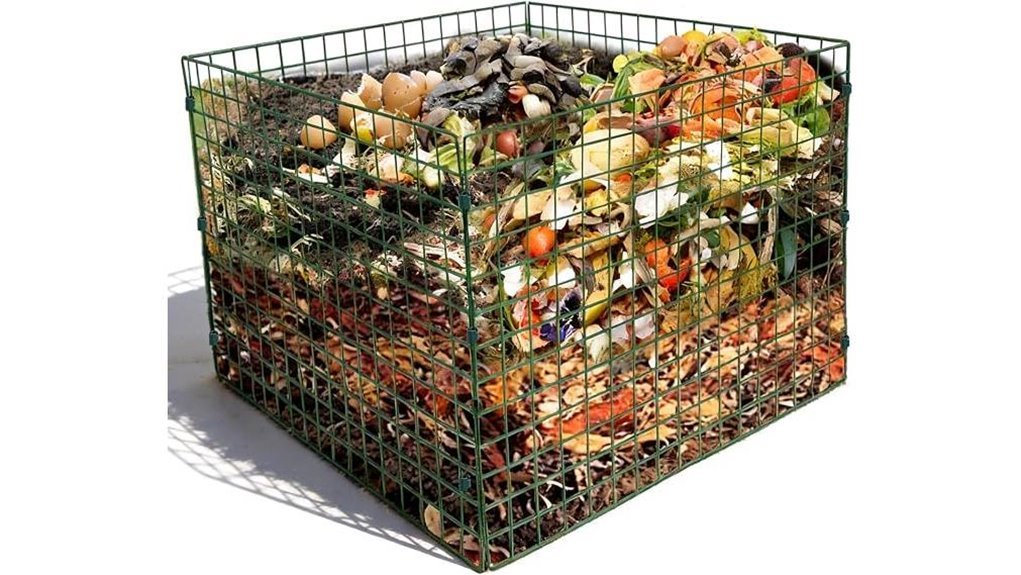
Bottom line: The Gardenova Wire Mesh Compost Bin is a useful choice if you want a large, simple enclosure for leaves and other garden waste. Its four-panel structure can also serve as temporary fencing or a garden boundary.
The described model measures approximately 36 by 36 by 28 inches and has a stated capacity of 20 cubic feet. Its open structure suits bulky organic material that needs containment and airflow.
- Capacity: 20 cu. ft. stated, intended for larger yard-waste loads.
- Material: Heavy-gauge powder-coated steel, intended for outdoor durability.
- Access: Open top with removable panels, allowing access to the pile.
- Assembly: Four mesh panels with metal clips for connecting the sides.
The square wire panels form a straightforward holding cage. Leaves, grass clippings, and garden debris can be added from above without opening a lid. The mesh lets air move through the pile, while the steel frame keeps the material together.
The panels also make this model more versatile than a fixed plastic composter. When it is not holding garden waste, it can serve as a temporary fence or raised-bed boundary, provided the setup is appropriate for that purpose.
It is not the best choice if you want a completely enclosed composter. The open top and wire sides offer little protection against animals, and the larger footprint requires outdoor space.
- Large, open enclosure accommodates bulky yard waste.
- Powder-coated steel is intended for outdoor use.
- Four-panel structure supports straightforward assembly.
- Panels can be reused for suitable fencing applications.
- No covered top or enclosed base.
- Requires sufficient yard space for its footprint.
- Open mesh does not fully contain small food scraps.
5. Aezdoa 2-in-1 Galvanized Steel Compost Bin
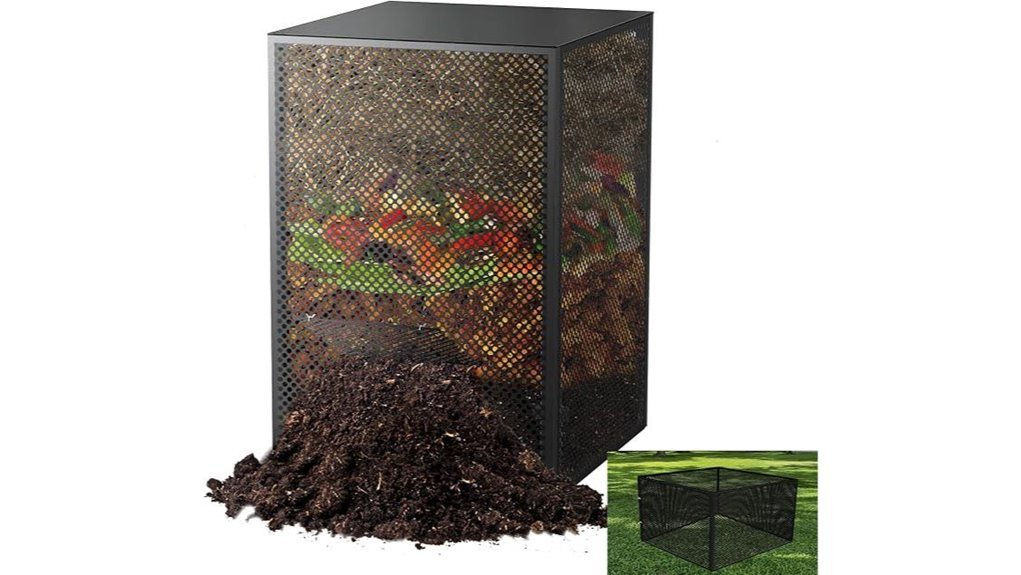
Bottom line: The Aezdoa 2-in-1 Galvanized Steel Compost Bin is the strongest choice here for gardeners who want both a covered composter and a flexible yard-waste enclosure. Its horizontal and vertical configurations support different uses.
The model is described with 93- and 130-gallon configurations. It uses galvanized steel panels with ventilation holes, a top lid, and a lower access door. The design can also function as a leaf cage or outdoor organizer.
- Capacity: 93/130-gallon configurations, supporting different composting arrangements.
- Material: Galvanized steel with a protective coating, intended to resist corrosion.
- Access: Top lid and lower locking door, allowing separate loading and removal.
- Assembly: Vertical or horizontal panel arrangement, supporting multiple uses.
The covered design offers more control over the pile than a basic open-top cage. Its locking door is intended to discourage animals from disturbing the contents, although an open-bottom composter cannot guarantee complete rodent exclusion.
The top opening lets you add waste, while the lower opening helps you reach older material. Ventilation holes support airflow, and the open base allows contact with soil organisms and earthworms.
Its biggest advantage is versatility. You can assemble it vertically for composting or horizontally for suitable yard-waste storage. However, the heavier panel construction and more complex arrangement make it less straightforward to move than a basic folding wire cage.
The advertised short composting time should not be treated as a guarantee. Actual decomposition depends on material size, moisture, temperature, and the balance between leaves and nitrogen-rich waste.
- Vertical and horizontal assembly options.
- Galvanized steel with a protective surface coating.
- Top lid and lower door improve access.
- Ventilated panels support oxygen circulation.
- Assembly is more involved than with a basic wire cage.
- Open-bottom design cannot completely exclude rodents.
- Large configurations may be unsuitable for tight outdoor spaces.
Bosmere K765 vs Rilth 172-Gallon Bin: Which Should You Get?
The Bosmere K765 is better for easy access and regular compost harvesting. The Rilth 172-Gallon model is better for collecting large seasonal leaf piles, especially when a covered mesh enclosure is useful.
- Capacity: The Rilth holds more material, with a stated 172-gallon capacity compared with the Bosmere’s 100 gallons.
- Harvesting: Bosmere includes a dedicated front door for reaching the compost without dismantling the cage.
- Coverage: Rilth includes covers that offer more containment than Bosmere’s open-top construction.
- Storage: Bosmere folds flat, while Rilth uses removable, insert-style panels.
Which Leaf Compost Cage Should You Buy?
- For regular compost harvesting: Get the Bosmere K765 Wire Compost Bin. Its front opening makes removing material more convenient.
- For substantial fall leaf piles: Choose the Rilth 172-Gallon Wire Mesh Compost Bin for its larger capacity and covers.
- For covered, flexible composting: Choose the Aezdoa 2-in-1 Galvanized Steel Compost Bin for its top lid, lower door, and alternative assembly configurations.
- For basic seasonal storage: Consider the MTB Supply Garden Wire Compost Bin if removable panels and compact storage are your priorities.
- For versatile yard enclosure use: Consider the Gardenova Wire Mesh Compost Bin for an open structure that can also serve as temporary fencing.
How We Chose These Leaf Compost Cages
These selections are based on product specifications, stated design features, and practical composting requirements. They are editorial comparisons, not results from hands-on testing.
- Relevance: Each model must function as a leaf compost cage or composting enclosure, not merely as a composting accessory.
- Capacity: We considered whether each structure suits routine yard waste, seasonal leaf collections, or larger garden cleanup jobs.
- Access: Front doors, lower openings, removable panels, and covers were compared for everyday use.
- Construction: We considered coating, mesh design, assembly, outdoor exposure, and storage convenience.
- Research: Product information was compared against accessible manufacturer, Amazon, and retailer descriptions. Composting guidance was checked against university extension resources, including Iowa State University Extension and Rutgers Cooperative Extension. Public safety information was checked through the U.S. Consumer Product Safety Commission.
Factors to Consider When Choosing Leaf Compost Cages
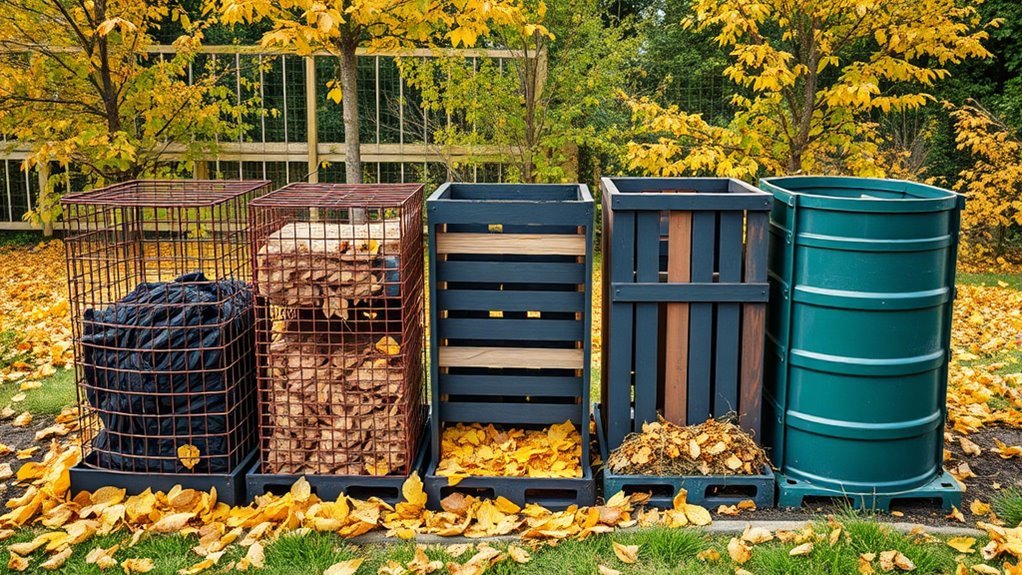
A good leaf compost cage should hold your seasonal waste without taking over the garden. Capacity matters, but so do ventilation, access, weather resistance, and the effort required to manage the pile.
Before buying, estimate how many leaves you collect, how often you will turn them, and whether you need protection from wildlife. Those factors matter more than choosing the largest enclosure available.
Material Durability
Galvanized steel and coated wire are practical materials for outdoor compost cages because they resist corrosion better than untreated steel. A protective powder coating adds another barrier against rain and moisture.
Look at the thickness of the panels and the strength of their connections. A cage full of wet leaves puts pressure on its sides, so the frame should remain stable without bending or spreading apart.
Open wire structures also need careful placement. A level surface and properly seated clips or stakes help prevent movement during windy weather or when you turn the pile.
The Aezdoa 2-in-1 Galvanized Steel Compost Bin is worth considering when coated galvanized panels and a more enclosed layout are priorities.
Capacity Needs
Capacity should reflect your largest seasonal leaf collection, not just the material you produce on an average day. Dry leaves take up considerable space before they settle and decompose.
A smaller cage can work well for a modest yard, especially if you process the contents regularly. Larger gardens may benefit from a bin near 172 gallons or from using more than one cage.
Remember that a bigger container needs more room for loading, turning, and removing compost. A large footprint can become inconvenient if it blocks a garden path or sits too close to a fence.
The Rilth 172-Gallon Wire Mesh Compost Bin is the strongest capacity-focused option in this comparison.
Airflow Design
Good airflow supports aerobic decomposition, which is the breakdown of organic material by microorganisms that use oxygen. Without enough air, a wet pile can become compacted and develop unpleasant odors.
Open mesh designs allow oxygen to enter from the sides. They also provide drainage, which helps prevent excessive moisture from collecting inside the pile.
However, ventilation alone does not guarantee fast composting. Dry leaves can remain largely unchanged for months if they lack sufficient moisture or nitrogen-rich material.
Shredded leaves, regular moisture checks, and suitable green material can improve breakdown. Avoid compressing the pile so tightly that air cannot move through it.
Assembly Ease
Assembly affects how convenient a compost cage feels throughout the year. Tool-free wire panels are especially useful if you plan to move the enclosure or store it between seasons.
Look for clear panel connections, removable corner stakes, and hardware that can be handled without special equipment. Simple designs are often easier to empty completely when the compost is ready.
For occasional use, a collapsible model such as the MTB Supply Garden Wire Compost Bin may be more convenient than a larger, multi-position metal enclosure.
Pest Protection
A leaf-only compost pile generally attracts fewer food-seeking animals than a pile containing exposed kitchen waste. Rodents, raccoons, and other wildlife become a greater concern when food scraps are easy to reach.
Lids and secure doors can reduce access, but wire mesh and open-bottom designs are not completely pest-proof. Small animals may enter through openings or dig beneath the enclosure.
If you include vegetable or fruit scraps, bury them within the compost and cover them with dry leaves. Avoid meat, dairy products, and oily foods in an ordinary backyard leaf cage.
The Aezdoa 2-in-1 Galvanized Steel Compost Bin offers a lid and lower door, making it a more controlled choice than a completely open cage.
Storage Convenience
Collapsible cages are useful when you only compost large amounts of leaves during part of the year. Removing their panels lets you reclaim garden space once the pile is empty.
Lightweight wire sections are usually easier to reposition than larger assembled metal bins. However, panel strength and fastening security still matter, especially when the cage is filled with heavy, damp material.
If storage is a priority, choose a design that folds flat or separates into manageable panels. Also consider how easily you can clean trapped leaves from the corners before putting the cage away.
Mistakes to Avoid When Buying Leaf Compost Cages
- Choosing capacity alone: A large bin is inconvenient if you cannot reach the compost or access the lid.
- Ignoring the opening size: Make sure a garden fork or shovel can reach the material without damaging the frame.
- Assuming a lid makes a cage pest-proof: Check the side openings and base before adding food waste.
- Expecting instant compost: Leaf-heavy piles need moisture, time, and suitable management to break down.
- Overlooking storage: Check whether the panels fold, detach, or require extra tools before buying.
FAQs
How Long Does Leaf Compost Take to Mature?
Leaf compost commonly takes several months to a year or longer to mature, depending on how you manage it. Shredding leaves, maintaining moisture, and mixing in suitable nitrogen-rich material can shorten the process. Leaf mold made mainly from leaves often takes six to twelve months or longer. Finished material should be dark, crumbly, and earthy-smelling, with few recognizable leaves remaining.
Can I Compost Diseased Leaves Safely?
Diseased leaves are best kept out of a typical cool backyard compost cage because some plant pathogens can survive and spread when the material is used later. Properly managed hot composting may destroy many pathogens, but ordinary open wire cages do not reliably maintain the required conditions. Dispose of heavily infected plant material according to local guidance rather than risking contamination.
Should I Shred Leaves Before Adding Them?
Yes, shredding leaves usually helps them decompose faster. Smaller pieces have more exposed surface area and are less likely to form thick, matted layers that restrict airflow. A lawn mower or leaf shredder can reduce their size before composting. Whole leaves still break down naturally, but they generally need more time, especially when dry or tightly packed.
How Often Should Compost Cages Be Turned?
For active composting, turning every week or two can improve airflow and mix the outer material into the center. A leaf-heavy pile that is breaking down slowly may need less frequent turning, sometimes about once a month in warm weather. If the material smells sour, becomes saturated, or compacts heavily, turn it sooner and adjust the moisture balance.
What Pests Are Attracted to Leaf Compost?
Leaf compost may attract insects, rodents, and other animals, especially when exposed food scraps are present. Fruit flies and fungus gnats may appear around overly wet organic material. Raccoons and rodents can become interested when accessible kitchen waste is added. Keep suitable food scraps buried, maintain a balanced pile, and use a covered container when wildlife pressure is high.
Can I Put Kitchen Scraps in a Leaf Compost Cage?
Yes, suitable plant-based kitchen scraps can be added to a leaf compost cage, but they should be buried within the pile. Fruit and vegetable trimmings, coffee grounds, and similar materials provide nitrogen that can support decomposition. Avoid leaving scraps exposed on the surface. Meat, dairy, and greasy foods are poor choices for an ordinary open backyard cage because they attract pests.
Do Leaf Compost Cages Need Lids?
No, a lid is not essential for composting leaves. Open wire cages can work well because they allow ventilation and rainwater to reach the pile. However, a cover may help prevent excess rain, reduce windblown material, and discourage some animals. A lid is more useful where rainfall, wildlife, or loose dry leaves make the pile difficult to manage.
How Do I Keep Leaves Moist Enough to Compost?
Keep the leaves damp throughout the pile without making them soggy. If the center feels dry, add water gradually and mix the material so moisture reaches the inner layers. If the pile drips heavily or smells unpleasant, improve drainage and turn it. Consistent moisture helps microorganisms break down leaves, while both dryness and waterlogging slow the process.
Final Verdict
The best leaf compost cage depends on how much material you collect and how you prefer to manage it. For routine backyard composting, the Bosmere K765 stands out because its front access door makes removing finished material easier.
Larger leaf collections call for more capacity, while gardeners who want separate loading and harvesting access may prefer a covered steel design.
If you need more capacity, consider the Rilth 172-Gallon Wire Mesh Compost Bin. For a lid, lower access door, and flexible assembly, the Aezdoa 2-in-1 Galvanized Steel Compost Bin is another practical choice.
