
Garden hoses in 2027 are no longer judged by length alone. Buyers now expect lighter handling, stronger fittings, and enough flexibility to avoid constant tangling. Expandable models, kink-resistant builds, and multi-spray nozzles have become common across the best options. Yet not every hose suits every yard or task, and a few details separate the reliable picks from the disappointing ones. The differences become clearer with a closer look.
Flexi Hose Expandable Garden Hose with Nozzle
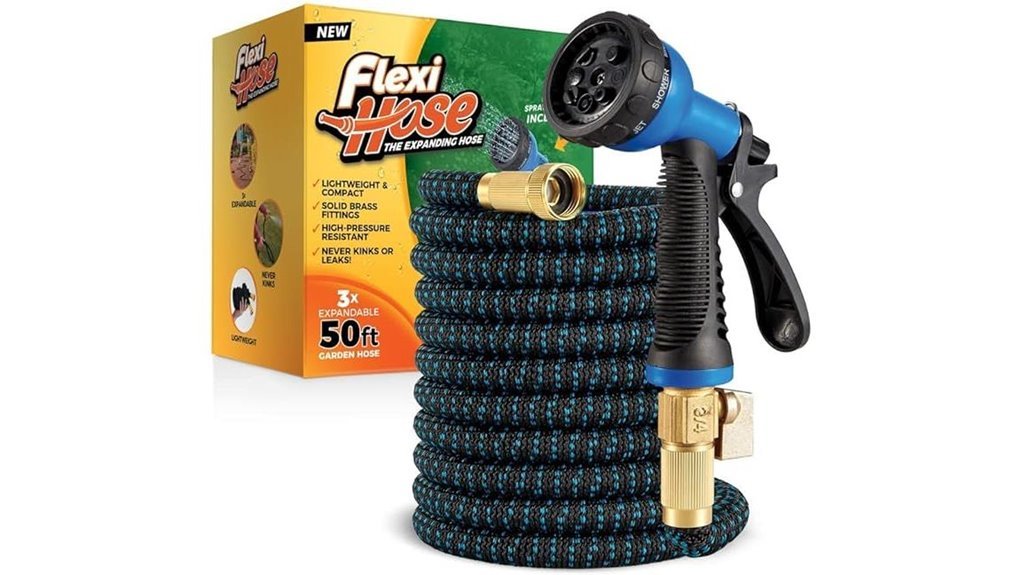
The Flexi Hose Expandable Garden Hose with Nozzle is a strong pick for gardeners who want a lightweight hose that stores easily without sacrificing durability. At 50 feet, it expands to about three times its length under standard water pressure, then retracts when emptied. Its 3750D elastic outer fabric and double latex core are built to resist thorns, punctures, and sharp edges, while solid brass fittings add reliability. It handles pressures up to 12 bar, works between 41°F and 113°F, and includes an eight-pattern nozzle with an ergonomic rubberized grip for comfortable use.
Best For: Gardeners who want a lightweight, easy-to-store expandable hose that still offers solid durability and a comfortable multi-pattern spray nozzle.
Pros:
- Expands to about 3 times its length for convenient reach, then retracts compactly for storage.
- Durable construction with 3750D outer fabric, double latex core, and solid brass fittings.
- Includes an 8-pattern nozzle with an ergonomic, slip-resistant rubberized handle.
Cons:
- Expandable hoses can be less familiar and may require careful handling compared with traditional hoses.
- Performance depends on standard water pressure, so expansion may vary by setup.
- Temperature range is limited, so it may not be ideal for very hot or very cold conditions.
Flexi Hose with 8-Function Nozzle, 50FT Expandable Garden Hose
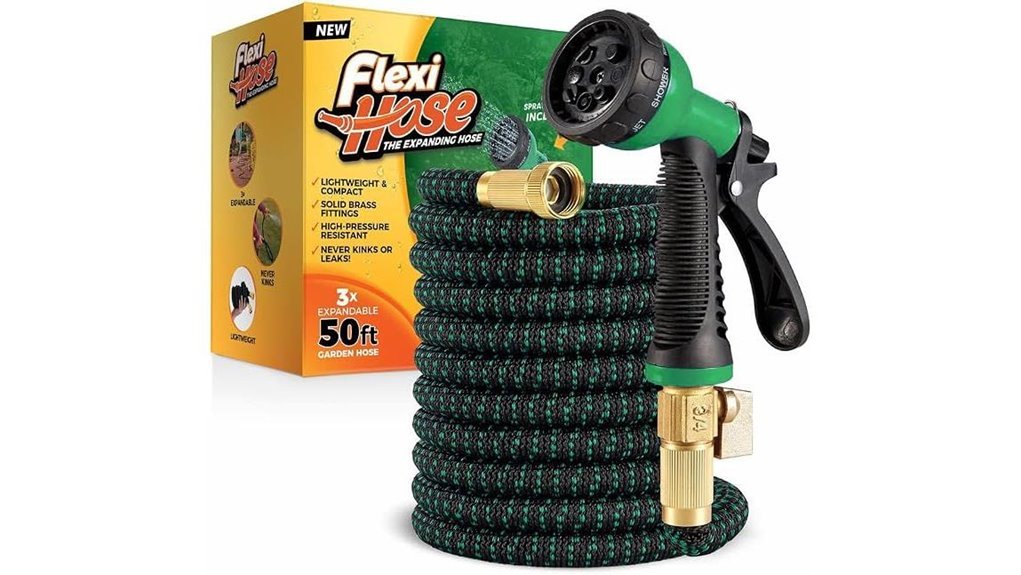
Flexi Hose suits homeowners wanting a lightweight, space-saving hose with reliable spray control. This 50-foot expandable model stretches to three times its length under standard water pressure, then contracts neatly once shut off. Its 3750D elastic outer fabric and four latex layers help resist thorns and punctures, while solid 3/4-inch brass connectors fit standard US outdoor taps. Endurance-tested for 2,000 uses, it tolerates up to 12 bar and temperatures from 41 to 113 degrees Fahrenheit. The included 8-pattern rotating ABS nozzle adds versatility, and the rubberized handle improves comfort during extended watering tasks.
Best For: Homeowners who want a lightweight, space-saving garden hose with reliable spray control and durable everyday performance.
Pros:
- Expands to 50 feet and contracts compactly for easy storage.
- Durable 3750D outer fabric with four latex layers helps resist thorns and punctures.
- Includes an 8-pattern rotating nozzle and comfortable rubberized handle.
Cons:
- May not be ideal for users who prefer a traditional hose feel or heavier-duty construction.
- Performance is limited by temperature range and pressure ratings.
- Expandable hoses can be less convenient if they kink or need careful handling compared with standard hoses.
Flexi Hose 50FT Expandable Garden Hose with Nozzle
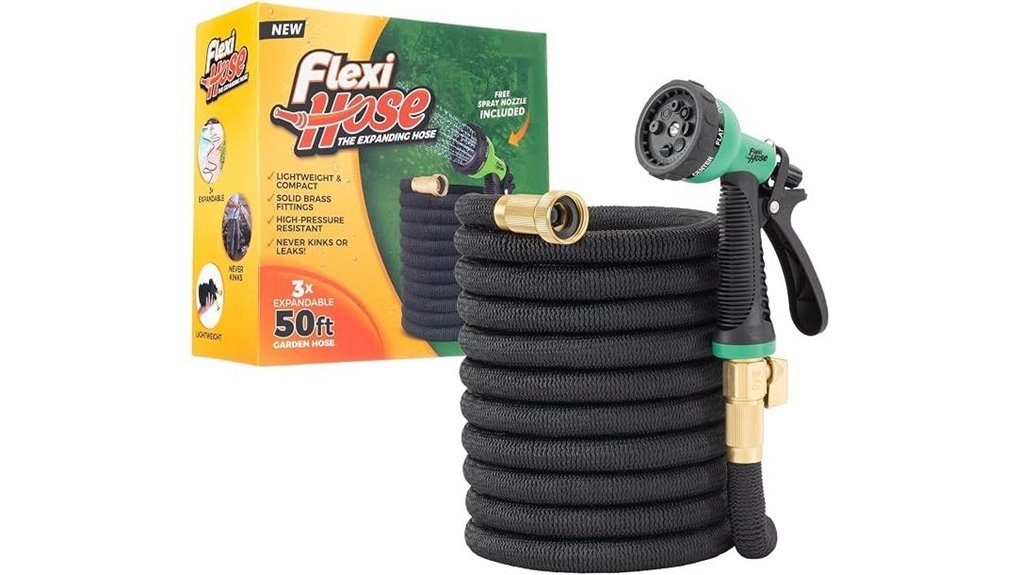
Ideal for homeowners needing easy storage and lightweight handling, this hose stretches to 50 feet with standard pressure. The Flexi Hose 50FT Expandable Garden Hose with Nozzle uses a double latex core and 3/4-inch solid brass fittings for added durability. Its no-kink design helps maintain steady water flow and reduces frustration during routine yard work. When the water is turned off, it contracts to a compact size for simple storage. An included 8-function nozzle supports a range of watering tasks, from gentle plant care to stronger cleaning jobs, making it practical for versatile outdoor use.
Best For: Homeowners and gardeners who want a lightweight, easy-to-store hose with flexible handling and versatile watering options.
Pros:
- Expands to 50 feet with standard water pressure for extended reach.
- Double latex core and 3/4-inch solid brass fittings add durability.
- Includes an 8-function nozzle for a variety of watering and cleaning tasks.
Cons:
- Needs water pressure to fully expand, so performance may vary by setup.
- Less suitable for heavy-duty or industrial use than traditional hoses.
- Must be fully drained and stored properly to maintain its lifespan.
J&B XpandaHose 150ft Expandable Garden Hose, Lightweight, Brass Connectors
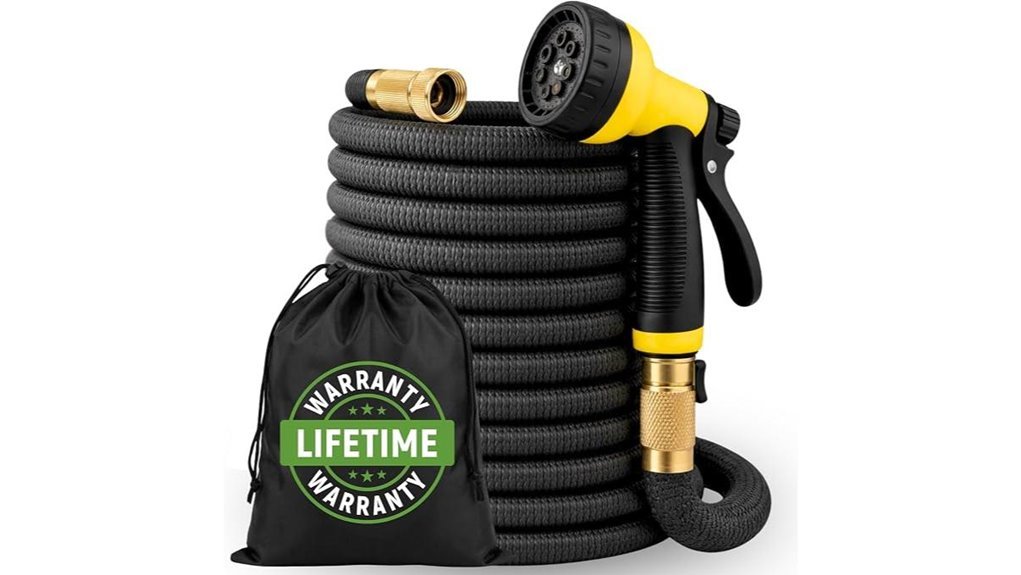
Built for gardeners needing long reach without heavy hauling, the J&B XpandaHose extends to 150 feet. It remains under 3.5 pounds, so maneuvering around beds, patios, and trees is easier than with traditional rubber hoses. Durable 3/4-inch brass connectors and a reinforced on/off valve help resist cracking, loosening, and leaks. A 4-layer latex core and 3750D fabric add tear resistance and flexibility. The hose contracts for compact storage, includes a 10-pattern nozzle and bag, and is supported by a lifetime warranty.
Best For: Gardeners who want a lightweight, long-reach expandable hose with durable brass fittings and easy storage.
Pros:
- Expands up to 150 feet while staying compact when not in use.
- Lightweight design makes it easier to carry and maneuver around the yard.
- Includes a 10-pattern nozzle, storage bag, and lifetime warranty.
Cons:
- Expandable hoses may not feel as sturdy as traditional rubber hoses in all conditions.
- Performance depends on water pressure for full expansion.
- The 150 ft length may be more than some users need, making storage less necessary but bulkier when expanded.
Pocket Hose Ballistic 50 FT Expandable Garden Hose, No-Kink, As Seen on TV
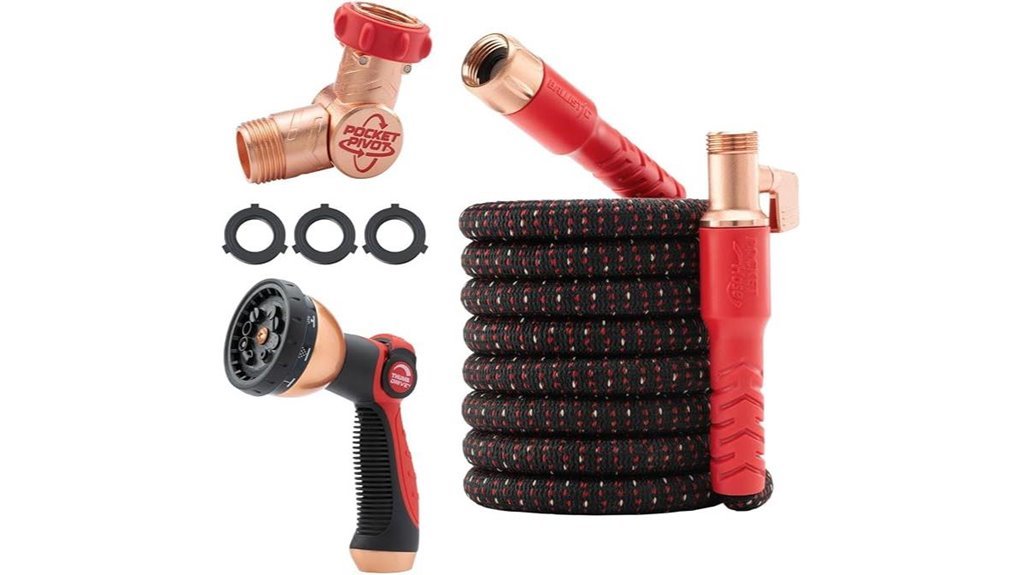
Pocket Hose Ballistic 50 FT suits gardeners who want a lightweight, kink-resistant hose for easy storage. This 50-foot expandable model stretches to about three times its size during use, then contracts for compact storage. Its red anti-burst sleeve is reinforced with bulletproof fiber, adding durability without excess weight. A 360-degree swiveling pocket pivot connector helps reduce twisting and snagging. Backed by more than 100 patents, it has earned strong recognition in the expanding-hose category. Amazon offers a 30-day voluntary return guarantee, and customer feedback is generally positive.
Best For: Gardeners and homeowners who want a lightweight, kink-resistant, easy-to-store 50-foot expandable hose for everyday watering.
Pros:
- Expands up to 3X its size for use, then shrinks compactly for storage.
- Anti-burst sleeve with bulletproof fiber adds durability while staying lightweight.
- 360° swiveling pocket pivot connector helps reduce twisting and kinks.
Cons:
- Expandable hoses can be less familiar or durable-feeling than traditional hoses for some users.
- Performance depends on proper water pressure and careful handling.
- Warranty details are not clearly specified upfront.
Flexzilla Lightweight All-Weather Garden Hose, 5/8 in. x 50 ft
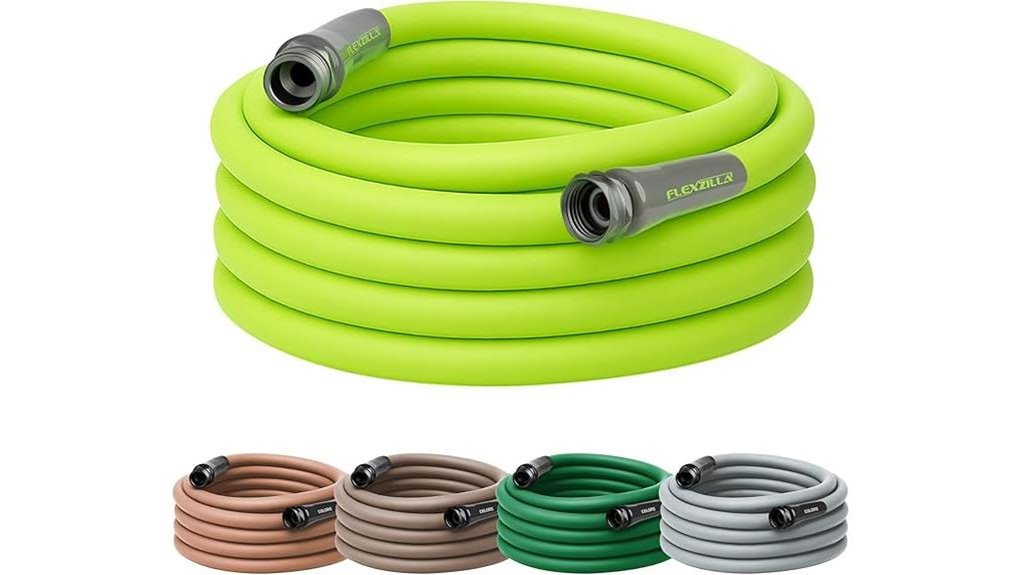
Flexzilla’s lightweight, all-weather build makes it best for gardeners who want easy handling without sacrificing durability. The 5/8 in. x 50 ft hose uses a premium hybrid polymer that stays ultra-flexible, resists abrasion, and performs reliably in varied conditions. Its crush-resistant anodized aircraft aluminum fittings add strength at connection points, while the durable O-ring helps maintain leak-free use at the spigot. Made in the USA, it coils easily, lies flat with zero memory, and has earned recognition from HGTV, USA Today, and Best Reviews as a Best Overall Garden Hose for dependable outdoor tasks.
Best For: Gardeners and homeowners who want a lightweight, highly flexible hose that’s durable, easy to maneuver, and reliable in all-weather use.
Pros:
- Ultra-flexible premium hybrid polymer construction resists abrasion and handles varied weather conditions well.
- Lightweight design coils easily, lies flat with zero memory, and is simple to carry and use.
- Crush-resistant aluminum fittings and a durable O-ring support strong, leak-free connections.
Cons:
- Premium materials may make it more expensive than basic garden hoses.
- The lightweight build may not feel as sturdy to users who prefer a heavier hose.
- At 50 ft, it may be too short for larger yards or more distant watering needs.
100ft Non-Expandable Garden Hose with Spray Nozzle
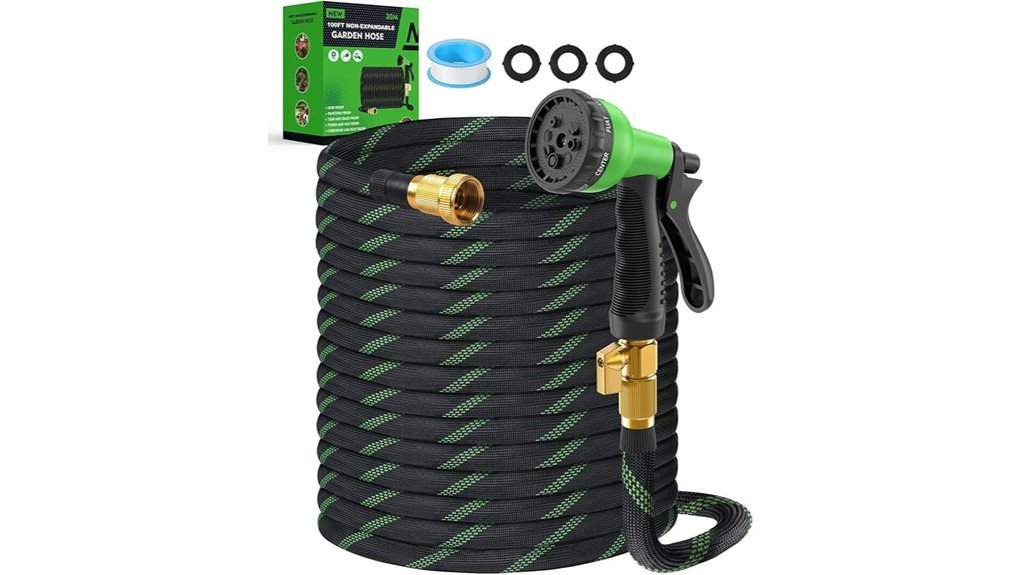
BIGITTA’s 100ft non-expandable hose suits gardeners who want long reach without pressure loss. Its TPE inner tube and polyester sleeve keep water moving steadily, while the reinforced build resists kinks, tangles, and shrinkage. The included 8-function spray nozzle handles misting, rinsing, and jet cleaning, and the ergonomic shut-off valve adds control. Brass-aluminum fittings with standard 3/4 GHT threads fit most outdoor faucets. At 5.07 lbs, it remains manageable, and its burst resistance, abrasion resistance, and weather range make it practical for demanding outdoor use.
Best For: Gardeners and homeowners who need a long, durable, kink-resistant hose with versatile spray options and reliable water flow for everyday outdoor tasks.
Pros:
- 8-function spray nozzle offers flexibility for watering, rinsing, and cleaning.
- Reinforced non-expandable design helps prevent kinks, tangles, and pressure loss.
- Brass-aluminum fittings and a built-in shut-off valve add convenience and control.
Cons:
- At 100 ft, it may be cumbersome for users with limited storage space.
- Needs to be drained and stored indoors in cold weather to avoid freezing damage.
- Non-expandable design may be less compact than lightweight expandable hoses.
Heavy Duty 25ft Non-Expandable Kink-Resistant Garden Hose
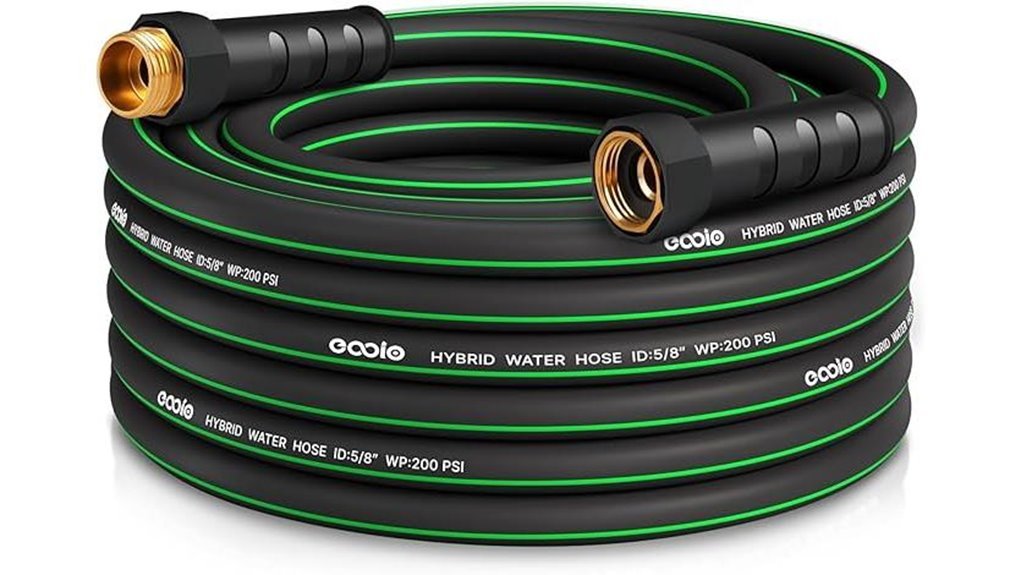
Built for demanding outdoor use, this 25-foot hose suits gardeners who need rugged reliability. Its non-expandable, lightweight hybrid build combines rubber and PVC for flexibility without sacrificing strength. A woven middle layer reinforces the hose, while the kink-resistant design helps maintain steady water flow during routine tasks. It stays flexible in extreme temperatures and handles 200psi working pressure and 600psi burst pressure. Copper-plated aluminum connectors resist crushing, rust, and leaks. Abrasion resistance extends service life, and lifetime customer support adds practical reassurance for long-term use.
Best For: Gardeners and homeowners who want a durable, kink-resistant 25-foot hose that stays flexible, handles tough outdoor conditions, and offers reliable long-term performance.
Pros:
- Heavy-duty hybrid rubber/PVC construction provides a good balance of flexibility and strength.
- Kink-resistant, abrasion-resistant design helps maintain water flow and extend lifespan.
- Copper-plated aluminum connectors help prevent leaks, rust, and crushing damage.
Cons:
- Non-expandable design may be less convenient for users who prefer compact storage.
- 25-foot length may be too short for larger yards or gardens.
- Heavier-duty materials may feel less lightweight than ultra-flexible standard hoses.
150 ft Kink-Free Flexible Garden Hose with Nozzle
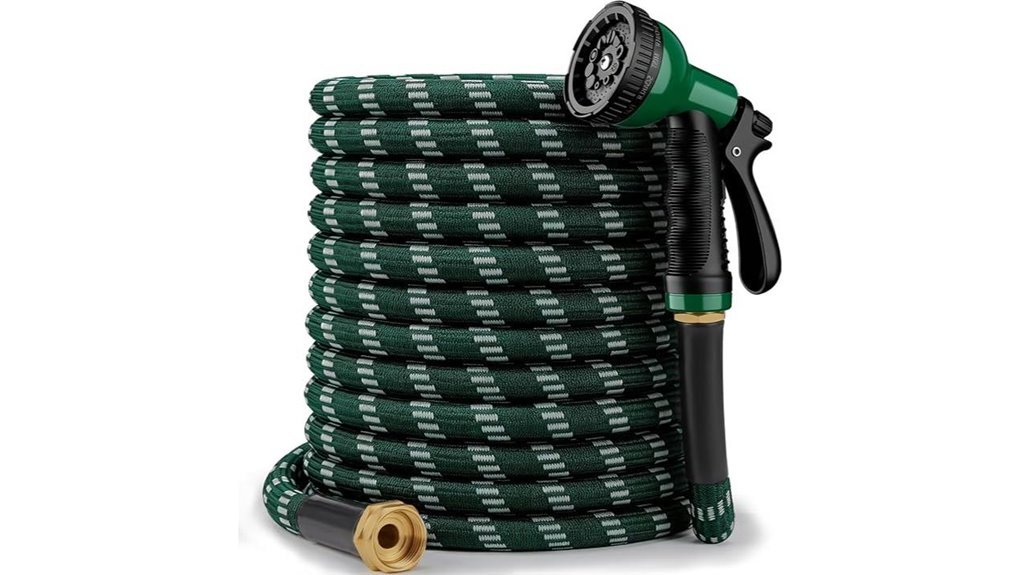
The 150 ft kink-free flexible garden hose suits homeowners who want long reach without heavy lifting. Its woven outer cover and nano-composite inner tube help resist kinks, tangles, punctures, and breaks while keeping the hose flexible. At 6.7 pounds, it is easy to move, store, and handle in cabinets or RVs. Solid copper-infused aluminum connectors and rubber washers support leak-proof performance. The included nozzle offers 10 spray patterns, from mist to jet, with simple flow control for watering, cleaning, and pet bathing. It withstands harsh conditions above 23°F and includes a 12-month warranty.
Best For: Homeowners, renters, seniors, families, and gardeners who want a lightweight, kink-free 150 ft hose with versatile spray settings for watering, cleaning, and pet bathing.
Pros:
- Lightweight at 6.7 lbs, making it easier to carry, store, and handle
- Kink-free, tangle-free design with durable woven outer cover and nano-composite inner tube
- 10 spray patterns and leak-resistant connectors for flexible everyday use
Cons:
- Not suitable for drinking water or hot water
- Best used only in temperatures above 23°F, so winter storage is needed in cold climates
- A 150 ft hose may be more length than needed for small yards or simple tasks
Non-Expanding Garden Hose 100 ft with Spray Nozzle
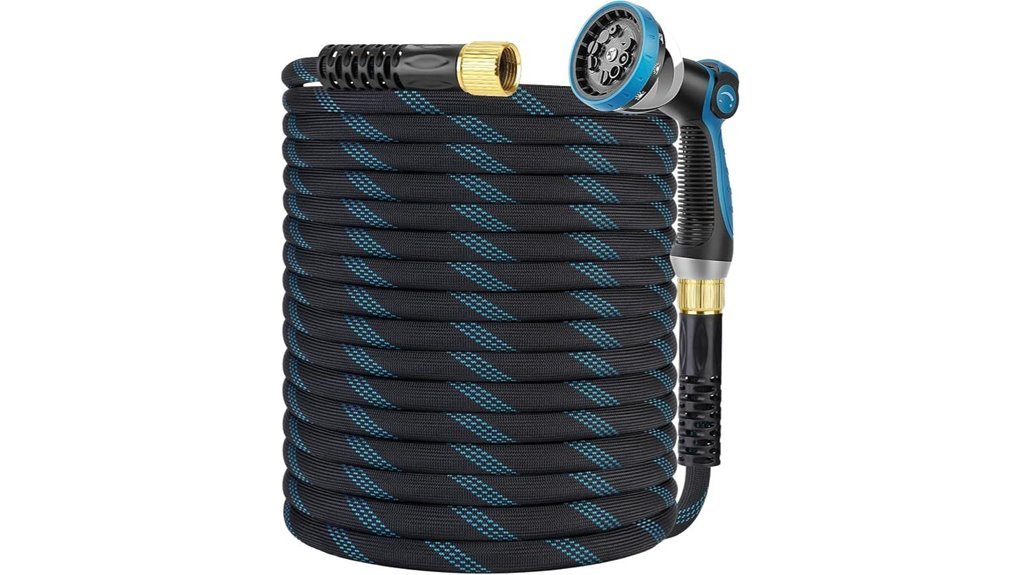
KETTOYA’s 100-foot non-expanding hose suits gardeners who want reach without bulk. Its lightweight build is up to three times lighter than standard vinyl hoses, making it easier to carry, coil, and position around beds or patios. The 10-pattern spray nozzle adds flexibility for watering plants, rinsing tools, and cleaning pets. A thick nano PVC inner tube, ultra-high-density outer layer, and aluminum pressing help support leak resistance. 360-degree rotating connectors reduce kinks, while the included strap simplifies storage and transport in tight spaces.
Best For: Gardeners and homeowners who want a long, lightweight, kink-resistant hose for watering plants, rinsing equipment, and general outdoor cleaning.
Pros:
- 100 ft length provides excellent reach without the bulk of an expanding hose.
- Lightweight, flexible design makes it easier to carry, coil, and store.
- 10-pattern nozzle adds versatility for gardening, pet washing, and cleaning tasks.
Cons:
- Non-expandable design may take up more storage space than expandable alternatives.
- 0.75-inch outside diameter may feel less compact than slimmer hoses.
- Premium materials and features may make it more expensive than basic garden hoses.
Factors to Consider When Choosing Garden Hoses in 2026
When choosing a garden hose in 2026, hose length, material durability, and kink resistance are key factors that affect everyday use. Water pressure rating also matters because it determines how well the hose performs under different conditions. An expandable design may offer added convenience, but its benefits should be weighed against durability and pressure needs.
Hose Length Needs
How long should a garden hose be? The answer depends on yard size and tasks. Small gardens often need only 25 to 50 feet, while larger properties may benefit from hoses up to 150 feet. The chosen length should reach every bed, border, and spigot without extra connectors or extensions, since added fittings can reduce water pressure. A 50-foot hose is often a practical middle ground because it expands to about three times its compact length and handles many watering jobs. For homes with cleaning and watering duties, a longer hose can reduce repeated repositioning. Storage space also matters: longer hoses require more room, while expandable models retract into a compact form for easier handling and tidier storage overall.
Material Durability
Material durability is a major factor in choosing a garden hose, since the hose’s material largely determines its resistance to punctures, wear, and cracking. Reinforced latex, PVC, and hybrid polymers each offer different balances of toughness and flexibility, so the best choice depends on expected use. Hoses with high-density woven fabric layers usually provide stronger tear resistance and better performance in rough outdoor settings. Fittings also matter: brass or aluminum connectors tend to last longer and help reduce leaks at the water source. Temperature tolerance should be checked as well, because hoses rated for wider Fahrenheit or Celsius ranges are more likely to stay intact in hot summers or cold snaps. Some models also include anti-kink features, which can further protect the hose from strain and extend service life.
Kink Resistance
Kink resistance is one of the most important features in a garden hose, since even occasional bends can interrupt water flow and slow down watering tasks. A hose that resists kinking keeps watering steady, reduces user frustration, and improves efficiency during routine jobs. Models made with hybrid polymers or reinforced fabrics often hold their shape better while remaining flexible enough for normal handling. Rotating connectors also help by limiting twists and tangles that can trigger bends during use. Non-expandable hoses generally provide stronger kink resistance because their solid construction is less prone to collapse under pressure. This design advantage also helps extend service life by reducing repeated wear. In practice, a kink-resistant hose delivers smoother operation and more dependable performance over time.
Water Pressure Rating
Water pressure rating determines whether a garden hose can handle a home’s water output without bursting, leaking, or underperforming under load. This rating is usually stated in bar or psi, and residential hoses may reach about 12 bar, or 171 psi. A suitable hose should meet or exceed the pressure delivered by the spigot to reduce the risk of failure. Stronger ratings matter when the job demands forceful flow, such as washing vehicles or clearing driveways, where weak hoses can slow progress and waste water. Checking the home’s water pressure before purchase helps match performance to the task. For many gardeners, the right rating supports reliable use across routine watering and tougher cleaning chores without unnecessary wear.
Expandable Design
Expandable hoses offer a practical balance of reach and convenience for many garden tasks. When filled with water, they can stretch to roughly three times their original length, giving users extra reach for watering beds, washing patios, or moving around larger yards. After use, they contract into a compact form, which simplifies storage and transport in small sheds or garages. Their lightweight construction also reduces fatigue, making them easier to carry and maneuver than heavier traditional hoses. Many models use a 3750D elastic outer fabric with multiple latex layers, adding resistance to punctures and thorn damage. Solid brass fittings help them connect securely to standard outdoor taps, supporting steady water flow during routine use.
Connector Quality
Connector quality is one of the most important factors in a garden hose’s long-term performance. Solid brass fittings usually offer better durability and leak resistance than plastic parts, helping the hose last through repeated use. A standard 3/4-inch connector size improves compatibility with most outdoor faucets and makes replacement or upgrades straightforward. Corrosion-resistant materials also matter, since outdoor exposure can quickly cause rust and deterioration in lesser fittings. Reliable designs include rubber washers or O-rings, which form a watertight seal and help maintain steady water pressure. Premium hoses often add reinforced connectors to reduce cracking, loosening, and wear. Taken together, these features determine whether a hose remains dependable or becomes a frequent source of leaks and maintenance.
Temperature Tolerance
Temperature tolerance can determine whether a garden hose stays flexible and reliable or becomes brittle and prone to damage. Most expandable hoses perform best within a moderate range, often around 41°F to 113°F, so climate matching matters. In cold weather, some hoses become stiff, crack, or leak unless they are explicitly rated for freezing conditions. In hot conditions, materials such as hybrid polymers or reinforced fabrics help preserve shape and strength without warping or melting. Buyers should review manufacturer specifications carefully, since temperature ratings vary widely by design. A hose suited to local seasonal extremes is more likely to last longer, resist damage, and maintain consistent performance throughout the year.
Nozzle Spray Options
Nozzle spray options are a key factor because most garden hoses offer 5 to 10 patterns, making it easier to switch from gentle misting for seedlings to a strong jet for cleaning jobs. Common settings include flat, cone, soaker, full, angle, shower, mist, and jet, giving one hose broad utility across watering and washing tasks. A control knob or trigger helps regulate flow with precision, improving water use and task control. Ergonomic, slip-resistant handles reduce hand fatigue during longer sessions, which matters for frequent gardeners. Durable ABS plastic construction also supports outdoor durability and helps prevent cracks or breakage over time. Overall, the best nozzle design balances pattern variety, comfortable handling, and dependable materials for consistent performance.
Frequently Asked Questions
How Do I Prevent Garden Hose Leaks at Connections?
Garden hose leaks at connections are prevented by tightening fittings firmly, replacing worn washers, and wrapping threads with plumber’s tape before assembly. He or she should inspect for cracks, rust, or distorted ends and clean debris from both hose and spigot. Using compatible connectors and avoiding over-tightening also helps. If leaks persist, the hose end may need a new ferrule or a replacement coupling to restore a watertight seal.
Which Hose Material Lasts Longest in Freezing Weather?
The cold can be a hose’s worst enemy. In freezing weather, rubber hoses usually last longest because they stay flexible, resist cracking, and handle temperature swings better than vinyl. Reinforced hybrid hoses can also perform well, but plain vinyl often becomes stiff and brittle, like glass in winter. Proper draining, coiling, and storage indoors matter too, since even the toughest material suffers when water is left inside.
Can Expandable Hoses Handle High Water Pressure Safely?
Expandable hoses can handle moderate water pressure safely, but only within the manufacturer’s rated limit. A detached assessment notes that high pressure can strain the inner latex core, cause leaks, or shorten service life. They are generally less tolerant of surges than reinforced rubber hoses. Using a pressure regulator, avoiding kinks, and closing the spigot gradually helps reduce risk. For very high pressure, a sturdier hose is safer.
How Often Should I Replace a Garden Hose?
A garden hose should usually be replaced every 5 to 10 years, though some fail far sooner if used hard or stored poorly. Cracks, leaks, bulges, kinks, or a stubborn loss of water flow signal replacement time. Treated gently, a hose may seem immortal; abused, it can unravel like a doomed serpent in the sun. Seasonal inspection helps catch damage early and prevents sudden, messy failures.
What Hose Length Is Best for Small Yards?
For small yards, a 25-foot hose is usually best, since it reaches most beds and faucets without excess weight or clutter. A 50-foot hose may suit oddly shaped spaces, but it can be harder to store and maneuver. The ideal length depends on faucet placement and walking paths, so measuring the farthest point from the spigot helps avoid buying a hose that is too short or unnecessarily long.
Conclusion
Choosing the right garden hose in 2027 comes down to balancing length, durability, and ease of use. For example, a homeowner watering hanging baskets, washing the car, and rinsing a patio may prefer a lightweight expandable model with a brass nozzle for quick switching between tasks. Whether the priority is kink resistance, high pressure, or compact storage, the best hose is the one that fits the yard and daily routine without frustration.
