

5-ply stainless steel is cookware whose pan walls are made of five bonded layers of metal instead of one. The layers usually alternate stainless steel and aluminum (some lines add copper), which gives you a durable cooking surface plus a core that spreads heat evenly. It is typically heavier and more expensive than 3-ply, and many 5-ply lines work on induction.
Not sure whether you need it? Our guide on which ply of stainless steel cookware is best compares 3-ply and 5-ply in detail.
5-Ply Stainless Steel at a Glance
| Question | Short answer |
|---|---|
| What are the five layers? | Varies by brand. Common layout: stainless, aluminum, stainless, aluminum, stainless |
| Why layer metals? | Stainless is durable but a poor heat spreader. Aluminum or copper spreads heat |
| Cooking surface | Stainless steel, non-reactive with acidic foods |
| Induction? | Many lines, yes. Confirm with the maker or a magnet |
| Oven safe? | Often to high temperatures, but check the brand’s rating |
| Main drawback | Heavier and pricier than 3-ply |
How Is 5-Ply Stainless Steel Cookware Built?
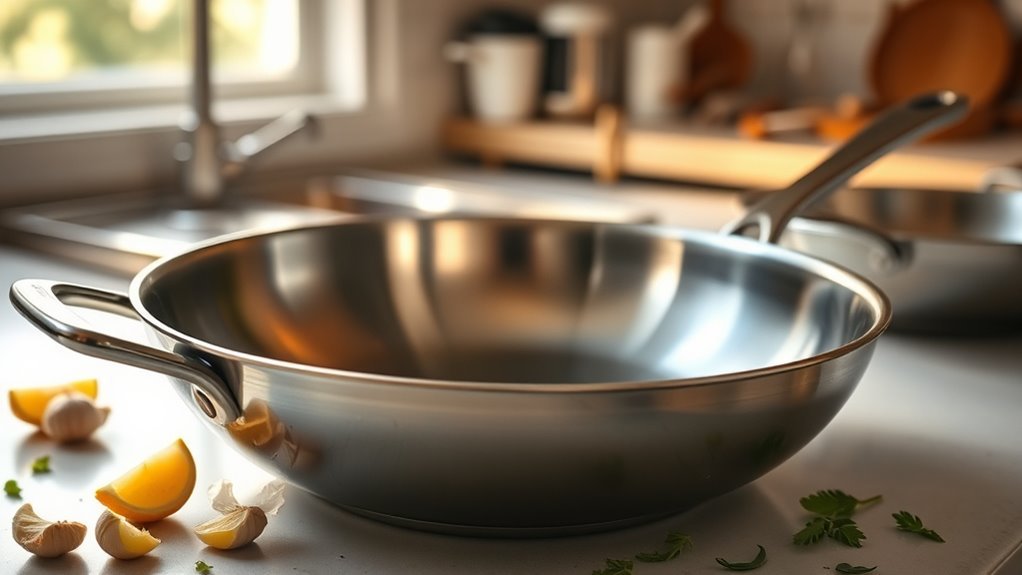
“Ply” refers to a bonded layer. In clad cookware, sheets of metal are bonded together under heat and pressure, then formed into pans. This is called cladding, and it is why the layers do not separate in normal use.
- Inside layer: stainless steel that touches your food.
- Middle layers: aluminum, and in some cases copper or another stainless layer, that conduct or hold heat.
- Outside layer: stainless steel, often a magnetic grade so the pan works on induction.
Five layers does not mean five different metals. All-Clad’s D5 lines are described as five layers of stainless steel and aluminum. All-Clad’s Copper Core is also a 5-ply bonded build, but with a copper center. Other brands arrange their layers differently, so read the product page.
Benefits of 5-Ply Stainless Steel Cookware
- Even heat: multiple layers help reduce hot spots, which helps with searing and sauces.
- Steady temperature: the extra metal tends to hold heat once it is hot.
- Resists warping: thicker walls hold their shape better in many designs.
- Durable surface: stainless handles metal utensils and does not chip like a coating.
- Versatile: works on gas, electric and glass-top stoves, and often on induction.
Drawbacks to Know
- Weight: heavier pans can be tiring for tossing and lifting.
- Price: usually costs more than 3-ply, especially with copper.
- Slower to react: thick pans take longer to cool when you lower the heat.
- Food can still stick: 5-ply is still stainless, so you need proper preheating. See when a stainless steel pan is ready.
Is 5-Ply Stainless Steel Good for Induction?
Often yes, if the outer layer is magnetic. All-Clad’s D5 product pages, for instance, state compatibility with all cooktops including induction. Other brands vary, so check the product listing or hold a magnet to the base. If it sticks firmly, induction should work. For more on this, see how to tell if cookware is induction ready.
Oven and Dishwasher Use
Many 5-ply stainless pans can go in the oven, but the limit depends on the brand, the handles and the lid. All-Clad, for example, rates its stainless cookware up to 600°F and notes color changes above 500°F. Always check your own pan’s rating.
Dishwasher guidance is brand-specific. Some makers say hand wash only, which protects the finish. Read can stainless steel go in the dishwasher for detail.
How to Care for 5-Ply Cookware
- Preheat gradually on low to medium heat.
- Add oil to a hot pan, then food.
- Let the pan cool before washing. Never put a hot pan under cold water.
- Wash with warm soapy water and a soft sponge.
- Remove stains with white vinegar or a non-abrasive cleanser, and avoid steel wool.
- Dry the pan right away to prevent water spots.
Is 5-Ply Worth It?
It is worth it if you cook often, sear on high-output burners or want cookware that lasts for years. If you only cook occasionally or want a lighter pan, a good 3-ply set may serve you just as well. Read about a popular 5-ply brand in our guide to what All-Clad cookware is.
Frequently Asked Questions
What does 5-ply stainless steel mean?
It means the pan wall is built from five bonded layers of metal. A common layout is stainless steel and aluminum in alternating layers, with stainless on the inside and outside. Some lines use a copper layer. Layouts vary by brand.
Is 5-ply stainless steel better than 3-ply?
It often heats more evenly and resists warping better, but it is usually heavier and costs more. A good 3-ply pan can perform well for many cooks. Choose based on weight, thickness and how you cook.
Is 5-ply stainless steel good for induction?
Often yes, because many 5-ply pans have a magnetic stainless outer layer. Confirm in the maker’s product description or test the base with a magnet. If the magnet sticks firmly, the pan should work.
What is the best grade of stainless steel for cookware?
Cooking surfaces are commonly 18/10 stainless steel, which resists corrosion and staining. Magnetic outer layers help with induction. The best choice depends on your needs, and people with nickel sensitivity should check with their doctor.
Conclusion
5-ply stainless steel combines a durable stainless surface with layered metals that spread and hold heat well. It is a strong choice for frequent cooks, as long as you accept the extra weight and price.
Related guides: is stainless steel hard to cook with and the healthiest cookware material.
