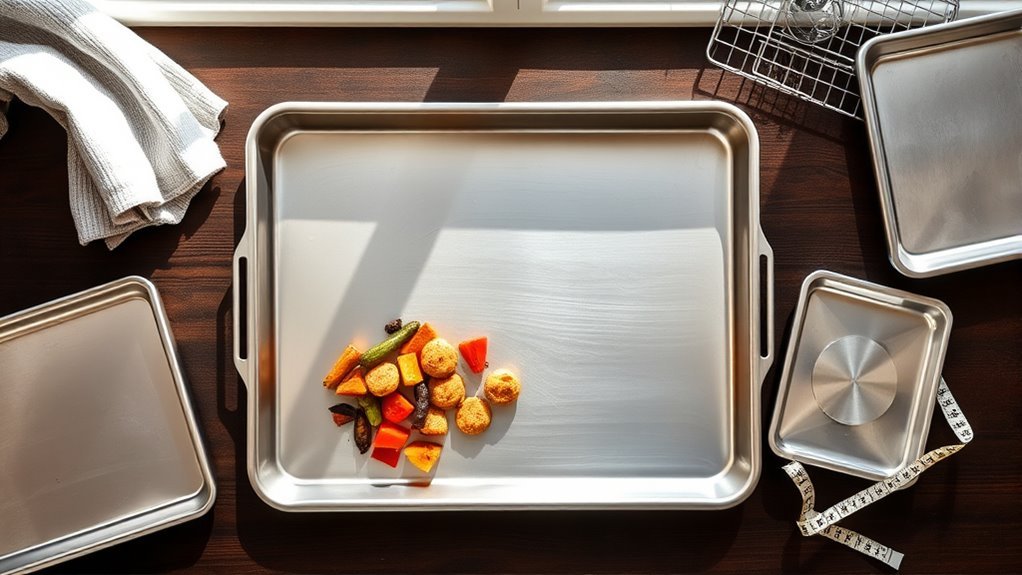
A half sheet pan is one of the most useful baking tools you can own. It gives you room to bake cookies, roast vegetables, and prepare complete meals on a single tray. But choosing the right material, size, and finish can make a big difference in your results.
Quick Answer
A half sheet pan is a rectangular, rimmed baking tray measuring approximately 18 x 13 inches, usually with sides about 1 inch high. It’s ideal for cookies, roasted vegetables, sheet cakes, and one-pan dinners. Heavy-gauge aluminum heats evenly, while reinforced rims help resist warping. Choose a pan that fits your oven and cooking needs.
Key Takeaways
- A half sheet provides roughly twice the surface area of a standard 9 x 13-inch pan, but its shallow sides limit how much cake batter it holds.
- Uncoated aluminum conducts heat well, while nonstick-coated steel offers easier food release.
- Some aluminum models are rated to 500°F, but many coated pans have a 450°F limit.
- Parchment paper, gentle cleaning, and proper storage help protect your baking tray.
What Is a Half Sheet Pan and Why Should You Use It?
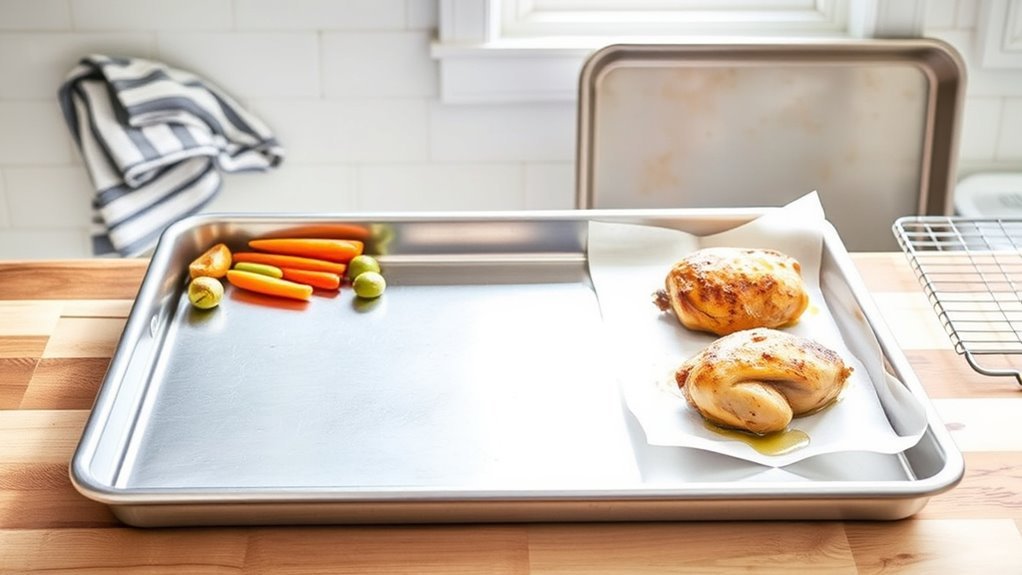
A half sheet pan is a shallow, rectangular baking tray with raised edges on all four sides. Its standard size is approximately 18 x 13 inches, making it practical for most conventional home ovens.
The raised rim helps keep oil, juices, and loose ingredients from spilling. Meanwhile, the broad cooking surface gives food enough room to brown instead of steam.
According to King Arthur Baking’s pan guide, half-sheet pans work well for cookies, cakes, roasted fruits, and vegetables.
You’ll find half-sheet pans in several materials, including natural aluminum, aluminized steel, and coated steel. Their dimensions may vary slightly between manufacturers.
Here is how the common sheet pan sizes compare:
- Full sheet pan: Approximately 26 x 18 inches. Typically used in commercial kitchens because it is too large for many home ovens.
- Half sheet pan: Approximately 18 x 13 inches. A versatile choice for everyday baking, roasting, and batch cooking.
- Quarter sheet pan: Approximately 13 x 9 inches. Useful for smaller portions, reheating food, and compact ovens.
A typical half sheet measures about 1 inch deep. That’s enough to contain ordinary roasting juices, but not enough for recipes needing a deep baking dish.
Before buying, measure your oven rack and check the pan’s outside dimensions. Allow room around the edges for hot air to circulate.
Essential Features That Make a Half Sheet Pan a Must-Have
A quality half sheet pan combines even heating, useful dimensions, and durable construction. These features help you prepare different foods without needing a separate baking tray for every recipe.
Pay particular attention to the material, rim design, and oven temperature rating. Not all half-sheet pans perform the same way.
Superior Heat Conductivity
Aluminum is popular for baking sheets because it transfers heat efficiently. This helps spread heat across the cooking surface and supports consistent browning.
For example, the Nordic Ware Naturals Baker’s Half Sheet uses uncoated aluminum and reinforced steel rims. The manufacturer rates this model for oven temperatures up to 500°F.
However, uncoated aluminum is not the same as a pan with an applied nonstick coating. Cookies, cakes, and other delicate foods can still stick without proper preparation.
| Feature | Benefit | Details |
|---|---|---|
| Material | Efficient heat transfer | Natural aluminum conducts heat well and supports even browning. |
| Construction | Better shape retention | A reinforced rim helps resist bending and warping. |
| Temperature | Flexible cooking | Some aluminum models withstand 500°F, while certain coated pans are limited to 450°F. |
Light-colored aluminum is especially useful for cookies because it promotes gentler browning than many dark baking sheets.
For reliable results, match the pan material to what you cook most often.
Versatile Cooking Applications
A half sheet pan works for much more than baking cookies. Its wide surface and raised edges make it useful for sweet and savory recipes.
You can use one for:
- Baking cookies, biscuits, scones, and pastries.
- Roasting potatoes, carrots, broccoli, and other vegetables.
- Preparing sheet-pan chicken, fish, or meat dishes.
- Baking thin sheet cakes, bars, and brownies.
- Reheating pizza, bread, and leftover roasted foods.
- Cooking granola, nuts, and other foods that need spreading.
- Preparing ingredients ahead of a large meal.
For coated options, the USA Pan Half Sheet Pan uses aluminized steel with a silicone-based nonstick coating. Its oven temperature limit is 450°F.
A nonstick finish can make cleanup easier, particularly when baking delicate foods. However, the coating may need more careful handling than bare aluminum.
Broiling is also possible with some uncoated pans. Always confirm that your specific model is approved for broiler use.
Durable, Long-Lasting Design
A durable half sheet pan should feel sturdy and maintain its shape during regular use. Look for thick metal, reinforced edges, and a flat cooking surface.
Heavy-gauge aluminum offers a useful balance of strength and heat conductivity. A rolled or encapsulated rim adds support around the pan’s edges.
This reinforcement matters when the tray holds a heavy batch of vegetables or a complete sheet-pan dinner.
Some manufacturers also provide warranties. Nordic Ware, for example, offers a lifetime warranty on its Naturals Baker’s Half Sheet.
Keep in mind that a reinforced pan can still warp under severe temperature changes. Avoid taking a hot baking sheet directly from the oven and placing it under cold running water.
For long-term use, choose a sturdy pan that matches your oven and treat it according to the manufacturer’s care instructions.
Common Uses for Your Half Sheet Pan
The biggest advantage of a half sheet pan is its flexibility. You can use the same tray for baked desserts, roasted vegetables, and practical weekday meals.
Its large surface also makes it easier to prepare several portions at once.
Versatile Baking Options
A half sheet pan is excellent for making larger batches of cookies and pastries. You can spread the dough across the tray while leaving space between individual pieces.
It’s also useful for making thin sheet cakes for family gatherings, parties, or celebrations.
A cake baked in this pan may serve 20-30 people when cut into appropriately sized portions. The actual yield depends on the recipe, cake thickness, and serving size.
However, don’t confuse surface area with batter capacity.
An 18 x 13-inch pan has roughly twice the surface area of a 9 x 13-inch pan, but it usually has much shallower sides.
That means doubling the batter from a regular 9 x 13-inch cake recipe can cause an overflow.
In its half-sheet baking conversion guide, King Arthur Baking suggests using approximately 1.5 times a typical 9 x 13-inch recipe as a starting point for suitable sheet-pan recipes.
This is a helpful guideline, not a universal conversion. Always consider the batter’s rise and the pan’s depth.
For taller cakes, casseroles, or thick brownies, a deeper baking pan may be more appropriate.
Efficient Meal Prep
A half sheet pan can simplify meal preparation by letting you cook several ingredients in one oven session.
For example, you can roast chicken pieces alongside potatoes, carrots, and onions. The raised edges help contain oil and juices while the ingredients cook.
To prepare a balanced sheet-pan meal:
- Choose a protein, such as chicken, fish, or another meat.
- Select vegetables that roast well, such as potatoes, broccoli, or carrots.
- Cut ingredients into pieces suited to their cooking times.
- Coat them lightly with oil and your preferred seasonings.
- Arrange everything in a single layer, leaving space between pieces.
- Roast according to the recipe, adding faster-cooking ingredients later if needed.
This approach reduces the number of cooking dishes you need to wash.
For food safety, check that meat and poultry reach their appropriate internal temperatures before serving.
You can also prepare separate trays for vegetables and proteins when their cooking times differ significantly.
For larger gatherings, several half-sheet pans make it easier to prepare multiple batches without overcrowding one tray.
Tips for Best Results With Your Half Sheet Pan
Getting good results with a half sheet pan depends on heat, food spacing, and proper preparation. These simple techniques can improve browning and reduce sticking.
- Preheat your oven. A properly heated oven helps food begin cooking at the temperature your recipe requires.
- Use the right oven rack. The middle position works well for many baking tasks unless the recipe specifies otherwise.
- Leave space between foods. Overcrowded vegetables release moisture and may steam instead of roast.
- Prepare the surface. Use oil, butter, parchment, or a suitable baking mat when needed to prevent sticking.
- Check food before the expected finish time. Baking time depends on the recipe, batter thickness, pan material, and oven temperature.
- Rotate the pan when necessary. If your oven heats unevenly, turning the tray during cooking may help produce more consistent results.
- Avoid sudden temperature changes. Allow the pan to cool before washing to reduce the risk of distortion.
When adapting a cake recipe, do not assume that a half sheet pan always reduces baking time by a fixed percentage.
Thinner cake layers often bake faster, but the exact difference depends on the amount of batter and the recipe.
Warning: Never use parchment paper under a broiler or near an exposed heating element. According to Reynolds Kitchens, its parchment paper is oven-safe up to 425°F but is not suitable for broiler use. Always follow the temperature rating of your specific liner.
For thick or dense cakes, use a pan with enough depth to hold the batter safely. A water bath may help certain specialty desserts, but it is not normally necessary for everyday sheet cakes.
Watch for the signs of doneness described in your recipe rather than relying only on the clock.
Caring for Your Half Sheet Pan
Proper cleaning keeps your half sheet pan in good condition and helps preserve its cooking performance.
For natural aluminum pans, hand washing with warm water, mild dish soap, and a soft sponge is usually the best approach.
Follow these care steps:
- Let the pan cool after removing it from the oven.
- Remove loose crumbs and leftover food.
- Wash with warm water and a mild dish detergent.
- Use a nonabrasive sponge to remove stuck-on residue.
- Rinse thoroughly and dry completely before storing.
Automatic dishwasher detergents can discolor natural aluminum. This change is generally cosmetic and does not necessarily mean the baking sheet is damaged.
Although aluminum does not develop iron rust, it can oxidize, darken, or develop surface marks over time.
Avoid harsh scouring pads and metal utensils when you want to preserve the surface finish. Metal tools can also damage applied nonstick coatings.
Natural aluminum can react with acidic ingredients, including vinegar and tomato-based foods. Prolonged contact may cause discoloration or surface damage.
For acidic recipes, use a suitable liner or choose a nonreactive baking surface.
Store your pan in a dry cabinet or on a baking sheet organizer. Avoid placing heavy cookware on top of thin trays, which can bend their rims.
Pro Tip: If your aluminum pan develops a darkened finish after repeated use, don’t assume you need to replace it. Cosmetic discoloration is common. Focus on removing food residue and keeping the cooking surface clean, flat, and free from significant damage.
Why Choose an Aluminum Half Sheet Pan?
An aluminum half sheet pan is a practical choice because it combines efficient heat transfer with relatively light weight.
Compared with many stainless steel baking sheets, aluminum conducts heat more effectively. This helps promote consistent baking and roasting.
Its main advantages include:
- Even heating: Aluminum transfers heat efficiently across the cooking surface.
- Light weight: The pan is easier to carry and handle than many heavier alternatives.
- Durability: Reinforced rims improve strength and help resist warping.
- Rust resistance: The aluminum surface does not develop the red rust associated with iron.
- Versatility: You can use the pan for baking, roasting, reheating, and food preparation.
Here is a quick comparison of the features that matter most:
| Feature | Benefit | Why It Matters |
|---|---|---|
| Heat Conductivity | More consistent baking | Helps food brown evenly when arranged correctly. |
| Durability | Reinforced construction | Supports regular use and helps maintain the pan’s shape. |
| Versatility | Multiple cooking applications | Suitable for cookies, vegetables, meats, and thin cakes within the model’s temperature limit. |
Natural aluminum also has some limitations.
It can scratch, discolor, and react with acidic foods. An uncoated surface may need parchment or grease for reliable food release.
If you prefer easy cleanup, a coated half-sheet pan may be more convenient. However, coatings have their own care requirements and temperature limits.
For frequent high-temperature roasting, a sturdy uncoated aluminum pan is often a practical option. For delicate baked goods, a lighter-colored nonstick pan can also work well.
Choose based on your cooking habits rather than assuming one finish is best for every recipe.
Recommended Brands of Half Sheet Pans
Several manufacturers offer half-sheet pans for home and commercial kitchens. The right option depends on whether you value uncoated aluminum, nonstick convenience, or bulk purchasing.
Here are three brands worth comparing:
- BIEAMA: Offers commercial-style aluminum baking sheets and multipack options, including the 12-pack half-sheet configuration mentioned in the original selection. These can suit kitchens that need several trays. The BIEAMA website lists half-size and full-size aluminum sheet pans.
- FSE Commercial: Offers foodservice baking equipment, including commercial sheet pans. Its products are aimed at busy kitchens that need sturdy, practical bakeware. You can review the manufacturer’s range through Foodservice Essentials.
- HONGBAKE: Offers nonstick half-sheet pans for everyday baking and roasting. Its carbon steel half-sheet pan two-pack has a reinforced nonstick finish and a stated oven limit of 450°F.
When comparing these brands, look beyond the product name.
Check the actual dimensions, metal thickness, coating type, maximum oven temperature, and cleaning instructions.
For commercial use, also consider how easily the trays stack and whether the rim construction can handle repeated loading and unloading.
Some pans have lifetime warranties, while others offer shorter coverage. Always compare the terms for the exact product you’re considering.
A well-built half sheet pan should fit your oven, feel sturdy in your hands, and suit the foods you prepare most often.
Frequently Asked Questions
What Is the Difference Between a Sheet Pan and a Half Sheet Pan?
A half sheet pan is a type of sheet pan. The term sheet pan covers several sizes, including full, half, and quarter sheets. A full sheet usually measures 26 x 18 inches, while a half sheet measures about 18 x 13 inches. The smaller size is more convenient for most home ovens.
Is a 9×13 Pan a Half Sheet?
No, a 9 x 13-inch pan is not a half sheet pan. A half sheet measures approximately 18 x 13 inches. A 9 x 13-inch rimmed sheet pan is closer to quarter-sheet size, while a standard 9 x 13-inch baking dish usually has deeper sides for cakes and casseroles.
What Size Is a 1/2 Sheet Pan?
A 1/2 sheet pan typically measures 18 inches long and 13 inches wide, with a rim around 1 inch high. Exact dimensions vary slightly by manufacturer. This size works well for cookies, roasted vegetables, and sheet-pan dinners, provided there is enough space inside your oven for air circulation.
What Does a 1/2 Sheet Pan Look Like?
A half sheet pan looks like a large, shallow rectangular tray with a flat cooking surface and raised edges on all four sides. Many models have a silver aluminum finish and rolled, reinforced rims. Others feature dark or colored nonstick coatings. The shape gives you plenty of room for arranging food.
Can You Put a Half Sheet Pan in the Dishwasher?
Some half-sheet pans are labeled dishwasher-safe, but hand washing is usually better for maintaining their appearance and finish. Natural aluminum can discolor when exposed to dishwasher detergents. Coated pans may also last longer with gentle hand washing. Always follow the cleaning instructions supplied with your particular pan.
Can You Use a Half Sheet Pan Under the Broiler?
Some uncoated aluminum half-sheet pans are suitable for broiling, but not every model is approved for this use. Check the manufacturer’s instructions before placing your pan under a broiler. Avoid parchment paper and other liners that are not rated for direct broiler heat. Nonstick coatings may also have lower temperature limits.
Conclusion
A half sheet pan is a dependable kitchen tool for baking, roasting, and everyday meal preparation. Its practical 18 x 13-inch size offers generous cooking space without requiring commercial equipment.
For long-term use, choose a sturdy pan with an appropriate oven temperature rating. Keep the surface clean, avoid overcrowding your food, and use the right liner when needed.
With the right care, a quality half sheet pan can serve your kitchen for years.
Sources
- Nordic Ware: Natural aluminum construction, reinforced rims, oven temperature limits, warranties, and care instructions.
- USA Pan: Aluminized steel construction, nonstick coating, and 450°F temperature limit.
- King Arthur Baking: Guide to Baking Pans: Sheet pan dimensions, materials, baking applications, and oven clearance.
- King Arthur Baking: Half-Sheet Recipe Conversions: Adapting 9 x 13-inch recipes to shallow half-sheet pans.
- Reynolds Kitchens: Parchment paper temperature ratings and broiler safety.
- BIEAMA: Commercial aluminum sheet pans and available size categories.
- Foodservice Essentials: Commercial kitchen equipment and sheet pan product range.
- HONGBAKE: Carbon steel nonstick half-sheet pan construction, dimensions, temperature limits, and cleaning guidance.