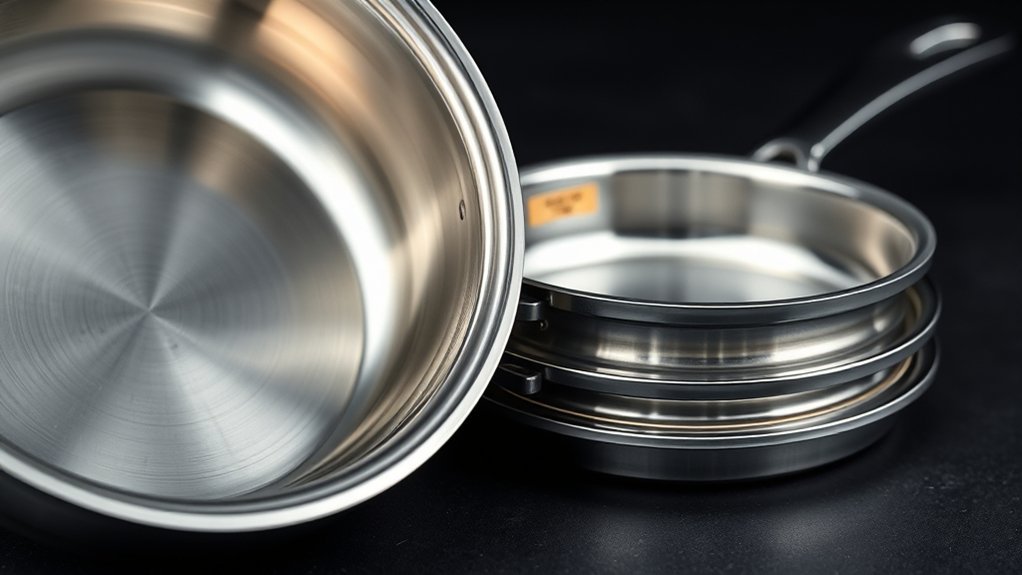
All-Clad stainless steel cookware combines a durable stainless-steel cooking surface with bonded layers of more heat-conductive metals. In its best-known stainless lines, D3 uses three bonded layers, D5 uses five layers for steadier temperature control, and Copper Core adds copper for faster thermal response. The exact materials matter because stainless steel, aluminum, copper, and the magnetic exterior each perform a different job.
Quick Answer
All-Clad’s bonded stainless cookware uses a stainless-steel cooking surface over heat-conductive core layers. D3 uses three bonded layers with an aluminum core, D5 uses five bonded layers for steadier heat, and Copper Core uses five layers with a copper center for faster response. The magnetic exterior supports induction cooking.
Key Takeaways
- All-Clad identifies 18/10 stainless steel as the food-contact interior in D3 construction; the induction-compatible exterior uses a magnetic stainless alloy.
- D3 is fully bonded tri-ply, D5 is five-ply, and Copper Core is five-ply with a conductive copper center.
- Aluminum and copper do most of the rapid heat spreading; stainless steel contributes durability, corrosion resistance, induction compatibility, and a useful cooking surface.
- Current D3, D5, and Copper Core product pages specify handwashing and list the cookware as oven and broiler safe up to 600°F, subject to component-specific limits.
- Major bonded pieces are currently described by All-Clad as made in the USA with global components, so country-of-origin wording should be checked on the exact product.
What Is All-Clad Stainless Steel?
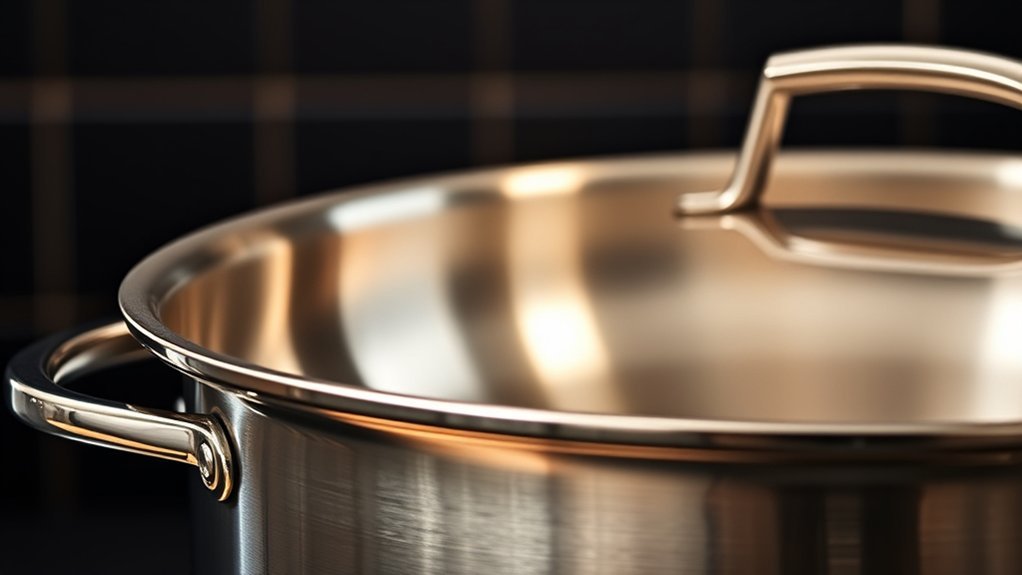
All-Clad stainless steel cookware is best understood as a bonded multi-metal system, not as a pan made from one solid sheet of 18/10 stainless steel. The food-contact surface is stainless steel, while internal layers use metals such as aluminum or copper to move heat more efficiently.
For example, All-Clad describes D3 as a three-layer construction with an 18/10 stainless-steel interior, an aluminum core, and a stainless exterior selected for strength and induction compatibility.
The stainless surface provides durability and a stable cooking interface; the bonded aluminum or copper core is what greatly improves heat spreading and responsiveness.
This combination helps explain why bonded stainless cookware behaves differently from a thin, single-layer stainless pan. The conductive core moves heat across the base and sidewalls, while stainless steel provides corrosion resistance, high-temperature capability, and a surface suited to browning, searing, deglazing, simmering, and acidic foods.
All-Clad currently describes many of its major bonded stainless pieces as made in the USA with global components at its Pennsylvania facility. That wording is more accurate than saying every All-Clad product or every component is made domestically. Country of origin can vary by item, lid, insert, accessory, or product family, so the exact product listing is the best source.
All-Clad also provides a limited lifetime warranty on covered cookware against qualifying defects in material, construction, or workmanship when the product is used according to its instructions. Normal wear, scratches, stains, misuse, thermal-shock damage, and several other conditions are excluded.
What Does 18/10 Stainless Steel Mean?
18/10 stainless steel is common shorthand for an austenitic stainless alloy containing roughly 18% chromium and about 10% nickel. Chromium supports corrosion resistance, while nickel helps stabilize the alloy and contributes to corrosion resistance, toughness, and the smooth food-contact characteristics associated with this type of stainless steel.
In All-Clad D3 construction, the manufacturer specifically identifies the interior cooking surface as 18/10 stainless steel. That does not mean every stainless layer in the pan has the same composition.
| Material or feature | Main role in bonded cookware |
|---|---|
| 18/10 stainless cooking surface | Corrosion resistance, durability, browning, and a relatively non-reactive food-contact surface |
| Aluminum | Rapid heat conduction and more even heat distribution |
| Copper | Very fast thermal response and fine temperature adjustment |
| Magnetic stainless exterior | Durability plus compatibility with induction cooktops |
Note: Do not confuse “18/10 stainless steel” with the pan’s heat-conductive core. Stainless steel is valuable for the cooking surface, but the aluminum, copper, graphite, or complete bonded stack is responsible for much of All-Clad’s improved thermal performance.
Does All-Clad Stainless Steel Contain Nickel?
Yes. An 18/10 stainless cooking surface contains nickel as part of the alloy. That is normal for this class of stainless steel and contributes to its corrosion resistance and material properties.
For most cooks, this is simply part of the material specification. However, people with a diagnosed nickel sensitivity may want to discuss cookware exposure with a qualified medical professional. Research indexed by the U.S. National Library of Medicine has found that nickel and chromium can migrate from stainless cookware into acidic foods, with the amount influenced by factors such as cookware condition, acidity, cooking time, and the specific alloy.
That does not mean stainless cookware should automatically be described as unsafe. One study using common one-hour cooking conditions found the measured release below known allergy-triggering thresholds in its experiments. Other research using longer or more aggressive conditions has measured higher migration. The useful takeaway is that “nickel-free” and “18/10 stainless” are not the same thing.
How Do All-Clad Bonded Layers Work?
All-Clad bonds different metals into one continuous pan body so each material can contribute a useful property. Stainless steel alone is durable but not an especially fast heat conductor. Aluminum and copper conduct heat much more readily, so placing them inside the bonded structure improves how the pan heats.
Because the layers extend through the pan rather than functioning only as a separate disk on the bottom in the major fully bonded lines discussed here, heat can spread through the base and sidewalls.
Bonded Layer Basics
In a typical bonded stainless design, the interior stainless layer touches the food, the conductive core spreads heat, and the exterior stainless layer provides strength and cooktop compatibility.
D3 uses three bonded layers. D5 uses five bonded layers and incorporates additional stainless mass for steadier thermal behavior. Copper Core also uses five bonded layers but places copper at the center for faster response to burner changes.
The layers are permanently bonded into the cookware body. They are not removable coatings, and the stainless cooking surface is not a conventional nonstick coating.
Heat Flow Mechanism
When a burner heats the bottom of the pan, energy passes from the exterior into the conductive core. Aluminum or copper then spreads that energy more quickly across the bonded structure than stainless steel would by itself.
This reduces the severity of localized hot spots and gives the cook more useful control when searing, simmering, reducing sauces, or moving between high and low heat.
Copper responds especially quickly when burner output changes, which is why All-Clad positions Copper Core as its precision-focused bonded stainless line.
Layer Benefits Explained
Each layer solves a different cookware problem:
- Stainless interior: durable, corrosion resistant, suitable for browning and deglazing, and relatively non-reactive with common foods.
- Aluminum: spreads heat quickly and helps the pan respond to changes in burner output.
- Copper: increases responsiveness further, useful when a sauce or delicate food needs quick temperature adjustment.
- Magnetic stainless exterior: strengthens the pan and allows induction-compatible models to couple with an induction burner.
The practical advantage is not that more layers are automatically “better.” Layer count changes weight, thermal behavior, response, and cost. The best configuration depends on how the cookware will be used.
Which All-Clad Collections Use Stainless Steel?
D3 Stainless, D3 Everyday, D5 Stainless, Copper Core, and G5 Graphite Core are among All-Clad’s current cookware families that use stainless steel as an important part of their bonded construction. The brand also sells other products that incorporate stainless components, so the range is broader than three collections.
The three lines most often compared for traditional bonded stainless cookware are D3, D5, and Copper Core:
| Collection | Construction | Thermal character | Good fit for |
|---|---|---|---|
| D3 Stainless | 3-ply: stainless / aluminum / stainless | Fast, even and comparatively agile | General everyday cooking |
| D5 Stainless | 5-ply bonded construction with a steel core and conductive layers | Steadier and more gradual | Cooks who prefer more thermal stability and mass |
| Copper Core | 5-ply with aluminum, stainless steel and a copper center | Fastest response of these three | Fine temperature adjustments and sauce work |
All three are induction compatible in their current configurations. All-Clad also lists the current D3, D5 and Copper Core cookware as oven and broiler safe up to 600°F, although lids and accessories can have different limits.
D3 vs D5 vs Copper Core: What’s the Difference?
The biggest differences are layer count, core material, weight, thermal response, and price.
D3 Stainless is the simplest of the three. Its fully bonded tri-ply body sandwiches an aluminum core between stainless layers. The aluminum provides fast heat spreading without the additional mass of D5.
D5 Stainless uses five bonded layers. All-Clad describes its steel core as providing steadier, more even heat, which makes the line feel more substantial and less quick to change temperature than a lighter D3 pan.
Copper Core is also five-ply, but the center copper layer raises thermal responsiveness. It reacts more quickly when heat is increased or reduced, which can be useful for temperature-sensitive sauces, reductions, eggs, seafood, and other foods where a quick correction matters.
More layers do not automatically guarantee better food. A cook who values lighter handling and quick everyday response may prefer D3, while someone who values steadier heat may prefer D5. Copper Core is designed for cooks who specifically want faster thermal response.
Which All-Clad Line Is Right for You?
For many kitchens, D3 is the practical starting point. It delivers the core advantages of fully bonded stainless cookware without the additional layers of D5 or the copper used in Copper Core.
Choose D5 if you prefer a heavier pan that changes temperature more gradually and holds a steadier cooking environment during braising, pan roasting, or sauce work.
Choose Copper Core if fast response to burner adjustments is a priority and you are willing to pay for the added copper construction.
Handling matters as much as thermal performance. If possible, lift the size you plan to buy and consider how comfortable it will be when filled with food. A heavier five-ply sauté pan can feel very different from a smaller D3 skillet.
Where Is All-Clad Stainless Steel Cookware Made?
Current All-Clad listings for major D3, D5, and Copper Core bonded cookware describe those pieces as made in the USA with global components in the company’s Pennsylvania factory.
That wording is important. It does not mean every All-Clad-branded item, accessory, insert, lid, tool, or component is manufactured in the United States. For example, some accessories and inserts sold under the brand are produced elsewhere.
If country of origin matters to your purchase, check the exact product page rather than applying one manufacturing claim to the entire All-Clad catalog.
Why Stainless Steel Improves Cooking
Stainless steel is especially useful for techniques that depend on browning. Meat, fish, and vegetables can develop a browned layer on the pan surface, and the flavorful browned residue called fond can then be dissolved with stock, wine, water, or another liquid to build a pan sauce.
The stainless cooking surface also tolerates acidic ingredients such as tomatoes and wine well in normal culinary use. Unlike a conventional nonstick coating, it can be used for high-heat browning without depending on a polymer release layer.
All-Clad’s even heating comes from the complete bonded structure: stainless steel provides the cooking surface while aluminum, copper, or another conductive core spreads heat through the pan.
How to Reduce Sticking on All-Clad Stainless Steel
Stainless steel is not inherently nonstick, but technique makes a large difference. Preheat the pan over moderate heat, add cooking fat after the pan is warm, then add reasonably dry food. Proteins often release more easily after a browned crust develops.
Pro Tip: Avoid starting every stainless-steel task on maximum heat. Fully bonded cookware transfers heat efficiently, so medium or medium-high heat is enough for many jobs. Excess heat can burn oil, scorch food, cause discoloration, and make sticking worse.
How Do You Care for All-Clad Stainless Steel Cookware?
Proper care helps preserve both the cooking surface and the bonded structure. Let the pan cool before washing; plunging a hot pan into cold water can create thermal shock and may warp the cookware.
For normal cleaning, use warm water, mild dish soap, and a soft sponge. For stuck-on food, soak the pan first or use a baking-soda paste with a non-abrasive sponge. White mineral deposits or rainbow discoloration can often be treated with diluted white vinegar.
Avoid steel wool, harsh scouring pads, oven cleaner, bleach-containing cleaners, and other aggressive products unless the specific care instructions say they are safe.
Can All-Clad Stainless Steel Go in the Dishwasher?
Check the instructions for the exact cookware you own. Current All-Clad product pages reviewed for D3 Stainless, D5 Stainless, and Copper Core specify Handwash Only.
This is especially worth noting because older D3, D5, and LTD cookware was involved in litigation over previous “dishwasher safe” marketing. Handwashing also helps preserve polished or brushed finishes over time.
Warning: Never cool a very hot pan abruptly with cold water. Handles and stainless lids can also become extremely hot during oven or broiler use, so use appropriate dry oven mitts and follow the temperature limit for the exact lid or accessory.
All-Clad Oven and Broiler Limits
All-Clad currently states that D3, D5, G5, and Copper Core cookware is oven safe up to 600°F. The manufacturer also lists those stainless cookware bodies as broiler safe, but component limits matter.
According to All-Clad customer support, stainless-steel lids can be oven safe to 600°F, while glass lids should be limited to 350°F. Always follow the lowest temperature limit among the pan, lid, handle, insert, or accessory being used.
Frequently Asked Questions
What Is the Lawsuit Against All-Clad?
The major consolidated All-Clad cookware litigation concerned D3, D5, and LTD stainless cookware that had been marketed as dishwasher safe. Plaintiffs alleged dishwasher cleaning could erode exposed aluminum at the edge of the bonded cookware and leave a thin or sharp stainless rim. The U.S. District Court for the Western District of Pennsylvania approved the class settlement on February 17, 2023. The court record describes this as dishwasher-safe cookware litigation, not primarily a dispute over whether the cookware was made in the USA. See the federal court opinion.
Which Is Better, Stainless Steel or All-Clad?
The comparison is not quite apples to apples because All-Clad is a cookware brand, while stainless steel is a material. Many All-Clad lines are stainless-steel cookware. The meaningful comparison is between fully bonded All-Clad construction and another stainless pan. A well-made bonded pan generally spreads heat more evenly than thin single-layer stainless because it adds conductive aluminum, copper, or another core material.
Is All-Clad Stainless Steel Cookware Toxic Free?
“Toxic free” is not a useful universal certification for cookware. All-Clad’s uncoated stainless lines do not use a conventional PTFE nonstick cooking surface, but stainless steel itself contains metals including chromium and, in 18/10 grades, nickel. Published studies show that small amounts of nickel and chromium can migrate into foods under some conditions. For most consumers, stainless steel is a widely used food-contact material, but people with diagnosed nickel sensitivity should consider their individual needs.
What Is the Least Toxic Stainless Steel Cookware?
There is no scientifically established stainless-steel grade that can universally be called the “least toxic.” Food-grade stainless cookware is selected for corrosion resistance and food contact, but different alloys contain different amounts of nickel, chromium, and other elements. For someone with a known nickel allergy, an 18/10 pan is not nickel-free, so another cookware material or a verified nickel-free stainless composition may be more appropriate.
Is All-Clad D3 or D5 Better?
Neither construction is automatically better for every cook. D3 is lighter and responds quickly because of its tri-ply aluminum-core construction. D5 has five bonded layers and more thermal mass, so it tends to change temperature more gradually. D3 suits cooks who value agility and simpler handling; D5 suits those who prefer a heavier pan with steadier heat behavior.
Is All-Clad Stainless Steel Dishwasher Safe?
Follow the care instructions for the exact model. Current D3 Stainless, D5 Stainless, and Copper Core product pages reviewed by All-Clad specify handwashing. The manufacturer’s general care guidance also recommends checking each product because care requirements can differ across collections and finishes.
Conclusion
All-Clad’s stainless cookware works because it combines materials rather than asking one metal to do everything. The stainless cooking surface provides durability, corrosion resistance, and a strong surface for browning; aluminum or copper moves heat through the pan; and magnetic exterior stainless makes current bonded lines induction compatible.
D3 offers a responsive three-layer design, D5 adds mass and steadier five-layer behavior, and Copper Core uses copper for the quickest temperature response of those three lines. The right choice depends on handling, thermal response, cooking style, and budget rather than layer count alone.
Proper care matters as well. Follow the current product instructions, handwash D3, D5, and Copper Core where specified, avoid severe thermal shock, and use moderate heat for most cooking. With appropriate use and care, bonded stainless cookware is designed for long service rather than being literally indestructible.
Sources
- All-Clad — D3 Stainless Everyday Collection — 18/10 cooking interior, three-layer construction, aluminum core, and stainless exterior.
- All-Clad — D5 Stainless 5-Ply Cookware — current D5 construction, manufacturing, oven/broiler, induction, and handwashing information.
- All-Clad — Copper Core 5-Ply Cookware — copper-centered five-ply construction and thermal-response information.
- All-Clad — Use and Care Guide — cooling, handwashing, residue removal, vinegar cleaning, and abrasive-cleaner guidance.
- U.S. District Court for the Western District of Pennsylvania — In re All-Clad Metalcrafters Cookware Marketing and Sales Practices Litigation — dishwasher-safe allegations and 2023 settlement approval history.
- PubMed — Release of Nickel and Chromium During Cooking in 18/10 Stainless Steel Pots — research on nickel/chromium migration under common cooking conditions.