
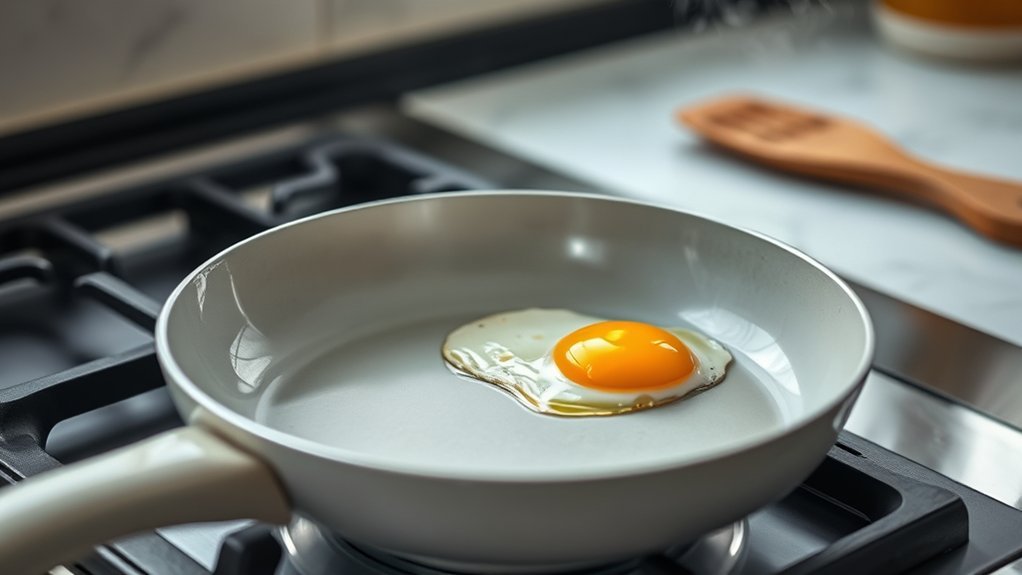
Ceramic pans are genuinely nonstick when new, but that easy-release performance does not last forever. Most ceramic nonstick cookware uses a thin mineral-based coating over a metal pan, and excessive heat, burnt-on oil, metal utensils, abrasive cleaning, and normal wear can gradually reduce its slickness. Gentle heat, a little cooking oil, soft utensils, careful cleaning, and protected storage can help the surface perform well for longer.
Quick Answer
Yes, ceramic pans are nonstick, especially when new. Their ceramic-based coating provides a smooth cooking surface, but repeated overheating, carbonized oil, abrasion, and ordinary wear can reduce food release. Use low to medium heat, a small amount of oil, soft utensils, and gentle hand washing to preserve performance.
Key Takeaways
- Most ceramic nonstick pans are metal cookware covered with a thin ceramic or sol-gel coating rather than solid ceramic.
- Ceramic coatings can provide excellent food release when new, but independent testing shows their nonstick performance can decline with repeated use.
- High heat, burnt oil, aerosol cooking sprays, metal utensils, abrasive cleaners, and rough stacking can shorten coating life.
- A sticky but smooth pan may simply have carbonized residue; a deeply scratched, peeling, chipped, or permanently rough coating cannot be restored by cleaning.
- There is no universal calendar lifespan for every ceramic pan, so condition and performance are more useful replacement guides than age alone.
At a Glance
| Time Required | About 10–20 minutes for routine sticky-residue cleaning; longer for stubborn burnt-on buildup |
| Difficulty | Easy |
| Tools Needed | Warm water, mild dish soap, soft sponge or cloth, and a wooden or silicone utensil for loosening residue |
| Cost | Usually no additional cost if normal dishwashing supplies are already available |
Are Ceramic Pans Actually Nonstick?
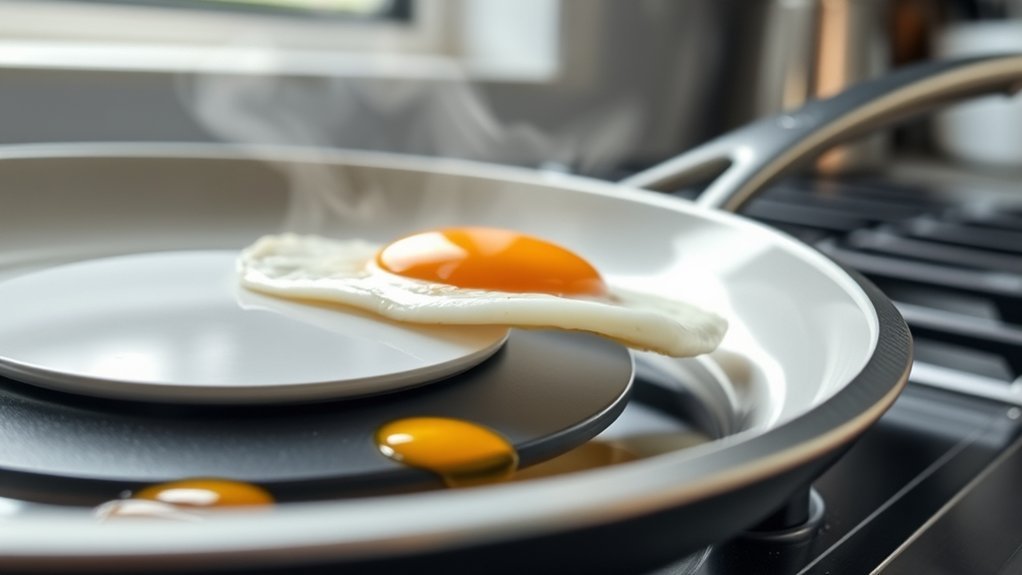
Yes. Ceramic pans can provide strong nonstick performance, particularly when the coating is new and clean. Most products sold as ceramic nonstick are not solid ceramic cookware. They usually have an aluminum, stainless-steel, or other metal body covered by a thin ceramic-based coating.
The exact formula differs among manufacturers. Many modern coatings are produced with a sol-gel process and contain silicon-based ceramic compounds. A 2025 study comparing several commercial ceramic coatings with PTFE identified silicon dioxide, silicon carbide, and other ceramic compounds in the tested coatings.
Note: “Ceramic nonstick” normally describes a coating on a metal pan. It is different from solid ceramic bakeware, traditional pottery, enameled cookware, and PTFE-based nonstick.
A clean ceramic coating can release eggs, pancakes, vegetables, and delicate fish with relatively little fat. However, nonstick performance is not permanent. In laboratory testing, ceramic coatings generally lost some release performance as cooking cycles accumulated, while the tested PTFE coating maintained lower release forces for longer.
A 2025 comparative study found that the tested PTFE coating retained more consistent nonstick performance through repeated cooking cycles than most of the tested ceramic coatings.
Ceramic cookware is also commonly marketed to people who want cookware made without intentionally added PTFE or PFAS. That can be a legitimate purchasing preference, but it should not be turned into a blanket claim that every ceramic pan is healthier than every conventional nonstick pan. The U.S. Food and Drug Administration states that authorized polymerized PFAS used in certain nonstick cookware coatings are tightly bound during manufacturing and that available studies show negligible amounts capable of migrating to food.
PFOA is also not the same thing as PTFE. The U.S. Environmental Protection Agency’s major-company PFOA Stewardship Program targeted elimination of PFOA and related chemicals from emissions and products by 2015, and participating companies reported meeting those goals.
Why Ceramic Nonstick Stops Working
Ceramic pans can begin extremely slick and then become noticeably stickier. The change may come from true coating wear, but it can also come from a layer of burnt oil or food residue sitting on top of an otherwise usable surface.
The most common causes include:
- Excessive heat: High burner settings can overheat the pan and burn cooking fats onto the surface.
- Carbonized oil: Oil heated too aggressively can form a sticky film that interferes with food release.
- Aerosol or spray oils: Some manufacturers advise against them because fine droplets can bake onto the coating and create difficult residue.
- Metal utensils: Repeated scraping can mark or damage the coating.
- Abrasive cleaning: Steel wool, rough scouring pads, and harsh powders can physically wear the cooking surface.
- Thermal shock: Running cold water into a very hot pan can stress or warp cookware.
- Unprotected stacking: The bottom of one pan can scratch another pan’s cooking surface.
- Normal wear: Even carefully maintained nonstick coatings are wear surfaces and gradually change with use.
Research on ceramic-coated cookware has also shown why avoiding severe abrasion matters. A NIST-associated study of ceramic cookware found increased migration of coating constituents under simulated consumer-use conditions, with the strongest effects occurring during the most aggressive mechanical abrasion.
Warning: Do not use knives, steel wool, metal scouring pads, or other sharp tools to scrape a ceramic cooking surface. Physical abrasion can permanently damage the coating.
How Long Ceramic Nonstick Pans Last
There is no reliable universal lifespan that applies to every ceramic nonstick pan. Consumer guides often quote ranges such as one to three years, but coating formulation, cooking frequency, burner temperature, utensils, cleaning, and storage can make real-world performance vary considerably.
Independent research supports focusing on performance rather than a fixed calendar. In the 2025 comparison of five ceramic coatings, the coatings did not deteriorate at the same rate. Some retained useful release substantially better than others after repeated cooking cycles.
Watch for changes such as food sticking to a clean surface, a rougher feel, deep scratches, chipping, peeling, visible substrate, or warping. Those signs are more useful than simply asking whether the pan is one, two, or three years old.
Hand washing can also reduce avoidable wear. Some ceramic pans are officially dishwasher-safe, while others are designated hand-wash only. Even when a manufacturer permits dishwasher use, hand washing with mild soap and a soft sponge is often recommended to help preserve the finish.
Always follow the care instructions for the exact pan because oven limits, dishwasher compatibility, utensil recommendations, and broiler suitability vary by model.
What Helps Ceramic Pans Stay Nonstick?
Ceramic nonstick performs best when the coating remains clean, smooth, and protected from unnecessary heat and abrasion. The most useful habits are moderate heat, a small amount of cooking fat, soft utensils, gentle cleaning, gradual cooling, and protected storage.
Proper Heat Control
Maintaining a ceramic pan’s nonstick surface starts with heat control. For ordinary stovetop cooking, low to medium burner settings are usually sufficient. Several ceramic cookware manufacturers specifically recommend this range because these pans can heat quickly.
Preheat the pan gradually rather than leaving it empty over a high flame. A short preheat at low or medium heat is usually enough before adding a small amount of oil or butter and then the food.
Very high heat is especially unnecessary for eggs, pancakes, fish, grilled sandwiches, and vegetables. If a recipe requires an aggressive steak sear or prolonged high-temperature cooking, stainless steel, cast iron, or carbon steel is often a better tool.
Pro Tip: Keep the burner lower than you would for an uncoated stainless-steel skillet. If oil starts smoking before the food goes in, the pan is hotter than necessary for most ceramic-nonstick cooking.
Gentle Cleaning Habits
Cleaning technique has a direct effect on how long a ceramic coating stays smooth. Let the pan cool before washing it, then clean the cooking surface with warm water, mild dish soap, and a soft sponge or cloth.
Avoid steel wool, abrasive powders, harsh scouring pads, and repeated scraping with metal utensils. Wood, silicone, and nylon tools are gentler choices.
There is normally no need to “season” a ceramic nonstick coating after washing. For example, Caraway’s current ceramic cookware instructions specifically state that its ceramic coating does not need seasoning. A small amount of oil during cooking is sufficient.
Some pans are dishwasher-safe, but that does not mean dishwasher cleaning is best for preserving every ceramic coating. Check the manufacturer’s instructions and choose hand washing when longevity is the priority.
Avoid Cooking Spray and Burnt-On Oil
Sticky ceramic cookware is not always worn-out cookware. Burnt cooking fat can form a film on the surface and make an intact coating feel much less nonstick.
GreenPan’s current care guidance, for example, warns that spray oils can carbonize and leave buildup on ceramic nonstick. A small amount of regular liquid oil or butter is generally easier to control.
Oil should also stay below the point where it is aggressively smoking or burning. Regular cleaning after cooking prevents thin layers of residue from accumulating over repeated meals.
Protect the Pan From Thermal Shock and Storage Damage
Do not take a very hot ceramic pan directly from the stove and flood it with cold water. Let it cool first. Sudden temperature changes can stress cookware materials and may contribute to warping or coating damage.
Storage matters too. If pans must be stacked, place a soft pan protector, clean towel, or similar barrier between them so the base of one pan does not rub directly against another pan’s ceramic cooking surface.
How to Fix a Sticky Ceramic Pan
A sticky ceramic pan may be recoverable when the problem is oil or food residue rather than permanent coating wear. Start by looking closely at the clean, dry surface.
If it still looks smooth and intact but food has recently begun sticking, deep cleaning is worth trying. If the coating is peeling, badly chipped, deeply scratched, rough, or worn through to the underlying material, cleaning cannot rebuild it.
Is It Residue or Coating Wear?
- Likely residue: brown, amber, dark, or tacky areas; surface still feels generally smooth; sticking appeared after overheated oil or cooking spray.
- Likely wear: deep scratches, chips, peeling, exposed base material, permanent roughness, or sticking that continues after thorough cleaning.
This distinction prevents unnecessary replacement while also avoiding increasingly aggressive scrubbing on a coating that is already physically damaged.
Gentle Cleaning Steps
For ordinary sticky residue, begin with the least aggressive method:
- Allow the pan to cool to a safe handling temperature.
- Wash it with warm water, mild dish soap, and a soft nonabrasive sponge.
- If food remains stuck, add enough water to cover the affected area with a small amount of dish soap.
- Warm the water to a gentle simmer for about 10 minutes to loosen burnt residue.
- Turn off the heat, allow the pan to cool, and wipe the loosened material away with a soft sponge or a wooden or silicone utensil.
- Rinse thoroughly and dry with a soft cloth.
For more stubborn residue, some ceramic-nonstick manufacturers permit baking-soda or vinegar-based cleaning methods. GreenPan’s burnt-nonstick cleaning guide, for example, describes mild baking-soda treatments as well as a diluted vinegar-and-water method. Because coating formulations differ, avoid stronger chemicals or abrasive products unless the manufacturer of the specific pan allows them.
Do not try to polish, sand, scrape, or grind away stubborn marks. That can remove the coating along with the residue.
Heat And Oil Use
Once the surface is clean, cooking technique can make a major difference. Use low to medium heat and add a small amount of oil or butter before food contacts the cooking surface.
- Use low to medium heat for most everyday cooking.
- Avoid prolonged empty preheating, especially over high heat.
- Add a modest amount of liquid oil or butter rather than relying on aerosol spray.
- Keep oil from repeatedly smoking and burning onto the pan.
- Use silicone, wood, or nylon utensils instead of sharp metal tools.
This does not restore a physically worn coating, but it can make a clean, intact ceramic surface perform much better.
When To Replace
When a ceramic pan remains sticky after thorough cleaning and correct low-to-medium-heat cooking, the coating may be approaching the end of its useful nonstick life.
Replacement becomes more sensible when there is peeling, substantial chipping, deep scratching, exposed substrate, severe warping, or a permanently rough cooking surface. Those problems are physical damage rather than removable residue.
A minor cosmetic mark does not automatically prove that a pan is hazardous. However, there is little benefit in continuing to depend on a visibly deteriorating nonstick coating, especially when food release has also become poor.
Care can slow wear, but it cannot rebuild coating that has been physically removed.
Best Ways to Use Ceramic Pans
Ceramic cookware works particularly well for foods that benefit from controlled heat and easy release. Eggs, omelets, pancakes, crepes, fish fillets, sautéed vegetables, and grilled sandwiches are natural matches.
Before adding ingredients, preheat the pan briefly on low to medium heat and add a small amount of oil or butter. There is no need to heat the empty pan until it is smoking.
- Use silicone, wooden, or nylon utensils where possible.
- Keep stovetop heat moderate unless the manufacturer’s instructions specifically allow another technique.
- Avoid aerosol cooking sprays when the manufacturer advises against them.
- Let the pan cool before washing.
- Hand-wash with mild detergent and a nonabrasive sponge for gentler care.
- Protect the cooking surface when pans are stacked.
For very high-heat browning or searing, an uncoated stainless-steel, carbon-steel, or cast-iron pan is often a better choice. Ceramic nonstick is most useful when its easy-release surface is allowed to do the work without extreme heat.
Oven and broiler limits should never be assumed from the word “ceramic.” Different pans, handles, lids, and coatings can have very different temperature ratings, so use the limit printed in the manufacturer’s instructions for that exact product.
When to Replace a Ceramic Pan
Even with careful use, ceramic pans are wear items. Replacement should be based primarily on condition and cooking performance rather than a fixed age.
Consider replacing the pan when deep scratches, peeling, substantial chipping, exposed metal, severe warping, or a persistently rough cooking surface appears. Food that continues sticking to a thoroughly cleaned pan despite moderate heat and a little oil is another sign that the coating’s original release performance may be gone.
Discoloration by itself does not always mean the coating has failed. Burnt oil can produce visible brown or dark areas that may improve after gentle cleaning. Check whether the surface becomes smooth and releases food normally again before assuming the pan is finished.
Research does show that aggressive mechanical abrasion can increase migration of components from some tested ceramic coatings. That supports avoiding rough scraping and replacing heavily damaged cookware, but it does not establish that every tiny cosmetic scratch creates an immediate health hazard.
If the pan is visibly peeling, losing pieces of coating, or exposing its underlying body, replacement is the practical choice rather than increasingly aggressive cleaning.
Frequently Asked Questions
What Is the Downside of Ceramic Cookware?
The main downside is that ceramic nonstick performance can decline with heat, residue buildup, abrasion, and normal use. Independent comparisons have found PTFE coatings can retain nonstick performance longer than some ceramic coatings. Ceramic pans also require gentler heat and care than durable uncoated cookware such as stainless steel or cast iron.
What Is the Healthiest Non-Stick Pan?
There is no single nonstick pan that can objectively be called the healthiest for everyone. Ceramic-coated pans are useful for people who specifically want a PTFE- or PFAS-free coating. Whatever material you choose, buy reputable food-contact cookware, follow its temperature and care instructions, and replace a coating that is peeling, badly damaged, or worn through.
What Not to Cook in a Ceramic Pan?
Avoid using ceramic nonstick for prolonged dry heating or very high-heat searing unless the manufacturer specifically permits it. Tomatoes, vinegar sauces, citrus, and other acidic ingredients are not universally prohibited in ceramic-coated pans. Follow the instructions for the specific cookware rather than applying restrictions meant for materials such as unseasoned or poorly seasoned cast iron.
Is Ceramic Nonstick as Bad as Teflon?
Ceramic and PTFE are different coating systems, so describing one as simply “as bad as” the other is not very useful. Ceramic coatings are commonly sold as PTFE- or PFAS-free, while FDA-authorized polymerized PFAS cookware coatings are reported to have negligible migration to food. Independent testing also shows PTFE can retain nonstick performance longer than many ceramic coatings. The better choice depends on material preference, cooking style, and willingness to follow the required care.
Can You Use Cooking Spray on Ceramic Pans?
Regular liquid oil or butter is usually the better choice. Some ceramic cookware manufacturers specifically advise against aerosol and spray oils because fine droplets can burn or carbonize on the cooking surface and gradually create sticky residue.
Can Ceramic Pans Go in the Dishwasher?
It depends on the specific pan. Some ceramic nonstick cookware is dishwasher-safe, while other products are hand-wash only. Even when dishwasher cleaning is permitted, manufacturers often recommend gentle hand washing to reduce unnecessary wear on the cooking surface.
Conclusion
Ceramic pans are truly nonstick, particularly when new, but their coating is a wear surface rather than a permanent property of the pan. Excessive heat, carbonized oil, cooking sprays, abrasive utensils, harsh cleaning, thermal shock, and unprotected stacking can all reduce performance.
If a ceramic pan starts sticking, clean it thoroughly before assuming the coating has failed. A smooth surface covered with burnt residue may recover, while deep scratches, peeling, exposed substrate, permanent roughness, or continued sticking after cleaning usually point to coating wear. Moderate heat, a small amount of oil, soft utensils, gentle washing, and careful storage give ceramic cookware its best chance of staying useful for longer.
Sources
- U.S. Food and Drug Administration — Authorized Uses of PFAS in Food Contact Applications — current regulatory context for polymerized PFAS used in certain nonstick cookware coatings and migration to food.
- U.S. Environmental Protection Agency — 2010/2015 PFOA Stewardship Program — historical context on the phase-out of PFOA and related chemicals by participating manufacturers.
- Research in Engineering — Ceramic vs. PTFE Nonstick Coatings, 2025 — comparative testing of ceramic coating composition, nonstick performance, repeated cooking cycles, and wear resistance.
- National Institute of Standards and Technology — Consumer Use Effects on Ceramic Cookware — research on mechanical abrasion and migration of coating constituents.
- GreenPan — Ceramic Cookware Maintenance Guidance — low-to-medium heat, utensil choice, cleaning, cooking spray, cooling, and storage recommendations.
- Caraway — Ceramic-Coated Cookware Care and Cleaning — manufacturer guidance on preheating, seasoning, hand washing, and temperature management.

2 thoughts on “Are Ceramic Pans Nonstick? Why It Happens & How to Fix It”