
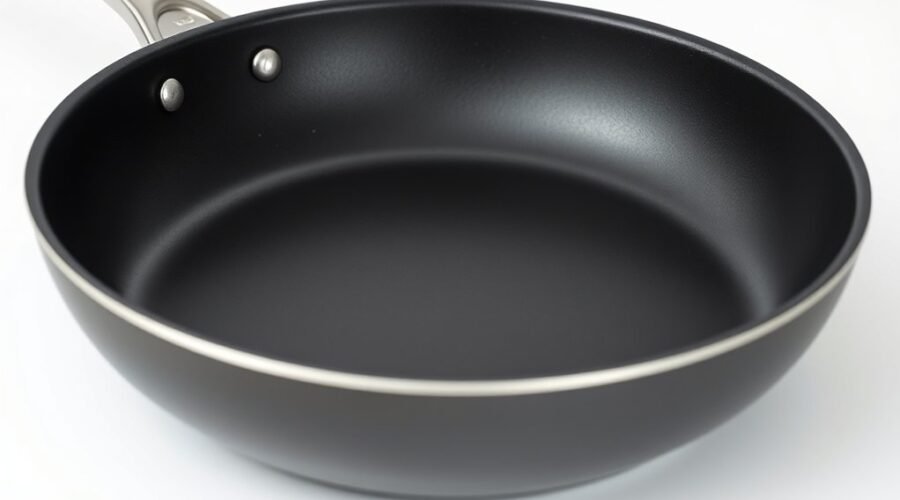
Nonstick pans are usually built with a metal core of aluminum, stainless steel, or cast iron for strength and heat control. The cooking surface is then finished with a low-friction coating, most often PTFE, or with ceramic, titanium-, or silica-based PFAS-free layers. Some pans rely on seasoned fat instead of a manufactured coating. Durability depends on coating quality, body thickness, and care. Safe use and material differences become clearer with a closer look.
What Makes a Pan Nonstick?
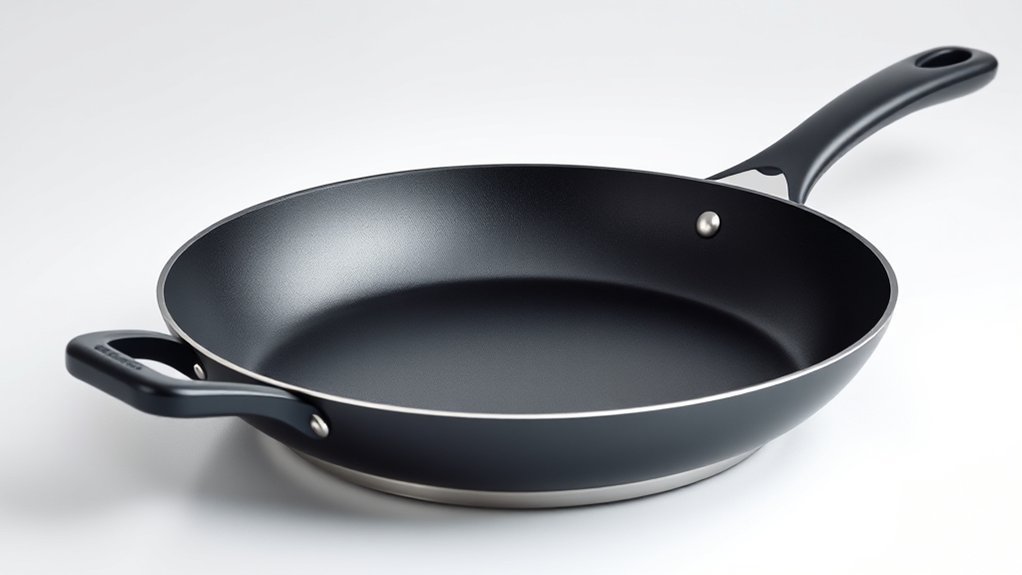
A pan becomes nonstick through a low-friction surface layer that limits adhesion between food and metal. In modern Nonstick cookware, PTFE coatings form the benchmark: this fluorinated polymer yields very low surface energy, strong corrosion resistance, and durable release performance.
Alternative Ceramic coatings use mineral-based formulations and are often selected to reduce health concerns associated with certain PFAS materials. Traditional nonstick systems also include seasoned cast iron and carbon steel, where fat and heat create a bonded film that produces nonstick properties without synthetic coating.
Across all types, the manufacturing process determines uniformity, thickness, and resistance to wear. Scratching, abrasion, or overheating can degrade performance, exposing substrate irregularities and reducing release efficiency.
Proper care thus preserves the engineered surface and extends functional life. For users seeking liberation from constant scrubbing, the relevant variable is not convenience alone but the stability of the interface between pan and food.
What Are Nonstick Pans Made Of?
Nonstick pans typically combine a structural core of aluminum or stainless steel with a surface coating engineered to reduce adhesion and improve heat distribution.
The most common coating is PTFE, while alternatives include ceramic, fluoropolymer, and silicone-based layers with different thermal and durability properties.
Material selection determines both the mechanical performance of the pan and the cooking behavior of its surface.
Core Pan Materials
At the structural level, nonstick pans are typically built on aluminum, stainless steel, or cast iron cores, each selected for distinct performance characteristics: aluminum for low weight and rapid heat response, stainless steel for strength plus resistance to rust and staining, and cast iron for superior heat retention and even cooking.
These core materials govern heat conductivity, warp resistance, and handling.
- Aluminum enables fast temperature changes.
- Stainless steel prioritizes durability.
- Cast iron maximizes thermal stability.
- Ceramic cookware often uses similar substrates.
In practice, nonstick coatings, including Teflon and other PTFE systems, are layered onto these foundations to reduce friction, while alternative ceramic treatments pursue PFAS-free performance.
The substrate choice remains decisive: liberated cooking begins with a pan body engineered for control, longevity, and balanced heat delivery.
Common Nonstick Coatings
Common nonstick pans are finished with low-friction surface coatings, most often polytetrafluoroethylene (PTFE), or Teflon, which reduces adhesion by creating an exceptionally slick cooking surface.
In nonstick cookware, PTFE and related fluoropolymer systems provide a durable barrier that resists wear and remains stable at high temperatures under normal use.
Ceramic coatings, typically based on titanium and silica, offer a PFAS-free option and tolerate heat differently, though their surface chemistry is not identical to polytetrafluoroethylene.
Xylan and similar formulations add binder resins to improve adhesion and abrasion resistance.
Emerging superhydrophobic treatments aim to repel water and residues without harmful chemicals.
The result is cookware that is easier to clean and less dependent on heavy scrubbing, supporting practical, efficient, and liberated cooking.
PTFE, Teflon, and Fluoropolymer Coatings
PTFE, commonly sold under the Teflon brand, is a fluoropolymer coating valued for its low-friction, nonreactive surface that reduces food adhesion.
Its widespread use in cookware reflects a balance of durability and performance, with the material’s carbon-fluorine structure providing the underlying nonstick behavior.
Safety analysis remains centered on thermal limits, since overheating above about 500°F (260°C) can release toxic fumes and continues to inform discussion of PFAS-related concerns.
PTFE Coating Basics
Polytetrafluoroethylene, or PTFE, is a synthetic fluoropolymer best known by the brand name Teflon, first discovered by Roy Plunkett in 1938. PTFE forms a durable nonstick surface on cookware through coatings with a low coefficient of friction, allowing food release with minimal adherence and reduced cleanup effort.
- Industry-standard fluoropolymer in nonstick pans
- PFOA-free formulations in current products
- Stable up to 500°F (260°C)
- Overheating can generate toxic fumes
These polytetrafluoroethylene coatings dominate roughly 75% of cookware and bakeware sales, reflecting broad manufacturing adoption.
The material’s value lies in operational simplicity: efficient cooking, easier maintenance, and fewer required additives. For users seeking liberation from stubborn residue, PTFE remains a technically efficient surface layer.
Fluoropolymer Safety Limits
Fluoropolymer coatings such as PTFE, widely recognized through the Teflon brand, provide their nonstick performance within a defined thermal window. Below 500°F (260°C), PTFE in nonstick pans remains chemically stable for cooking; beyond that threshold, overheating may generate toxic fumes and a measurable health risk.
The historical use of PFOA in fluoropolymer manufacture ended in the United States by 2015, so modern nonstick cookware is PFOA-free. Even so, PFAS remain a broader category under scrutiny, because related compounds may still be present and their biological effects are not fully resolved.
The Environmental Protection Agency (EPA) has issued safety guidelines that frame consumer exposure as a matter of informed choice, not blind trust, allowing users to handle nonstick cookware with greater autonomy.
Ceramic and PFAS-Free Alternatives
Ceramic nonstick pans are typically built with a silica-based coating that is free from PFAS, offering a safer alternative to conventional nonstick cookware. As PFAS-free nonstick options, ceramic surfaces provide nonstick properties without relying on PTFE coatings, and they tolerate high heat until about 370°C (700°F) before degradation.
- No PFAS, no fluoropolymer exposure
- High-heat compatible for liberated everyday cooking
- No toxic fumes when overheated
- Requires careful handling to limit chipping
This chemistry supports safer routine use, especially where thermal control is imperfect.
However, ceramic coatings often have a shorter lifespan than conventional systems, so their surface performance can decline sooner under abrasion or impact. Careful handling remains essential.
Some manufacturers also offer titanium-coated cookware with PFAS-free nonstick behavior, extending high-heat utility while preserving a low-friction cooking surface.
What Makes a Nonstick Pan Durable?
Durability in a nonstick pan depends on both coating chemistry and structural design. High-quality nonstick coatings, especially PTFE, resist wear by reducing friction at the surface.
Ceramic systems can also perform well, though their endurance varies by formulation. Many durable pans add titanium or diamond-infused layers to strengthen the coating matrix and limit abrasion.
The base matters too: a thicker, heavier body improves heat distribution and helps prevent warping, preserving the coating above. Construction quality thus affects how long the pan remains functional under repeated use.
Maintenance further determines lifespan; careful cleaning and non-metal tools reduce mechanical damage and slow surface degradation.
Manufacturers often support these claims with warranties, signaling expected durability rather than mere marketing.
For users seeking practical freedom in the kitchen, the most durable nonstick pans are those that combine resilient coatings, reinforced materials, and stable construction with disciplined maintenance over time.
How to Use Nonstick Cookware Safely
Safe operation of nonstick cookware depends on controlling heat, limiting abrasion, and monitoring surface condition. Nonstick coatings, especially PTFE, perform best at low to medium heat; high heat above 500°F (260°C) can degrade the surface and release fumes that compromise health.
Empty pans should not be preheated, because rapid temperature rise accelerates failure. For delicate foods, stable thermal control preserves release performance and texture.
- Use wooden, silicone, or plastic tools.
- Avoid metal utensils that scratch coatings.
- Maintain good kitchen ventilation during cooking.
- Replace nonstick cookware when peeling or scratches appear.
These measures support longer service life while helping avoid PFAS-related exposure concerns. Clean handling and restrained heat use preserve the coating’s function, reduce unnecessary emissions, and maintain a safer kitchen environment.
When deterioration is visible, replace nonstick cookware immediately rather than attempting to restore a compromised surface.
Frequently Asked Questions
Is Teflon Safe Now?
Teflon is generally considered safe when used correctly.
Modern coatings use PFOA alternatives, reducing earlier Teflon safety concerns, while Health regulations overview and Environmental impact studies continue to track PFAS.
Cooking temperature effects matter: overheating increases risk.
Manufacturing processes also influence Scratch resistance comparison and Non stick lifespan.
Consumer awareness tips include low-to-medium heat and discarding damaged pans.
For liberated, informed kitchens, current evidence supports cautious use, not panic.
Which Non-Stick Coating Is Safe for Health?
Ceramic coatings are generally the safest non-stick choice, with PFAS-free chemistry, strong heat resistance, and decent coating longevity.
Silicone alternatives are also safer, though durability concerns limit performance.
For maximal liberation from synthetic surfaces, cast iron and stainless steel offer eco-friendly options through seasoning and technique rather than additives.
Maintenance tips: avoid overheating, use gentle utensils, and inspect labels for PFAS-free or PFOA-free claims to reduce health risk.
Is Made in Non-Stick Cookware Safe?
Made in non-stick cookware is generally safe when product labeling shows PTFE-based coatings and ingredient transparency is clear.
Nonstick surface safety depends on avoiding overheating risks above 500°F and following proper usage tips with low to medium heat.
Maintenance guidelines require replacing scratched or peeling pans.
Consumer awareness should also consider cookware chemical concerns and alternative materials such as stainless steel or cast iron, especially where long-term liberation from uncertainty matters.
Do Non-Stick Pans Still Contain Teflon?
Yes, many non-stick pans still contain Teflon, despite the objection that newer coatings must have replaced it entirely.
Teflon alternatives, including ceramic and silicone, now compete on cooking performance, heat resistance, and scratch resistance. Yet Teflon often remains dominant for food release and nonstick longevity.
Eco-friendly options may cost more in price comparison.
Maintenance tips matter: low heat and gentle utensils preserve liberation from premature coating failure and fumes.
Conclusion
In the end, a nonstick pan is less a miracle than a carefully engineered compromise: usually an aluminum or stainless-steel body topped with PTFE, ceramic, or another low-friction coating. Durability depends less on wishful thinking and more on heat control, gentle utensils, and restraint with abrasives. The pan, predictably, performs best when treated as a precision tool rather than an indestructible kitchen celebrity. Even materials science, it seems, has limits.