
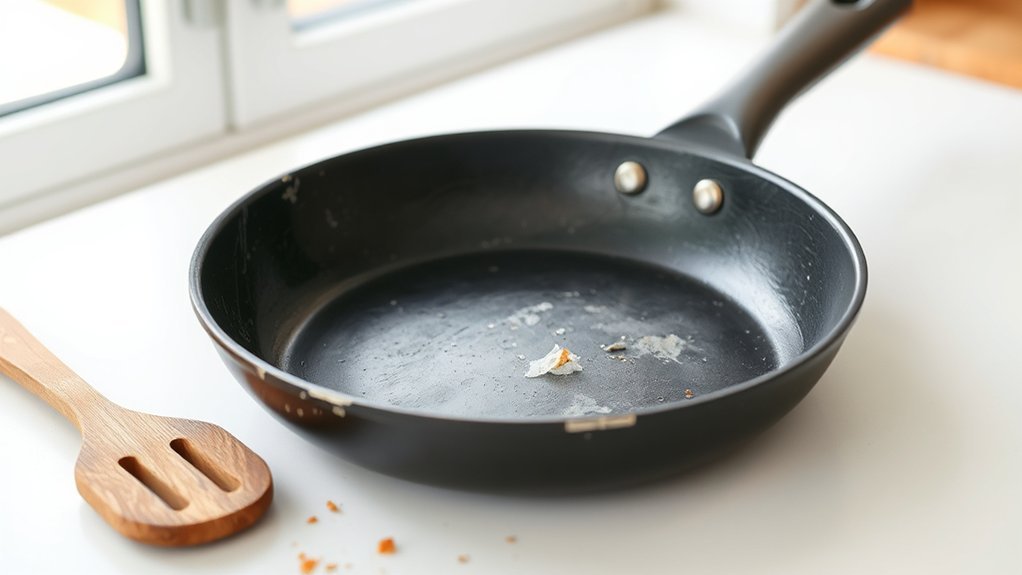
A nonstick pan uses a low-friction cooking surface to help eggs, fish, pancakes, and other delicate foods release with less sticking. Most coated pans use PTFE or a ceramic-style coating, while seasoned cast iron and carbon steel can develop lower-stick surfaces through use. When a nonstick pan starts sticking, the cause may be residue buildup, overheating, scratches, or normal coating wear. Gentle cleaning, moderate heat, suitable utensils, and proper storage can extend its useful life, but a coating that is peeling, blistering, or badly worn cannot be permanently repaired at home.
Quick Answer
A nonstick pan works because its cooking surface reduces friction between food and the pan. If food begins sticking, first remove grease or cooked-on residue with gentle cleaning. Use low to medium heat and avoid empty-pan overheating. Replace the pan when its coating is peeling, blistered, deeply worn, or no longer releases food after proper cleaning.
Key Takeaways
- PTFE and ceramic-style coatings reduce food adhesion, but they have different formulations and care requirements.
- A suddenly sticky pan may only have oil or food residue on its surface; cleaning can sometimes restore performance.
- Low to medium stovetop heat is the safest general approach for coated nonstick cookware.
- Do not use a universal replacement schedule such as 12 or 18 months. Replace according to coating condition, performance, deformation, and the manufacturer’s instructions.
- “PFOA-free” does not necessarily mean “PFAS-free.” PTFE itself belongs to the broad PFAS family.
What Makes a Pan Nonstick?
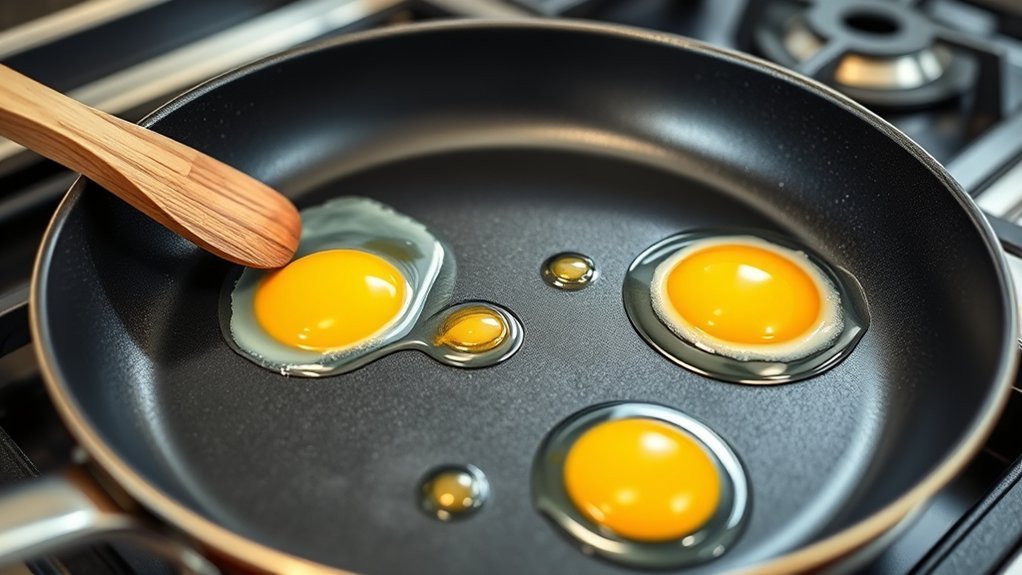
A pan becomes nonstick when its cooking surface reduces the attraction and friction between food and the pan. In cookware sold specifically as nonstick, this is normally achieved with an engineered coating rather than cooking technique alone.
PTFE Nonstick Coatings
PTFE, or polytetrafluoroethylene, is one of the most common nonstick coating materials. Its smooth, chemically resistant surface helps food release with relatively little fat. The U.S. Food and Drug Administration explains that PFAS used in approved nonstick cookware coatings are polymerized and tightly bound to the cookware, with studies showing negligible amounts capable of migrating to food.
Ceramic-Style Nonstick Coatings
Ceramic nonstick cookware generally uses a mineral- or silica-based coating rather than traditional PTFE. Many current ceramic pans are specifically marketed as being made without PTFE or intentionally added PFAS, but the exact formulation depends on the manufacturer. Check the product’s material disclosure rather than assuming every pan labeled “ceramic” has the same chemistry.
Ceramic does not automatically mean that unlimited high heat is safe. Major manufacturers still commonly recommend low to medium heat to preserve ceramic nonstick performance.
Seasoned Cast Iron and Carbon Steel
Seasoned cast iron and carbon steel are different from factory-coated nonstick pans. Heating thin layers of oil on the metal develops a polymerized seasoning layer that can improve food release over time. These pans can be excellent for eggs and other foods once well seasoned, but they require different care from PTFE or ceramic coatings.
Stainless steel is not inherently nonstick. It can release food successfully when properly preheated and used with enough cooking fat, but its surface does not function like a dedicated nonstick coating.
Note: “PFOA-free” and “PFAS-free” are not interchangeable terms. PFOA was historically used as a processing aid and has largely been phased out of U.S. manufacture and import through EPA initiatives, while PTFE itself is classified within the broad PFAS family.
Why Nonstick Pans Lose Their Coating
Nonstick performance can decline through abrasion, overheating, residue buildup, thermal shock, or normal wear. The exact durability depends on the coating system, pan construction, cooking frequency, heat level, cleaning method, and storage habits.
| Cause | What Happens | Best Response |
|---|---|---|
| Metal scraping or abrasive cleaning | May scratch or wear coatings not designed for it | Use silicone, wood, nylon, or whatever the manufacturer approves |
| Excessive heat | Can shorten coating life and, with severe PTFE overheating, release hazardous fumes | Use low to medium stovetop heat and follow the product’s heat limits |
| Oil or cooking-spray residue | Creates a sticky film that interferes with release | Deep-clean gently according to the manufacturer’s instructions |
| Hot pan placed in cold water | Thermal shock may warp the pan or stress the coating | Allow it to cool before washing |
| Normal use over time | Release performance gradually declines | Replace when condition or performance warrants it |
There is no reliable universal rule saying every nonstick pan lasts 12 months, 18 months, three years, or five years. A lightly used premium pan may remain serviceable much longer than a heavily used pan exposed to frequent high heat.
Why Does a Nonstick Pan Start Sticking?
A pan that starts sticking is not automatically worn out. A common cause is a thin layer of polymerized oil, food residue, or cooking-spray buildup covering the coating. All-Clad notes that residue left on a nonstick surface can interfere with release performance.
Before replacing the pan, inspect it in good light and ask:
- Does the surface feel sticky or greasy even after normal washing?
- Is there visible cooked-on residue or a brown film?
- Does the coating look smooth but food releases poorly?
- Or does the surface have peeling, blistering, deep wear, exposed base metal, or structural damage?
The first three situations may improve after careful cleaning. The last group points to coating or pan failure that cleaning cannot reverse.
Pro Tip: Before assuming the coating has failed, remove invisible grease and residue. Many nonstick problems come from surface buildup rather than the coating suddenly disappearing.
How to Fix a Sticking Nonstick Pan
At a Glance
| Time Required | About 10–30 minutes, depending on residue |
| Difficulty | Easy |
| Tools Needed | Mild dish soap, warm water, soft sponge or cloth; optional baking-soda treatment only when the manufacturer permits it |
| Cost | Usually no extra cost if basic cleaning supplies are already available |
To restore performance, first determine whether the problem is residue or actual coating damage.
- Let the pan cool. Do not plunge a hot pan into cold water.
- Wash it thoroughly. Use warm water, mild dish detergent, and a soft sponge or cloth.
- Soak stubborn residue. Warm soapy water can loosen cooked-on grease without aggressive scrubbing.
- Check the manufacturer’s deep-cleaning instructions. Some brands permit a mild baking-soda treatment for residue, while others specifically discourage abrasive powders or particular cleaners.
- Rinse and dry completely. Inspect the clean surface under bright light.
- Test it at low or medium heat. Use a small amount of butter or cooking oil if appropriate for the food.
During cooking, use silicone, nylon, wooden, or other manufacturer-approved utensils. Avoid forceful scraping.
If the cleaned coating remains intact but performance had been reduced by residue, food release may improve substantially. If the surface is peeling, blistering, deeply gouged, or exposing the underlying pan, cleaning will not rebuild the coating.
Warning: Do not sand, grind, scrape away, or apply an unapproved DIY coating to a damaged nonstick cooking surface. Factory cookware coatings are manufactured and cured under controlled conditions. A failing coating should be handled according to the manufacturer’s replacement or warranty guidance.
How to Care for a Nonstick Pan
Proper care reduces scratching, residue buildup, overheating, and premature loss of release performance.
- Use low to medium stovetop heat. Nonstick pans usually do not need high burner settings for eggs, pancakes, fish, reheating, or similar tasks.
- Avoid prolonged empty-pan heating. Health Canada specifically advises against preheating empty nonstick cookware.
- Follow the actual oven rating. Current cookware models vary widely; an oven-safe rating should not be treated as a recommended stovetop surface temperature.
- Use coating-friendly utensils. Silicone, nylon, and wood are conservative choices. Some modern products permit metal utensils, but only use them when the manufacturer expressly allows it.
- Clean with nonabrasive tools. Steel wool and aggressive scouring pads can damage many coatings.
- Let the pan cool before washing. Rapid temperature changes can warp cookware or stress its coating.
- Hand-wash when practical. Hand washing is gentle, although some current models are dishwasher-safe. Follow your product instructions.
- Be cautious with aerosol cooking sprays. Manufacturers including All-Clad and Calphalon warn that some sprays can leave residue that reduces nonstick performance.
- Protect the cooking surface in storage. If pans must be stacked, place a pan protector, soft cloth, or similar barrier between them.
A small amount of cooking oil or butter can improve release for certain foods, but a good nonstick pan should not need a heavy layer of fat.
How to Spot a Worn-Out Pan
A worn-out nonstick pan usually shows a combination of declining release performance and physical deterioration.
- Food continues to stick after the pan has been thoroughly and gently cleaned.
- The coating is peeling, flaking, blistered, or separating from the base.
- Large or deep worn areas expose the underlying metal.
- The pan is badly warped and no longer sits securely on the cooktop.
- A handle or attachment has become unsafe or unstable.
- The manufacturer specifically recommends replacement for the type of damage present.
A few superficial marks do not automatically mean a PTFE pan has become acutely toxic. The German Federal Institute for Risk Assessment states that accidental ingestion of tiny particles released from a scratched PTFE coating is not expected to harm consumer health because PTFE is inert and is not digested.
That does not mean a badly damaged pan should be used indefinitely. Visible coating failure usually means release performance is declining, and the manufacturer may recommend replacement.
When to Replace a Nonstick Pan
Replace a nonstick pan because of its condition, not simply because a calendar says it has reached a specific age.
Replacement is sensible when the coating is peeling, blistered, extensively worn, or no longer performs properly after residue has been removed. A badly warped pan or loose handle can also justify replacement regardless of coating condition.
There is no universal 12-month, 18-month, or five-year replacement deadline for every nonstick pan. Condition, performance, use, care, and manufacturer guidance are better indicators.
A pan used occasionally at moderate heat may age very differently from one used every day for high-temperature cooking. Check the warranty and care documentation for the specific cookware rather than relying on a single lifespan estimate.
Nonstick vs. Stainless Steel Pans
Nonstick and stainless steel pans serve different cooking needs. Neither material is automatically superior for every job.
- Nonstick excels at eggs, pancakes, crepes, delicate fish, and foods where easy release matters.
- Stainless steel is better suited to strong browning, searing, fond development, and deglazing.
- Nonstick generally benefits from low or medium heat and gentler utensils.
- Stainless steel can tolerate more aggressive cooking and does not depend on a sacrificial release coating.
- Nonstick is easy to clean when used correctly.
- Stainless steel can remain usable for decades when well constructed and maintained.
Heat distribution depends on the pan’s underlying construction, thickness, and materials. A high-quality nonstick pan with an aluminum core may heat more evenly than a thin stainless pan, while multilayer stainless cookware may outperform cheaper designs. The presence or absence of a nonstick coating alone does not determine even heating.
Best Foods for Nonstick Pans
Delicate or adhesion-prone foods are the best match for nonstick pans.
- Fried or scrambled eggs
- Omelelets
- Pancakes and crepes
- Delicate fish fillets
- Quesadillas
- Soft or sticky noodles
- Reheated foods that benefit from gentle browning
These foods usually cook successfully at low to medium temperatures, which also suits the normal operating range recommended for many nonstick coatings.
Nonstick cookware is less suitable for tasks that intentionally require very high heat, hard searing, prolonged broiling when the manufacturer prohibits it, or aggressive scraping with metal tools.
Acidic foods such as tomato sauce are not automatically prohibited. Coated nonstick cookware is generally nonreactive, unlike bare cast iron, carbon steel, unlined copper, or some bare aluminum surfaces. The deciding factor should be the instructions for the specific pan and the cooking temperature required by the recipe.
Are Nonstick Pans Safe to Use?
Modern PTFE-coated cookware is generally considered safe when it is used as intended and not severely overheated. The FDA states that approved nonstick cookware coatings contain negligible amounts of PFAS capable of migrating to food, while the German Federal Institute for Risk Assessment says adverse health effects are not expected from PTFE cookware used as intended.
PTFE, PFOA, and PFAS Are Not the Same Thing
PFAS is a broad family of fluorinated substances. PTFE is a fluoropolymer within that broad family and is widely used for nonstick coatings. PFOA is a different PFAS that was historically used as a processing aid in fluoropolymer production.
The U.S. Environmental Protection Agency reports that participating companies worked toward eliminating PFOA and related long-chain chemicals from emissions and product content by 2015. Therefore, seeing “PFOA-free” on modern cookware is not the same as seeing “PFAS-free.”
Avoid Severe Overheating
Health Canada advises users not to preheat empty nonstick cookware and not to expose it to high temperatures above 260°C (500°F). The BfR reports that strongly overheated PTFE coatings can begin producing hazardous decomposition gases at temperatures around and above 360°C (680°F).
These numbers should not be interpreted as targets for normal cooking. An empty pan can heat rapidly, particularly on powerful gas and induction burners, and individual cookware may have lower manufacturer limits.
Warning: If a PTFE-coated pan is accidentally severely overheated and produces fumes or an unusual odor, turn off the heat if it is safe to do so, move away from the exposure, and ventilate the area. Follow local poison-control or medical guidance if anyone develops symptoms after significant fume exposure. Birds are especially sensitive to overheated PTFE fumes and should be kept away from cooking fumes.
For people who prefer cookware made without PTFE, alternatives include ceramic-coated cookware specifically labeled as made without PFAS, stainless steel, seasoned cast iron, carbon steel, and enameled cookware. Each option has its own heat, care, and food-release characteristics.
Frequently Asked Questions
How Do I Know if My Pan Is Non-Stick?
Check the product label, model number, packaging, or manufacturer’s specifications. PTFE and ceramic-style coatings are common on pans sold as nonstick. Appearance alone is not always reliable, and a water-beading test cannot conclusively identify the coating material.
What Is the Difference Between a Nonstick Pan and a Regular Pan?
A coated nonstick pan has a low-friction cooking surface designed to improve food release. Stainless steel and other uncoated pans rely more heavily on preheating, cooking fat, and technique. Nonstick is especially convenient for eggs and delicate foods, while stainless steel, cast iron, and carbon steel are usually better choices for high-heat searing and strong browning.
What Should You Not Cook in a Non-Stick Pan?
Avoid cooking methods that require temperatures or techniques beyond the manufacturer’s limits, such as very-high-heat steak searing, direct-flame use, or broiling when the pan is not rated for it. Avoid aggressive scraping with metal tools unless the manufacturer specifically approves them. Acidic tomato sauces are not automatically unsafe for coated nonstick cookware.
Should I Stop Using Nonstick Pans?
There is no general need to stop using an intact PTFE nonstick pan solely because it contains PTFE. Current FDA and BfR guidance indicates that properly used cookware is not expected to cause adverse health effects. Use moderate heat, avoid severe empty-pan overheating, follow the manufacturer’s care instructions, and replace cookware when the coating or pan has substantially failed. People who prefer to avoid PTFE can choose ceramic cookware specifically labeled as made without PFAS, stainless steel, cast iron, carbon steel, or enamel.
Can a Scratched Nonstick Pan Be Repaired?
Cleaning can remove residue that makes an intact coating feel sticky, but it cannot rebuild a coating that has physically worn away, peeled, blistered, or separated from the pan. Do not sand the surface or apply an unapproved DIY coating. Check the manufacturer’s warranty or replacement guidance instead.
Does PFOA-Free Mean PFAS-Free?
No. PFOA is one specific member of the broad PFAS family. PTFE, the fluoropolymer commonly used in traditional nonstick coatings, is also classified within the broad PFAS family. If avoiding intentionally added PFAS is important to you, look for a clear manufacturer statement saying the coating is made without PFAS rather than relying only on a “PFOA-free” claim.
Conclusion
A nonstick pan works by providing a low-friction cooking surface, usually through a PTFE or ceramic-style coating. If it begins sticking, do not assume it must immediately be discarded. Oil films and cooked-on residue can interfere with food release and may be removable with careful cleaning.
Long-term performance depends heavily on heat, utensils, cleaning, storage, and the specific coating. Use low to medium stovetop heat, avoid severe empty-pan overheating, let the pan cool before washing, and follow the manufacturer’s individual care instructions. Replace the pan when the coating is substantially peeling, blistered, worn through, or remains ineffective after proper cleaning. There is no single replacement interval that applies to every nonstick pan.
Sources
- U.S. Food and Drug Administration — Questions and Answers on PFAS in Food — PFAS use in nonstick cookware coatings and migration to food.
- German Federal Institute for Risk Assessment — PTFE-Coated Cookware Safety — PTFE overheating, intended-use safety, and scratched-coating particles.
- Health Canada — Safe Use of Cookware and Bakeware — empty-pan heating, ventilation, and high-temperature guidance.
- U.S. Environmental Protection Agency — 2010/2015 PFOA Stewardship Program — historical PFOA phase-out and current context.
- All-Clad — Cookware Use and Care — nonstick heat, utensil, cleaning, cooking-spray, and thermal-shock guidance.
- Calphalon — Cookware Use and Care — model-specific oven, dishwasher, utensil, cleaning, and storage guidance.