If you’re wondering whether you can safely use your cast iron pan in the oven, you’re not alone. These versatile skillets are built to handle high temperatures, making them ideal for a variety of dishes. However, understanding the limits and best practices is key to maximizing their potential. From proper seasoning to avoiding thermal shock, there’s more to know before you start cooking. Let’s explore what you need to keep in mind.
Is It Safe to Use Your Cast Iron Skillet in the Oven?
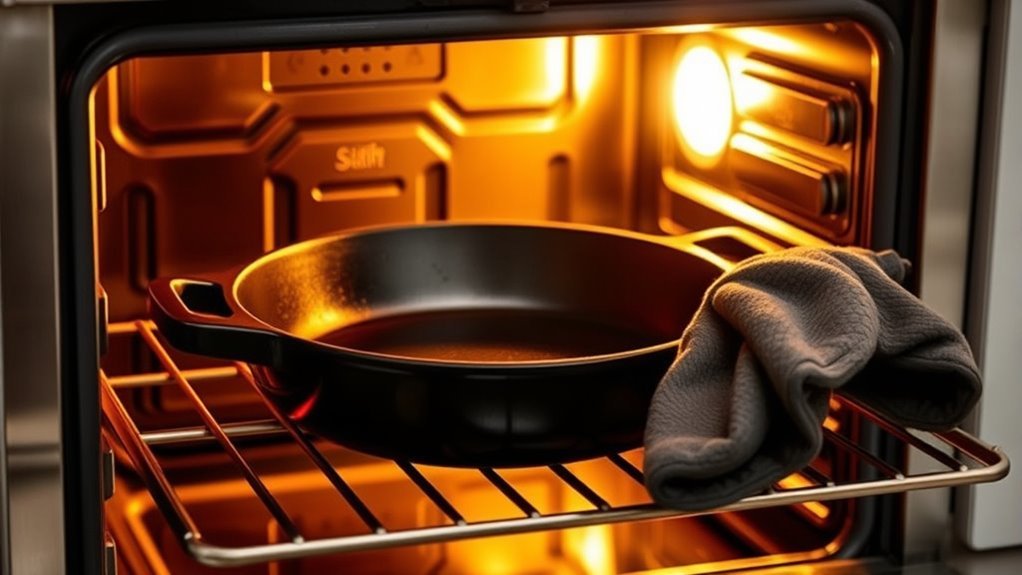
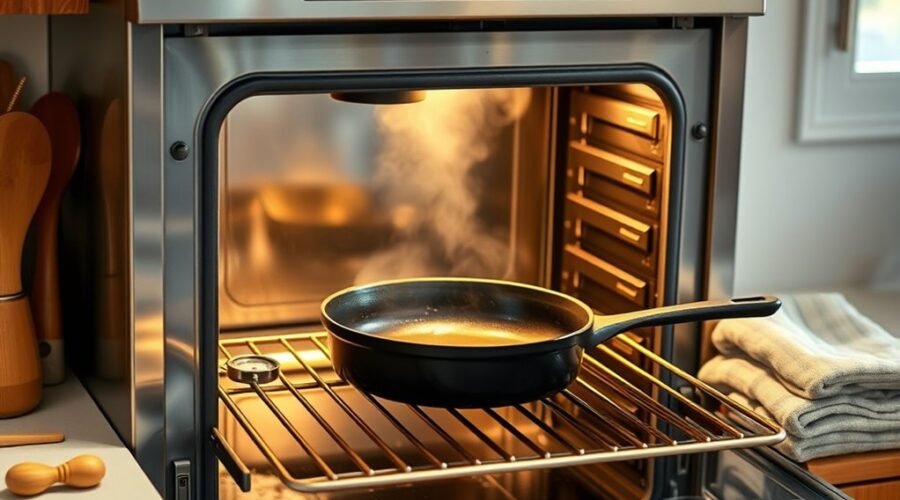
When you think about cooking with your cast iron skillet, you might wonder, “Is it truly safe to use in the oven?” The answer is a resounding yes! Cast iron skillets are designed to withstand oven-safe temperatures up to 500°F, making them perfect for baking cornbread or roasting vegetables.
Their exceptional heat retention guarantees your dishes cook evenly, enhancing flavors and textures.
Exceptional heat retention ensures even cooking, enhancing the flavors and textures of your favorite dishes.
To get the most out of your skillet, always preheat it in the oven. This maximizes heat retention and helps prevent food from sticking.
A well-seasoned skillet not only boosts its non-stick properties but also protects against rust. Just remember, avoid sudden temperature changes—moving a hot skillet to a cold surface can lead to cracking or warping.
Embrace the versatility of your cast iron skillet, and let it elevate your culinary adventures!
Understanding Safe Temperatures for Cast Iron in the Oven
Using your cast iron skillet in the oven opens up a world of cooking possibilities, but understanding safe temperatures is key to maximizing its potential.
These versatile pans can handle oven-safe temperatures up to 500 degrees Fahrenheit, making them perfect for high-heat cooking methods like roasting and baking. However, be cautious—temperatures above 500 degrees can cause the seasoning to break down, affecting performance and flavor.
To guarantee even cooking and prevent sticking, preheat your skillet in the oven.
Also, check the compatibility of any handles or lids, as some materials may not withstand high heat.
By regularly seasoning your skillet, you’ll enhance its oven performance and protect it against the rigors of baking and roasting.
Embrace the magic of cast iron cooking, but always keep these temperature guidelines in mind for the best results!
Essential Steps to Prepare Your Cast Iron Skillet for Oven Cooking
Before you pop your cast iron skillet in the oven, make certain it’s properly seasoned to keep food from sticking.
Preheating the skillet along with the oven helps guarantee even cooking and protects against thermal shock.
Preheat the Skillet
To achieve perfect results in your oven-safe cast iron skillet, preheating is essential. Start by placing your skillet on low to medium heat, allowing it to warm gradually. This simple step guarantees even cooking and prevents food from sticking.
After a few minutes, increase the temperature, but take your time; rapid changes can cause thermal shock, potentially cracking your beloved skillet. Aim to preheat the skillet for about 5-10 minutes before adding your ingredients. This not only enhances searing but also develops rich flavors.
Proper Seasoning Technique
Properly seasoning your cast iron skillet is essential for ensuring it performs beautifully in the oven. Start by scrubbing the skillet with steel wool and mild dish soap to eliminate any old seasoning or residue. Rinse it under hot water and dry it thoroughly to prevent rust.
Next, apply a thin layer of oil—flaxseed or canola works wonders. Place your skillet in the oven and bake it at 450-500 degrees Fahrenheit for one hour. This proper seasoning technique creates a durable non-stick surface.
After baking, let the skillet cool completely in the oven; this step is vital for setting the seasoning. Regular maintenance will enhance your skillet’s performance, making it ready for any oven cooking adventure.
Safe Temperature Limits
When you’re ready to cook with your cast iron skillet, knowing its safe temperature limits is essential to avoid any mishaps. Cast iron skillets are oven-safe at high temperatures, typically up to 500°F (260°C), making them perfect for various dishes.
Here’s what you need to keep in mind:
- Season Well: A well-seasoned skillet enhances non-stick properties.
- Preheat: Always preheat your skillet in the oven to prevent thermal shock.
- Check Handles: Avoid non-heat-resistant handles; they can melt.
- Use Oven Mitts: Handle with care after cooking, as both the skillet and its handle will be extremely hot.
With these tips, you’ll confidently embrace your cast iron skillet’s oven-safe temperatures and release your culinary creativity!
Top Cooking Techniques for Using Cast Iron in the Oven
When using your cast iron skillet in the oven, aim for temperatures up to 500°F for ideal results.
Start by searing your proteins on the stovetop to lock in flavors before transferring them to the oven for roasting.
Just be cautious with acidic foods, as they can react with the seasoning of your skillet, affecting both taste and finish.
Ideal Oven Temperatures
Oven-safe cast iron pans shine at temperatures up to 500°F, making them versatile tools for baking and roasting. To make the most of your cast iron, consider these ideal oven temperatures:
- 350°F: Perfect for even cooking, especially for cornbread or casseroles.
- 400°F: Great for roasting vegetables, enhancing natural sweetness and flavor.
- 450°F: Ideal for baking pizzas, creating a crispy crust without burning.
- 500°F: Best for searing meats, achieving a beautifully browned exterior.
Preheating your skillet can also boost searing, while proper seasoning prevents sticking.
Just remember to avoid drastic temperature changes to keep your cast iron in top shape. Embrace these ideal oven temperatures for delicious results every time!
Searing Before Baking
Perfecting your dishes in cast iron isn’t just about the right oven temperature; it’s also about the art of searing before baking.
Start by preheating your skillet on medium heat, allowing it to reach the perfect temperature for that coveted crust. Place your meat in the skillet and resist the urge to move it around too much. This patience pays off, creating a beautiful caramelized surface that locks in flavors.
Once seared, transfer the skillet directly to the oven, where it’ll maintain heat beautifully, ensuring even cooking throughout.
This technique not only enhances taste but also elevates your culinary skills, giving you the confidence to tackle any dish with your trusty cast iron. Enjoy the liberation of mastering this essential method!
Acidic Foods Considerations
Although cast iron pans are incredibly versatile, cooking with acidic foods like tomatoes or citrus demands a bit of finesse. Here are some key acidic foods considerations to keep in mind:
- Well-Established Seasoning: Verify your skillet’s seasoning is robust to prevent a metallic taste.
- Limit Use of Acids: Avoid acidic ingredients in new or poorly seasoned pans as they can break down the seasoning layer.
- Preheat for Flavor: Always preheat your skillet before adding acidic components to enhance flavors and searing.
- Monitor Cooking Time: Keep an eye on your dish; prolonged exposure to acids may require re-seasoning to maintain your pan’s integrity.
How to Keep Your Cast Iron Skillet Oven-Ready
To keep your cast iron skillet ready for the oven, start by confirming it’s well-seasoned. A good seasoning protects the surface and enhances the food’s flavor, allowing your skillet to withstand high temperatures.
Preheat your oven to no more than 500 degrees Fahrenheit; this is the sweet spot for most cast iron skillets, preventing warping or cracking.
Avoid drastic temperature changes—never place a cold skillet directly into a hot oven, as this can cause thermal shock. Always check that the handle is oven-safe; wooden or plastic handles may melt or ignite under high heat.
After you’ve used your skillet, let it cool gradually. This simple step is vital for maintaining its integrity and preventing any potential cracking.
Common Mistakes When Cooking With Your Cast Iron Skillet in the Oven
Even with a well-prepared cast iron skillet, mistakes can happen when cooking in the oven. To elevate your cooking experience and avoid mishaps, keep these common errors in mind:
- Starting Cold: Placing a cold skillet in a hot oven risks thermal shock, causing cracks. Always preheat your skillet when possible.
- Neglecting Seasoning: A poorly seasoned cooking surface can lead to sticking. Make sure your skillet is well-seasoned for best results.
- Using Acidic Foods Prematurely: Cooking acidic ingredients in a poorly seasoned skillet can strip away seasoning. Wait until it’s well-developed.
- Ignoring Temperature: Cast iron skillets are oven-safe, but extreme temperatures above 500°F can degrade your seasoning. Monitor your oven’s heat closely.
And remember, always use oven mitts when removing your skillet from the oven to avoid burns.
With these tips, you’ll master oven cooking with your cast iron skillet!
Frequently Asked Questions
Can I Put Cast Iron in the Oven at 400 Degrees?
Yes, you can put your cast iron pan in the oven at 400 degrees!
Cast iron’s built to handle high temperatures, making it perfect for oven safety. Just remember to preheat the skillet along with your oven for even cooking.
Confirm it’s well-seasoned to keep food from sticking, and always grab it with oven mitts, as that handle gets scorching hot.
Embrace the versatility of your skillet and enjoy delicious meals!
What Ruins a Cast Iron Skillet?
Neglecting your cast iron skillet can lead to serious issues—did you know 80% of rust problems stem from moisture?
To keep your skillet in top shape, avoid harsh detergents that strip the seasoning. Sudden temperature changes can crack it, while cooking acidic foods in a poorly seasoned pan can ruin flavors.
Remember to oil it before storage. With these seasoning tips, you’ll guarantee your skillet remains a trusty kitchen companion for years to come!
How to Use a Cast Iron Pan First Time?
To use a cast iron pan for the first time, start by ensuring it’s well-seasoned.
Preheat it on low to medium heat for even cooking.
Try simple dishes like sautéing veggies or frying eggs to familiarize yourself with its heat retention.
Avoid highly acidic foods until the seasoning’s established.
Clean it promptly with hot water and a non-metal pad to maintain that beautiful seasoning.
Embrace the process; it’s all about liberation in the kitchen!
Can You Put a Cast Iron Skillet in a 500 Degree Oven?
You can definitely put a cast iron skillet in a 500-degree oven—it’s built for that kind of heat!
Just remember, temperature safety is key. A well-seasoned skillet enhances your cooking experience, so make sure it’s ready to go.
Preheat it for even cooking and always use oven mitts when taking it out; that handle’s going to be sizzling hot.
Conclusion
In the culinary world, your cast iron skillet is like a trusty steed, ready to carry you through oven adventures. By understanding its limits and preparing it well, you can reveal a treasure trove of flavors and textures. Embrace the warmth of your skillet, and let it elevate your dishes to new heights. With a little care and attention, you’ll keep it oven-ready for years to come, making every meal a delightful journey worth savoring.