
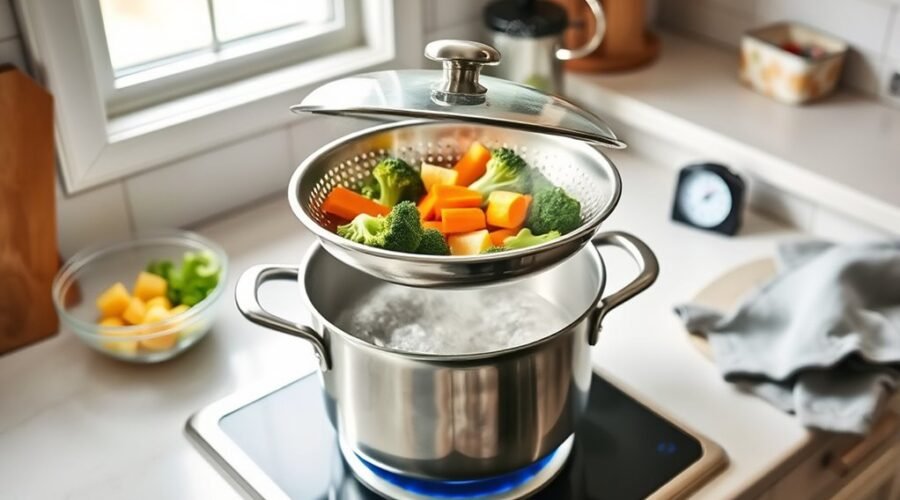
Using a steamer pot is a straightforward way to prepare healthy meals that retain their nutrients and flavor. You’ll find it easy to set up, and the results can be delicious. Whether you’re steaming vegetables, seafood, or chicken, knowing the right techniques makes all the difference. Curious about how to maximize your steaming experience and avoid common pitfalls? Let’s explore the essential steps and tips that will elevate your cooking.
What Is a Steamer Pot and Why Use It?
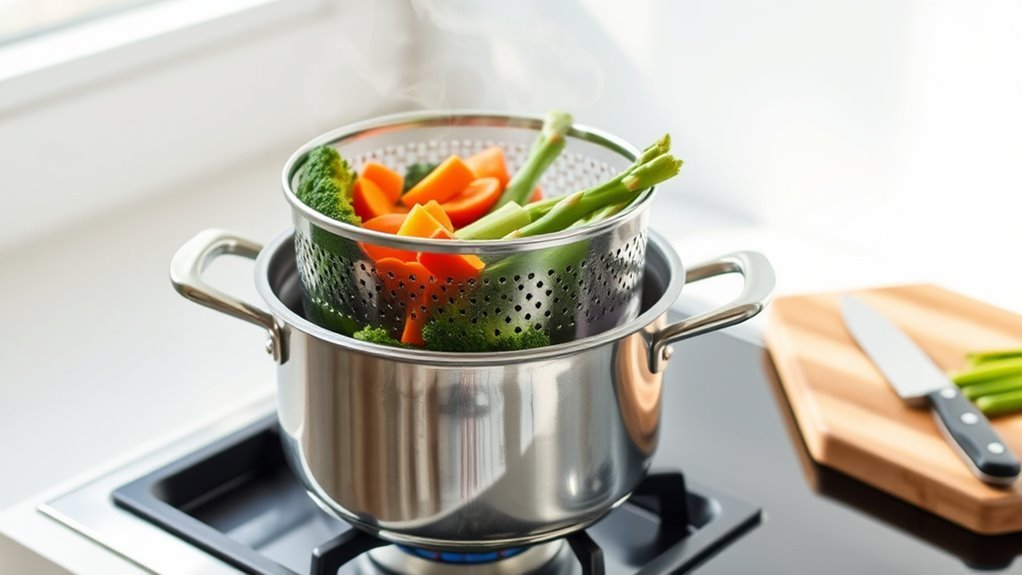
A steamer pot is a kitchen essential that makes healthy cooking both easy and efficient. This versatile tool allows you to cook a variety of foods using steam, which preserves nutrients and flavor while minimizing the need for added fats.
Unlike boiling or frying, steaming is a healthier cooking method that retains vitamins and minerals, ensuring you get the most from your meals.
Typically consisting of a pot with a perforated insert, a steamer pot circulates steam around vegetables, seafood, dumplings, and more. You only need a small amount of water at the bottom, which heats up quickly, allowing for rapid cooking without drying out your food.
Plus, you can use a steamer pot on the stovetop or pair it with appliances like the Instant Pot, expanding your culinary options. Embrace this cooking method for a healthier, more flavorful approach to your meals.
Essential Tools and Ingredients for Steaming
Steaming delicious meals requires a few essential tools and ingredients to get started. First, you’ll need a reliable steamer pot, which includes a pot with a lid and a steaming insert or basket. This setup lets your food sit above boiling water, ensuring it cooks evenly.
Steaming delicious meals begins with a reliable steamer pot and fresh ingredients for perfectly cooked dishes.
For essential ingredients, think vibrant vegetables like broccoli, carrots, and asparagus. Don’t forget proteins such as fish, chicken, and dumplings to create a well-rounded meal.
Make sure you add enough water to the pot—about 1 to 2 inches—without letting it touch the food in the steamer basket.
Using a lid while steaming is vital; it traps steam and maintains temperature, resulting in perfectly cooked dishes.
With these kitchen gadgets and ingredients at your fingertips, you’re well on your way to mastering the art of steaming!
Step-by-Step Guide: How to Set Up Your Steamer Pot
Now that you have your steamer pot and ingredients ready, setting it up for a successful steaming session is straightforward. Follow these steps for best results:
- Fill the bottom pot with water, making sure it doesn’t touch the steamer basket or insert to prevent boiling over.
- Place the steamer basket securely above the water level for ideal steam circulation.
- Arrange your food items evenly in the basket, leaving space for steam to flow around each piece.
Cover the pot with a tight-fitting lid to trap steam and maintain consistent cooking temperatures.
Remember to monitor cooking times based on the type and size of your food. Generally, vegetables take about 5-10 minutes, while seafood may need 10-15 minutes.
With these simple steps, you’re set for a deliciously steamed meal!
Choosing the Right Vegetables and Seafood for Steaming
Choosing the right vegetables and seafood makes all the difference in your steaming experience. Opt for vibrant, firm vegetables like broccoli, carrots, and snap peas; they not only look appealing but also retain their nutrients and flavor.
When it comes to seafood, shrimp, scallops, and fish fillets are excellent choices, as steaming helps preserve their delicate textures and tastes.
To guarantee even cooking, cut your vegetables into uniform sizes—smaller pieces will steam faster than larger ones. Remember to add denser vegetables first, and follow up with leafy greens like spinach and kale for superior results.
Don’t forget to season your vegetables and seafood with your favorite herbs and spices before steaming; this enhances their natural flavors without piling on extra calories.
Keeping an Eye on Cooking Times for Steam Perfection
When it comes to steaming, timing is everything for achieving that perfect texture.
Different foods require specific cooking times, so make sure to cut them into uniform sizes for even results.
Keep a timer handy and check for doneness a few minutes early to avoid overcooking.
Essential Cooking Times
To achieve steam perfection, it’s essential to keep an eye on cooking times for different foods. Knowing the right steaming times can make all the difference in taste and texture, whether you’re using a traditional steamer or an Instant Pot.
Here are some key guidelines:
- Vegetables: Steam broccoli and carrots for 5-7 minutes; denser potatoes need 10-15 minutes.
- Seafood: Shrimp takes about 3-5 minutes, while fish fillets require 6-10 minutes, depending on thickness.
- Meats: Tender chicken cuts will need 15-20 minutes to reach a safe internal temperature of 165°F (75°C).
Always monitor the water level in your steamer pot to avoid uneven results.
Happy steaming!
Steam Cooking Techniques
Mastering steam cooking techniques can elevate your culinary skills and enhance the flavors of your dishes. To achieve perfect results, start with 1 to 2 inches of water in your pot, creating ample steam.
Arrange foods in a single layer in the steamer basket; overcrowding leads to uneven cooking. Cooking times vary—vegetables typically take 5 to 10 minutes, while fish requires only 4 to 6 minutes.
It’s essential to monitor cooking times closely; over-steaming can strip nutrients and ruin textures, especially with delicate greens. Use a timer and check for doneness by piercing with a fork or knife.
Ingredient-Specific Adjustments
While steam cooking offers a quick and healthy way to prepare a variety of ingredients, it’s essential to adjust cooking times based on what you’re steaming. Different ingredients require different durations to steam to perfection:
- Leafy greens (spinach, kale): 2-3 minutes
- Dense vegetables (potatoes, sweet potatoes): 10-15 minutes
- Seafood (fish fillets, shrimp): 5-10 minutes
To guarantee the best flavor and texture, check ingredients periodically. This helps you avoid overcooking, which can lead to loss of nutrients and texture.
Cut larger items into smaller pieces to promote even steaming. By making these adjustments, you’ll make certain every ingredient shines in your meal!
Flavor Boosting Techniques for Steamed Dishes
To elevate your steamed dishes, start by choosing flavorful ingredients that naturally shine.
Enhance them with seasonings like fresh herbs or citrus zest to create a vibrant taste experience.
With just a few thoughtful additions, you can transform simple steaming into a gourmet delight.
Choosing Flavorful Ingredients
When you want to elevate your steamed dishes, choosing flavorful ingredients is key. Start by incorporating broths instead of water to infuse richness into your ingredients.
Here are some great techniques to enhance your steamer pot meals:
- Marinades: Soak proteins like chicken or fish in a flavorful marinade for at least 30 minutes before steaming.
- Layering Ingredients: Place aromatic vegetables, such as onions or garlic, at the bottom of the steamer to infuse their essence into everything above.
- Citrus Zest and Juice: Add zest or a splash of lemon or lime juice for a bright, zesty kick that complements your vegetables and proteins perfectly.
Experimenting with these elements will transform your steaming experience!
Enhancing With Seasonings
After selecting flavorful ingredients, boosting their taste with seasonings can take your steamed dishes to the next level. Here are some techniques to enhance your meals:
| Seasoning Technique | Description | Best For |
|---|---|---|
| Fresh Herbs and Spices | Add dill, basil, or parsley for vibrant flavor. | Vegetables, Fish |
| Broth Instead of Water | Use vegetable or chicken broth for richer taste. | All Steamed Dishes |
| Garlic and Onion | Place crushed garlic or onion in the pot for aroma. | Any Dish |
| Citrus Zest | Incorporate lemon or lime zest for tanginess. | Fish, Green Veggies |
| Soy Sauce or Vinegar | A splash adds umami richness and acidity. | Vegetables, Rice |
Experiment with these flavor boosters to liberate your culinary creativity!
Avoid These Common Steaming Mistakes
Steaming can be a simple yet effective cooking method, but avoiding common mistakes is essential for achieving the best results.
Steaming is a straightforward cooking technique, but being mindful of common pitfalls is crucial for optimal results.
Here are a few key points to keep in mind:
- Avoid overcrowding the steamer basket: This prevents steam from circulating evenly, leading to unevenly cooked food.
- Do not skip preheating the water: Starting with boiling water enhances cooking efficiency and reduces overall steaming time.
- Monitor steaming delicate vegetables: Vegetables like spinach or asparagus can wilt and lose nutrients if cooked too long, so keep a close eye on them.
Cleaning and Maintaining Your Steamer Pot
Proper care of your steamer pot is just as important as mastering the art of steaming. Cleaning and maintaining your pot guarantees it operates efficiently and lasts longer. After each use, wash it with warm, soapy water to remove food residue. Avoid abrasive cleaners or scouring pads; they can scratch the surface.
Regularly inspect and clean the steam vents to keep them unobstructed. Store your steamer pot in a dry place to prevent moisture buildup, which can lead to rust or mold. Periodically check for any signs of wear or damage, replacing parts as necessary to guarantee safe operation.
Here’s a quick reference table for your maintenance routine:
| Task | Frequency | Notes |
|---|---|---|
| Wash after each use | Every use | Use warm, soapy water |
| Inspect for damage | Monthly | Look for wear and tear |
| Clean steam vents | Bi-weekly | Guarantee free airflow |
| Store properly | After each use | Keep in a dry place |
| Replace parts | As needed | Guarantee safe operation |
Healthy and Creative Steaming Recipes to Try
Curious about how to elevate your meals with a steamer pot? Steaming is a fantastic way to create healthy options for meals while keeping flavors vibrant.
Here are some creative recipes for you to try:
- Herb-Infused Veggies: Steam broccoli, carrots, or asparagus with herbs, lemon juice, or garlic added to the water for a flavorful twist.
- Tender Proteins: Steam fish or chicken to keep them moist and tender, making them perfect for versatile meal preparation.
- Sweet Treats: Try steaming fruits like pears or apples for a warm dessert, served with yogurt or a sprinkle of cinnamon.
These simple techniques not only enhance taste but also retain nutrients, making your meals both delicious and nutritious.
Frequently Asked Questions
How to Properly Use a Steamer Pot?
To properly use a steamer pot, start by adding 1-2 inches of water in the bottom pot.
Make sure your food’s evenly spaced in the steamer basket for ideal steam circulation.
Avoid common steaming mistakes like overcrowding or boiling dry; check the water level regularly.
Aim for perfect steaming times—5-10 minutes for veggies and 10-15 for fish.
Enjoy the steamer pot benefits, like preserving nutrients and enhancing flavors in your meals!
How Much Water Do You Put in a Steaming Pot?
You’ll want to fill your steam pot with about 1 to 2 inches of water, depending on the steam pot dimensions and the food types you’re cooking.
Use cold or filtered water for better water temperature control. If you’re steaming longer, add more water to prevent it from evaporating completely.
Remember to check the water level halfway through to keep your food steaming perfectly and avoid burning.
Enjoy your liberating culinary experience!
What Are Two Rules for Steaming?
When steaming vegetables, remember two key rules: keep the water level below the steaming basket and avoid overcrowding.
This guarantees effective steam circulation, maximizing the benefits of steaming, like preserving nutrients and flavor.
Different types of steamers may require specific adjustments, but the basics remain the same.
By following these rules, you’ll enjoy perfectly cooked veggies every time, empowering your meals with vibrant taste and health benefits.
Enjoy your culinary freedom!
How Do I Cook With a Steam Pot?
Cooking with a steamer pot is easier than you think! First, fill the bottom pot with water, ensuring it doesn’t touch the steamer basket.
Place your food—like fresh vegetables—inside, spreading it out for even steaming.
Bring the water to a boil, then lower the heat. Enjoy the benefits of steaming, such as retaining nutrients and flavor.
Different types of steamer pots work similarly, so you’re free to choose your favorite!
Conclusion
Steaming your meals is like opening a treasure chest of flavors and nutrients. With the right techniques and a bit of creativity, you can transform simple ingredients into delicious, healthy dishes. Remember to experiment with different vegetables and seasonings to keep things exciting. As you master your steamer pot, you’ll discover that cooking healthy doesn’t have to be complicated. So, embrace the steam and enjoy the flavorful benefits of this versatile cooking method!