You’ll find that All‑Clad makes both PTFE‑coated nonstick pans and fully PTFE‑free stainless cookware, so the answer isn’t a simple yes or no. I’ll show you what PTFE is, how All‑Clad’s layered, fully‑clad construction works, which lines use coatings, and how that affects performance and safety — information that’ll help you pick the right set for your cooking style and priorities.
Does All‑Clad Use Teflon (PTFE)? Quick Answer

Wondering whether All‑Clad uses Teflon (PTFE)? You’ll be relieved: All‑Clad’s stainless steel cookware is completely PTFE‑free — it doesn’t use Teflon or similar non‑stick coatings.
If you want to avoid PTFE entirely, choose their fully clad stainless lines, which rely on layered stainless steel and aluminum for even heat, not a chemical coating.
That said, All‑Clad does offer dedicated non‑stick cookware that contains PTFE to deliver easy food release and simpler cleanup; those pieces meet modern safety standards.
The company phased out PFOA in 2015, removing a past safety concern tied to older Teflon processes.
So you can assert control: pick stainless steel for durability and chemical‑free cooking, or opt for their PTFE non‑stick when convenience matters.
The decision’s practical — you get performance without compromise, and you’re empowered to choose the material that aligns with your health and cooking priorities.
PTFE (Teflon): What It Is and Why It Matters
You just learned that All‑Clad’s stainless lines don’t use PTFE while some of their nonstick pieces do, so it helps to understand exactly what PTFE is and why people worry about it.
PTFE, commonly called Teflon, is a fluoropolymer prized for durable non-stick properties and heat resistance up to about 500°F (260°C). That means less oil, easier cleanup, and predictable release when you cook within recommended temperatures.
Your concern about health risks is reasonable: PTFE itself is inert under normal use, but if you overheat coated pans, they can emit fumes that are toxic to birds and can cause flu-like symptoms in humans.
The industry removed PFOA, a volatile step in prior Teflon production, which reduced one major exposure pathway, but “forever chemical” anxiety persists.
If liberation means informed choice, weigh the convenience of PTFE non-stick against potential overheating risks and choose All‑Clad’s stainless options when you want a PTFE-free path.
How All‑Clad Is Built: Metals, Layers, and “Fully Clad
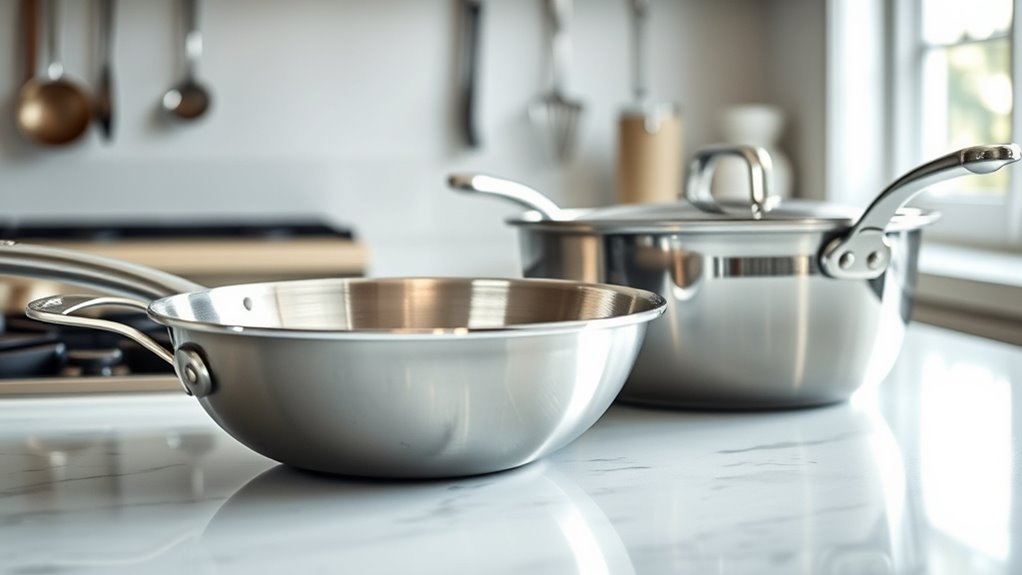
Because heat control starts in the metal, All‑Clad builds its pans with multiple bonded layers—a fully clad construction that sandwiches an aluminum core between 18/10 stainless steel faces—to deliver fast, even conduction and a durable, PTFE‑free cooking surface that browns and deglazes reliably.
You get purposeful metals and layers engineered for performance and longevity.
- Metals chosen: aluminum core for conduction, 18/10 stainless steel for cooking surface and corrosion resistance.
- Layers: fully clad bonding minimizes hot spots by spreading heat across the pan body and up the sides.
- Stainless steel surface: PTFE‑free, robust, and skilled at browning and deglazing without chemical coatings.
- Construction and durability: heavy gauge materials and precise bonding mean cookware that can last decades with proper care.
This construction frees you from disposable pans and engineered nonstick dependency, giving you control, predictable results, and cookware that aligns with long‑term, liberated cooking practice.
Which All‑Clad Lines Contain PTFE : and Which Are PTFE‑Free
Which All‑Clad lines contain PTFE, and which don’t?
You should know: All‑Clad’s nonstick families — particularly NS1 and NS Pro collections — use PTFE (Teflon) to deliver slick release.
The NS Pro Ceramic Nonstick branding can confuse you; the NS Pro line includes PTFE-coated options, while any explicitly labeled “ceramic” aims to be PTFE-free but requires checking the specific SKU.
If you want guaranteed PTFE-free cookware, choose All‑Clad’s stainless steel cookware lines like D3 and D5, or alternatives such as Copper Core, all made without PTFE coatings.
Since 2015 All‑Clad phased out PFOA, reducing prior chemical concerns in PTFE products, but PTFE itself remains in their nonstick ranges.
Practically, inspect product descriptions: “PTFE-free” will be stated for ceramic or other non-coated items.
If liberation for you means avoiding synthetic coatings, stick with the branded stainless options or clearly marked PTFE-free pieces.
How All‑Clad Stainless Steel Pans Perform Without Teflon
After noting that All‑Clad’s nonstick lines use PTFE while its stainless cookware does not, it’s worth looking at how those uncoated pans actually perform.
You get durable 18/8 stainless steel that resists rust without a Teflon layer, and the fully clad aluminum core delivers reliable heat distribution so you won’t fight hot spots. With proper care, the smooth stainless steel surface yields surprisingly good non-stick release for eggs, pancakes, and seared proteins.
- Seasoning: heat oil, coat, cool—repeat to build a slick surface that improves release.
- Temperature control: use medium-low heat; high heat can make food stick and complicate cleanup.
- Cooking technique: preheat, add oil, then add food—this prevents adhesion and preserves finish.
- Cleaning and storage: avoid abrasives, hand-wash when possible, dry thoroughly to maintain performance.
These pans reward intentional use and maintenance, freeing you from fragile coatings while offering professional-grade results.
All‑Clad vs PTFE: Safety Comparison With Ceramic, Cast Iron, and Stainless Steel
You should weigh PTFE’s known risk of emitting harmful fumes when overheated against the practical benefits of easy food release in All‑Clad’s nonstick lines.
Ceramic coatings avoid PTFE-related fumes but often sacrifice durability and even heating, while cast iron and All‑Clad stainless offer PTFE‑free options that require different care and cooking techniques to achieve stick resistance.
Consider your typical cooking temperatures and maintenance tolerance when choosing between these tradeoffs.
PTFE Health Risks
How worried should you be about PTFE in All‑Clad cookware? You should be informed, not fearful. PTFE health risks hinge on misuse: overheating PTFE non-stick coating above 500°F (260°C) can release toxic fumes; proper use prevents that.
Consider practical comparisons:
- Choose PFAS-free ceramic options when you want non-stick performance without PTFE.
- Opt for All‑Clad’s stainless steel surface if you want completely PTFE-free, durable cooking.
- Use PTFE pans at moderate heat, avoid scratching, and replace damaged pieces to reduce degradation concerns.
- Compare longevity: cast iron and stainless steel often outlast PTFE-coated pans despite heavier maintenance.
Make choices that free you from unnecessary chemical exposure while matching your cooking needs.
Ceramic Coating Tradeoffs
While All‑Clad’s nonstick lines rely on PTFE for reliably slick release, ceramic‑coated pans trade that chemical resilience for a PFAS‑free surface that tends to lose its slickness and evenness of heat more quickly.
You’ll weigh clear tradeoffs: ceramic offers a perceived safety gain because it’s PFAS-free, but its nonstick coating often degrades sooner and may heat unevenly, pushing you to use more oil or gentler techniques.
All‑Clad’s PTFE gives superior release but demands care to avoid overheating.
If you want liberation from frequent replacement, consider alternatives: seasoned cast iron builds a durable non‑stick surface without chemicals, and stainless steel relies on construction and technique for gentle release.
Choose based on lifespan, cooking style, and tolerable risk.
Cast Iron And Stainless
After weighing ceramic’s PFAS-free but short-lived performance against PTFE’s reliable release, it’s worth comparing truly long-lived alternatives: All‑Clad stainless steel and well‑seasoned cast iron. You want safe, lasting tools that free you from disposable cookware cycles.
- All‑Clad stainless steel is PTFE-free, handles high heat without off-gassing, and suits searing and deglazing for flavor-forward cooking.
- Properly seasoned cast iron offers a natural non-stick layer, unmatched heat retention, and can last generations with simple care.
- PTFE coatings risk toxic fumes above 500°F (260°C); avoiding them removes a major safety concern for health-focused cooks.
- Compared to ceramic, both cast iron and All‑Clad stainless steel are durable, premium cookware investments that align with liberation from short-lived products.
How to Tell If Your All‑Clad Pan Has a Nonstick (PTFE) Coating
Wondering whether your All‑Clad pan has a PTFE (Teflon) coating? Check labels and surface finish first.
All-Clad pans marketed as non-stick pans will often state “non-stick” or “PTFE” on packaging and product pages; that explicit labeling is the clearest evidence.
Visually inspect the cooking surface: PTFE-coated cookware has a smooth, glossy black or dark finish, unlike stainless steel’s brushed or polished metallic look.
If labeling is absent, confirm via All‑Clad’s official website or retailer specifications—product listings typically note materials and layers.
You can also cross-check model names against All‑Clad catalogs; non-coated stainless steel lines are listed separately and explicitly lack PTFE.
Don’t rely on feel alone, since some finishes can be similar; documentation beats guesswork.
These steps let you identify whether your pan contains a PTFE coating and choose freedom from unwanted chemicals or embrace the convenience of true non-stick performance.
Care and Lifespan: Protecting Coatings and Maximizing Stainless‑Steel Performance
To protect PTFE coatings and get the most from bare stainless All‑Clad, you should season stainless pans with a thin layer of oil and preheat them properly to improve release and reduce sticking.
Use silicone or wooden utensils and hand wash with mild soap—avoid metal tools and abrasive cleaners that can scratch coatings or finish.
Those simple habits greatly extend nonstick performance and overall pan lifespan.
Proper Seasoning Techniques
When you season stainless steel correctly, a thin polymerized oil layer forms that improves food release and cuts down on sticking; use a high smoke-point oil such as canola or grapeseed, heat the pan over medium-low until the oil shimmers, then let it cool and wipe out any excess.
- Choose a high-quality stainless steel pan and a neutral oil; this is the foundation of proper seasoning and long-term performance.
- Apply a thin coat, warm on medium-low heat until shimmering, then cool—this creates the polymerized barrier that aids release.
- After use, wipe residual oil and food particles away promptly to protect the seasoned surface and extend lifespan; consistent care matters.
- To preserve the seasoning, avoid using abrasive cleaners or metal utensils that can scratch and strip the protective layer.
Gentle Cleaning Practices
Although proper seasoning helps, gentle cleaning is the key to preserving All‑Clad’s finish and performance. So hand wash warm, soapy water and a soft sponge after each use rather than relying on the dishwasher.
You’ll protect coatings and stainless layers by letting pans cool first, then rinsing to remove loose debris. Use mild detergent and a nonabrasive sponge; avoid using metal utensils or scouring pads that scratch surfaces.
Regular cleaning after each use prevents residue buildup and discoloration that reduces performance. If stuck-on food appears, soak briefly in warm, soapy water and lift debris with a soft tool.
These gentle cleaning practices are practical, evidence-driven steps you can take to care to maintain cookware integrity and keep your kitchen tools reliable for years.
Extending Pan Lifespan
One simple routine can greatly extend the life of your All‑Clad pans: hand wash them with warm, soapy water, dry promptly, and store with protection between pieces to prevent scratches.
That habit preserves both stainless and non-stick surfaces and frees you from premature replacement.
- Hand wash and dry immediately to avoid detergent and heat damage that degrade surface integrity.
- Use wooden or silicone utensils; never metal on non-stick coatings to prevent scratching and loss of release.
- Season stainless pans periodically—heat oil, let cool, wipe—to boost non-stick performance for delicate cooking.
- Store with pan protectors or cloth layers to prevent abrasion during stacking.
These practical, evidence-based steps focus on extending lifespan and protecting coatings so your cookware serves you longer.
How to Choose the Right All‑Clad Collection for Health, Cooking Style, and Longevity
Curious which All‑Clad line matches your priorities? Decide by weighing health, cooking methods, and longevity.
Curious which All‑Clad fits you? Weigh health, cooking style, and longevity to choose stainless, nonstick, or ceramic.
If you cook at high heat and want PTFE‑free performance, choose stainless steel pans: they sear, brown, and retain heat aggressively, and an All‑Clad pan can last 30+ years.
If you prioritize easy release for sautéing or delicate foods, All‑Clad’s non‑stick (PTFE) options simplify cleanup, but expect shorter service life and eventual replacement.
Ceramic and other alternatives on the market offer a middle ground for those avoiding PTFE; they release well for low‑to‑medium heat but don’t match stainless steel durability.
Match material to technique: use stainless for searing and reductions, non‑stick or ceramic for eggs and crepes.
Finally, assess budget and maintenance willingness—invest in stainless for longevity and versatility, or pick non‑stick/ceramic if convenience and specific cooking methods matter more to your daily freedom.
Frequently Asked Questions
Are All-Clad Teflon Pans Safe?
Yes — All-Clad Teflon pans can be safe if you follow precautions.
You’ll mitigate Teflon safety concerns by avoiding temperatures above 500°F, using wooden or silicone utensils, and replacing scratched pans.
Consider non-stick alternatives like ceramic or stainless steel if you want to avoid PTFE.
For cookware longevity tips, hand-wash gently and store without stacking.
Understand surface coating differences to choose cookware that matches your health and freedom priorities.
What Is the All-Clad Lawsuit?
Like a spotlight revealing flaws, the All-Clad lawsuit alleges its Teflon-coated cookware hid risks and misleading claims.
You’ll see accusations tied to Teflon history, cookware safety failures, and inadequate warnings about toxic fumes and coating degradation.
The case probes legal implications for marketing and ingredient disclosure, urging greater consumer awareness and accountability.
You’ll want clear evidence, safer practices, and transparency to reclaim control over your kitchen choices.
What Is the Best Cookware Without Teflon?
The best cookware without Teflon depends on your needs: choose ceramic cookware options for PFAS-free non-stick convenience, stainless steel advantages for durability and high-heat searing, or cast iron benefits for longevity and superior heat retention.
Those non-stick alternatives let you cook freely: season cast iron, use proper oils with stainless, or pick high-quality ceramic for easy release.
You’ll get safer, versatile tools that support liberated, confident cooking.
Which All-Clad Is Non-Toxic?
All-Clad’s non-toxic picks include their stainless steel and NS Pro ceramic lines. You’ll gain health benefits from PTFE- and PFAS-free surfaces, and you’ll cook safely using alternative materials like bonded stainless and ceramic coatings.
These choices boost cookware longevity when you maintain proper care, so you’re free from worrying about chemical exposure. Choose stainless for durability and ceramic for a safer nonstick option that supports liberated, evidence-driven cooking.
Conclusion
You don’t have to guess — some All‑Clad lines use PTFE (NS1, NS Pro), while stainless collections like D3 and D5 are fully PTFE‑free and fully clad with an aluminum core. Think of choosing cookware like picking shoes: my grandmother’s sturdy loafers (her D5 set) lasted 20 years, proving durability beats convenience for some tasks. Use nonstick for eggs, stainless for searing — pick what matches your cooking, care, and safety priorities.