
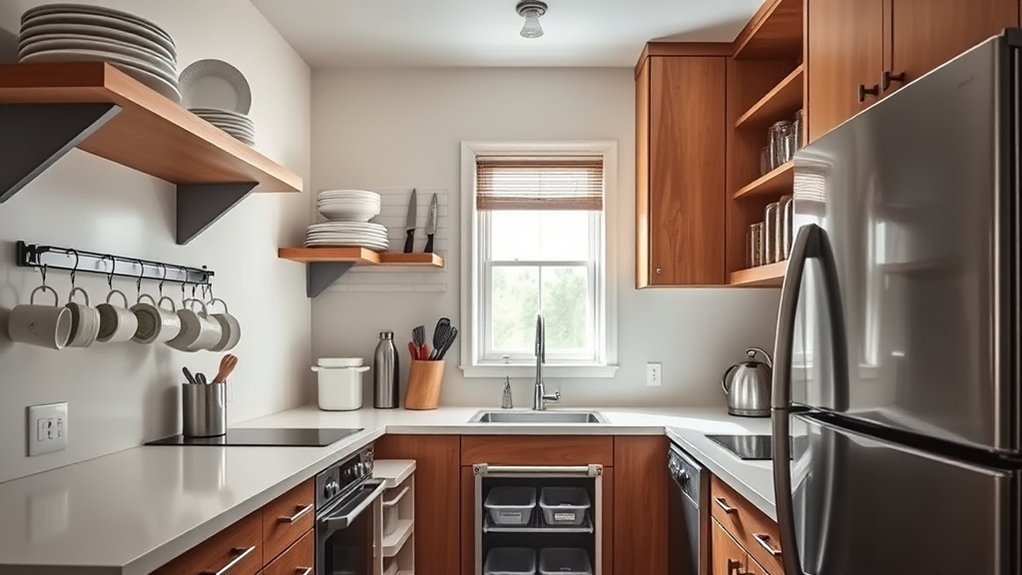
A small kitchen becomes easier to use when you remove what you do not need, organize the remaining items around daily tasks, and make better use of cabinets, drawers, walls, doors, and counters. Start with what you already own before buying organizers. The goal is not to fit more into the room, but to make the things you use easy to see, reach, use, and put away.
Quick Answer
To organize a small kitchen, declutter first, then create zones for cooking, prep, cleaning, serving, and food storage. Keep frequently used items close to where they are used, store heavy cookware low, use shelves and doors vertically, divide drawers, and keep counters mostly clear. Measure every space before buying organizers.
Key Takeaways
- Declutter before buying bins, racks, shelves, or other organizers.
- Store items by task and frequency of use so everyday tools require fewer steps.
- Use vertical cabinet, wall, and door space without exceeding mounting or weight limits.
- Keep combustible items away from the stovetop and household chemicals separate from food.
- Measure cabinets and organizers first so storage products do not waste the limited space you have.
At a Glance
| Time Required | About 30–90 minutes for an initial declutter and reorganization; longer if you install shelves or racks. |
| Difficulty | Easy to moderate |
| Tools Needed | Donation/trash boxes, tape measure, labels or marker; appropriate mounting hardware only if installing wall storage. |
| Cost | Potentially $0 when reorganizing existing storage; optional dividers, bins, carts, and wall organizers increase the cost. |
Purge Your Small Kitchen First
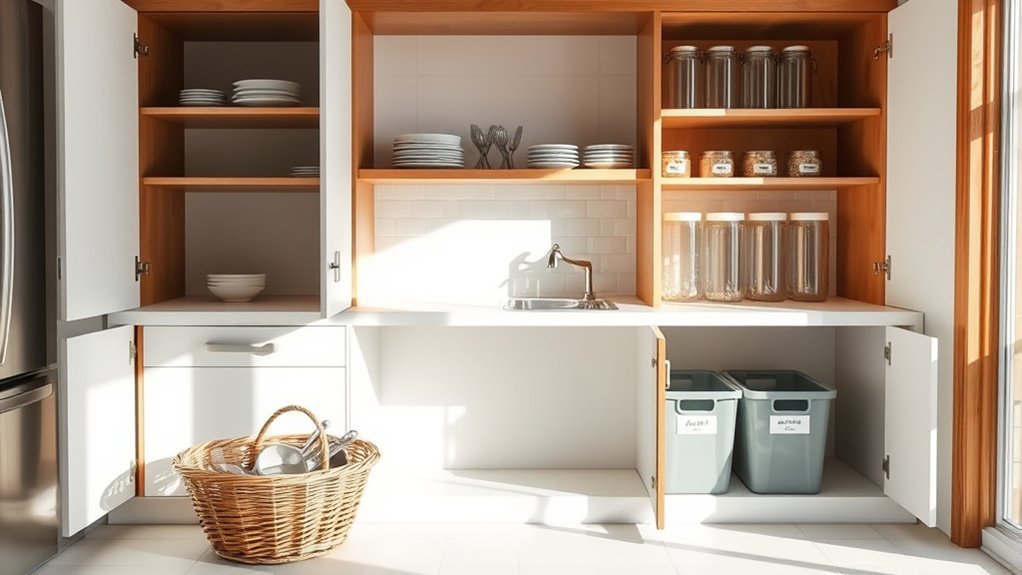
Begin by evaluating what is taking up space. Pull out one cabinet, shelf, or drawer at a time rather than emptying the entire kitchen at once. Group duplicates and ask which tools you actually use for the meals you cook.
The common “one-year rule” can be a useful decluttering prompt, but it is not a requirement. Seasonal bakeware, emergency equipment, specialty tools, or items used for particular holidays may still deserve a place even if they are used infrequently.
Remove broken tools, food containers without matching lids, obvious duplicates, and gadgets that no longer serve a purpose. Donate usable items when practical and dispose of damaged items appropriately.
A designated basket or organizer for food-storage lids can prevent loose pieces from spreading through a cabinet. Before buying a new container or divider, check whether an existing box, basket, jar, or tray can do the same job.
Pro Tip: Measure the inside width, depth, and height of a cabinet or drawer before buying an organizer. Also measure door hinges, pipes, and shelf supports that reduce usable space.
Set Up Small-Kitchen Zones by Daily Use
A small kitchen works best when items follow the tasks performed in the room. Instead of asking which cabinet looks empty, ask where an item is used and how often you reach for it.
A cooking zone around the range can hold frequently used pans, heat-safe cooking tools, pot holders stored safely away from the burners, and commonly used seasonings in a nearby cabinet.
A prep zone should place cutting boards, mixing bowls, knives, measuring tools, and frequently used ingredients close to the main preparation surface.
A serving zone can group plates, bowls, glasses, and serving tools near the dining area or dishwasher, depending on your normal routine.
A cleaning zone around the sink can hold dish soap, brushes, clean towels, trash bags, and related supplies. Household cleaning chemicals should remain separate from food and food-contact items.
A food-storage zone can include pantry shelves, dry goods, snacks, canned foods, and food-storage containers. Grouping similar foods makes it easier to see what you already have before buying more.
Store Items Near Where You Cook
Pots, pans, and frequently used cooking tools should be close enough to the range to reduce unnecessary movement, but “close” does not mean directly beside a flame or hot burner.
Baking sheets and mixing bowls can go in drawers or cabinets between the prep area and oven. Heavy Dutch ovens, cast-iron pans, and large appliances are usually safer and easier to handle from lower cabinets than from high shelves.
Keep Tools Near the Stove Safely
Spatulas, ladles, tongs, and similar tools can stay in a nearby drawer or utensil holder where they are easy to reach without placing them in the burner area.
A wall rail, magnetic knife strip, or pegboard can save drawer space when it is installed securely on an appropriate surface and positioned outside the heat, steam, grease-splatter, and flame zone. Follow the organizer manufacturer’s mounting and weight instructions.
Keep oils and spices in a nearby cabinet or shelf protected from excessive heat rather than directly above the stovetop. USDA guidance recommends storing shelf-stable foods in a cool, clean, dry location away from extreme temperatures.
Warning: Do not use the area immediately around the stovetop as general storage. The National Fire Protection Association advises keeping items that can catch fire—including oven mitts, wooden utensils, packaging, towels, and curtains—away from the stovetop.
Group Pans and Baking Sheets
Store frequently used pans near the cooking area and group similar pieces so you do not have to lift several unrelated items to reach one pan.
Baking sheets, muffin tins, cooling racks, cutting boards, and trays often use cabinet space more efficiently when stored vertically in a divided rack. Lids can also stand vertically in a dedicated lid rack rather than being stacked in an unstable pile.
A Lazy Susan is more useful for bottles, jars, spices, condiments, and other smaller items that benefit from rotation. It is generally a poor match for large flat baking sheets.
Use Vertical Space on Walls and Doors
Vertical storage can increase usable capacity without taking more floor space. Wall-mounted shelves, pegboards, rails, hooks, and magnetic organizers can move suitable items off counters and out of crowded drawers.
The inside of a cabinet or pantry door can hold light items such as measuring spoons, wraps, cleaning cloths, or small packets when the organizer does not interfere with shelves or hinges.
Before using adhesive hooks, check the manufacturer’s weight rating and surface requirements. For heavier racks or shelves, use mounting hardware suitable for the wall construction and the expected load.
Renters can focus on removable hooks, over-door organizers, freestanding shelf risers, tension systems, magnetic accessories on compatible surfaces, and clip-on baskets when their lease limits drilling.
Do not fill high shelves simply because space exists. Reserve them for lighter, less frequently used items that can be retrieved safely.
Organize Cabinets and Drawers
Cabinets and drawers work best when placement reflects both frequency of use and item weight. Daily essentials belong in the easiest reach zone. Heavy cookware is generally easier to handle from lower storage, while light seasonal items can move higher.
Sort by Use
Place everyday flatware, cooking tools, dishes, and food-storage supplies in drawers or shelves you can reach without stretching. Move specialty gadgets and occasional bakeware away from the prime storage positions.
Keep baking tools close to the main prep area or oven. Keep coffee or tea equipment together if it is used daily. Creating these smaller task groups reduces the number of cabinets opened during routine work.
Group Like Items
Store pots with pans, baking supplies together, food-storage containers with their lids, and frequently used cups and glasses in one predictable area.
Clear containers can improve visibility, but they are not necessary for everything. Original food packaging often contains important preparation, allergen, storage, lot, and expiration information. If you decant dry goods, label the container clearly and retain any information you may need.
Add Drawer Dividers
Drawer dividers give utensils and small gadgets defined spaces so items remain visible instead of forming a pile. Adjustable dividers are useful when drawer widths vary, while shallow trays can organize measuring spoons, peelers, clips, and other small tools.
Measure first and avoid filling every inch. A drawer is easier to maintain when there is enough open space to remove and return each item without rearranging several others.
Make Deep and Corner Cabinets Easier to Use
Deep cabinets often waste space because items at the back become difficult to see. Use handled bins to create pull-out groups, or use approved slide-out shelves where installation is practical.
In a corner cabinet, a Lazy Susan can improve access to jars, containers, or small appliances. Another option is to assign the deepest area to infrequently used equipment while keeping daily items near the opening.
Avoid unstable towers of cookware. If several heavy pieces must be stacked, keep the stack low and place the largest, heaviest item at the bottom.
Organize Pantry and Dry-Food Storage
Group pantry foods into simple categories such as breakfast foods, baking ingredients, grains, canned foods, snacks, and meal staples. Put frequently used items where labels can be seen without moving several packages.
USDA guidance recommends storing shelf-stable foods in a cool, clean, dry location away from extreme heat or cold. Packages that can be affected by moisture or pests may gain extra protection from suitable sealed containers.
Use a simple “first in, first out” habit when restocking: bring older packages forward and put newer purchases behind them when appropriate. This makes it easier to use food before quality declines.
Do not store food in the same bin or shelf as household cleaning chemicals.
Organize Under the Sink Safely
The cabinet below the sink is useful for dishwashing and cleaning supplies because it is close to the cleanup zone, but pipes reduce usable space and leaks can occur.
Use small bins or removable caddies around the plumbing so supplies can be pulled out easily if you need to inspect the pipes. Avoid packing the cabinet so tightly that a slow leak goes unnoticed.
University of Minnesota Extension recommends keeping cleaning chemicals away from food, ingredients, and food-contact surfaces. Follow each product’s storage instructions and keep household chemicals in their labeled containers.
If children can access the kitchen, EPA recommends storing potentially harmful household products out of their reach and using appropriate child-resistant storage or locks on low cabinets.
Create More Counter Space
Counter space is especially valuable in a small kitchen, so decide which appliances genuinely need permanent countertop positions. An appliance used several times a day may deserve the space; one used monthly may be better in a cabinet or nearby storage area.
A cutting board designed to bridge the sink can temporarily expand the prep area. Use only a board that sits securely on the sink and does not slide during cutting.
| Solution | Benefit | Best Use |
|---|---|---|
| Sink board | Adds temporary prep space | Food preparation |
| Rolling cart | Creates movable workspace | Prep and extra storage |
| Wall basket | Frees the countertop | Light items |
| Corner shelf | Uses overlooked space | Small, lightweight items |
A rolling cart can provide storage plus extra work surface without becoming permanent cabinetry. Choose one that fits the available aisle space and can be parked without blocking doors, appliances, or normal walking paths.
Wall-mounted racks, shelf risers, and under-cabinet baskets can also free work surfaces when used within their mounting and weight limits.
Tame Cookware, Lids, and Bakeware
Cookware is easier to manage when every pan, lid, tray, and board has a defined storage position. Wall-mounted pot racks can free cabinet space when the wall and fasteners are suitable for the loaded weight.
Vertical bakeware dividers work well for baking sheets, cooling racks, cutting boards, and trays. A cabinet-door or freestanding lid organizer can keep lids visible without creating unstable stacks.
In a corner cabinet, a Lazy Susan can improve access to jars, small containers, or other pieces that fit safely on the rotating shelf. Clear pantry containers can make dry ingredients easier to see when they are labeled properly.
A securely mounted magnetic knife strip can free drawer or counter space, but position it where children cannot easily reach the knives and away from heat or heavy kitchen traffic.
Keep Your Small Kitchen Organized
A storage system only works if items can be returned without effort. Give each frequently used object one predictable home and avoid adding organizers that create more steps than they save.
- Return cookware and tools to their assigned zone after use.
- Keep countertop storage limited to items used often.
- Match food-storage containers with lids before putting them away.
- Check pantry dates and duplicates before grocery shopping.
- Review one cabinet or drawer whenever it starts becoming difficult to use.
- Remove broken or unused pieces before adding new organizers.
A five-minute reset after cooking is often more manageable than repeatedly reorganizing the entire kitchen. Every few months, review categories that tend to grow quickly, such as food containers, mugs, gadgets, reusable bottles, and pantry supplies.
Plan a Small-Kitchen Layout Around Workflow
If you are reorganizing an existing kitchen, you usually cannot move the sink, range, or refrigerator. You can still improve workflow by storing the tools and ingredients associated with each appliance close to that work area.
For a renovation, the traditional kitchen work triangle remains one planning reference. NKBA guidance describes a three-center triangle in which each leg is generally 4 to 9 feet and the three legs total no more than 26 feet.
That does not mean every good kitchen must follow a perfect triangle. Galley kitchens, one-wall kitchens, kitchens with multiple cooks, and layouts with additional appliances may work better when planned as overlapping prep, cooking, cleanup, refrigeration, and storage zones.
Note: Avoid solving a storage problem by narrowing a necessary walkway or blocking an appliance door. A clear path through the kitchen is more valuable than squeezing in one more cart or cabinet.
Frequently Asked Questions
What are some good space-saving ideas for a small kitchen?
Start by decluttering, then use vertical cabinet space, shelf risers, drawer dividers, door organizers, vertical bakeware racks, and wall storage where mounting is safe. A rolling cart or stable over-sink cutting board can add temporary workspace. Keep everyday items within easy reach and move rarely used pieces out of prime storage areas.
How can I effectively organize a small kitchen space?
Organize around tasks rather than filling cabinets randomly. Create cooking, prep, cleanup, serving, and food-storage zones; keep frequently used items near those zones; place heavy cookware low; divide drawers; and keep countertops mostly clear. Measure cabinets before purchasing organizers and maintain the system with short, regular resets.
What are some clever storage ideas for a small kitchen?
Useful options include shelf risers, pull-out bins for deep cabinets, vertical dividers for trays and cutting boards, cabinet-door organizers, Lazy Susans for jars and bottles, drawer dividers, removable wall hooks for light items, and narrow rolling carts. Choose solutions based on the specific space rather than buying an organizer first and trying to make it fit.
What are some good layout ideas for a small kitchen?
Galley, L-shaped, one-wall, and compact U-shaped kitchens can all work well when walking paths remain clear and storage follows the workflow. In renovations, the traditional work triangle can be one useful planning reference, but modern layouts can also be organized successfully around prep, cooking, cleanup, refrigeration, and storage zones.
How do I organize a small kitchen without buying anything?
Remove duplicates and unused items first, then relocate what remains according to where it is used. Reuse sturdy boxes, jars, trays, baskets, or containers you already own as dividers when appropriate. Moving rarely used items out of prime storage and clearing unnecessary countertop appliances can create meaningful space without purchasing organizers.
What should I store under the kitchen sink?
The area can hold dishwashing and household-cleaning supplies if products are stored according to their labels and separated from food and food-contact items. Keep plumbing visible enough to notice leaks. If children are present, hazardous products should be secured out of reach or behind suitable child-resistant storage.
Conclusion
A small kitchen does not need a complicated organizing system. Start by removing excess, assign the remaining items to practical work zones, keep daily tools easy to reach, and use cabinets, walls, doors, and drawers deliberately. Measure before adding organizers and protect safety around the stove, sink, chemicals, and high storage. When every frequently used item has an obvious home, maintaining order takes much less effort.
Sources
- National Fire Protection Association — Cooking Safety — supports guidance on keeping combustible items away from the stovetop.
- USDA Food Safety and Inspection Service — Storing Dry Goods — supports cool, clean, dry storage and protection from excessive heat and moisture.
- USDA Food and Nutrition Service — Best Practices to Safely Handle and Store Foods at Home — supports safe household food-storage practices.
- University of Minnesota Extension — Sink Essentials for Your Home Kitchen — supports separating cleaning chemicals from food and food-contact surfaces.
- U.S. Environmental Protection Agency — Read the Label First: Protect Your Kids — supports safer storage of household chemical products around children.
- National Kitchen & Bath Association — Kitchen Planning Guidelines — supports the referenced work-triangle dimensions and kitchen-planning principles.