
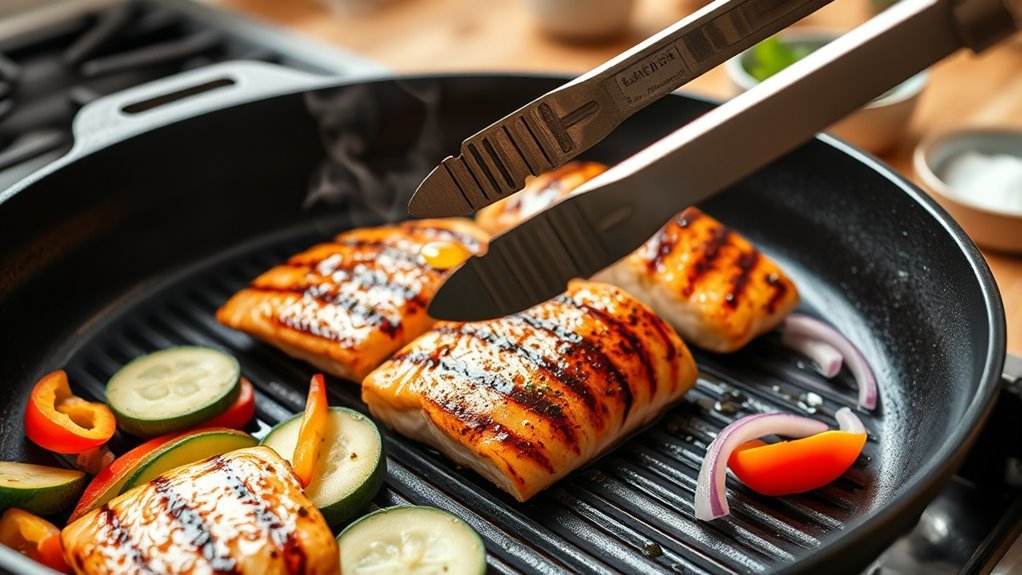
What is a grill pan used for? It cooks food indoors on the stovetop with grill-style sear marks. Its raised ridges lift food above rendered fat, so steaks, chicken, burgers, fish, sausages and vegetables brown and drain a little while they cook. It will not give you true charcoal flavor, but it is a handy way to grill year-round.
This is our main guide to grill pan uses. If you want to weigh the pros and cons, see what grill pans are good for. If you are choosing one, read grilling pan meaning and key facts.
What Is a Grill Pan Used For?
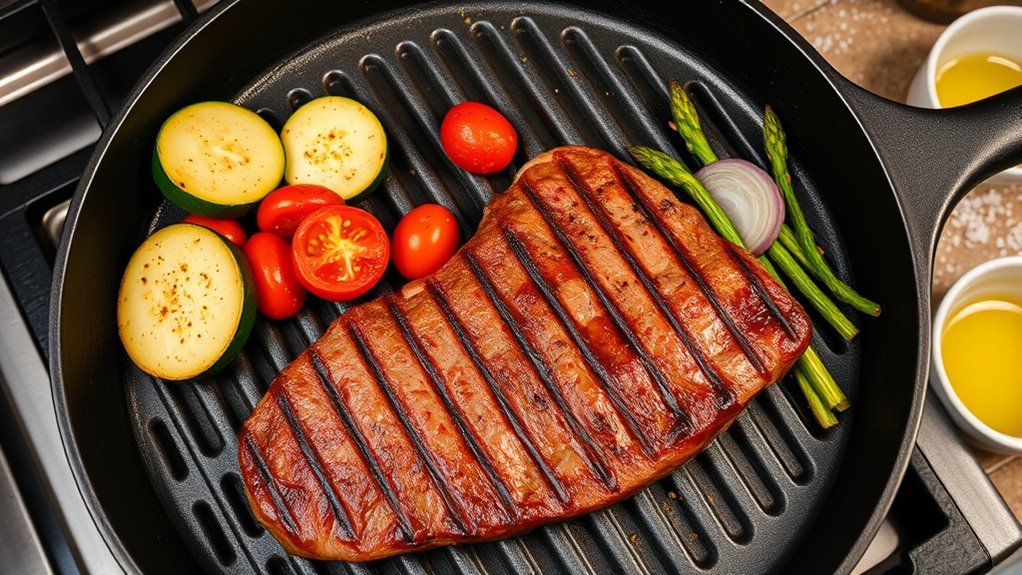
A grill pan is a skillet or griddle with parallel raised ridges across the cooking surface. The ridges do three things:
- They create the dark sear lines that make food look grilled.
- They hold food off the pan floor so fat and juices collect in the grooves.
- They concentrate heat at the contact points, which browns the food in stripes.
Because the heat comes from the stove burner (and the pan’s mass), the flavor is different from a charcoal or gas grill, which adds smoke. The pan works best for foods that cook quickly and benefit from sear marks.
Best Foods to Cook on a Grill Pan
| Food | Why it works | Tip |
|---|---|---|
| Steaks and chops | Strong sear and fast cooking | Pat dry, season, and rest after cooking |
| Chicken breasts or thighs | Marks and drainage of fat | Pound breasts to an even thickness |
| Burgers and sausages | Fat drains into the grooves | Do not press down on burgers |
| Fish fillets and shrimp | Quick cooking | Use a firm fish, oil the fish, and flip once |
| Zucchini, peppers, asparagus, eggplant | Light char and sweet flavor | Cut into flat slabs or long pieces |
| Halloumi, tofu, paneer | Firm cheese and tofu hold their shape | Pat dry before cooking |
| Sandwiches and flatbreads | Crisp, marked bread | Press with a heavy pan or a grill press |
| Fruit such as pineapple or peaches | Caramelized sugars | Brush lightly with oil, use medium heat |
How to Use a Grill Pan Step by Step
- Preheat dry. Heat the pan over medium to medium-high for a few minutes until it is hot. A drop of water should sizzle and evaporate quickly.
- Oil the food, not the pan. Brush a thin coat of oil on the food. Oil in the grooves smokes and burns.
- Use an oil with a high smoke point. Refined avocado, canola, peanut or vegetable oils are common choices.
- Lay food at an angle. For crosshatch marks, rotate each piece about 90 degrees partway through one side’s cooking time.
- Do not move it too soon. Food releases from the ridges when it has seared. Tugging at it tears it.
- Flip once. Turn it over when the first side has deep marks.
- Finish in the oven if needed. Thick steaks and bone-in chicken often brown on the pan and then finish at a moderate oven temperature, if your pan is oven-safe.
- Check the internal temperature. Use a thermometer. USDA minimums are 165°F (74°C) for poultry, 160°F (71°C) for ground meat, and 145°F (63°C) for whole cuts of beef, pork and fish, with a three-minute rest for the whole cuts of meat.
Handling Smoke When Using a Grill Pan Indoors
Grill pans can smoke because fat and oil heat in direct contact with a hot metal. To reduce smoke:
- Turn on your range hood and open a window.
- Trim excess fat from meat and pat food dry.
- Use a high smoke point oil and use only a little.
- Keep the heat at medium to medium-high rather than maximum.
- Wipe out burnt oil between batches.
Cleaning and Caring for a Grill Pan
- Let the pan cool for a few minutes, then clean it while still warm. Burnt-on food is harder to remove when it sets.
- Use a soft-bristle brush or a non-scratch scrubber to reach the grooves.
- For cast iron, mild dish soap is fine. Dry it immediately and rub on a very thin coat of oil. Our cast iron care guide covers this.
- For nonstick versions, avoid metal utensils and steel wool, and follow the maker’s heat limit. See whether nonstick cookware is dishwasher-safe.
- Check the manufacturer’s care page before using a dishwasher, as advice differs by brand and material.
Common Grill Pan Mistakes
- Crowding the pan, which lowers heat and steams food instead of searing.
- Putting cold food straight from the fridge into a hot pan. Let it sit out briefly, unless food safety guidance says otherwise.
- Using too much oil or marinade with sugar, which burns in the grooves.
- Pressing the food down on the ridges, which squeezes out juices.
- Cooking in a pan that is too small for your burner, which leaves cool spots.
Substitutes for a Grill Pan
A regular skillet will cook the same foods but will not leave sear lines or drain fat. A flat griddle offers more surface for pancakes and sandwiches. An outdoor grill or an oven broiler gives a stronger smoky or charred result. See also what a braiser is if you want a pan for slow, covered cooking instead of searing.
Frequently Asked Questions
Do you really need a grill pan?
No. A regular skillet cooks most of the same foods. A grill pan is worth having if you like seared marks, want fat to drain away from burgers and steaks, or cook indoors a lot without access to an outdoor grill. It is a convenience, not a necessity.
What do you cook on a grill pan?
Steaks, chops, chicken, burgers, sausages, fish fillets and shrimp work well, along with vegetables like zucchini, peppers and asparagus. Halloumi, tofu, sandwiches and fruit also do well. Foods that cook quickly and benefit from sear marks suit the pan best.
What can I use as a substitute for a grill pan?
A cast iron skillet is a good substitute for searing, though it will not make grill marks. A flat griddle works for sandwiches and vegetables, and an oven broiler or outdoor grill gives a smokier char. Choose based on the food and the effect you want.
What is the difference between a grill pan and a regular pan?
A grill pan has raised ridges that lift food above the surface, leave sear marks and let fat drain into the grooves. A regular pan has a flat cooking surface, so food sits in its own juices and browns evenly but without grill-style lines.
Conclusion
A grill pan gives you sear marks and a little fat drainage on the stovetop. Use it for steaks, chicken, fish, burgers and vegetables, oil the food instead of the pan, and ventilate your kitchen.
