
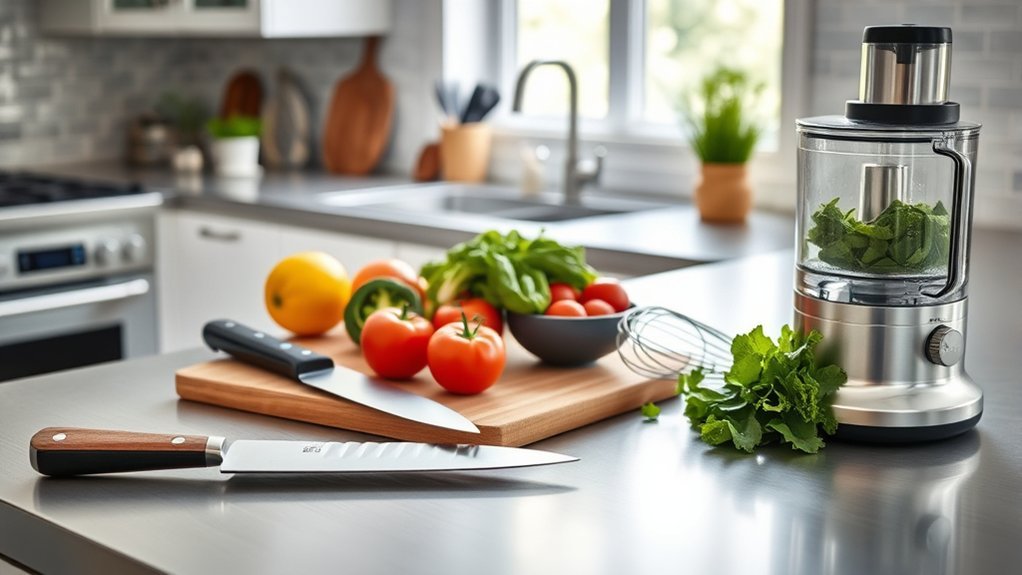
A food processor is worth it for people who regularly chop, slice, shred, mix thick dips, prepare dough, or cook in batches. It can remove a lot of repetitive manual prep, but it is not automatically faster for every job. Small tasks may be easier with a knife, while a blender usually works better for liquid-heavy recipes and very smooth purees. The best choice depends on what you cook, how much you make, your storage space, and how much cleanup you are willing to do.
Quick Answer
Yes, a food processor is worth it if you regularly chop, slice, shred, mix thick dips, or make dough in batches. It is less worthwhile for tiny prep jobs, liquid-heavy recipes, or kitchens with little storage. The best test is whether it replaces repeated knife, grater, or dough work you already do.
Key Takeaways
- Food processors are especially useful for repeated chopping, slicing, shredding, thick dips, nut butters, breadcrumbs, and some doughs.
- A blender is generally the better choice for smoothies, liquid-heavy recipes, and very silky purees.
- Large processors make the most sense for batch cooking; a compact chopper may be more practical for small quantities.
- Setup, washing, attachment storage, and counter or cabinet space are part of the true cost of ownership.
- Buy for the tasks you already do regularly rather than for functions you only expect to use someday.
Is a Food Processor Worth It?
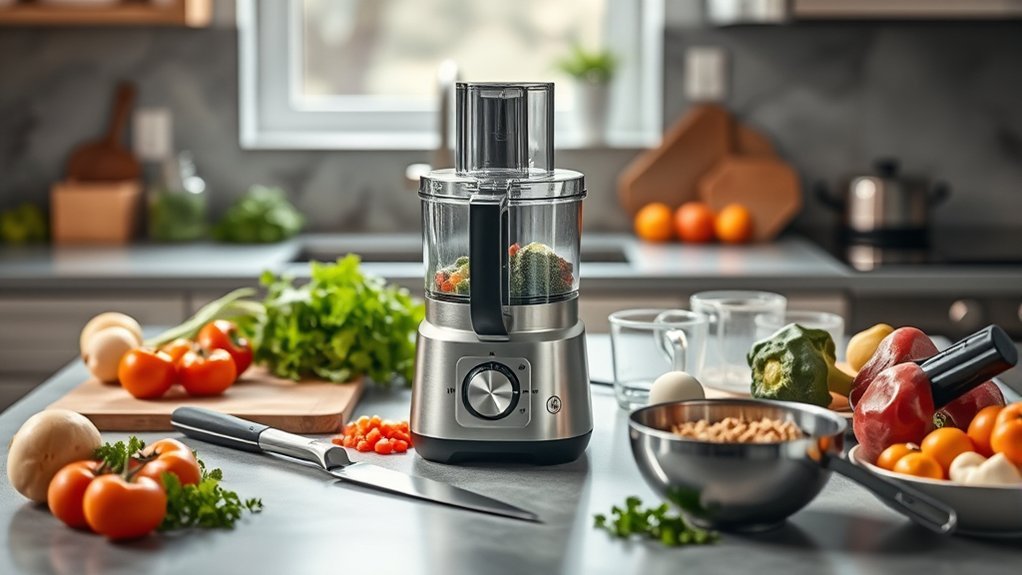
A food processor is worth it for cooks who want to save time on repetitive prep work. Full-size models can chop vegetables, slice produce, shred cheese, puree dips, mix ingredients, and, with the right attachment, knead dough. Current KitchenAid food processor guidance also highlights feed tubes, multiple blades, and slicing or shredding discs as key differences between full-size processors and smaller food choppers.
The value becomes clearer when the same jobs appear repeatedly in your weekly cooking. Shredding several carrots, slicing potatoes, chopping a large batch of vegetables, or making hummus is where a processor can remove a noticeable amount of knife and grater work.
For frequent cooks, a food processor can save time and reduce tedious manual prep, especially when the quantities are large enough to justify setup and cleanup.
It is less compelling for an occasional cook who usually prepares small meals. Taking out the machine, assembling it, washing the bowl and blade, and storing the attachments can take longer than cutting one onion with a knife.
People with painful joints or limited hand strength may also appreciate reducing repetitive chopping or grating. The Arthritis Foundation specifically recommends relying on electric kitchen gadgets, including food processors, when they help reduce strain on the hands.
What a Food Processor Does Best
What a food processor does best is handle repetitive prep quickly and consistently. It is a countertop appliance with a work bowl and rotating blade or interchangeable discs. Depending on the model and accessories, it can chop, puree, mix, slice, shred, grate, dice, or knead.
| Task | Best Result | Why It Matters |
|---|---|---|
| Vegetable prep | Chopped, sliced, or shredded pieces | Useful for salads, slaws, soups, gratins, and batch cooking |
| Thick or dry mixtures | Dough, breadcrumbs, nut butter, pastry mixtures | Handles jobs that do not depend on a large amount of liquid |
| Dips and sauces | Hummus, salsa, pesto, tapenade | Makes it easy to control whether the texture stays coarse or becomes smoother |
A full-size processor can also replace several manual tools for certain jobs, including a grater, pastry cutter, and much of the repetitive knife work involved in large-batch preparation. It does not eliminate every kitchen tool, but it can reduce the number of separate steps needed for recipes with extensive chopping, slicing, or shredding.
When a Food Processor Saves Time
A food processor saves the most time when the amount of food is large enough that repetitive hand preparation would otherwise dominate the recipe. Its advantage becomes smaller when only a few ingredients need attention.
For example, slicing several potatoes, shredding a large amount of cabbage, or preparing vegetables for multiple meals gives the machine enough work to justify assembly and cleanup.
It also performs well when a recipe moves through several processor-friendly tasks, such as chopping aromatics and then preparing a dip, pesto, breadcrumb mixture, or dough.
Meal Prep Speed
Meal prep speed is one of the clearest reasons a food processor earns counter or cabinet space. Recipes involving repeated chopping, shredding, slicing, or mixing can move more quickly because the appliance processes a larger quantity at once.
For weekly meal prep, it can chop vegetables, shred cheese, grate produce, or blend hummus and pesto without requiring the same repetitive knife or grater motion for every batch.
Baking can also benefit. A processor can cut cold butter into flour for pastry, and models with appropriate dough blades can handle certain dough recipes. The exact capacity and recommended processing time depend on the appliance, so the model manual should control.
Pro Tip: Judge time savings from the whole job, including setup and washing. A processor is most efficient when you can prepare several ingredients or a large batch before cleaning it.
Large Batch Chopping
When large batches of vegetables, herbs, nuts, or cheese need to be prepared, a food processor can significantly reduce repetitive hand work. This is particularly useful during meal prep, holiday cooking, parties, or family-size recipes.
- It can chop substantial quantities of vegetables more quickly than preparing the same amount individually by hand.
- A shredding disc can process cheese, carrots, cabbage, potatoes, and similar ingredients efficiently.
- It reduces repetitive gripping, chopping, and grating motions for people who find those jobs uncomfortable.
Recipes with many chopped ingredients also become easier to organize because the processor can perform several prep jobs with one work bowl and a small set of attachments.
The biggest advantage is scale. For one garlic clove or a handful of herbs, a knife or small chopper may still be quicker.
Fast Sauce Making
A food processor is also useful for fast sauce making, particularly for recipes that are thick rather than highly liquid. Herbs, nuts, cheese, aromatics, beans, and oil can be combined for pesto, hummus, salsa, tapenade, and similar mixtures.
Pulse control is especially useful because it lets you stop while ingredients still have texture rather than processing everything continuously into a paste.
Food processors can also emulsify some dressings and sauces, although the exact performance depends on the bowl, blade, and whether the model includes a drizzle opening or similar feature.
Cleanup is not automatically easier than hand preparation because the bowl, lid, blade, and any discs used still need washing. The processor earns its advantage when the amount of prep saved is greater than that extra cleanup.
What a Food Processor Does Poorly
Food processors are versatile, but they are not the best appliance for every texture or quantity. A blender generally has the advantage when a recipe depends on a very smooth, liquid-heavy result, such as a smoothie or silky blended soup.
A large processor can also be awkward for tiny batches. A few cloves of garlic, a small handful of herbs, or one small onion may be easier to handle with a knife or compact food chopper.
Over-processing is another risk. Herbs, vegetables, nuts, and other foods can move from chopped to finely minced or pasty if the machine runs too long. Short pulses provide more control.
- Very smooth liquids: A blender is usually better at creating a silky, flowing texture.
- Tiny batches: Large bowls may not process very small quantities efficiently.
- Precision knife work: A processor cannot replace hand-cut garnishes or specialty cuts that require exact control.
- Setup and cleanup: The bowl, lid, blade, discs, and food pusher create more parts to wash and store.
The tradeoff is straightforward: a food processor can save significant effort on the right jobs, but it can be excessive for small or delicate tasks.
Food Processor vs. Blender
A food processor is generally the better tool for chopping vegetables, slicing or shredding with discs, making breadcrumbs, preparing nut butters, working with thicker dips, and handling some doughs.
A blender is generally better suited to liquid-heavy recipes. Its tall jar and blade system are designed to circulate ingredients through a vortex, which helps produce smooth smoothies, soups, drinks, and sauces. The KitchenAid comparison of food processors and blenders describes the same basic distinction while noting that the appliances overlap for tasks such as pureeing dips and sauces.
Neither rule is absolute. A food processor can puree, and a blender can handle some thick mixtures. The better choice depends on the recipe, desired texture, quantity, and appliance design.
Best Uses for Each
| Food Processor | Blender |
|---|---|
| Chopping vegetables and herbs | Smoothies and drinks |
| Slicing and shredding with discs | Silky soups and liquid purees |
| Breadcrumbs, nut butter, pesto, coarse salsa | Pourable sauces and creamy dressings |
| Pie dough and some kneaded doughs | Recipes that need ingredients circulated in liquid |
For dips, either appliance may work. A processor makes it easier to stop at a coarser texture, while a suitable blender may make it easier to push a sufficiently fluid mixture toward a very smooth consistency.
Key Texture Differences
Texture is where these appliances differ most clearly. A food processor uses a wide work bowl with an S-shaped blade and, on full-size models, interchangeable discs. That layout is well suited to chopping, slicing, shredding, and processing foods without requiring substantial added liquid.
A blender uses a tall jar designed to keep wetter ingredients circulating through its blades. That makes it particularly useful for smoothies, soups, drinks, creamy sauces, and other flowing mixtures.
For hummus and similar dips, both appliances can work. Recipe hydration, processing time, ingredient temperature, and the individual appliance can affect the final texture, so it is better to choose based on the consistency you want rather than assume one appliance always gives a specific result.
Who Benefits Most From a Food Processor
Food processors are most useful for people who regularly want to save time and repetitive effort in the kitchen. A processor can take over chopping, slicing, shredding, grating, and other preparation that would otherwise require repeated knife or grater work.
It especially helps people preparing large batches for meal prep, family cooking, entertaining, or baking. The more repetitive prep a recipe contains, the more useful the machine tends to become.
- Home cooks who regularly chop or shred large quantities
- People who want to reduce repetitive knife or grater work
- People with painful joints or limited hand strength who find electric preparation easier
- Cooks who frequently make dips, pesto, nut butter, breadcrumbs, pastry, or dough
- Anyone who values consistent slices or shreds from a processing disc
The same efficiency becomes important in higher-volume kitchens, but a home cook does not need restaurant-scale output to benefit. The key is whether the processor regularly replaces a task that otherwise feels slow or physically tiring.
What to Check Before You Buy
Before buying a food processor, consider what you will actually prepare with it, how much food you normally process, where the machine will live, and how willing you are to clean several removable parts.
Storage matters because a full-size processor has a motor base and bowl plus blades, discs, adapters, and pushers that may require additional cabinet space.
Storage matters too, because the appliance is bulky and its attachments need room of their own.
Choose the Right Capacity
Capacity should match the quantities you normally prepare. Current KitchenAid buying guidance describes compact food choppers around three to five cups and larger processors commonly ranging from roughly six to 14 cups.
A small chopper can be more convenient for herbs, garlic, dressings, and modest portions. A larger processor is better suited to batch cooking, slicing or shredding substantial quantities, and recipes that use specialized discs.
Bigger is not automatically better. Very large work bowls can be less convenient for tiny quantities, and the appliance itself requires more storage.
Check the Blades, Discs, and Feed Tube
Do not buy based on motor size or bowl capacity alone. Check exactly which accessories are included.
- Multipurpose S-blade: Standard tool for chopping, mixing, and pureeing.
- Slicing disc: Useful for potatoes, cucumbers, carrots, and other produce.
- Shredding/grating disc: Useful for cheese, cabbage, carrots, potatoes, and similar foods.
- Dough blade: Worth considering if dough is one of your planned uses.
- Pulse control: Helps prevent over-processing by giving short bursts of power.
- Wide feed tube: Can reduce the amount of pre-cutting required before slicing or shredding.
Specialized dicing, julienne, whipping, or adjustable slicing accessories vary by model, so confirm what comes in the box rather than assuming every full-size processor has the same functions.
Consider Cleaning, Storage, and Noise
A food processor is only convenient if using it does not create more work than the prep it replaces. Look at how easily the bowl and lid separate, whether food becomes trapped around seals or corners, and where the blades and discs will be stored.
Note: Dishwasher compatibility is model-specific. For example, KitchenAid states that removable parts on certain processors are top-rack dishwasher safe, while the motor base must be wiped rather than immersed. Always follow the care instructions for your exact machine.
Set a Realistic Budget
There is no reliable universal price for a “good” 14-cup processor. Prices vary widely by capacity, accessories, construction, and brand. The Consumer Reports food processor buying guide notes that some processors under $100 can perform well, while higher-end machines can cost several hundred dollars.
Instead of choosing a price first, identify the tasks and capacity you need and compare models that meet those requirements. Paying for unused dicing kits, specialty discs, or oversized bowls provides little value.
Good Alternatives to a Food Processor
Several kitchen tools can cover part of a food processor’s job without requiring as much storage. The best alternative depends on the task.
- Stand mixer — including models such as KitchenAid stand mixers — is better suited to extended mixing, kneading, and whipping when chopping or slicing is not required.
- Countertop blender — including models from brands such as Hamilton Beach — is better for smoothies, soups, liquid sauces, and very smooth purees.
- Stick blender — useful for pureeing soups or sauces directly in a pot or container.
- Mandoline slicer — including compact designs such as Fullstar models — can provide fast, even slices without a motorized appliance.
- Personal or bullet-style blender — useful for small portions of smoothies, dressings, and sufficiently liquid sauces.
- Chef’s knife and box grater — often the simplest choice when the amount of food is small.
A compact food chopper is another useful middle ground. It handles small batches of chopping, mixing, and pureeing while taking up less space, although it generally lacks the slicing and shredding discs found on a full-size food processor.
When a Food Processor Is Worth the Space
A food processor earns its place when chopping, slicing, shredding, or mixing substantial quantities is already a regular part of your cooking.
It is especially practical for family meals, batch-prepping, frequent baking, large salads or slaws, homemade dips, pesto, nut butters, breadcrumbs, and recipes that repeatedly call for grated or sliced ingredients.
It may also make cooking more accessible for someone who wants to limit repetitive knife and grater work.
On the other hand, a full-size processor may not be worth the space if most meals require only a small amount of chopping, if smoothies and soups are the main reason for buying one, or if the appliance will be difficult to reach and assemble from storage.
| A Food Processor Is More Likely Worth It If… | It May Be Less Worth It If… |
|---|---|
| You frequently prep large batches | You normally cook very small portions |
| You regularly slice or shred vegetables and cheese | You mainly need smoothies or liquid purees |
| You make hummus, pesto, nut butter, pastry, or dough | A knife, grater, and blender already cover your routine |
| You have accessible storage for the base and accessories | Storage is so inconvenient that the appliance will rarely come out |
The most useful test is to look at the meals you already cook. If you repeatedly encounter processor-friendly jobs, the appliance has a clear role. If you are trying to invent reasons to use it, a smaller or simpler tool may be the better purchase.
Food Processor Safety and Cleanup
Food processor blades and slicing or shredding discs are extremely sharp, even when the machine is switched off. Safe handling matters during processing, disassembly, washing, and storage.
Warning: Use the supplied food pusher rather than fingers or utensils to move ingredients through the feed tube. Turn the processor off, unplug it before handling or changing blades, and wait until the blade or disc has completely stopped before opening or disassembling the machine.
Breville’s blade-safety guidance recommends keeping fingers away from the feed chute while blades are moving, using the pusher, unplugging before changing blades, and storing blades safely. KitchenAid likewise advises waiting for the blade or disc to stop completely before removing the work-bowl cover.
For cleaning, unplug the appliance first. Remove the bowl, lid, blade, and discs according to the manual. Wipe the motor base with a damp cloth rather than immersing it. If the removable parts are labeled dishwasher safe, follow the manufacturer’s rack and temperature instructions.
Frequently Asked Questions
What Should I Do if I Don’t Have a Food Processor?
Manual alternatives can handle nearly every food processor task. Use a sharp chef’s knife for chopping and mincing, a box grater for shredding, and a mandoline for even slices. A mortar and pestle works for pesto and spices. A blender handles liquid-heavy purees, while a stand mixer is usually better for extended mixing, kneading, and whipping.
Can I Use My Regular Blender as a Food Processor?
A blender can replace a food processor for some pureeing, emulsifying, and sauce-making tasks, especially when enough liquid is present. It usually cannot replace a processor’s slicing and shredding discs, and it gives less control over coarse chopping. A blender remains the stronger choice for smoothies, drinks, and very smooth liquid-heavy mixtures.
Is a Food Processor Really Useful?
Yes, if its main functions match the way you cook. It is particularly useful for chopping, slicing, shredding, grating, making dips and nut butter, preparing breadcrumbs, and handling certain doughs. Its value drops when most jobs involve only one or two ingredients in very small quantities.
Are Food Processors Worth Buying?
They are worth buying when they replace prep work you already do frequently. Cooks who regularly slice vegetables, shred cheese, prepare large batches, make thick dips, or work with pastry and dough are more likely to use one often. Occasional cooks may get better value from a knife, grater, compact chopper, or blender.
Is a Food Processor Worth It for One Person?
It can be, but quantity matters more than household size. A person who batch-cooks, prepares large salads, bakes often, or freezes meals may use a full-size processor regularly. Someone who normally chops only a small amount at a time may find a three- to five-cup chopper easier to store and clean.
What Size Food Processor Should I Buy?
Choose capacity from the amount of food you normally prepare. Compact three- to five-cup choppers suit small jobs. Full-size processors commonly start around six or seven cups and extend into larger 13- to 14-cup sizes for batch cooking and more demanding preparation. Also check dimensions, feed-tube size, and included accessories before buying.
Conclusion
In the end, a food processor is a labor-saving tool rather than a kitchen necessity. It is at its best when chopping, slicing, shredding, mixing, or batch preparation appears regularly in the meals you already cook. It cannot replace a blender for every smooth or liquid recipe, and it may create more cleanup than it saves on very small jobs.
If you regularly prepare vegetables in quantity, make dips or nut butters, bake with pastry or dough, or want to reduce repetitive hand prep, a food processor can earn its storage space. If most meals require only a little chopping and your knife, grater, and blender already handle the work comfortably, those simpler tools may be all you need.
Sources
- KitchenAid — What Is a Food Processor? A Buying Guide — supports processor functions, capacity ranges, accessories, and differences between food choppers and full-size processors.
- KitchenAid — Food Processor vs. Blender — supports the comparison of blades, bowl/jar design, liquid-heavy recipes, slicing, shredding, and pureeing.
- Consumer Reports — Food Processor & Chopper Buying Guide — supports current price, capacity, feature, and performance considerations.
- KitchenAid Product Help — Food Processor Cleaning and Care — supports model-specific dishwasher and base-cleaning guidance.
- Breville — Food Processor Blades Explained — supports blade selection and safe handling of blades, feed chutes, and pushers.
- Arthritis Foundation — Arthritis-Friendly Kitchen Tools — supports using electric kitchen tools to reduce repetitive hand strain.

1 thought on “Do I Need a Food Processor? What You Need to Know”