
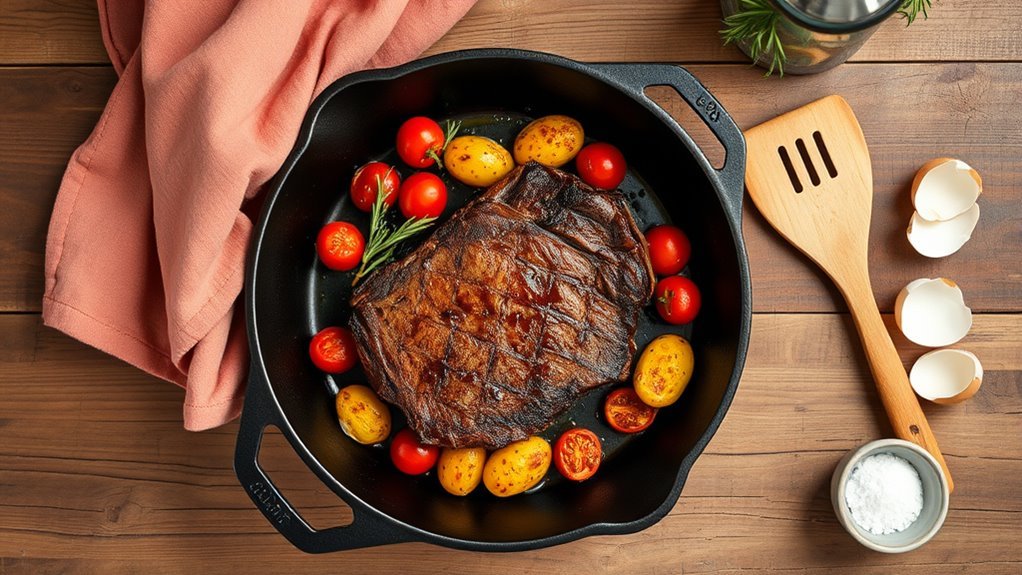
You might think cast iron skillets are just for frying, but their versatility extends far beyond that. These robust tools can handle various cooking methods, from baking to searing, making them essential in any kitchen. With the right techniques, you can elevate your meals, creating everything from crispy cornbread to perfectly seared steaks. Curious about how to maximize their unique properties and keep them in top shape? Let’s explore the best uses and tips for your cast iron skillet.
How to Use Cast Iron Skillets: Versatile Cooking Methods
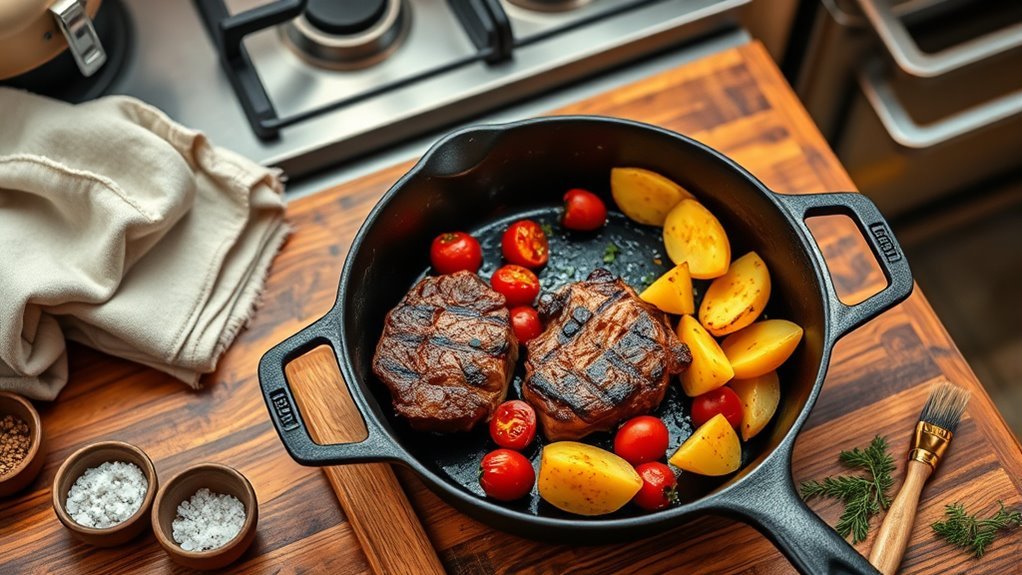
Cast iron skillets are your kitchen’s best friend, offering five essential cooking methods that can elevate any meal. You can fry crispy chicken, bake a savory cornbread, sauté vibrant veggies, or even broil a mouthwatering steak—all with one versatile cast iron skillet.
Its ability to retain heat guarantees even cooking and perfect searing, enhancing the flavors and textures of your dishes. Plus, shifting from stovetop to oven is a breeze, allowing you to create stunning one-pan meals without the hassle of changing cookware.
When seasoned properly, your skillet develops a natural nonstick surface, making it ideal for delicate foods like eggs and pancakes.
With a durable construction, it stands up to high-temperature cooking, whether you’re using it on an open flame or a campfire, revealing unique outdoor culinary experiences.
Embrace the freedom of cooking with a cast iron skillet and transform your meals today!
Why Are Cast Iron Skillets Perfect for High-Heat Cooking?
When it comes to high-heat cooking, few tools match the performance of a well-seasoned cast iron skillet. Its ability to withstand extreme temperatures makes it perfect for searing meats, creating that mouthwatering crust without warping.
The exceptional heat retention of cast iron guarantees even cooking, so you’ll achieve consistent results every time.
Versatile enough for open flames, stovetops, or ovens, this skillet adapts to various high-heat methods. Plus, the seasoning enhances its nonstick properties, making it easier to cook delicate items like eggs or pancakes without sticking.
Embrace the art of browning and caramelization with cast iron, as these techniques elevate flavors in dishes like stir-fries and frittatas.
With a cast iron skillet in your arsenal, you’ll release the full potential of high-heat cooking, transforming your culinary creations into unforgettable experiences.
Baking With Cast Iron Skillets: Tips for Perfect Cornbread
Baking cornbread in a cast iron skillet transforms a simple dish into a culinary delight. Start by preheating your cast iron pan in the oven—this guarantees a crispy, golden crust that everyone craves.
Using a well-seasoned skillet enhances its nonstick properties, making it easy for your cornbread to release after baking. For that perfect texture, stir in melted butter or oil into your batter; it adds moisture and flavor that elevates your cornbread.
Maintain a baking temperature of around 400°F for even cooking and a delightful rise. Don’t hesitate to get creative—mix in cheese, jalapeños, or fresh herbs for a unique twist on the classic recipe.
With these tips, cooking with cast iron becomes a liberating experience, letting you explore flavors while achieving that sought-after, mouthwatering cornbread. Enjoy the process and savor the delicious results!
Searing Techniques for Restaurant-Quality Cast Iron Dishes
When you want to achieve that mouthwatering sear on your meats, using the right heat is essential.
Preheating your cast iron skillet not only sets the stage for the perfect crust but also enhances the flavors through the Maillard reaction.
Choosing the Right Heat
Searing is the secret to achieving that coveted restaurant-quality crust on your meats, and getting the heat just right is essential. Preheat your cast iron skillet to a sizzling 400°F to 500°F. This high temperature guarantees a beautifully developed crust.
Use a high smoke point oil, like canola or avocado, to prevent burning and elevate flavors. Before searing, pat your protein dry with paper towels; it helps avoid steaming and maximizes caramelization.
Remember, don’t overcrowd the skillet; doing so lowers the heat and leads to uneven cooking. If you have more to sear, do it in batches.
Finally, let your meat rest for a few minutes to allow those delicious juices to redistribute, guaranteeing a tender outcome.
Techniques for Perfect Searing
Achieving a perfect sear on your meat can elevate a dish from ordinary to extraordinary. Start by preheating your cast iron skillet over medium-high heat for several minutes to guarantee an even cooking surface.
Choose a high smoke point oil, like grapeseed or canola, to create that beautiful crust without burning. Pat your meat dry with paper towels—moisture is the enemy of a good sear.
When you place the meat in the skillet, avoid overcrowding; give each piece space to breathe and develop a rich, brown crust.
Finally, let your meat rest after searing. This short break allows juices to redistribute, enhancing flavor and tenderness, making your dish truly restaurant-quality.
One-Pan Meals: Easy Cast Iron Recipes
One-pan meals using a cast iron skillet bring convenience and flavor to your kitchen. Imagine whipping up a frittata that shifts seamlessly from stovetop to oven, guaranteeing even cooking and a fluffy texture.
Cast iron skillets shine when making hearty dishes like skillet lasagna, where flavors meld beautifully while keeping everything moist. You can sauté vegetables alongside proteins, achieving perfect caramelization thanks to the skillet’s excellent heat retention.
Cast iron skillets excel in crafting hearty meals like skillet lasagna, melding flavors perfectly while ensuring everything stays deliciously moist.
For a comforting one-pan chicken and rice, the seasoned surface guarantees easy food release and swift cleanup.
And don’t forget dessert! A cast iron skillet is perfect for baking cornbread or fruit cobblers, enhancing flavors through even heat distribution.
With these versatile one-pan meals, you’ll embrace the joy of cooking while savoring every bite, all in just one dish. Your cast iron skillet is your ticket to delicious, uncomplicated meals that liberate your culinary creativity.
How to Keep Your Cast Iron Skillet in Top Shape
Keeping your cast iron skillet in top shape is essential for ensuring it remains a reliable kitchen companion. Start by regularly seasoning it—just apply a thin layer of oil and bake at 400°F for one hour. This not only maintains its nonstick surface but also enhances flavors in your dishes.
When cleaning, skip the soap; instead, use hot water and a natural fiber sponge or coarse salt to preserve that precious seasoning.
Always dry your skillet immediately after washing to prevent rust. A light coat of oil will protect its surface. Keep an eye out for any color changes or rust spots; these are telltale signs that it’s time for re-seasoning.
Finally, store your skillet in a dry place, perhaps with a paper towel inside to absorb moisture. With these simple steps, your skillet will continue to serve you beautifully for years to come!
How to Keep Your Cast Iron Nonstick Through Seasoning
Maintaining a nonstick surface on your cast iron skillet is all about the right seasoning techniques. Regular seasoning keeps that smooth finish you crave. Start by applying a thin layer of oil and baking the skillet upside down at 400°F for an hour. Keep an eye on the skillet’s color; darker hues signal great seasoning, while lighter shades mean it’s time for a touch-up.
Here’s a quick reference table for your seasoning routine:
| Action | Frequency | Notes |
|---|---|---|
| Seasoning with oil | Every 1-2 months | Use vegetable or flaxseed oil |
| Scrubbing with salt | As needed | Use coarse kosher salt and a sponge |
| Storing with paper towel | Always | Absorbs moisture to prevent rust |
| Avoiding acidic foods | Until seasoned | Protects the seasoning layer |
| Checking color | Regularly | Darker is better! |
Follow these tips, and your skillet will stay nonstick and ready for culinary adventures!
Common Cast Iron Cooking Problems and Solutions
When using your cast iron skillet, you might face issues like food sticking or rust forming.
To keep your skillet in top shape, it’s essential to know how to prevent these problems and tackle them effectively.
Let’s explore some simple solutions to guarantee your beloved pan stays ready for delicious meals.
Sticking Issues and Solutions
Sticking food can be one of the most frustrating issues when cooking with a cast iron skillet, but it’s easily manageable with a few simple strategies.
First, make sure your skillet is well-seasoned; this creates a natural nonstick surface that promotes food release.
Always preheat your skillet before adding oil and food—this helps with heat distribution and minimizes sticking.
Don’t skimp on cooking oil, especially with delicate foods; a generous amount creates a barrier between the food and the skillet.
If sticking occurs, gently scrub the residue with coarse kosher salt and a natural fiber sponge to restore the seasoning.
Finally, limit acidic foods like tomatoes, as they can strip seasoning and hinder your skillet’s nonstick capabilities.
Rust Prevention Tips
After tackling sticking issues, it’s important to focus on keeping your cast iron skillet in top shape to avoid rusting.
Always make sure your skillet is completely dry after washing, as moisture is a rust magnet. Regularly seasoning your skillet with a thin layer of oil not only enhances its nonstick properties but also forms a protective barrier against rust.
When storing, keep it in a dry place and toss a paper towel inside to absorb any moisture. Avoid soaking your skillet for long periods; a quick wash and thorough drying are better.
If rust does appear, scrub it away with steel wool and re-season your skillet to restore its protective layer, ensuring it stays ready for delicious meals.
Frequently Asked Questions
What Is the Point of a Cast Iron Skillet?
The point of a cast iron skillet lies in its incredible heat retention and versatility. You’ll love how it sears meats to perfection and develops a natural nonstick surface over time.
With proper skillet maintenance, like regular seasoning and careful cleaning, you can enjoy its benefits for a lifetime.
Plus, cooking with cast iron can boost the iron content in your meals, making it a smart choice for your health and culinary adventures.
What Cannot Be Cooked in a Cast Iron Pan?
You can’t cook acidic foods, like tomato sauce or vinegar, in a cast iron pan without risking a ruined seasoning.
Imagine your flavorful dish turning bitter instead of bright.
Delicate dishes like eggs or pancakes might cling to the surface, transforming breakfast bliss into a sticky mess.
High-sugar treats can burn fiercely, so you might want to reach for non-stick alternatives.
Embrace the freedom of diverse cooking with the right tools!
Are Old Cast Iron Pans Worth Anything?
Yes, old cast iron pans can be quite valuable, especially in the vintage cookware collector’s market.
Brands like Griswold and Wagner are particularly sought after, with rare models fetching impressive prices.
If your skillet has a smooth surface, minimal rust, and original markings, it’s likely worth more.
Restored pieces that still function well and retain their seasoning are even more desirable.
These pans carry both monetary and sentimental value, connecting you to culinary heritage.
What’s the Best Thing to Cook in a Cast Iron Skillet?
The best thing to cook in a cast iron skillet is sizzling steaks or fluffy cornbread. When you sear your steak, the skillet locks in those savory juices, creating a mouthwatering crust you can’t resist.
For cornbread, the pre-heated skillet gives you that perfect crispy edge while keeping the inside tender and moist. Both dishes showcase the skillet’s versatility, enhancing flavors and textures, making your cooking experience truly liberating and delicious!
Conclusion
With your cast iron skillet in hand, you’re ready to elevate your cooking game. Imagine the sizzle as you sear a steak to perfection or the aroma wafting through your kitchen while baking cornbread. But remember, every skillet has its secrets. Will you reveal its full potential? By mastering seasoning and care, you’ll guarantee your skillet becomes a cherished heirloom, ready to create countless delicious memories. Don’t wait—your culinary adventure awaits!