
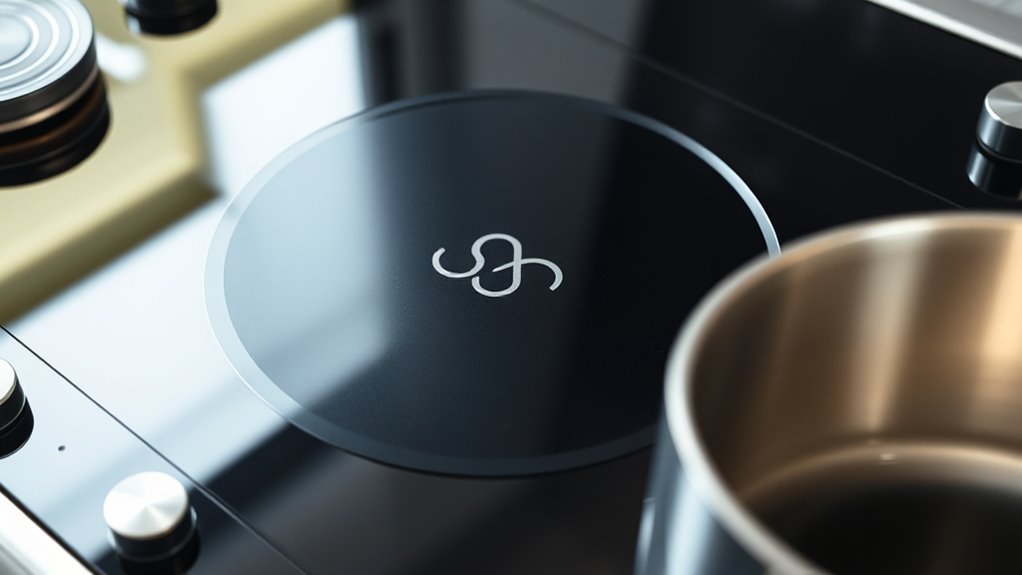
Did you know that over 30% of households now use induction cooktops for their energy efficiency and precision? Understanding the symbol for induction pans is vital to guarantee your cookware is compatible. This specific symbol, often resembling a coil, indicates suitability for induction cooking. But what if your pots and pans don’t have this symbol? You might need to perform a simple magnet test to confirm their compatibility. Let’s explore how you can identify this important symbol.
Understanding Induction Cooking Basics
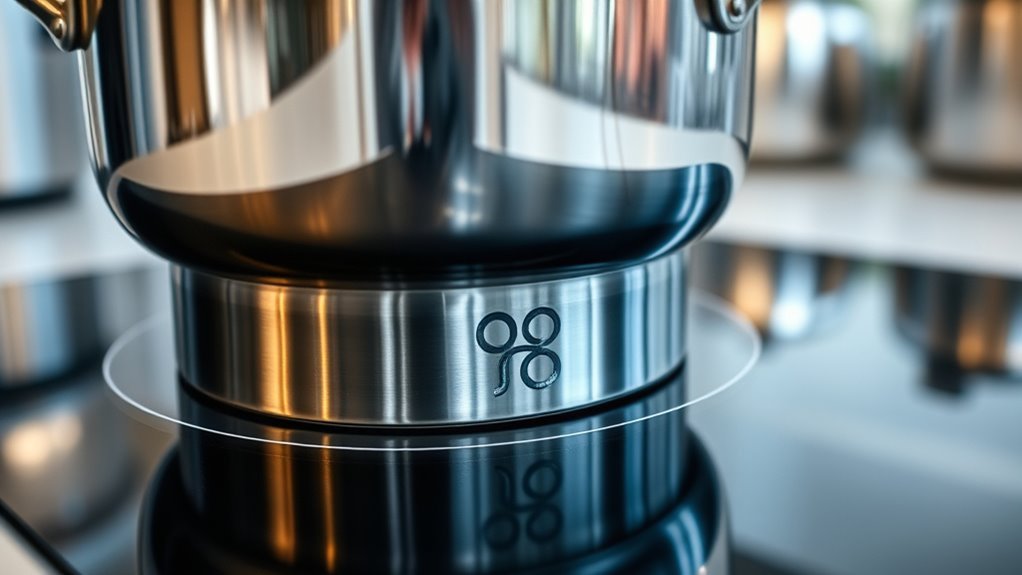
Induction cooking offers a modern approach to food preparation, as it uses electromagnetic fields to directly heat compatible cookware. This method requires specific pots and pans that possess magnetic properties.
To guarantee your cookware works on induction hobs, look for the induction symbol, which typically features a coil icon. This symbol indicates that the cookware is compatible with induction technology.
Look for the induction symbol, featuring a coil icon, to ensure your cookware is compatible with induction technology.
Non-magnetic materials, such as glass and aluminum, won’t heat up on induction stovetops, so always check for that symbol when purchasing.
If you’re unsure about your cookware, a simple magnet test can confirm compatibility; if the magnet sticks firmly to the base, you’re good to go.
Understanding the induction symbol empowers you to select the right pans, guaranteeing efficient and safe cooking on induction surfaces.
Embracing this technology not only enhances your cooking experience but also liberates you from the limitations of traditional methods.
What Is the Induction Symbol?
When selecting cookware for induction cooking, the induction symbol is your key indicator of compatibility. This symbol typically resembles a coil or series of loops, signifying that the cookware can be used on induction cooktops.
Cookware that features the induction symbol is crafted with ferrous materials, essential for the magnetic heating process.
When you’re purchasing new pots and pans, always check for this symbol to verify compatibility with induction hobs. The presence of the induction symbol guarantees that the cookware meets specific standards for effective heat conduction on induction surfaces.
If the symbol is absent, the cookware likely lacks a magnetic base, making it unsuitable for induction cooking.
Understanding and identifying the induction symbol empowers you to choose cookware that combines efficiency and effectiveness, assuring a seamless cooking experience on your induction stovetop.
Why the Induction Symbol Matters for Cookware
Recognizing the induction symbol is essential for anyone investing in cookware. This symbol, usually depicted as a coil or wave icon, indicates that the cookware is compatible with induction cooking systems. By identifying the induction symbol, you guarantee that you’re selecting cookware that can efficiently harness the electromagnetic heating method.
Cookware lacking this symbol may not heat properly on induction hobs, resulting in wasted energy and ineffective cooking. Understanding the induction symbol helps you avoid purchasing non-compatible materials, like aluminum or glass, which can lead to frustration in the kitchen.
When you see the induction symbol on packaging or the base of cookware, it provides assurance of its suitability for induction cooking, enhancing both safety and performance.
How to Perform the Magnet Test?
To determine if your cookware is induction-compatible, the magnet test is a straightforward and effective method. Simply grab a magnet and hold it against the bottom of your cookware to check for a magnetic layer. Here’s how to perform the test:
- Place the magnet firmly against the base of the cookware.
- If it sticks solidly, your cookware is likely induction compatible.
- A weak or loose attachment indicates it mightn’t heat efficiently.
- Be sure to test the entire base to confirm thorough compatibility.
This quick test can save you time and money before investing in new cookware for your induction stove.
Remember, only cookware with a strong magnetic layer will work effectively on induction hobs, so don’t overlook this essential step.
Best Cookware Materials for Induction Cooking
Induction cooking requires specific materials that can effectively respond to electromagnetic fields, guaranteeing ideal heat transfer and efficiency. The best options for your induction hobs include:
| Material | Benefits |
|---|---|
| Stainless Steel | Durable, rust-resistant, and magnetic base |
| Cast Iron | Excellent heat retention, even cooking |
| Carbon Steel | Lightweight, highly responsive to heat |
Stainless steel cookware with a magnetic base is a popular choice due to its durability. Cast iron is legendary for its heat retention, making it perfect for slow cooking. If you’re looking for versatility, carbon steel is lighter and reacts quickly to temperature changes. Enamel cast iron combines these advantages while maintaining a non-reactive surface. Always check for the induction-compatible symbol to confirm your cookware works seamlessly on induction cooktops.
Materials to Avoid for Induction Cooktops
When using induction cooktops, you’ll want to avoid cookware made from non-magnetic materials like aluminum, glass, or ceramic, as they won’t heat properly.
It’s essential to check your pans for a ferrous base; if a magnet doesn’t stick, they’re incompatible.
Additionally, warped cookware can lead to inefficient cooking, so always inspect for flatness and induction compatibility symbols before purchasing.
Common Non-Compatible Materials
Although many materials are suitable for cooking, certain types can hinder your experience with induction cooktops. It’s vital to avoid common non-compatible materials to guarantee effective heating.
Here are some to watch out for:
- Aluminum and copper: These materials don’t generate heat unless they’ve a magnetic base.
- Glass and ceramic: They can’t conduct electromagnetic fields, making them ineffective.
- Non-magnetic stainless steel: Lacking a ferrous core, these pans won’t work on induction hobs.
- Warped cookware: Uneven bases can lead to inefficient heating and poor performance.
Choosing the right materials is essential for ideal induction compatibility, so always check for the induction symbol before purchasing cookware.
Cookware Construction Considerations
To guarantee peak performance on induction cooktops, it’s essential to take into account the materials used in cookware construction.
Induction cookware must have a magnetic base; consequently, materials like aluminum, copper, glass, and ceramic are unsuitable unless they include a magnetic layer. Non-magnetic stainless steel also falls short, lacking the ferrous properties needed for effective heat generation.
Additionally, warped cookware can lead to uneven heating and potential malfunctions. Always check for the induction-compatible symbol, which resembles a coil, to confirm suitability for induction hobs.
Before purchasing, perform a magnet test—if a magnet doesn’t stick firmly, the cookware is likely incompatible with induction cooking.
Prioritize these considerations for ideal cooking experiences.
Testing for Induction Compatibility
How can you guarantee your cookware is induction-compatible? To confirm your pots and pans work effectively with induction cooktops, look for the induction symbol—a coil icon.
You should also be cautious about materials that generally won’t work unless they’ve a magnetic base. Here’s what to avoid:
- Aluminum cookware without a magnetic base
- Copper pots and pans
- Glass and ceramic dishes
- Non-magnetic stainless steel
For testing for induction compatibility, simply place a magnet on the bottom. If it sticks firmly, the cookware is suitable for induction.
How to Judge Cookware Performance?
To judge cookware performance, start by examining the material quality; higher-grade materials guarantee better heat conduction and durability.
Next, check the base diameter and flatness; a proper fit on the induction burner is essential for even heating.
Finally, make certain the base isn’t warped, as irregular shapes can disrupt contact and lead to inefficient cooking.
Cookware Material Quality
When evaluating cookware material quality, it’s crucial to focus on key performance indicators that directly impact cooking efficiency. High-quality induction cookware utilizes magnetic material and features fully clad construction to guarantee even heat distribution.
Here are some critical aspects to take into account:
- Magnetic Compatibility: Use a magnet to test the base; strong attachment indicates suitability for induction hobs.
- Flatness: A flat base maximizes contact with the hob, promoting efficient heat transfer.
- Durability: Look for warp-resistant designs that maintain heat conductivity under high temperatures.
- Heat Response: Cookware should quickly adapt to temperature changes for peak cookware performance.
Base Diameter and Flatness
The base diameter and flatness of induction cookware are vital factors influencing cooking performance. To achieve ideal heat transfer, your pans’ base diameter must match the burner size; otherwise, energy is wasted.
A flat cooking surface is equally important—irregular shapes can lead to uneven cooking and hot spots. Cookware with a fully flat base guarantees better contact with the induction surface, enhancing heat conduction and overall cooking efficiency.
Warped or uneven-bottomed pans hinder performance, so it’s essential to inspect cookware for flatness before use. Testing a pan’s stability on a flat surface can easily identify issues with its base diameter and flatness, making sure you maximize your induction cooking experience.
Tips for Choosing Induction Cookware
Choosing the right induction cookware is essential for achieving ideal cooking results. To guarantee your pots and pans perform at their best on induction hobs, keep these tips in mind:
- Look for the induction symbol, resembling a coil or spiral, on the base to confirm compatibility.
- Use a magnet to check for magnetic material; if it sticks firmly, the cookware is suitable for induction cooking.
- Opt for a flat, even base to enhance contact with the induction surface, improving heating efficiency and preventing hot spots.
- Consider fully clad cookware for superior heat distribution, as it combines a magnetic exterior with a conductive core.
Common Misconceptions About Induction Symbols
While many assume that all stainless steel cookware is suitable for induction cooking, it’s vital to understand that only those with a magnetic base will function properly on induction hobs. Misunderstanding the induction symbol can lead to purchasing unsuitable cookware, wasting both time and money.
| Cookware Type | Induction Symbol | Magnetic Base Required |
|---|---|---|
| Stainless Steel | Yes | Yes |
| Cast Iron | Yes | Yes |
| Non-Magnetic Steel | No | No |
| Aluminum | No | No |
| Copper | No | No |
Recognizing the induction symbol, which typically resembles a coil or concentric circles, helps you effectively select compatible cookware. Always test with a magnet if the symbol is absent; some pans may still be functional. Prioritizing the magnetic base guarantees peak cooking performance on induction hobs.
Where to Find Induction-Compatible Cookware
Finding induction-compatible cookware is simpler than ever, thanks to clear labeling and dedicated product sections in stores. When you shop, look for cookware that clearly states “induction ready” or “induction compatible.”
It’s essential that your pans must have the right features.
To simplify your search, keep an eye out for:
To streamline your shopping experience, look for key symbols and dedicated sections for induction-compatible cookware.
- Coil or spiral symbols on the base of the cookware, indicating compatibility.
- Magnetic test stickers on packaging, confirming the cookware’s suitability for induction surfaces.
- Dedicated sections in retail stores specifically for induction-compatible cookware.
- Online platforms featuring detailed specifications and customer reviews, which can provide assurance about compatibility.
Frequently Asked Questions
What Is the Symbol for an Induction Cooktop?
The symbol for an induction cooktop features a coil or spiral icon, indicating compatibility with induction cookware types.
When you choose pots and pans marked with this symbol, you reap the benefits of induction cooking, such as faster heating and energy efficiency.
To maximize induction efficiency, verify your cookware is ferromagnetic.
Always follow induction safety guidelines, like using flat-bottomed pans, to enhance performance and prevent accidents in the kitchen.
What Does Non-Induction Mean?
Non-induction refers to cookware made from materials that don’t possess magnetic properties, like aluminum, copper, glass, and ceramic.
These non-induction materials fail to generate heat on induction cooktops, impacting cooking efficiency and heat distribution.
If you want peak performance, you’ll need to choose induction cookware types that have the necessary magnetic base.
Always check for compatibility to guarantee effective cooking and avoid frustration in the kitchen.
Can Aluminum Be Used on an Induction Cooktop?
Aluminum can be used on an induction cooktop, but only if it has a magnetic base. This aluminum compatibility guarantees effective heat distribution and enhances cooktop efficiency.
You can check this by placing a magnet on the pan; if it sticks, you’re good to go. Otherwise, standard aluminum pans won’t work due to their lack of ferrous properties.
Always look for induction cookware specifically designed for induction cooking to enjoy excellent results.
What Is an Induction Hob?
Imagine a futuristic kitchen where pots and pans dance like marionettes, heated by invisible hands. That’s your induction hob! It uses electromagnetic energy to efficiently cook, offering benefits like energy efficiency and enhanced safety features.
With automatic shut-off and direct heat only to magnetic cookware, you’ll embrace liberation from traditional stoves.
Compatible induction cookware types include cast iron and magnetic stainless steel, transforming your cooking experience into a sleek, modern affair.
Conclusion
In summary, understanding the induction symbol is essential for effective cooking. Imagine trying to navigate a maze without a map; without the symbol, you risk choosing incompatible cookware. Just as a magnet reveals the hidden paths in that maze, it confirms your cookware’s suitability for induction hobs. By being informed and using the right materials, you’ll enhance your cooking experience and guarantee efficient energy use, making every meal a success on your induction stove.
