
You might wonder if vegetable oil is a good choice for seasoning your cast iron pan. It’s a common option, but knowing the right steps can make all the difference. From cleaning to baking, each phase plays a vital role in achieving that perfect nonstick surface. Ready to transform your cookware? Let’s explore how to season your cast iron effectively and discover the best practices for maintaining it for years to come.
Why Use Vegetable Oil for Seasoning Cast Iron?
When it comes to seasoning cast iron, using vegetable oil makes a lot of sense. Its high smoke point allows for effective polymerization, transforming your pan into a durable cooking surface.
This cost-effective option is widely available, making it accessible for everyone seeking to maintain their cast iron cookware.
Applying vegetable oil in thin layers is essential; it prevents stickiness and guarantees ideal seasoning results.
Applying vegetable oil in thin layers is key to achieving a smooth, non-sticky seasoning on your cast iron cookware.
With regular use, this oil enhances the seasoning layer, contributing to a smooth, non-stick surface that’s perfect for all your culinary adventures.
Plus, its refined nature means it won’t impart strong flavors, allowing your dishes to shine.
How to Season Your Cast Iron Pan: A Step-by-Step Guide
Seasoning your cast iron pan is a straightforward process that transforms it into a reliable kitchen companion. Follow these simple steps to achieve a beautifully seasoned surface:
1. Clean the pan: Start by washing your cast iron pans with warm, soapy water.
Dry it completely to prepare for oil application.
2. Apply oil: Use vegetable oil or another high-smoke-point oil to coat all surfaces with a thin layer, ensuring no excess oil remains.
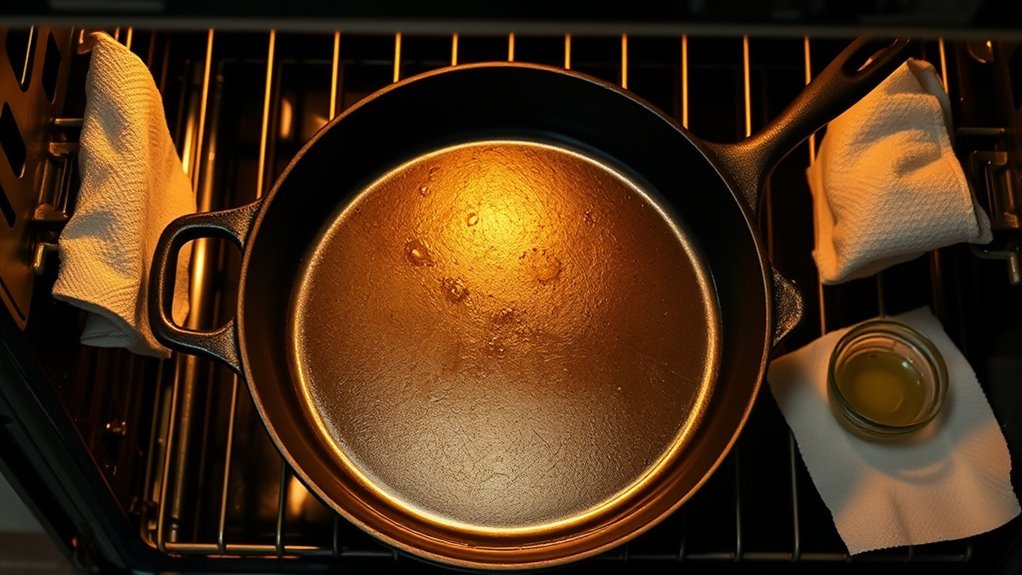
3. Preheat the oven: Set your oven to 450°F (230°C).
Place the oiled pan upside down on the top rack, using a baking sheet on the bottom rack to catch drips.
4. Bake and repeat: Bake for 30 minutes, then let it cool inside the oven.
Repeat the oiling and baking process three to four times for ideal seasoning.
With these steps, you’ll maintain a nonstick surface and enjoy your cast iron pan for years to come!
Top Mistakes to Avoid When Seasoning Cast Iron With Vegetable Oil
Avoiding common pitfalls is essential for achieving a perfectly seasoned cast iron pan with vegetable oil. One major mistake is using excess oil; applying too much can create a sticky layer instead of a smooth finish. Always wipe off any excess oil before baking.
Inadequate heating is another misstep; confirm your oven reaches 450°F–500°F to allow proper polymerization during the seasoning process. Also, never skip the drying step—moisture can lead to rust or hinder oil bonding.
Don’t settle for just one layer of seasoning; repeating the oiling and heating process three to four times builds a durable finish.
Finally, steer clear of unrefined vegetable oils, as their lower smoke points can leave unwanted flavors and residue. By avoiding these common mistakes, you’ll set yourself up for success with your new cast iron pan.
Best Practices for Maintaining Your Seasoned Cast Iron
Maintaining your seasoned cast iron is essential for keeping it in top shape and ensuring it lasts for generations. Follow these best practices for ideal Cast Iron Care:
- Regular Cooking: Use your cast iron pan with oils or fats. This enhances the nonstick surface and builds up that all-important layer of seasoning.
- Cleaning: After each use, clean your cast iron with hot water and a stiff brush. Avoid soap unless absolutely necessary, and dry it immediately to prevent rust.
- Oiling: Reapply a light coat of vegetable oil after cleaning. This maintains seasoning and shields the surface from moisture and air exposure.
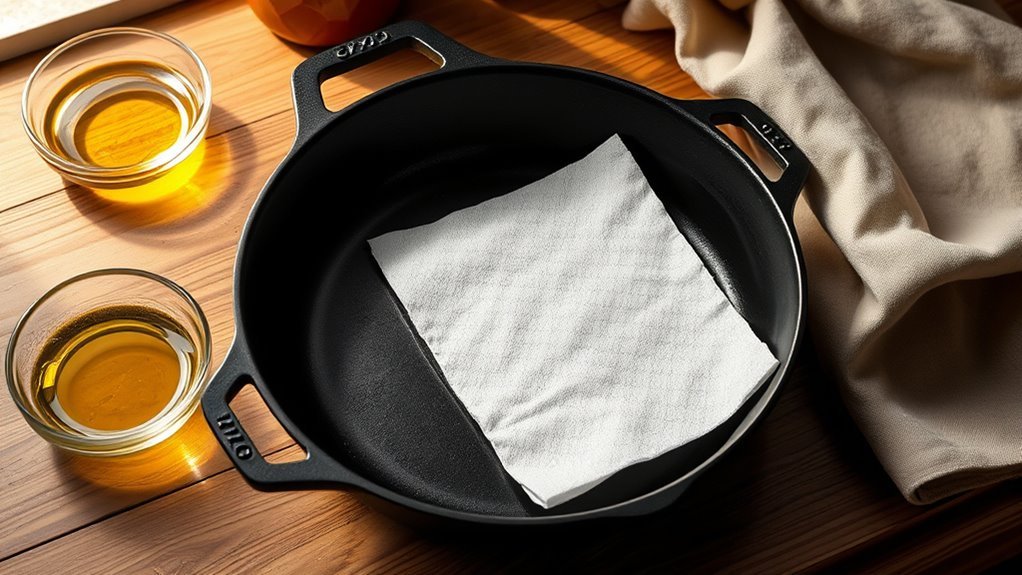
- Storage: Store your cast iron in a dry place. Placing a paper towel inside can absorb moisture, helping to reduce rust.
What Oils Can I Use Instead of Vegetable Oil for Seasoning?
When it comes to seasoning your cast iron, which oils can you turn to besides vegetable oil?
Consider using canola oil, grapeseed oil, or avocado oil—each boasts high smoke points, perfect for effective seasoning. Refined oils like sunflower or safflower also shine here, as they withstand high temperatures without burning.
Avoid unrefined oils or those with strong flavors; they can leave unwanted residues that affect your seasoning quality.
For a flavor twist, many cooks swear by lard or bacon fat. These not only offer high smoke points but also enhance the taste profile of your cast iron cookware.
Frequently Asked Questions
What Oil Should Not Be Used to Season Cast Iron?
You shouldn’t use oils like olive oil or butter for seasoning cast iron. They’ve low oil smoke points, which can lead to a sticky surface during the polymerization process.
Avoid high polyunsaturated oils too, as they oxidize quickly, impacting oil shelf life. Strong-flavored oils might transfer unwanted tastes to your food, disrupting your cooking experience.
Stick to high heat oils for effective seasoning methods and ideal cast iron maintenance.
What Oils Are Best for Cast Iron Seasoning?
When it comes to the best oils for seasoning cast iron, think of them as the magic potions that create a protective shield. High smoke oils like grapeseed and avocado are top choices, thanks to their oil stability.
Canola and corn oils work well too, offering affordability and effectiveness. For flavor infusion, avoid unrefined oils.
Regular seasoning with these popular brands guarantees your skillet stays in tip-top shape, ready for culinary adventures!
What Ruins Cast Iron Seasoning?
Excess moisture and improper cleaning can ruin your cast iron seasoning. Always dry your pan completely to prevent rust.
Cooking acidic foods breaks down the seasoning, so be cautious. Use high heat for proper bonding during seasoning, and control the temperature carefully.
Regular maintenance and storage tips, like keeping it dry and lightly oiled, guarantee cookware longevity.
What Oil Does Lodge Use to Season Cast Iron?
Lodge uses a unique blend of vegetable oil for their seasoning, akin to the way a chef crafts a perfect sauce. This blend creates a robust nonstick surface, enhancing your cooking experience.
Many myths surround oil comparisons, but Lodge’s seasoning techniques guarantee durability and flavor profiles that elevate dishes.
Conclusion
Just as a blacksmith tempers steel, you too can forge the perfect bond with your cast iron. By seasoning it with vegetable oil, you’re not just creating a nonstick surface; you’re nurturing a trusty companion in your kitchen. With each layer, you’re weaving stories of delicious meals and cherished memories. So, embrace this ritual, and watch your skillet transform into a resilient masterpiece, ready to sizzle with flavor for years to come. Happy cooking!
