
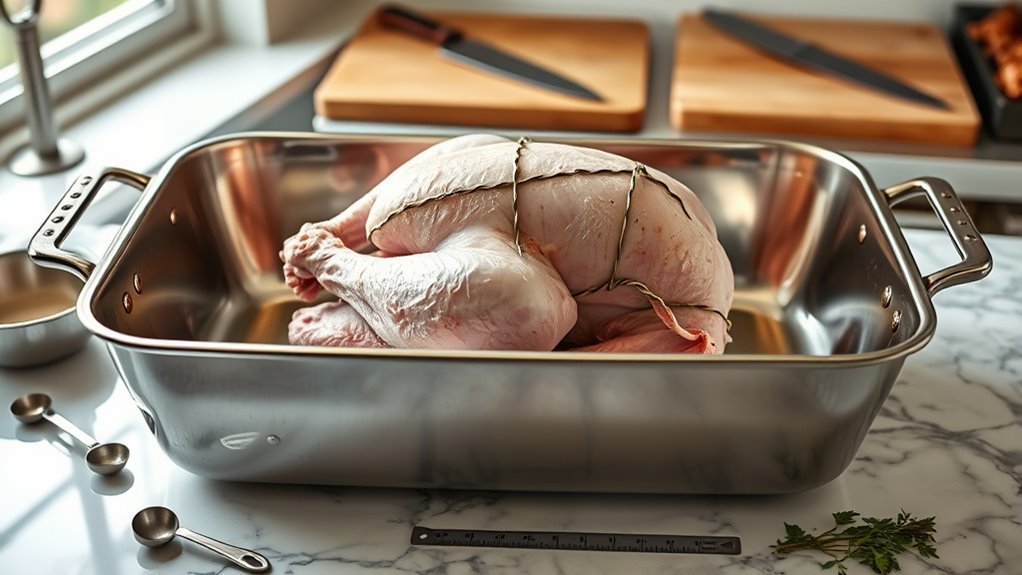
Imagine you’re preparing a holiday feast, and your 20 lb turkey is ready to shine. Choosing the right roasting pan is vital for achieving that perfect golden-brown crust. But how do you know what size to pick? With various dimensions and materials available, understanding the essentials can make all the difference in your cooking success. Let’s explore the key factors that influence your choice and guarantee your turkey turns out just right.
Understanding Roasting Pan Sizes: What You Need to Know
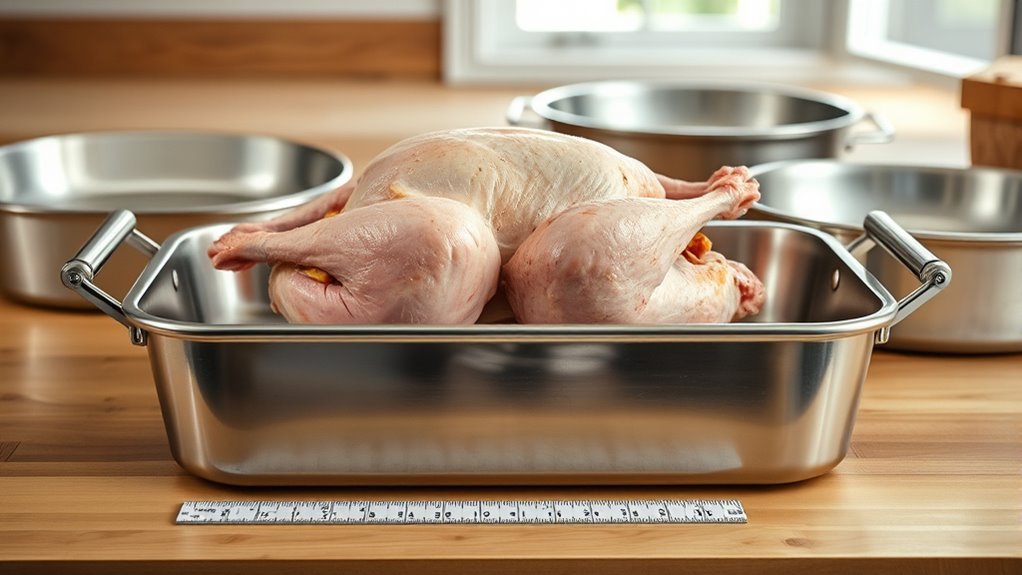
When you’re preparing to roast a 20 lb turkey, understanding the right roasting pan size is crucial for achieving that perfect golden-brown finish. Ideally, your roasting pan should be at least 18 inches in length to comfortably accommodate the bird and guarantee proper air circulation.
Choosing the right roasting pan is essential for a perfectly roasted 20 lb turkey—aim for at least 18 inches for optimal results.
Standard roasting pan sizes vary, with 16-inch pans suitable for birds up to 16 pounds, while larger pans are a must for bigger turkeys. A depth of about 3 inches is ideal, preventing steaming and allowing for those delicious drippings you crave.
Don’t forget to check your oven to make certain your chosen pan fits snugly, especially if you have a larger model. Selecting a roasting pan with a removable rack can elevate your turkey, promoting even cooking and enhancing the overall roasting quality.
Embrace the liberation of cooking with the right tools, and watch your meal come to life!
What Are the Best Dimensions for a 20 Lb Turkey Roasting Pan?
Choosing the right dimensions for a roasting pan is key to roasting a 20 lb turkey successfully. Aim for a size roasting pan that measures at least 16 by 14 inches, but an 18-inch pan is ideal. This size not only accommodates your turkey but also allows for proper airflow, guaranteeing even heat distribution.
Depth matters too; a pan with about 3 inches of depth helps prevent spills while promoting effective heat circulation.
Look for sturdy, easy-to-grip handles, since maneuvering a heavy turkey can be tricky. Don’t forget a removable roasting rack—this elevates your turkey, allowing drippings to collect below while promoting that perfect, even roast you crave.
Before you shop, measure your oven to confirm your chosen pan fits comfortably inside. With the right dimensions, you’re set for a delicious, satisfying turkey feast!
Why Depth Matters in Your Roasting Pan?
The depth of your roasting pan plays a crucial role in achieving that perfectly cooked turkey. Ideally, you want about three inches of depth. This allows heat to circulate evenly, promoting that desired golden-brown crust while preventing steaming.
The right depth of your roasting pan—about three inches—is essential for even cooking and achieving a golden-brown turkey.
If your pan’s too deep, it can trap moisture, leaving your turkey soggy instead of succulent. Conversely, a shallow pan can lead to splatters and messy braising, complicating your cooking experience.
An ideal depth strikes a balance, facilitating proper liquid handling. It accommodates drippings without spilling over, ensuring safety and convenience.
When roasting a large turkey, you need a pan that can manage those flavorful juices, enhancing your dish rather than overwhelming it. So, as you choose your roasting pan, remember that the right depth isn’t just a detail; it’s crucial for even cooking and elevating your culinary triumph.
Which Materials Are Best for Roasting Pans?
When choosing a roasting pan, the material plays a vital role in both durability and heat distribution.
Stainless steel stands out for its resilience and even cooking, while copper offers superior heat conduction, though at the cost of extra care.
On the other hand, enameled cast iron retains heat well but can be cumbersome, so it’s essential to weigh your options for the best results.
Material Durability Factors
While selecting the right roasting pan, understanding the material’s durability is essential for achieving the best cooking results.
Stainless steel pans stand out for their durability and exceptional heat distribution, ensuring your turkey cooks evenly every time.
If you’re looking for impressive heat conduction, copper pans are excellent but require more maintenance to keep them looking pristine.
Cast iron offers unmatched durability, though their weight can be cumbersome.
Anodized aluminum presents a lightweight alternative, yet it may react with acidic ingredients, which could affect your dish.
For the best of both worlds, fully clad stainless steel pans resist warping while providing even heat distribution, enhancing your overall cooking performance.
Choose wisely for delicious results!
Heat Distribution Efficiency
Choosing the right material for your roasting pan can greatly impact your turkey’s cooking performance.
Stainless steel roasting pans are a top choice, thanks to their durability and excellent heat distribution efficiency, which minimizes hot spots for even baking. If you want the best results, consider tri-ply construction; it combines layers of stainless steel and aluminum, enhancing heat conduction and ensuring consistent roasting.
Copper pans also shine for their responsiveness, giving you precise temperature control, but they require more upkeep.
It’s wise to avoid aluminum pans, as they can react with acidic ingredients, altering flavors and cooking outcomes.
Best Rack Options for Roasting Success
A sturdy roasting rack is a game-changer for achieving the perfect turkey. Elevating your bird not only allows for better heat circulation but also keeps the bottom from getting soggy.
To guarantee roasting success, consider these rack options:
- Removable Racks: These elevate your turkey, letting drippings flavor veggies below without causing steaming.
- Nonstick Coating: Opt for racks with a nonstick finish for easy cleanup, saving you time after your feast.
- Racks with Handles: Handles make it easier and safer to lift the turkey in and out of the oven, enhancing your overall experience.
When choosing a rack, make certain it fits snugly within your roasting pan and can support a hefty 20 lb turkey.
With the right rack, you’ll enjoy a perfectly roasted bird and delightful, flavorful drippings!
Choosing the Right Roasting Pan for Your Oven
Finding the right roasting pan for your oven can make all the difference when preparing a 20-pound turkey. You’ll want a pan that’s at least 16 inches wide for ideal airflow, but an 18-inch roasting pan is perfect for comfortably accommodating larger proteins.
Before you buy, measure your oven’s interior dimensions; this guarantees your roasting pan can fit without blocking airflow.
A depth of around three inches balances effective roasting and liquid handling, preventing splatters. If you’re using a smaller oven, look for a roasting pan with a removable rack. This elevates your turkey, promoting even cooking and allowing those delicious drippings to infuse flavor throughout.
Common Roasting Pan Selection Mistakes to Avoid
When picking a roasting pan, it’s easy to misjudge the size, which can lead to uneven cooking for your 20 lb turkey.
You also shouldn’t overlook the material; a quality pan makes a big difference in heat distribution and durability.
Avoid these common mistakes to guarantee your turkey turns out perfectly roasted every time.
Misjudging Pan Size
Selecting the right roasting pan for a 20-pound turkey can make or break your holiday feast. Misjudging pan size can lead to disaster. Here are three common mistakes to avoid:
- Choosing a pan that’s too small: A minimum 18-inch pan is essential for proper airflow and even cooking, especially with a large turkey.
- Ignoring your oven’s dimensions: Always measure your oven before buying a pan. A perfect fit is vital, as you don’t want a pan that won’t fit.
- Overlooking the pan’s depth: Aim for a depth of about 3 inches. This helps prevent steaming and promotes ideal roasting conditions.
With the right pan, you’ll achieve succulent, evenly cooked turkey that everyone will rave about!
Ignoring Material Quality
Many overlook the significance of material quality in their quest for the perfect roasting pan. Choosing a pan made from low-quality materials, like thin aluminum, can ruin your turkey. You’ll end up with uneven browning and burnt spots, leaving you frustrated.
Roasting pans come in various materials, but cast iron stands out for its durability and heat retention, ensuring even cooking. Don’t forget depth—aim for around three inches to avoid steaming instead of roasting.
A removable rack is essential for airflow, enhancing flavor and preventing soggy meat. Remember, opting for a cheap pan may save you money now, but it’ll cost you more in the long run when you need replacements. Invest wisely for delicious results!
Frequently Asked Questions
How Long Does It Take to Cook a 20 Lb Turkey in a Roaster Pan?
Cooking a 20 lb turkey in a roaster pan takes about 4 to 4.5 hours at 325°F.
To master roasting techniques, regularly baste your turkey every 30 minutes for that juicy, flavorful result.
Keep an eye on the temperature guidelines—aim for at least 165°F in the thickest part of the thigh to guarantee it’s fully cooked.
Let it rest for 20 to 30 minutes afterward to savor that perfect tenderness.
Is It Better to Bake a Turkey Covered or Uncovered?
It’s better to bake a turkey covered initially. This method promotes moisture retention and even heat distribution, ensuring your turkey doesn’t dry out.
You can use basting techniques during this time for extra flavor enhancement. Uncovering it in the last hour lets the skin crisp up beautifully, adding that golden touch.
Do You Put Anything in the Bottom of a Roasting Pan for Turkey?
Yes, you should definitely add something to the bottom of your roasting pan for turkey.
For turkey roasting essentials, consider layering chopped vegetables like carrots and onions; they infuse flavor and prevent sticking.
You can also pour in a bit of broth or water as a cooking liquid option to keep the turkey moist.
Just remember to avoid a solid layer of liquid, as you want to roast, not steam, for that crispy skin!
Should I Roast Turkey at 350 or 400?
Roasting your turkey at 350°F is like crafting a fine symphony—slow and steady, bringing out rich flavors.
While 400°F speeds up the performance, it risks burning the skin, leading to a dissonant dish.
Cooking time variations matter too; at 350°F, your turkey takes about 4 to 4.5 hours.
To enhance that flavor, consider basting or using herbs.
Conclusion
In choosing the right roasting pan for your 20 lb turkey, remember that a well-fitted pan makes all the difference in achieving that golden-brown skin and juicy meat. Did you know that a properly roasted turkey can retain up to 70% of its moisture? So, invest in a pan that guarantees proper airflow and accommodates those delicious drippings. With the right tools, your holiday feast will be a mouthwatering success, leaving your guests craving more!
