
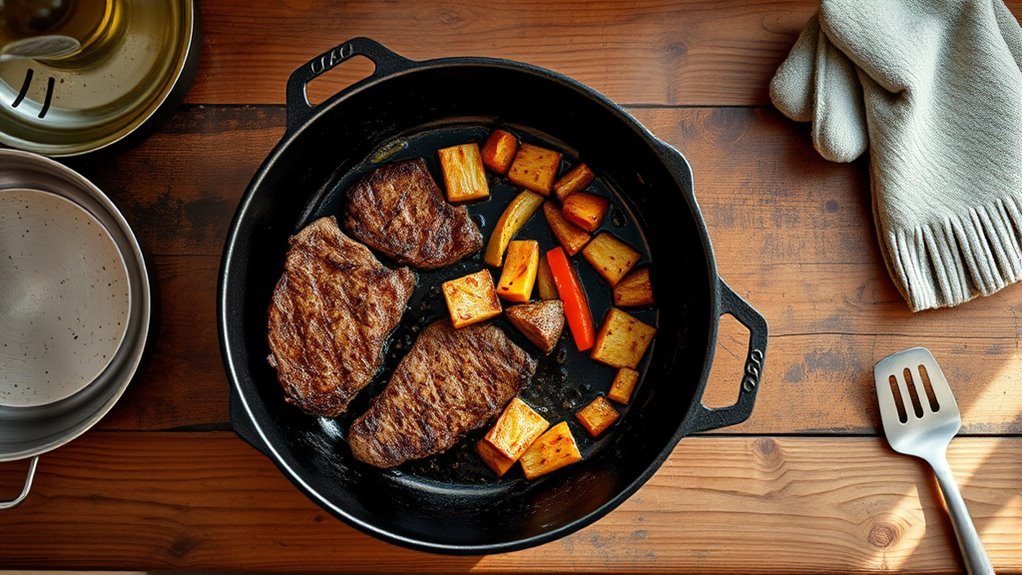
You might not realize that a well-seasoned cast iron skillet can last for generations, making it a staple in many kitchens. Its unique ability to retain heat and develop a natural non-stick surface sets it apart from other cookware. Yet, with great benefits come some challenges. What do you need to know about their care and the best ways to use them? Let’s explore the pros and cons that could influence your cooking choices.
Why Cast Iron Skillets Are So Durable
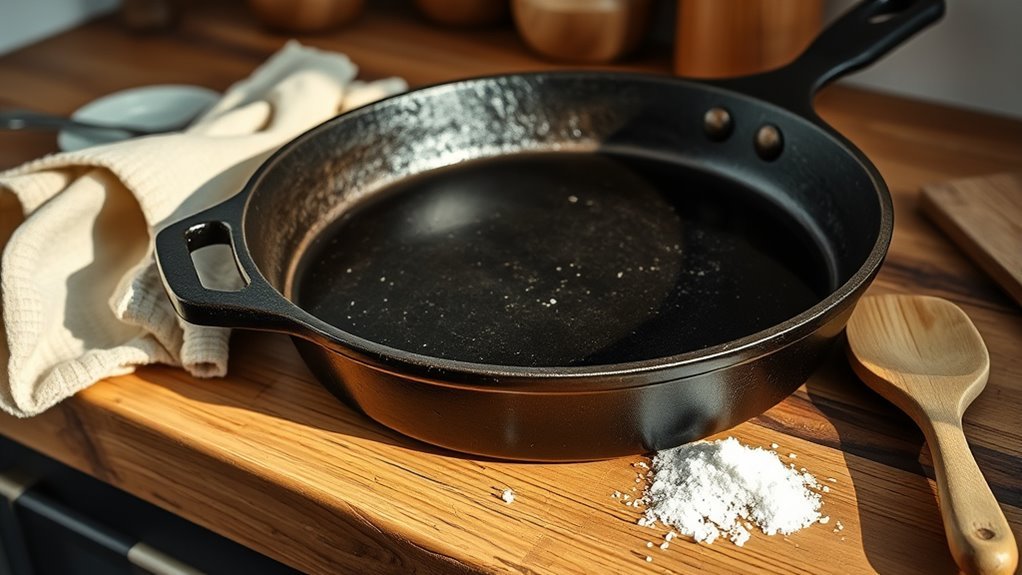
When you think about durability in cookware, cast iron skillets stand out as a top choice. Crafted from solid iron, these skillets are virtually indestructible, often lasting over 100 years with the right care. Their ability to withstand high temperatures without warping makes them a reliable companion in any kitchen.
Even if they show signs of wear, you can easily restore them to their former glory, proving their longevity. Regular seasoning not only enhances their cooking performance but also creates a protective layer that prevents rusting.
Imagine using an antique cast iron skillet, perhaps from the late 19th century, that still functions beautifully today—it’s a demonstration of the enduring quality of cast iron. By choosing cast iron skillets, you’re investing in cookware that supports your culinary adventures for generations, freeing you from the cycle of frequent replacements.
Why Cast Iron Skillets Enhance Your Cooking Experience
When you cook with a cast iron skillet, you’ll notice its incredible heat retention instantly transforms your dishes.
This allows for perfectly seared meats and versatile cooking techniques, from frying to baking.
Plus, as the skillet develops its natural non-stick surface, you’ll find cooking and cleanup become a breeze.
Versatile Cooking Techniques
Although many cooking tools have their merits, cast iron skillets truly stand out for their remarkable versatility in the kitchen.
With cast iron cookware, you can master versatile cooking techniques that elevate your culinary game. Whether you’re frying crispy chicken, baking cornbread, or sautéing vibrant veggies, these skillets adapt effortlessly to high heat.
Their natural non-stick surface, developed through seasoning, means you’ll use less oil for healthier meals.
Plus, the seamless shift from stovetop to oven opens up a world of recipes, like frittatas and roasted vegetables.
Cooking with cast iron not only enhances flavor but can also boost your dietary iron intake, making it a liberating choice for health-conscious cooks.
Embrace the versatility and transform your cooking experience!
Superior Heat Retention
Cast iron skillets shine in the kitchen, particularly for their superior heat retention, which transforms the cooking experience. When you preheat one, it takes a bit longer to warm up, but once it does, it holds that temperature beautifully. This is perfect for searing steaks, creating a delicious crust while keeping the inside tender and juicy.
The thick construction guarantees even heat distribution, eliminating hot spots and providing consistent results every time. Plus, that high heat capacity makes them versatile for frying, baking, or roasting.
As you cook, the skillet develops a natural seasoning, enhancing flavor profiles and enriching your dishes with each use. Embrace the magic of cast iron for an unforgettable culinary journey!
Common Myths About Cast Iron Skillets Debunked
Ever wondered what’s true and what’s just hype when it comes to cast iron skillets?
Let’s debunk some common myths that might be holding you back from mastering this versatile kitchen tool.
- Delicate Nature: Contrary to popular belief, cast iron skillets are incredibly durable and can last over a century with proper care.
- Heating Issues: While they may not heat evenly right away, they excel in heat retention after about 10 minutes, making them perfect for cooking.
- Soap Use: It’s a myth that soap should never touch your skillet. A little dish soap won’t strip the seasoning if you don’t soak it.
What to Consider When Using Cast Iron Skillets?
When you immerse yourself in cooking with cast iron skillets, there are a few key factors to keep in mind to maximize their potential.
First, proper seasoning is essential; it not only creates a natural nonstick surface but also prevents rust. Regular maintenance, like reapplying oil after washing, guarantees your skillet remains in top shape. Remember, it’s best to avoid soaking your skillet or using harsh soaps, as these can strip away that precious seasoning.
While cast iron skillets can be heavy, their durability and heat retention capabilities make them invaluable for searing meats and keeping dishes warm.
After cleaning, make certain to dry your skillet thoroughly and apply a light coat of oil. This simple step helps maintain its nonstick properties and prevents corrosion.
Embrace these considerations, and you’ll reveal the full potential of your cast iron skillet, transforming your cooking experience.
Top Ways to Use Your Cast Iron Skillet
Whether you’re a novice or a seasoned chef, your cast iron skillet opens up a world of culinary possibilities. Here are the top ways to release its potential:
- Searing Meats: Achieve that perfect crust on steaks and chicken thighs. The heat retention of cast iron is unbeatable, ensuring juicy, flavorful results every time.
- Baking: Bake delicious cornbread or chocolate chip cookies. The skillet creates a crispy edge while keeping the interior moist, elevating your baked goods to new heights.
- Deep Frying: Maintain high temperatures for crispy, evenly cooked fried chicken. With a small amount of oil, you can achieve that golden perfection without the mess.
Embrace your cast iron skillet for these versatile uses, and not only will you enjoy great flavors, but you’ll also benefit from the small amounts of iron it leaches into your food, promoting health and wellness.
How to Season and Care for Your Cast Iron Skillet
Using a cast iron skillet opens up endless culinary possibilities, but to truly enjoy its benefits, knowing how to season and care for it is essential. Start by scrubbing your skillet with hot, soapy water, then dry it thoroughly.
Next, apply a thin layer of melted shortening or vegetable oil, and bake it upside down at 375°F for an hour. This process helps create that coveted non-stick surface.
Apply a thin layer of melted shortening or vegetable oil, then bake upside down at 375°F for an hour to achieve a non-stick surface.
For regular maintenance, wash with warm water and a small amount of soap, but avoid soaking it. Always make sure your skillet is completely dry before storing it, and apply a light coat of oil to preserve its seasoning.
Periodically re-seasoning is vital, especially for pre-seasoned pans, to maintain non-stick properties and prevent rust. With proper care, your cast iron skillet can last for generations, becoming a cherished tool in your kitchen arsenal.
Frequently Asked Questions
What Are the Downsides of Using Cast Iron Pans?
Using cast iron pans comes with a few downsides. They can be heavy and awkward, especially when full.
You’ll need to master seasoning techniques to keep your skillet in top shape and prevent rust. Plus, they mightn’t heat evenly at first, creating hot spots that can affect your cooking.
If you cook acidic foods, like tomatoes, for too long, it can strip the seasoning and alter your skillet’s flavor.
Why Avoid Cooking in a Cast Iron Skillet?
You might want to avoid cooking in a cast iron skillet if you value ease and convenience. Non-stick alternatives can save you from the maintenance challenges that come with cast iron.
They require constant seasoning and careful cleaning to prevent rust, which can feel like a chore. Plus, the weight can be cumbersome, especially when full.
If you’re cooking acidic dishes, those flavors mightn’t shine through as you’d hoped.
Why Did People Stop Using Cast Iron?
People stopped using cast iron mainly due to modern alternatives that promised convenience and ease.
In the mid-20th century, lighter cookware like non-stick pans took center stage, appealing to those seeking hassle-free cooking.
Concerns about cast iron’s weight and maintenance, like seasoning and rust prevention, made it seem intimidating.
Yet, its rich history and durability are making a comeback, as more cooks rediscover the joys and benefits of traditional methods.
Is It Worth Having a Cast Iron Skillet?
Absolutely, it’s worth having a cast iron skillet!
Picture yourself channeling your inner pioneer, mastering cooking techniques that elevate your dishes. With proper maintenance tips, like seasoning and gentle cleaning, you’ll enjoy its robust durability for generations.
This skillet offers unmatched heat retention, perfect for searing and browning. Plus, you’ll savor the health benefits of increased iron intake.
Embrace the versatility and timeless charm of cast iron in your kitchen!
Conclusion
To sum up, cast iron skillets are a fantastic addition to your kitchen arsenal, offering unmatched durability and versatility. Imagine whipping up a perfectly seared steak that retains its juices, all while enhancing flavors with each use. With proper care, your skillet can last for generations, becoming a cherished heirloom. So, embrace the art of cooking with cast iron; it’s not just about food, it’s about crafting unforgettable culinary experiences. Happy cooking!
