
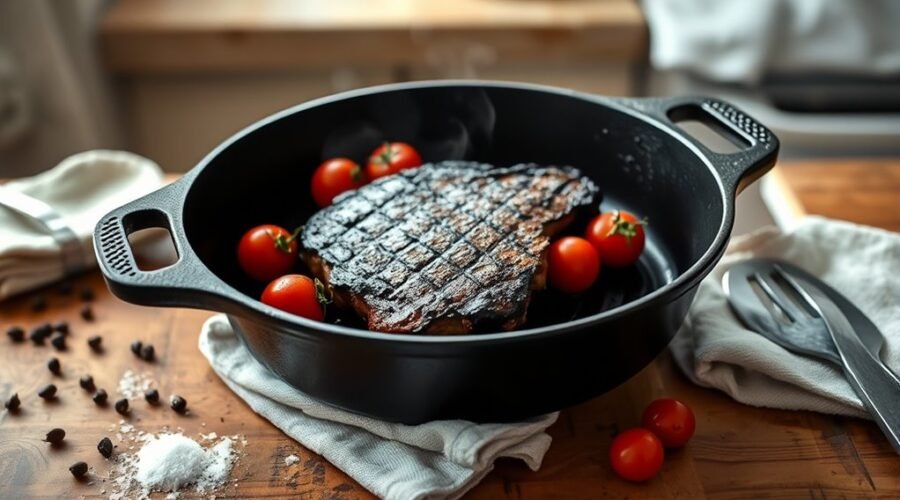
A cast iron skillet is more than just a cooking tool; it’s a kitchen essential that offers unparalleled heat retention and versatility. Whether you’re frying, baking, or searing, this skillet enhances flavors while requiring less fat. Its natural non-stick surface develops over time, making it a favorite among home cooks. Curious about its care tips, cooking methods, and how it compares to other types of skillets? Let’s explore what makes this cookware a timeless choice.
The Definition of a Cast Iron Skillet
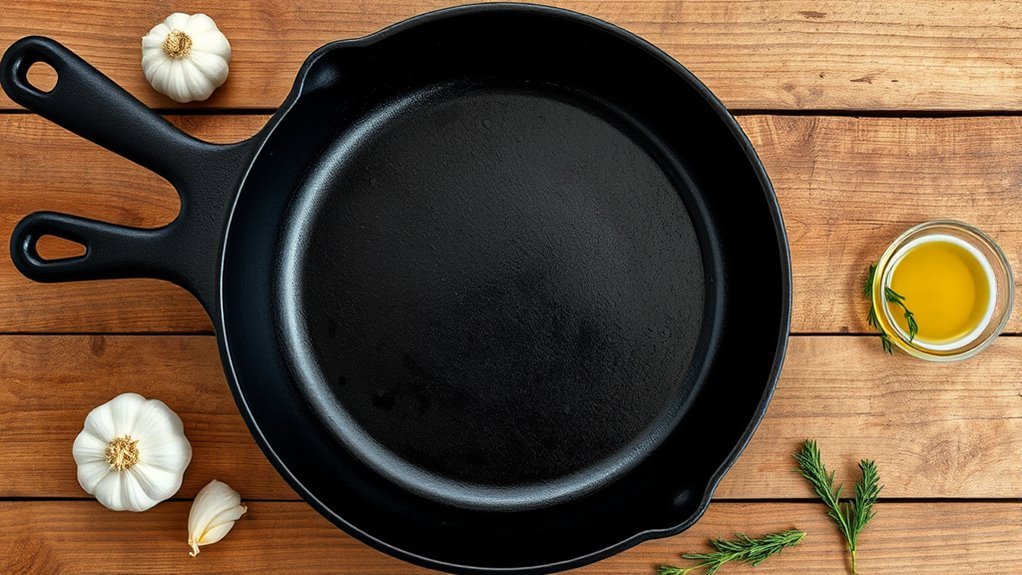
A cast iron skillet is more than just a cooking tool; it’s a culinary powerhouse. Made from molten iron, this heavy cooking pan excels in heat retention and promotes even cooking, making it a favorite for frying, searing, and baking.
The skillet can handle high temperatures, allowing you to explore various cooking methods without fear of damage. Over time, it develops a natural nonstick surface through seasoning, where oils are applied and heated, enhancing your cooking experience.
With its ability to withstand high temperatures and develop a natural nonstick surface, a cast iron skillet elevates your culinary creativity.
Durable and built to last, a cast iron skillet can become a cherished family heirloom, passed down through generations. Plus, it can leach dietary iron into your dishes, which can be beneficial if you’re iron deficient.
However, be mindful if you have conditions like hemochromatosis. Embrace the versatility and tradition of cast-iron cookware, and transform your cooking adventures with this timeless kitchen essential.
Key Benefits of Using Cast Iron Cookware
Using cast iron cookware brings a multitude of benefits that elevate your cooking experience. A cast-iron skillet excels in heat retention, ensuring your meals cook evenly and sear beautifully.
When seasoned correctly, it develops a natural non-stick surface, allowing you to reduce added fats while enhancing flavors. Plus, cast iron cookware can leach dietary iron into your food, which can be a boon for those with iron deficiencies—just be cautious if you have certain health conditions.
With proper care, your cast-iron skillet can last a lifetime, often becoming a cherished family heirloom. Its versatility shines through as it adapts to stovetops, ovens, and even open flames, opening up a world of cooking methods.
Embrace the freedom and creativity that cast iron cookware offers, and enjoy the rich, delicious meals you can create!
What Makes Cast Iron Skillets Non-Stick?
When you season a cast iron skillet, you create a non-stick surface that transforms your cooking experience.
This process involves polymerizing oils, forming a smooth, protective coating that lets food slide right off.
Plus, the textured surface enhances this effect, making your skillet a versatile tool for frying, baking, and sautéing.
Seasoning Process Importance
The seasoning process is vital for transforming a cast iron skillet into a dependable cooking companion. By seasoning a cast iron skillet, you create a layer of oil that, when heated, forms a natural non-stick surface. This not only enhances your skillet’s non-stick cooking abilities but also shields it from rust and damage.
Regular maintenance is important; reapply oil when the surface looks dull to guarantee peak performance. Beware, though—exposure to acidic foods or improper cleaning, like using a dishwasher, can compromise your seasoning.
A well-seasoned skillet can even leach minimal dietary iron into your meals, which is a bonus for those with iron deficiencies. Embrace this process, and elevate your cooking experience!
Polymerized Oil Coating
A cast iron skillet‘s remarkable non-stick properties stem from its unique polymerized oil coating, which forms through the seasoning process.
By applying oil to your skillet and heating it, you create a bonded layer of polymerized oils that protects the iron and enhances its cooking abilities.
As you use the skillet over time, the nonstick surface improves, making it even more effective for cooking without food sticking.
Choosing the right oil, like flaxseed oil for its high smoke point, can elevate this process.
To maintain this precious coating, avoid harsh soaps and abrasive scrubbing.
With proper care, your skillet’s polymerized oil layer will grant you a liberating cooking experience, empowering you to whip up delicious meals effortlessly.
Surface Texture Benefits
Surface texture plays an essential role in making cast iron skillets non-stick. The rough, textured surface of your cast-iron pan allows oils to adhere better, creating a durable nonstick layer as you cook.
With each use, seasoning bonds to the skillet, enhancing its non-stick properties over time. Unlike smooth surfaces that can repel oils, the slight texture of cast iron traps oil and food particles, forming a micro-layer that further boosts its non-stick capabilities.
A well-seasoned cast iron skillet can rival modern non-stick pans in performance while offering unmatched durability.
With proper care, you’ll enjoy the freedom of effortless cooking and easy cleanup, liberating you from the hassles of sticking and scrubbing.
Versatile Cooking Methods for Cast Iron Skillets
When you grab a cast iron skillet, you’re opening up a world of versatile cooking methods that can elevate your culinary creations. These skillets excel in searing, frying, and baking, thanks to their excellent heat retention and even cooking capabilities. You can use them on stovetops, in ovens, or over open flames, allowing for a variety of techniques like sautéing or baking cornbread.
Here’s a quick overview of the versatile cooking methods you can explore:
| Cooking Method | Description |
|---|---|
| Searing | Perfect for meats, locking in juices. |
| Frying | Ideal for crispy textures, like fried chicken. |
| Baking | Great for cornbread or frittatas. |
| Roasting | Suitable for vegetables or meats at high heat. |
| Broiling | Excellent for achieving a golden crust. |
With proper seasoning, your skillet can handle delicate foods, making cast-iron cooking a liberating experience!
Essential Care Tips for Longevity and Performance
To keep your cast iron skillet performing at its best, regular seasoning is key.
You’ll want to maintain that nonstick surface and prevent rust by applying oil, especially when the finish looks dull.
Plus, using the right cleaning techniques will guarantee your skillet stays in top shape for years to come.
Regular Seasoning Maintenance
Keeping your cast iron skillet in top shape requires a bit of TLC, but the rewards are well worth it. Regular seasoning maintenance is key to achieving that coveted non-stick surface.
Simply apply a thin layer of oil and heat your skillet to 500°F, creating a durable coating that enhances cooking performance. If your pan starts looking dull or food begins to stick, it’s time to reapply seasoning.
Avoid soap and dishwashers; instead, clean your cast-iron pan with a damp rag or coarse salt for stubborn residue. After cleaning, wipe it down with neutral oil to prevent rust.
Embrace the unique patina that develops over time—it’s a sign of your skillet’s character and cooking prowess.
Proper Cleaning Techniques
Maintaining your cast iron skillet goes beyond regular seasoning; proper cleaning techniques play an essential role in its longevity and performance.
Avoid the dishwasher—grab a damp rag or use hot water with a stiff brush to clean your skillet. For stubborn residue, sprinkle coarse salt and scrub with a Tawashi scrubber, effectively removing crusty bits without harming the seasoning.
After cleaning, reapply a thin layer of neutral oil to prevent rust and keep that nonstick surface intact.
Remember, steer clear of cooking acidic foods in unseasoned cast iron; they can strip your skillet’s seasoning.
Embrace the natural aesthetic changes over time—cosmetic wear is perfectly normal and won’t impact your cast iron skillet’s performance.
Top Mistakes to Avoid When Cooking With Cast Iron Skillets
When you plunge into cooking with cast iron skillets, avoiding common pitfalls can make all the difference in your culinary success. Here are some key mistakes to sidestep:
| Mistake | Why to Avoid It | Solution |
|---|---|---|
| Using Soap | Strips seasoning, compromising nonstick properties | Use hot water and a stiff brush |
| Cooking Acidic Foods Initially | Damages seasoning, leading to metallic taste | Wait until skillet is well-seasoned |
| Neglecting Seasoning | Causes rust and reduces nonstick surface | Regularly re-season when dull |
Stick to hand washing your skillets—dishwashers can ruin their seasoning. Also, remember to preheat your skillet gradually to avoid cracks. By steering clear of these mistakes, you’ll reveal the true potential of your cast-iron skillets, elevating your cooking experience beyond that of ordinary enameled cookware.
Comparing Enameled vs. Bare Cast Iron Skillets
When you’re choosing between enameled and bare cast iron skillets, it’s crucial to take into account durability, cooking versatility, and maintenance.
Enameled skillets shine with their rust resistance and ease of cleaning, while bare cast iron can develop a unique non-stick surface over time.
Each type has its strengths, and knowing these can help you make the best choice for your cooking needs.
Durability And Longevity
Durability is one of the standout features of cast iron skillets, whether you opt for enameled or bare versions. Both types can last a lifetime with proper care, making them a wise investment for any cooking enthusiast. Bare cast iron skillets develop a non-stick surface through seasoning, enhancing longevity and rust resistance. On the other hand, enameled cast iron requires no seasoning and offers easier cleaning, though it may chip over time. Here’s a quick comparison:
| Feature | Enameled Cast Iron | Bare Cast Iron |
|---|---|---|
| Seasoning Required | No | Yes |
| Rust Resistance | Yes | Yes (with care) |
| Cleaning Ease | High | Moderate |
| Price Point | Higher | Lower |
| Cooking Temperature Range | Moderate | High |
Choose wisely, and you’ll enjoy your skillet for years!
Cooking Versatility
Cast iron skillets are incredibly versatile kitchen tools, each type offering unique advantages that cater to different cooking styles.
Enameled skillets shine with their easy-to-clean cooking surface, allowing you to whip up tomato-based dishes without worry. They’re less reactive, making them a great choice for those concerned about iron leaching.
On the other hand, bare cast iron skillets excel in high-heat cooking methods like searing and frying, thanks to their ability to withstand intense temperatures. They develop a natural non-stick surface through seasoning, enhancing their versatility for traditional recipes.
While both types retain heat excellently, your choice boils down to your cooking preferences and how much maintenance you’re ready to embrace. Each skillet opens a world of culinary possibilities!
Maintenance Requirements
While both enameled and bare cast iron skillets offer fantastic cooking experiences, their maintenance requirements differ considerably.
Bare cast iron demands regular seasoning with oil to keep its nonstick surface and prevent rust, while enameled cast iron skips this step but needs enough fat during cooking to avoid sticking.
When it comes to cleaning methods, you’ll want to scrub your bare skillet with hot water and a stiff brush, steering clear of soap to maintain that seasoning.
Enameled cast iron, on the other hand, can handle soap and water, but avoid abrasive cleaners to protect the enamel.
Each type has its quirks, but with a little care, you’ll keep them both in top shape for delicious meals.
Choosing the Right Size Skillet
Have you ever wondered how to choose the perfect size cast iron skillet for your cooking needs? The right size can elevate your culinary experience. Typically, cast iron skillets range from 7 inches to 13.375 inches, catering to different cooking tasks. For most family meals, a No. 8 skillet (10.5 inches) offers versatility, while a No. 10 (11.625 inches) provides excellent heat retention but may feel heavy. Smaller skillets, like the No. 4, are ideal for single servings, making them among the best cast iron skillets for quick breakfasts.
Here’s a quick reference to help you decide:
| Skillet Size | Diameter (inches) | Best For |
|---|---|---|
| No. 4 | 7 | Single servings |
| No. 8 | 10.5 | Family meals |
| No. 10 | 11.625 | Larger batches |
| No. 12 | 13.375 | Big gatherings |
| No. 14 | 15 | Cooking for a crowd |
Choose a skillet that’s comfortable to grip and fits your cooking style!
Signs Your Cast Iron Skillet Needs Re-Seasoning?
Ever wondered how to tell if your beloved cast iron skillet is ready for a re-seasoning? Keeping an eye on its condition guarantees you maintain that perfect cooking surface. Here are some signs to watch for:
- Dull Surface: If your skillet looks lackluster and has lost its shine, it’s time for a refresh.
- Food Sticking: When your favorite dishes begin to stick, that’s a clear signal the seasoning is deteriorating.
- Rust Spots: Any rust indicates moisture has compromised the seasoning, requiring immediate attention.
- Uneven Color or Flaking: A dark, patchy appearance or flaking seasoning suggests your skillet needs re-seasoning to restore its performance.
Recognizing these signs early will keep your cast iron skillet in prime cooking condition, allowing you to create delicious meals with ease.
Don’t let a neglected skillet hold you back!
FAQs About Cast Iron Skillets
Curious about cast iron skillets and their unique qualities? These heavy-duty pans are crafted from cast iron, renowned for their remarkable heat retention and even cooking. Ideal for frying, searing, or baking, they’re a kitchen powerhouse.
When properly seasoned, a cast-iron skillet develops a natural nonstick surface, enhancing your cooking experience and warding off rust.
Wondering about their lifespan? With proper care, these skillets can last a lifetime or more, with collectors often seeking vintage brands like Griswold and Wagner. Plus, cooking with cast iron can boost your dietary iron intake, a definite plus if you’re iron deficient. Just remember, if you have hemochromatosis, it’s best to steer clear.
To keep your skillet in top shape, avoid dishwashers, use minimal soap, and re-season periodically. Embrace the beauty of cast iron, and enjoy cooking with a trusted companion that only gets better with time!
Frequently Asked Questions
What Is the Difference Between a Cast Iron Pan and a Regular Pan?
A cast iron pan stands out from a regular pan through its exceptional heat retention and durability. You’ll notice it excels in searing and even cooking, bringing out flavors beautifully.
However, it requires some maintenance—seasoning regularly keeps it non-stick and prevents rust. In contrast, regular pans may lose their coatings over time.
If you embrace diverse cooking techniques, investing in a cast iron skillet can elevate your culinary experience considerably.
What Is Special About a Cast Iron Skillet?
A cast iron skillet’s special because it offers incredible heat retention and seasoning benefits that enhance your cooking.
As you use it, the natural nonstick surface develops, making every meal a delight.
Whether you’re searing a steak or baking cornbread, you’ll appreciate its versatility.
Plus, its durability means it can last a lifetime, becoming a cherished heirloom in your kitchen.
Embrace this timeless tool, and liberate your culinary creativity!
How Do I Tell if My Skillet Is Cast Iron?
To tell if your skillet’s cast iron, just grab a magnet—if it sticks, you’ve got the real deal!
Now, if you’re marveling at its weight and rough texture, that’s another clue.
Don’t forget about cast iron care; a well-maintained skillet boasts a natural non-stick surface.
Just think, all that seasoning and skillet maintenance isn’t just for show; it’s your ticket to culinary freedom.
Embrace the heft and history of cast iron!
What Are the Disadvantages of Cast Iron Pans?
Cast iron pans have a few disadvantages you should consider. Their heavy weight can make them tough to maneuver, especially if you’ve got limited strength.
You’ll also face maintenance challenges, as they require regular seasoning to prevent rust and sticking. Plus, they can react with acidic foods, altering flavors and degrading seasoning faster.
Finally, they heat slowly and unevenly, so you’ll need to be patient for ideal cooking results.
Conclusion
In the culinary world, a cast iron skillet is your trusty companion, like a seasoned warrior in the kitchen. Its unmatched durability and heat retention turn every meal into a masterpiece. With a little care, it’ll serve you for generations, enhancing flavors and nourishing your family. So, embrace this timeless tool; it’s not just cookware, but a gateway to delicious memories waiting to be created. Your kitchen deserves the magic of cast iron—let the cooking adventures begin!