You might be surprised to find that a simple cast iron skillet can transform your cooking experience. Known for their impressive heat retention and natural non-stick capabilities, these skillets excel in frying, baking, and searing. But what exactly makes them a kitchen staple? From health benefits to specific dish pairings, the nuances of cast iron cooking reveal both advantages and challenges. Let’s explore what you need to know to make the most of this timeless cookware.
Unique Features of Cast Iron Skillets
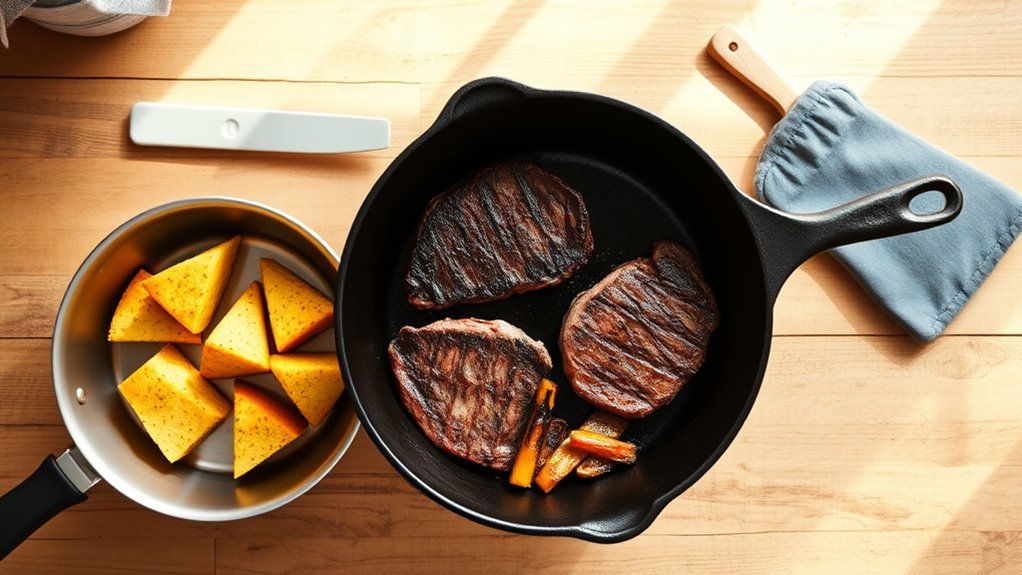
When you think about versatile cookware, cast iron skillets stand out due to their unique features. These skillets develop a naturally non-stick surface through seasoning, allowing you to cook with minimal oil and without synthetic chemicals.
Imagine sautéing vegetables or searing meats while enhancing their flavors with every use! Their exceptional heat retention guarantees consistent cooking temperatures, making it easy to achieve that perfect golden-brown crust.
Imagine the joy of sautéing vegetables and searing meats, enhancing flavors with every use while achieving that perfect golden-brown crust.
You can use seasoned cast iron for frying, baking, or even broiling, adapting to any cooking method you desire. Plus, their durability means that with proper care, your skillet can last a lifetime, improving its performance as it ages.
Whether you’re whipping up a quick meal on the stovetop, grilling outdoors, or even cooking over a campfire, cast iron skillets are your steadfast companion, ready to elevate your culinary adventures. Embrace the freedom of cooking with this timeless tool!
Health Benefits of Cooking With Cast Iron
Cooking with cast iron skillets offers several surprising health benefits that can enhance your culinary experience. One major advantage is the natural increase in iron content in your food, which is especially beneficial if you’re dealing with iron deficiency.
Plus, the non-stick surface of well-seasoned cast iron is free from synthetic chemicals, creating a safer cooking environment.
You’ll also find that using less oil when cooking in cast iron supports heart health by reducing overall fat intake. The excellent heat retention helps preserve nutrients, ensuring even cooking while retaining essential vitamins and minerals.
With cast iron’s durability and versatility, you can explore various healthy cooking methods that elevate your meals.
To maximize these health benefits, proper cast iron care is essential. With a little maintenance, your skillet can be a lifetime companion, contributing to a healthier, more vibrant lifestyle.
Ideal Foods for Cast Iron Cooking
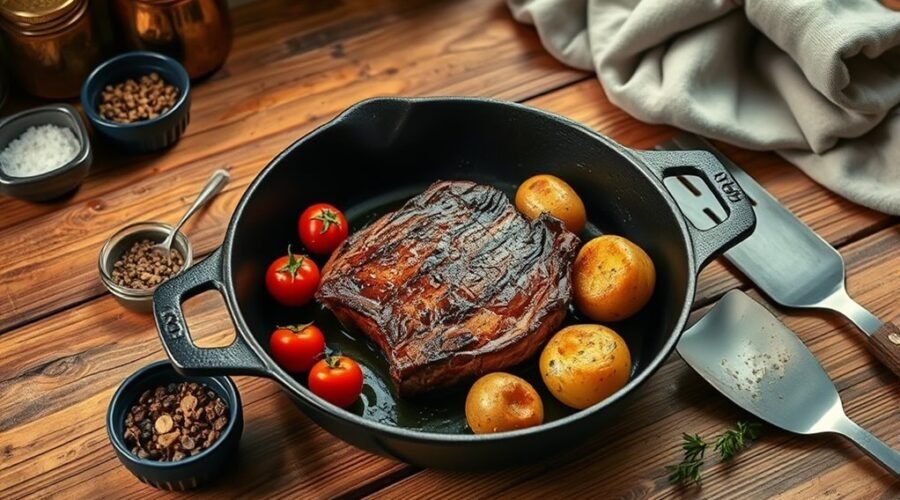
A cast iron skillet is your best friend when it comes to cooking a variety of delicious dishes. Its excellent heat retention makes it perfect for achieving that perfect sear on steak or roast, creating a mouthwatering crust that locks in flavors.
You’ll love how quickly you can whip up a vibrant stir-fry, keeping those veggies crisp and colorful.
Consider these foods for your next cooking adventure:
- Fried chicken: Enjoy crispy skin and juicy meat with perfect heat distribution.
- Roasted vegetables: Achieve a crunchy exterior that elevates your side dishes.
- Cornbread: Bake in a preheated skillet for a golden, irresistible crust.
With cast iron cookware, you’re not just cooking; you’re liberating your culinary creativity, transforming everyday meals into extraordinary experiences.
Embrace the joy of cooking with cast iron and savor the rich flavors it brings to your table.
Foods to Avoid in Cast Iron
When using your cast iron skillet, it’s best to steer clear of delicate fish like flounder or sole, as they can easily flake and become a hassle to manage.
You’ll also want to avoid overly acidic ingredients, like marinara sauce or citrus, which can interact with the iron and alter both flavor and seasoning.
Keeping these tips in mind will help you maintain your skillet’s quality and guarantee delicious meals.
Delicate Foods to Avoid
While cast iron skillets are prized for their versatility, certain delicate foods can pose challenges that may spoil your culinary efforts. To guarantee your dishes shine, avoid:
- Delicate fish like flounder or sole that can easily flake apart.
- Overly acidic foods such as marinara or bolognese sauce, which can strip away your skillet’s seasoning and alter flavors.
- Sweet dishes like pancakes that might absorb savory flavors, ruining their intended taste.
These foods can turn your cooking experience into frustration. By steering clear of these delicacies, you can preserve the integrity of your cast iron skillet and enjoy the liberation of perfectly cooked meals.
Embrace the journey of cooking with the right ingredients, and let your skillet shine!
Acidic Ingredients Concerns
Although you might be tempted to use acidic ingredients in your cast iron skillet, doing so can lead to unexpected challenges. Acidic foods like tomatoes and vinegar can strip away the skillet’s seasoning, resulting in a sticky surface and potential rusting. Additionally, these ingredients may impart metallic flavors to your dishes.
| Acidic Foods to Avoid | Why to Avoid |
|---|---|
| Marinara Sauces | Can damage unseasoned cast iron |
| Citrus-Based Marinades | React with iron, deteriorating seasoning |
| Vinegar | Strips seasoning, affecting taste |
For best results, save these acidic ingredients for stainless steel or other non-reactive cookware until your skillet is properly seasoned. This way, you can maintain your cast iron’s integrity and enjoy delicious meals without compromise.
Caring for Your Cast Iron Skillet: Tips and Tricks
Caring for your cast iron skillet is essential to guarantee it stays in top shape and serves you well for years to come.
Here are some tips to keep it beautifully seasoned and ready for your culinary adventures:
Tips for maintaining your cast iron skillet ensure it’s always beautifully seasoned and ready for your next culinary adventure.
- Clean without soap; use kosher salt and a towel for stubborn bits.
- Always dry it immediately after washing to prevent rust.
- Re-season regularly by applying a thin layer of fat and baking at 500°F for an hour.
Pros of Using Cast Iron Cookware
When you choose cast iron cookware, you’re not just investing in durable kitchen tools; you’re embracing a culinary tradition that offers numerous benefits.
One of the standout pros of cast iron skillets is their incredible durability. With proper care, they can last a lifetime and even improve with age, making them a cost-effective choice. Their heat retention is another advantage, maintaining consistent temperatures that help you achieve that perfect crispy crust on meats and veggies.
Additionally, when seasoned well, cast iron provides a natural non-stick surface, eliminating the need for synthetic chemicals. This versatility means you can sear, sauté, bake, and fry with ease, adapting to a wide range of cooking styles.
Plus, cooking in cast iron can fortify your meals with iron, offering nutritional benefits worth considering.
Drawbacks of Cast Iron Skillets?
While cast iron skillets offer many advantages, they come with their own set of drawbacks that you should consider. These drawbacks can impact your cooking experience, so it’s important to be aware of them.
- Heavy Weight: Maneuvering a cast iron skillet can feel like lifting weights, requiring both hands for safety.
- Uneven Heating: If the burner doesn’t match the skillet size, you might encounter frustrating uneven heating, leading to inconsistent results.
- Hot Handles: Without proper precautions, those handles can burn you, adding an element of danger to your cooking routine.
Additionally, the need for regular seasoning and careful maintenance can be a hassle. You’ll want to avoid soap and abrasive scrubbers to keep your skillet in prime condition.
Understanding these drawbacks of cast iron skillets will help you decide if they’re the right fit for your kitchen adventures.
How to Enhance Your Cooking Skills With Cast Iron
Mastering heat management is essential when cooking with cast iron, as it guarantees even heat distribution and prevents sticking.
By developing unique flavor profiles through proper seasoning and technique, you’ll elevate your dishes to new heights.
Plus, exploring various cooking methods like frying and baking will showcase the skillet’s versatility and enhance your culinary skills.
Mastering Heat Management
To elevate your cooking with a cast iron skillet, understanding heat management is vital. Mastering this skill allows you to create mouthwatering dishes that impress every time.
- Feel the satisfaction of a perfect sear on meats.
- Experience the joy of crispy, caramelized vegetables.
- Relish the consistent results that come from even heat distribution.
Begin by preheating your skillet to guarantee ideal heat distribution. Use the right burner size to prevent temperature drops and maintain that steady heat.
Remember, gradual temperature changes are important—cast iron retains heat beautifully but can crack if you’re not careful.
Finally, always manage those hot handles with oven mitts to avoid burns. Embrace this mastery, and let your culinary creativity soar!
Developing Flavor Profiles
Building on your newfound heat management skills, developing flavor profiles with a cast iron skillet can transform your cooking.
The skillet’s superior heat retention promotes exceptional browning and caramelization, enhancing the complexity of your dishes. As you season your skillet, it develops a natural non-stick surface that allows flavors to shine without synthetic additives.
Cooking with cast iron intensifies tastes, imparting subtle, savory notes to cornbread and roasted vegetables alike. When you sear meats, the high temperatures lock in juices, creating a delectable crust that elevates overall flavor.
With regular use, your cast iron skillet becomes uniquely yours, enhancing its flavor profile over time, making every dish a reflection of your culinary journey.
Embrace the liberation of flavor!
Exploring Cooking Techniques
While exploring cooking techniques with your cast iron skillet, you’ll discover how this versatile tool can elevate your culinary skills. To truly release its potential, remember to preheat for success—this guarantees even heat distribution, perfect for that mouthwatering sear on meats or a crispy crust on veggies.
- Enjoy healthier meals with less oil, thanks to your skillet’s excellent non-stick properties.
- Experiment with various cooking methods, from frying to baking, enriching your cooking repertoire.
- Adjust heat levels gradually for precise control, whether you’re searing or slow-cooking.
With each use, you’ll not only enhance flavors but also gain confidence, transforming your kitchen adventures into liberating culinary experiences.
Alternatives to Cast Iron Cookware
For those who prefer a chemical-free option, ceramic cookware offers a non-stick surface, but keep in mind it’s best for low to medium heat.
Aluminum cookware is lightweight and heats quickly, but it can react with acidic foods.
Finally, copper cookware excels in heat conductivity, great for precision, yet demands more maintenance.
Each option has its strengths, allowing you the freedom to choose what suits your culinary needs.
Cast Iron Cooking Community and Heritage
Cast iron cooking isn’t just about the cookware; it’s a vibrant community steeped in heritage and tradition. These sturdy cast iron pans are more than tools; they connect generations through cherished recipes and unforgettable meals.
You’ll find a wealth of tips, stories, and techniques shared among enthusiasts, making every cooking experience richer.
- Culinary connections: Each skillet tells a story, often passed down through family lines.
- Sustainable practices: Emphasizing the importance of preserving culinary heritage.
- Community events: Workshops that bring people together, fostering friendships and shared knowledge.
As you embrace cast iron, you’re joining a community that values durability and longevity—cookware made to last, just like the memories you’ll create.
Celebrate the joy of cooking with cast iron, and you’ll feel the spirit of tradition and connection in every dish.
Frequently Asked Questions
What Are the Downsides of Using Cast Iron Pans?
Using cast iron pans comes with some downsides. They’re heavy, so you often need both hands for safe handling.
The handles can get dangerously hot, risking burns. You’ll also need to master seasoning techniques to maintain that coveted non-stick surface and prevent rust.
If you don’t care for them properly, they’ll be susceptible to damage from acidic foods.
Plus, cleaning requires special care to keep the seasoning intact, adding to your maintenance routine.
What Is the Advantage of Using a Cast Iron Skillet?
Using a cast iron skillet is like wielding a trusty sword in the kitchen. Its incredible heat retention guarantees your dishes cook evenly, while proper seasoning techniques create a natural non-stick surface that enhances flavors.
You’ll discover that every meal becomes an adventure, whether you’re searing meats or baking cornbread. Plus, with its durability, this skillet can be a lifelong companion, making your cooking journey not just easier, but liberating.
What Should You Not Use a Cast Iron Pan For?
You shouldn’t use a cast iron pan for delicate fish or overly acidic foods, like marinara, as they can ruin the seasoning.
Sweet dishes, such as cakes, may absorb unwanted savory flavors, too.
If you’re craving scrambled eggs or frittatas, make certain your pan is well-seasoned to avoid sticking.
For smoother cooking, consider non-stick alternatives when tackling these challenges.
Why Did People Stop Using Cast Iron?
You might’ve stopped using cast iron due to the cookware evolution favoring lighter, non-stick options. Many people found the weight cumbersome and the upkeep challenging, fearing the regular seasoning required would be a hassle.
The misconception that cast iron pans needed excessive maintenance dissuaded you, while modern materials offered convenience.
As cast iron history faded from daily use, its initial learning curve led some to seek easier alternatives, making the switch more appealing.
Conclusion
To sum up, cast iron skillets are your culinary sidekicks, ready to elevate your cooking game. With their unrivaled heat retention and health benefits, they’re perfect for whipping up everything from crispy fried chicken to delightful cornbread. Just remember to give them some TLC to keep them in tip-top shape. So, grab your skillet and channel your inner pioneer chef—it’s time to create delicious meals that stand the test of time!