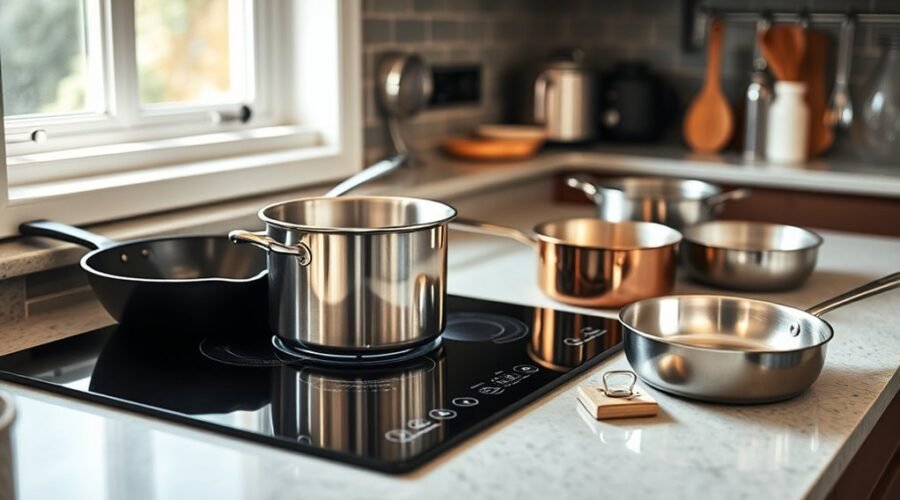
Induction-capable cookware is essential for anyone using induction cooking systems. This specialized cookware is made from ferromagnetic materials, allowing it to generate heat directly through electromagnetic fields. If you’re unsure whether your pots and pans are compatible, there’s a simple magnet test you can perform. Understanding the types of cookware that work with induction is vital for maximizing efficiency in the kitchen. Let’s explore the specifics of induction cookware and how to choose the right pieces for your needs.
What Is Induction Cooking and How Does It Work?
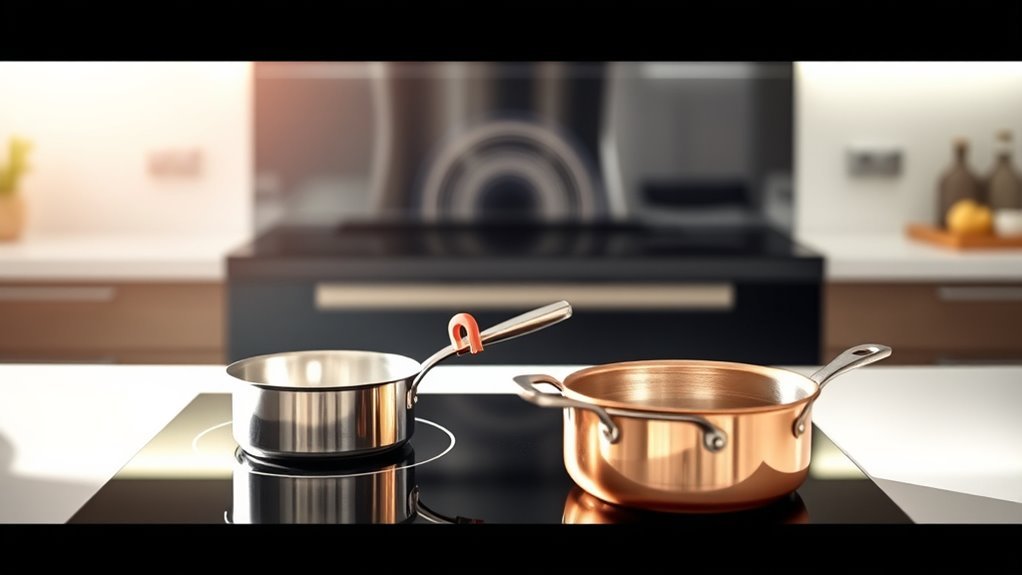
Induction cooking revolutionizes the way we prepare meals by using electromagnetic fields to heat ferromagnetic cookware directly. This technology generates heat almost instantly at the contact point between the cookware and the stovetop, ensuring rapid and efficient cooking.
Only induction-compatible cookware, like cast iron and certain stainless steels, works with this system; non-ferromagnetic materials such as aluminum or glass remain cool to the touch. This not only minimizes energy loss but also enhances safety, as the cooktop itself stays relatively cool, reducing burn risks for children and pets.
Additionally, a built-in safety feature prevents the induction cooktop from activating unless compatible cookware is detected, eliminating the risk of accidental heating.
Through this innovative approach, you can enjoy a more controlled and efficient cooking experience, freeing you to focus on your culinary creativity without the worry of traditional cooking hazards.
Top Benefits of Induction-Compatible Cookware for Home Chefs
When you choose induction-compatible cookware, you’re investing in a cooking experience that prioritizes speed and efficiency. Induction cookware heats up quickly and evenly through direct interaction with induction cooktops, enhancing your cooking performance.
Investing in induction-compatible cookware means embracing speed and efficiency for an enhanced cooking experience.
You’ll appreciate the precise temperature control, allowing you to make instant heat adjustments that minimize the risk of overcooking. The cooktop remains cool to the touch during cooking, making it a safer option for families with children and pets.
Additionally, induction cooking reduces heat loss to the environment, resulting in lower nitrogen dioxide levels compared to gas stoves, improving indoor air quality.
Versatility is another benefit; you can use induction-compatible cookware on traditional gas and electric stovetops. This flexibility guarantees you can adapt to various cooking methods without compromising on quality or safety.
Embrace the liberation that comes from efficient, safe, and versatile cooking.
How to Identify Induction-Compatible Cookware Using the Magnet Test?
Identifying induction-compatible cookware is straightforward and can be done quickly with a simple magnet test. To check for induction compatibility, take a magnet and see if it sticks firmly to the bottom of your cookware. If it does, you’re in luck; your pot or pan is made from ferromagnetic materials like cast iron, stainless steel, or carbon steel, which interact effectively with electromagnetic fields on an induction cooktop.
Conversely, if the magnet doesn’t stick, the cookware is likely made from non-magnetic materials such as aluminum, glass, or pure copper, which won’t heat on induction unless they’ve a magnetic layer.
Keep in mind that some cookware may feature a pasted-on induction bottom that only heats in that area, while a full magnetic base guarantees even heat distribution across the entire surface.
Using the magnet test is a quick and effective way to verify your cookware is suitable for induction cooking.
Induction-Compatible Cookware Types
Cookware types that work with induction cooktops primarily consist of ferromagnetic materials, ensuring efficient heating through electromagnetic fields. The most common options include cast iron, carbon steel, and magnetic stainless steel. Each of these materials interacts effectively with induction cooktops, providing quick and even heating.
| Cookware Type | Material | Features |
|---|---|---|
| Cast Iron | Ferromagnetic Iron | Excellent heat retention, suitable for slow cooking |
| Enameled Cast Iron | Cast Iron with Enamel | Non-reactive surface, retains heat well |
| Magnetic Stainless Steel | Stainless Steel | Durable, rust-resistant, quick heating |
| Carbon Steel | Ferromagnetic Steel | Lightweight, great for high-heat cooking |
When selecting induction-compatible cookware, you should also verify specific labeling for non-stick options, ensuring they possess a magnetic base. This way, you can fully enjoy the benefits of induction cooking.
How to Choose the Best Induction Cookware
Choosing the best induction cookware can greatly enhance your cooking experience. Start by ensuring your pots and pans are made from ferromagnetic materials like cast iron, magnetic stainless steel, or carbon steel.
Look for the “induction compatible” symbol on cookware sets or perform a simple magnet test; if the magnet sticks firmly, you’re good to go.
Check for the “induction compatible” symbol or use a magnet; a strong hold means your cookware will work perfectly.
Opt for flat-bottomed cookware to maximize contact with the cooktop, which improves heat transfer and cooking efficiency.
Consider your personal cooking preferences as well; handle comfort and weight can notably impact ease of use during meal prep.
Lastly, seek fully clad cookware designs. They promote even heat distribution, preventing hot spots and ensuring consistent cooking results.
Caring for Your Induction Cookware: Tips and Tricks
To guarantee your induction cookware lasts, you’ll need to adopt proper cleaning techniques and maintenance practices.
Hand washing is best, as it preserves the surface without risking damage from harsh cleaners.
Additionally, regular inspections will help you catch any wear early, particularly on the magnetic base, securing peak performance on your cooktop.
Proper Cleaning Techniques
Maintaining the integrity of your induction cookware is vital for its longevity and performance. To guarantee your induction-compatible cookware stays in top shape, hand washing is the best practice; it prevents damage from harsh detergents.
Avoid abrasive scrubbers or steel wool, as they can scratch non-stick or enamel coatings. After washing, thoroughly dry your cookware to prevent water spots and maintain its appearance.
Gentle handling is essential, especially with cast iron, to avoid scratching your glass cooktop surface. By following these care tips and incorporating proper cleaning techniques, you can enhance the durability and functionality of your pots and pans, making sure they serve you well for years to come.
Storage and Maintenance Tips
Proper cleaning techniques lay the groundwork for effective storage and maintenance of your induction cookware. Always hand wash your cookware to preserve its surface integrity. Thoroughly dry it to prevent water spots and rust, especially on cast iron. Store your induction cookware carefully, using protective padding between pieces to avoid scratches.
| Tip | Description |
|---|---|
| Hand Washing | Use mild detergent; avoid harsh chemicals. |
| Drying | Guarantee complete drying to prevent rust. |
| Protective Padding | Place padding between pieces for nonstick surfaces. |
| Regular Checks | Inspect for warping or damage regularly. |
Avoid stacking heavy items on top to maintain the cooking surface. Proper maintenance guarantees peak performance on induction cooktops.
Frequently Asked Questions
How Can I Tell if My Cookware Is Induction Compatible?
To tell if your cookware is induction compatible, perform a cookware testing using a magnet. If it sticks, you’ve got magnetic materials suitable for induction cooktops.
Confirm your cookware has a flat bottom for ideal heat distribution; warped bases can cause uneven cooking.
Look for induction symbols on the packaging or check the manufacturer’s specifications if you’re unsure.
This simple process helps you avoid frustration while cooking efficiently with induction technology.
What Are the Disadvantages of Induction Pots?
Induction pots come with disadvantages like higher cost considerations, as they often feature specialized materials for efficient heat distribution.
You’ll also face material limitations since non-magnetic options like aluminum or glass won’t work without modifications.
Additionally, the flat-bottom design restricts certain cookware shapes, and you might experience a learning curve adjusting to faster heating.
Be aware that some lightweight pots can create noise or vibrations, which can be distracting while cooking.
Can I Use Normal Cookware on Induction?
No, you can’t use normal cookware on induction cooktops unless it contains ferromagnetic materials.
Induction cooking benefits from energy efficiency, providing quick and even heating. Cookware materials like cast iron or magnetic stainless steel work best.
If you have aluminum or copper pans, confirm they’re designed with a magnetic base.
Using the right cookware not only enhances your cooking experience but also maximizes the efficiency of your induction system.
What Happens if You Use a Regular Pan on an Induction Stove?
If you think using a regular pan on an induction stove will magically cook your food, think again! You’ll just end up with a cold, untouched meal.
Induction cookware benefits from magnetic properties that generate heat efficiently, unlike your non-magnetic pans. They can’t activate the stove’s electromagnetic coils, wasting your time and energy.
Conclusion
In conclusion, choosing induction-capable cookware elevates your cooking experience with efficiency and precision. Imagine preparing a family dinner, where your sautéed vegetables retain their vibrant colors and nutrients, all thanks to quick, even heating. By investing in the right tools and caring for them properly, you can enjoy the benefits of induction cooking for years to come. Don’t just cook—create memorable meals that bring loved ones together around the table.