

If you’ve just purchased a Lodge cast iron pan, you might be wondering what “pre-seasoned” really means. Fundamentally, it means your skillet is ready to use right out of the box, thanks to a special oil treatment that creates a non-stick surface. This convenience is perfect for beginners. However, to keep that surface in top shape, there’s a bit more to it. Let’s explore how you can maximize your cooking experience with this versatile kitchen tool.
What Does Pre-Seasoned Mean for Lodge Cast Iron?
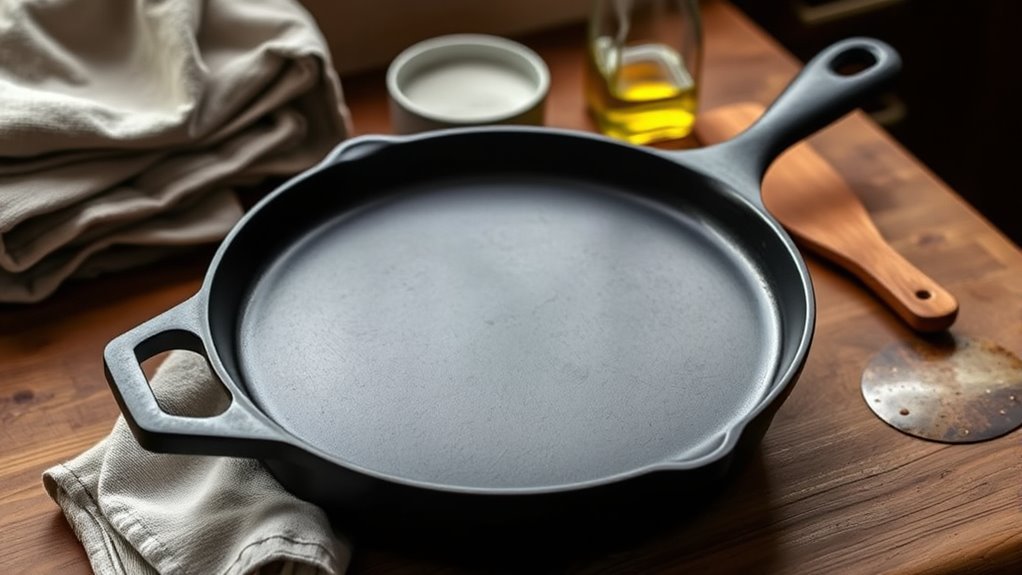
When you unwrap a Lodge cast iron pan, you’re greeted with the promise of culinary excellence, thanks to its pre-seasoned surface. This means you can dive right into cooking with a natural non-stick quality right out of the box.
Lodge achieves this by applying a soy-based vegetable oil and baking it at high temperatures, creating a durable seasoning layer that enhances cooking performance. For beginners, this convenience is a game-changer—no need to season at home before using.
To keep that non-stick surface thriving, you’ll want to cook with oil and avoid acidic ingredients until the seasoning’s well established. Regular use and proper care won’t only improve the non-stick quality but also enhance the longevity of your Lodge cast iron cookware.
Embrace this tool, and you’ll find it becomes a beloved ally in your culinary adventures.
Benefits of Using Pre-Seasoned Cast Iron
Using a pre-seasoned Lodge cast iron pan brings a host of benefits that elevate your cooking experience from the get-go. Right out of the box, you’ll discover a ready-to-use, non-stick surface crafted with 100% natural vegetable oil. This pre-seasoning process involves high-temperature baking, creating a durable layer that not only protects your pan but also improves with each use.
Versatile and compatible with all heat sources, these skillets excel in heat retention, enhancing flavors and cooking performance. You won’t have to worry about the hassle of initial seasoning, making it perfect for beginners keen to immerse themselves in culinary adventures.
Plus, as you cook with oil, the seasoning builds additional layers, making the surface even more non-stick over time. Embrace the liberation of effortless cooking with a pre-seasoned cast iron pan, and watch your skills flourish.
How to Care for Your Pre-Seasoned Skillet
Caring for your pre-seasoned skillet is essential to guarantee its longevity and performance. Start by hand washing your cast iron skillet with warm, soapy water after it’s cooled down.
Thorough drying is vital to prevent rust. Avoid harsh detergents or soaking, as these can strip the seasoning and compromise your skillet’s non-stick surface.
Thorough drying is essential to prevent rust; avoid harsh detergents or soaking to preserve your skillet’s seasoning and non-stick surface.
To maintain that beautiful seasoning, apply a light layer of oil after each cleaning. This not only enhances the non-stick qualities but also protects against moisture.
For tough residues, simmer water in the skillet for 3-5 minutes, then scrape gently to lift off stuck-on food without damaging the seasoning.
Avoid These Common Cast Iron Mistakes
When using your Lodge cast iron pan, you might be tempted to reach for the soap, but that can ruin your seasoning.
Cooking with acidic ingredients too soon can also damage that precious non-stick surface you’ve worked to build.
Let’s explore these common pitfalls and keep your skillet in top shape.
Overusing Soap When Cleaning
Although it might seem tempting to scrub your Lodge cast iron pan with soap for a spotless finish, overusing it can lead to more harm than good. Here are some essential tips for maintaining your pre-seasoned cookware:
- Use soap sparingly: A little goes a long way. Frequent soap use strips the seasoning, making food stick and inviting rust.
- Hand wash with hot water: Often, a quick rinse with just hot water is enough for routine cleaning.
- Tackle tough messes wisely: Simmer water in the skillet for 3-5 minutes to loosen stubborn food without damaging the seasoning.
After cleaning, always dry your cast iron thoroughly and apply a light layer of oil. This simple maintenance helps preserve its non-stick surface and prevents rust.
Cooking Acidic Ingredients Early
Maintaining the seasoning on your Lodge cast iron pan is essential for its longevity and cooking performance, especially when it comes to the ingredients you choose. Cooking with acidic ingredients like tomatoes or lemons can strip away the seasoning layer, leading to a sticky surface and potential rust. To preserve seasoning, focus on using non-acidic ingredients early on, allowing your skillet’s pre-seasoned layer of soy-based vegetable oil to strengthen.
| Avoid These | Embrace These |
|---|---|
| Acidic Ingredients | Non-Acidic Ingredients |
| Tomatoes | Potatoes |
| Lemons | Carrots |
| Vinegar | Chicken |
Regular use of oils and fats will help build that strong seasoning layer, ensuring excellent cooking performance for years to come.
Best Cooking Techniques for Your Cast Iron
When it comes to cooking with your Lodge cast iron pan, mastering essential techniques can elevate your culinary game.
Start by controlling the temperature; cast iron heats differently, so medium-low settings help prevent sticking and guarantee even cooking.
To maintain that sought-after non-stick surface, remember to regularly oil your skillet and avoid acidic foods until the seasoning is well-established.
Essential Cooking Methods
Cast iron skillets are incredibly versatile tools in the kitchen, perfect for a variety of cooking techniques. When you use your pre-seasoned skillet, it offers a naturally non-stick surface that enhances your culinary experience.
To make the most of your cast iron, try these essential cooking methods:
- Sautéing: Use medium-low heat to avoid sticking and achieve even cooking.
- Baking: Ideal for cornbread or frittatas, cast iron retains heat beautifully.
- Frying: Perfect for crispy fried chicken, ensuring a golden crust.
Remember to care for your skillet by hand washing with warm, soapy water, drying it immediately, and applying a light layer of vegetable oil after each use. This maintains the seasoning and keeps your skillet performing at its best.
Temperature Control Tips
How can you master temperature control with your cast iron skillet? Start by using medium-low heat to guarantee even cooking and prevent food from sticking.
Preheat your Lodge Cast Iron skillet for a few minutes before adding oil or food; this boosts its non-stick properties.
Don’t forget to use butter or oil, as they help build and maintain the seasoning layer, enhancing your cooking experience.
Remember to avoid excessive fiddling with your food; let it sear properly before moving it for that perfect crust.
Finally, be cautious with acidic ingredients like tomatoes or lemon until your seasoning layer is well-established, as they can strip it away.
Embrace these tips for flavorful, liberated cooking!
Maintaining Non-Stick Surface
Mastering temperature control sets the stage for an enjoyable cooking experience, but maintaining that non-stick surface is what truly elevates your meals.
Lodge Cast Iron Pans come pre-seasoned, but with a few simple steps, you can guarantee your skillet remains a culinary companion.
- Use Medium-Low Heat: This prevents food from sticking while promoting even cooking.
- Cook with Oil: Regularly using cooking oil enhances the seasoning layer, boosting the non-stick properties.
- Hand Wash and Oil: After washing your skillet with warm, soapy water, apply a light layer of oil to maintain that non-stick finish.
Avoid acidic ingredients like tomatoes or lemon until the seasoning is well-established to protect your skillet’s surface.
Enjoy liberating cooking with your cast iron!
Maintaining Your Skillet’s Seasoning
To keep your Lodge skillet in top shape, regular maintenance is essential. Your pre-seasoned skillet offers a fantastic non-stick surface, but you must maintain its seasoning for peak performance. After each use, wash it by hand with warm, soapy water, ensuring it’s completely dried to prevent rust.
Here’s a quick maintenance guide:
| Step | Action | Purpose |
|---|---|---|
| Cleaning | Hand wash with warm, soapy water | Removes food residue |
| Drying | Thoroughly dry with a cloth | Prevents rust |
| Oiling | Apply a light layer of oil | Preserves and enhances seasoning |
| Avoiding Acidics | Skip tomatoes and lemons initially | Protects the seasoning layer |
Regular cooking with oil will naturally build up your skillet’s seasoning, enhancing its non-stick properties and overall cooking performance. With a bit of care, your skillet will serve you well for years to come.
Troubleshooting: What to Do If Food Sticks?
If your food’s sticking to the Lodge cast iron pan, don’t panic—there are simple solutions to get things cooking smoothly again. Here’s what you can do:
- Use Enough Oil: Make sure you’re adding enough oil or fat to create a non-stick barrier between the food and the pan. This is crucial for successful cooking.
- Preheat Your Skillet: Always preheat your skillet on medium-low heat for a few minutes. This helps establish a non-stick surface, making it easier for your food to release.
- Avoid Acidic Ingredients: Until your seasoning layer is well-established, steer clear of acidic foods like tomatoes or lemon, as they can break down your seasoning.
For stubborn stuck food, try simmering water in the pan for 3-5 minutes before gently scraping it off with a spatula.
With these tips, you’ll be back to liberating your culinary creations in no time!
Frequently Asked Questions
Do You Need to Season Lodge Cast Iron Before Using?
You don’t need to season your Lodge cast iron before first use; it’s already pre-seasoned.
For ideal flavor enhancement, stick to oil types like vegetable or canola during cooking.
To maintain your pan, focus on temperature control while cooking and use gentle cleaning methods.
Regular cooking builds up seasoning, boosting longevity benefits and non-stick properties.
How Can I Tell if a Cast Iron Pan Is Seasoned?
To tell if your cast iron pan is seasoned, look for a dark, smooth surface. Did you know that a well-seasoned pan can last a lifetime?
Check for seasoning signs by performing a water test: if water beads and rolls, you’re golden!
Remember, seasoning benefits include improved food release and flavor enhancement.
Avoid acidic foods until your seasoning’s established, and follow maintenance tips like proper cleaning methods to guarantee longevity factors are in your favor.
Why Is Lodge Cast Iron so Cheap?
Lodge cast iron pans are so cheap because of their efficient manufacturing process and the quality of materials they use.
With a brand history dating back to 1896, they benefit from economies of scale, keeping prices low. Market competition drives affordability, while customer reviews praise their product longevity and cooking versatility.
Plus, regular sales make these affordable cookware options even more accessible.
Just remember to follow maintenance tips for lasting performance!
Which Lodge Cast Iron Skillet Is Considered the Best?
Many consider the Lodge 10.25-inch Pre-Seasoned Cast Iron Skillet the best, thanks to its superior heat retention and versatile cooking performance.
Weighing just 5.4 pounds, it boasts easy-grip features and spouts for pouring.
With over 125 years of expertise, Lodge skillets exemplify cast iron durability, backed by solid customer reviews and warranty benefits.
Proper skillet maintenance guarantees longevity, making it a top choice among Lodge cookware comparisons for both home cooks and professionals.
Conclusion
Now that you know Lodge cast iron pans come pre-seasoned, you’re just a step away from culinary greatness. Imagine the sizzle of a perfectly seared steak or the aroma of freshly baked cornbread wafting through your kitchen. But remember, the magic lies in how you care for your skillet. Will you master the art of seasoning and avoid common pitfalls? The journey to becoming a cast iron connoisseur awaits. Get ready to elevate your cooking experience!
