
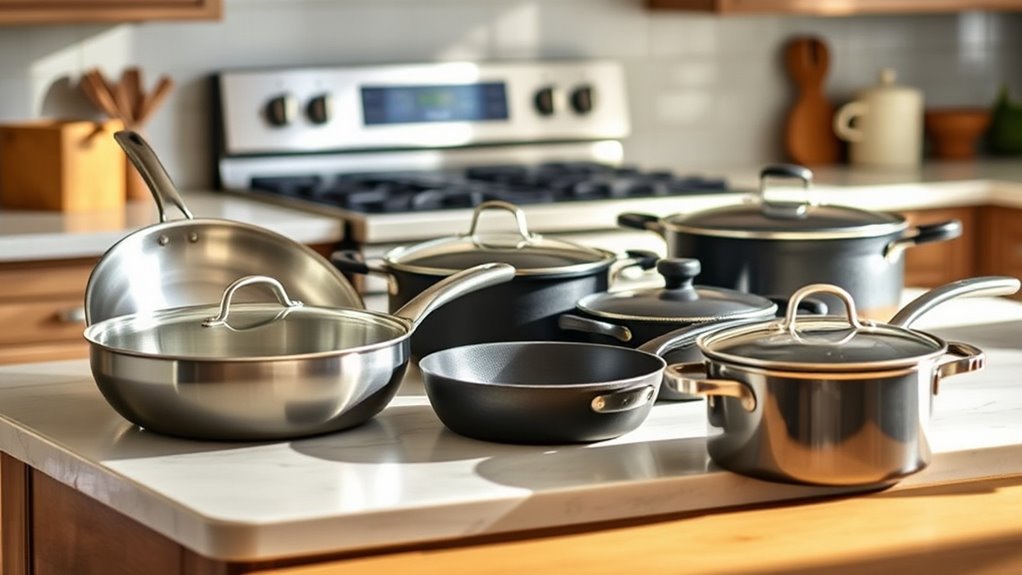
You might think that choosing pots and pans is overwhelming, but it doesn’t have to be. Understanding the essential sizes and materials can simplify your decision-making process. Whether you’re whipping up a quick breakfast or preparing a hearty dinner, having the right cookware makes all the difference. Let’s explore which pieces are truly indispensable in your kitchen and how they can elevate your cooking experience.
Get to Know Your Cookware Types
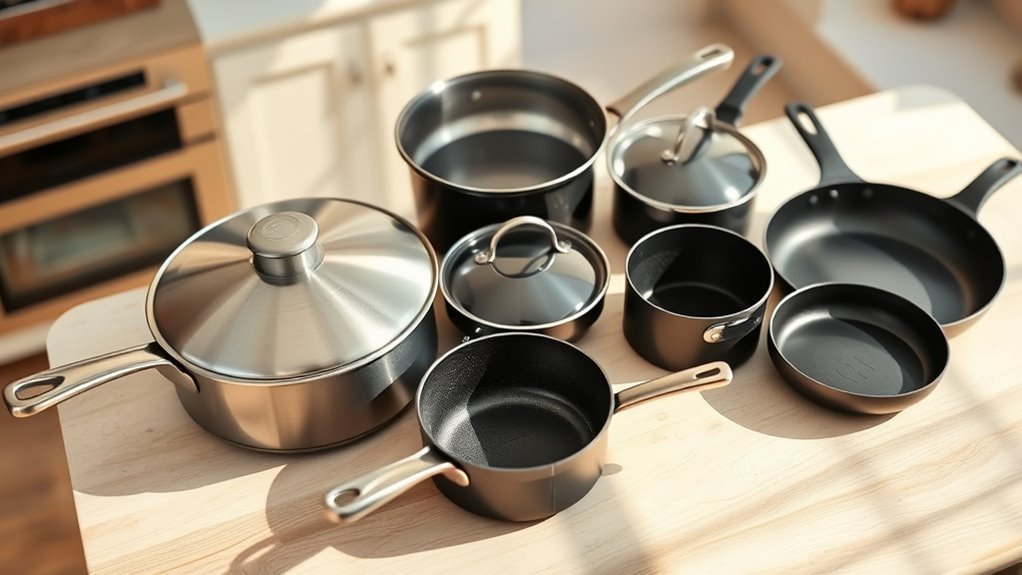
When it comes to cookware, understanding the different types can transform your cooking experience.
Stainless steel cookware is a fantastic choice for those who love searing and browning, thanks to its durability and rust resistance.
Stainless steel cookware excels in searing and browning, offering unmatched durability and rust resistance for every cooking enthusiast.
Frying pans, with their low, flared sides, are perfect for flipping and sautéing, while skillets, boasting higher sides, excel at braising and simmering.
If you’re after convenience, nonstick frying pans require less oil, making them ideal for delicate items like eggs and fish.
On the other hand, cast iron pans develop a natural nonstick surface through seasoning, perfect for slow cooking and baking.
Your choice of pots and pans should reflect your cooking style and needs, whether you lean towards the lightweight efficiency of aluminum or the superior heat control of copper.
Embrace the diverse world of cookware to elevate your culinary adventures!
Choosing the Right Materials for Your Needs
Knowing the different types of cookware sets the stage for selecting the right materials that suit your cooking style.
If you want durability and rust resistance, stainless steel is your go-to; it’s perfect for searing meats.
For those who love high-temperature cooking, a cast iron fry pan is unbeatable, especially when seasoned for that natural nonstick surface.
If you prefer something lightweight, aluminum heats up quickly but might need a nonstick coating to prevent sticking.
On the other hand, copper offers superb heat control, ideal for precision cooking, though it requires regular maintenance.
Finally, nonstick coatings are fantastic for low-fat meals, making delicate foods like eggs a breeze.
Whichever you choose, remember that each material has its strengths, so weigh your options carefully.
Good luck as you initiate this culinary adventure and create a new account of delicious meals!
Benefits of Nonstick vs. Stainless Steel
Choosing between nonstick and stainless steel cookware can greatly impact your cooking experience.
Nonstick advantages include lower fat cooking, as these pans require less oil, making them perfect for delicate foods like eggs and fish. You’ll appreciate how easy they’re to clean, but remember to handle them carefully to avoid scratches.
On the other hand, stainless steel benefits lie in its durability and heat retention. These pans excel in browning and searing meats, allowing you to explore various cooking techniques at higher temperatures. They resist scratches and rust, often lasting longer with proper care.
Ultimately, if you enjoy quick, low-fat meals, nonstick is your go-to. If you’re passionate about mastering techniques like searing and sautéing, stainless steel will serve you well.
Balancing your cookware collection with both types can liberate your culinary adventures!
Crucial Cookware Sizes for Everyday Use
Selecting the right cookware sizes can transform your daily cooking routine, ensuring you have the right tools for every task.
Start with a 10-inch frying pan for those frying pan essentials—perfect for eggs and sautéing veggies without overwhelming your kitchen.
Next, a 3-quart saucepan offers superb saucepan versatility, ideal for whipping up grains, sauces, or soups for family meals while being easy to store.
For heartier dishes, a 5-quart Dutch oven is a must, delivering Dutch oven benefits like even heat distribution for braising and stewing.
If you love one-pan meals, a 12-inch skillet provides ample space for larger portions, maximizing your cooking surface for perfect browning.
Finally, don’t forget a large stockpot (at least 8 quarts) for making soups or boiling pasta, ensuring you have enough volume for everyone.
With these sizes, your culinary adventures will be more enjoyable and efficient!
Properly Maintain Your Cookware
To keep your cookware in top shape, regular cleaning is essential, so use gentle materials that won’t scratch.
If you’ve got cast iron, remember to season it properly after each use with a thin layer of oil to preserve its nonstick surface.
Regular Cleaning Techniques
Maintaining your cookware is essential for ensuring it lasts and performs at its best. Regularly wash your pots and pans with warm soapy water and a soft sponge to clear away food residues without scratching.
For cast iron, skip the soap; instead, use coarse salt and a cloth, rinsing and drying it immediately to prevent rust. Nonstick pans thrive when cleaned gently with rubber utensils, and hand-washing is best.
You might’ve heard cookware myths about using harsh chemicals, but eco-friendly options work wonders! Soak stubborn stains on stainless steel in warm water before scrubbing gently.
These cleaning hacks will keep your cookware in top shape, ready to liberate your culinary creativity!
Seasoning Cast Iron Properly
Seasoning cast iron cookware is a game-changer for both durability and cooking performance. To reveal those impressive cast iron benefits, start by cleaning your pan thoroughly with soap and water, then dry it completely to prevent rust.
Next, apply a thin layer of vegetable oil or melted shortening all over the surface using a paper towel—this guarantees even coverage. Preheat your oven to 375°F (190°C) and place the cast iron upside down on the middle rack, allowing excess oil to drip off.
Bake for at least an hour, then cool it in the oven. For ongoing maintenance, avoid soap during cleaning, use minimal water, and reapply oil after each use to keep your cookware nonstick and rust-free.
How to Budget for High-Quality Cookware
When you’re ready to invest in high-quality cookware, it’s essential to start with a clear budget that prioritizes your cooking needs. Identify your essential purchases, like a versatile frying pan, skillet, and saucepan, which can handle various techniques and save you money over time.
Focus on quality over quantity; brands like All-Clad or Tramontina provide durability that can prevent frequent replacements.
Look for budget-friendly options by taking advantage of sales and promotions, or even browsing second-hand stores. Gradually build your collection, starting with items that meet your immediate needs instead of splurging on complete sets.
Research online and in local shops for the best prices, and remember to factor in maintenance costs—quality cookware often requires less upkeep.
Organize Your Cookware Collection Effectively
To create an efficient cooking space, you’ll want to organize your cookware collection thoughtfully. Start by categorizing your pieces into essential groups: frying pans, skillets, saucepans, and stockpots. This guarantees you have versatile options for every culinary adventure.
Consider sizes; a 10-12 inch frying pan is perfect for daily meals, while a 4-6 quart saucepan works wonders for sauces and small batches of pasta.
Invest in high-quality staples like a durable cast iron skillet and a stainless steel saucepan to form your collection’s backbone. For space-saving solutions, utilize vertical storage ideas like pot racks or shelf organizers.
These cookware organization hacks not only maximize space but also keep your essentials easily accessible. Regularly evaluate your collection, removing duplicates or seldom-used items to maintain a functional inventory.
This approach liberates your kitchen, making cooking a more enjoyable experience.
Caring for Nonstick and Stainless Steel Cookware
Caring for your nonstick and stainless steel cookware is essential for keeping them in top shape.
Use gentle sponges and avoid metal utensils to protect your nonstick surfaces, while regular cleaning and occasional seasoning will keep your stainless steel shining bright.
Proper Cleaning Techniques
Maintaining the longevity and performance of your cookware hinges on proper cleaning techniques.
For nonstick pans, use rubber or silicone utensils to prevent scratches that compromise the coating. Clean them with mild dish soap and a soft sponge; harsh abrasives are a no-go.
When it comes to stainless steel, tackle common stains by mixing baking soda with water. Scrub gently with a non-abrasive pad after allowing the pans to cool—this prevents warping and makes cleaning easier.
Aim for hand washing over dishwashers to extend your cookware’s lifespan. Regular cleaning frequency is key; don’t let stains linger.
Embrace these practices, and your pots and pans will serve you well for years to come.
Seasoning Nonstick Surfaces
While you might think nonstick pans are easy to use and care for, seasoning them properly is crucial for preserving their performance. Start by applying a thin layer of oil using your preferred oil application methods, like a brush or cloth. Heat the pan gently to create a protective layer, and remember to manage heat carefully; high temperatures can degrade the coating.
Here’s a quick reference:
| Step | Technique | Tips |
|---|---|---|
| 1. Oil Application | Use a paper towel | Guarantee even coverage |
| 2. Heating | Low to medium heat | Avoid overheating |
| 3. Utensils | Use silicone or rubber | Prevent scratching |
| 4. Cleaning | Mild soap | No abrasive sponges |
| 5. Maintenance | Regular checks | Always inspect surfaces |
With these nonstick seasoning techniques, your cookware will last longer and perform better.
Avoiding Common Mistakes
When it comes to nonstick and stainless steel cookware, avoiding common mistakes can make a world of difference in your cooking experience.
Many people believe cookware myths, like using metal utensils on nonstick surfaces; this can scratch the coating and ruin its effectiveness. Instead, opt for gentle sponges and mild detergents to keep your nonstick pans in top shape.
For stainless steel, always preheat the pan before adding oil to prevent sticking and enhance browning—this combats common misconceptions.
Remember to cool your cookware before washing to avoid warping, and use a vinegar-water mix for stubborn stains.
Cookware for Popular Cooking Styles and Diets
Choosing the right cookware can elevate your culinary adventures, whether you’re whipping up a quick stir-fry or simmering a hearty stew.
For vibrant Asian cuisine, a large 14-inch wok gives you the space to toss ingredients effortlessly over high heat. If soups and stews are your go-to, a 6 to 8-quart stockpot is essential for boiling and simmering flavors.
A 14-inch wok is perfect for vibrant Asian dishes, while a 6 to 8-quart stockpot is a must for hearty soups and stews.
For healthy meal prep, a 10-12 inch nonstick skillet lets you sauté veggies and proteins with minimal oil, keeping your dishes light.
A versatile 2-quart saucepan is perfect for boiling grains or making sauces, while a sturdy cast iron skillet can shift from stovetop to oven, making it a favorite for baking enthusiasts.
Explore budget-friendly options that don’t skimp on quality, and consider eco-friendly cookware to align with your values.
With the right tools, you’ll enjoy liberating cooking experiences that nourish both body and soul.
Frequently Asked Questions
Which Pans to Stay Away From?
You should steer clear of nonstick pans with damaged coatings, as they can release harmful fumes and lead to sticking issues.
Avoid cheap aluminum cookware that warps easily and reacts with acidic foods.
Don’t settle for overly lightweight pans either; they struggle with heat conductivity, causing uneven cooking.
Finally, skip cookware with uncomfortable or non-heat-resistant handles to keep your cooking experience safe and enjoyable.
Opt for durable materials that deliver consistent results!
What Are the Most Useful Pan Sizes?
Imagine whipping up a delicious stir-fry in a 12-inch skillet, where sauté pan versatility shines with ample space for all your colorful veggies.
You’ll find a 10-inch frying pan size perfect for quick breakfasts, while a 2-quart saucepan simplifies your sauce-making.
For larger gatherings, an 8-quart stock pot dimension becomes your best friend, effortlessly boiling pasta or soup for family feasts.
These key sizes truly elevate your cooking experience!
What Are People Saying About the Our Place Essentials Cookware Set?
People rave about the Our Place Essentials Cookware Set for its user experience, highlighting the non-toxic materials and even heat distribution that make cooking enjoyable.
You’ll appreciate the modern design and vibrant colors, enhancing your kitchen’s aesthetic.
While some express durability concerns, most find the quality worth the price, especially compared to similar sets.
This cookware’s versatility across all stovetops guarantees you can cook freely, no matter your kitchen setup.
How Do I Know What Pots and Pans to Buy?
To know what pots and pans to buy, consider cooking material types like stainless steel for durability and cast iron for heat retention.
Think about pot shape differences; deep pots are great for boiling, while wide skillets excel at sautéing.
Also, factor in heat conductivity—copper heats quickly, while ceramic offers even cooking.
Start with versatile pieces that match your cooking style, ensuring you’re equipped for everything from quick meals to hearty family dinners.
Conclusion
In choosing your cookware, remember that 70% of home cooks find that having the right pots and pans enhances their cooking experience. With a well-rounded collection, including nonstick and stainless steel options in essential sizes, you’ll tackle any recipe with confidence. By investing in quality cookware and maintaining it properly, you’ll not only elevate your culinary skills but also enjoy countless delicious meals. So, gear up and get cooking—your kitchen adventures await!
