
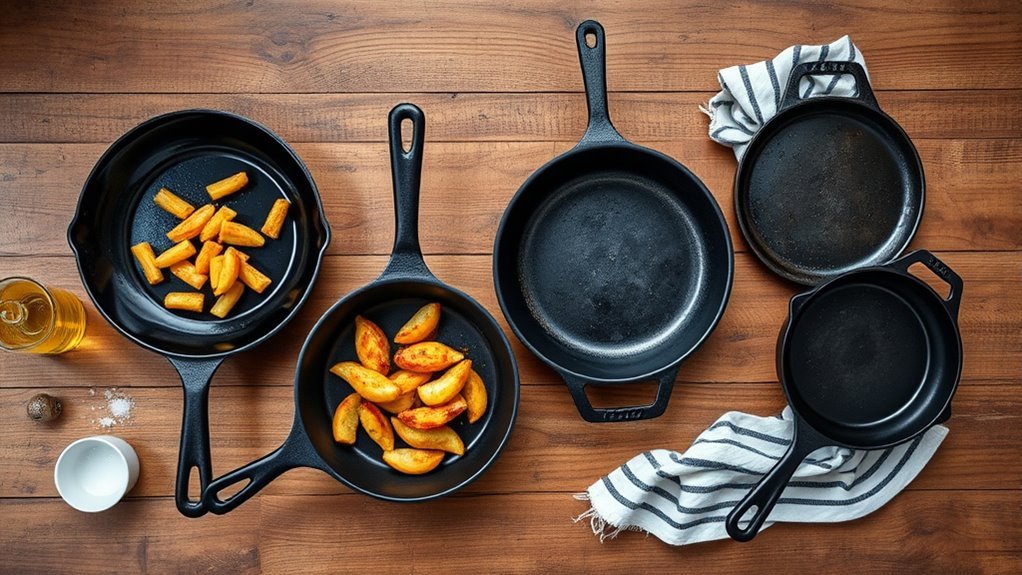
Not all cast iron pans are the same. The type of coating, weight, surface finish, and age can change how a skillet cooks and how much care it needs. Understanding the different types of cast iron pans helps you choose one that fits your cooking habits, whether you enjoy searing steaks, frying eggs, or making slow-cooked meals.
Quick Answer
Cast iron pans differ mainly in their coatings, thickness, weight, and surface finish. Bare cast iron needs seasoning and works well for searing, frying, and baking. Enameled cast iron needs no seasoning and handles acidic foods better. Pre-seasoned cast iron is simply bare cast iron with a factory-applied seasoning layer, not a separate material.
Key Takeaways
- A smooth cooking surface can make food release easier, but good seasoning and proper heat control matter more than texture alone.
- Vintage skillets are often lighter and smoother, although modern manufacturers also make lightweight, machined cast iron.
- Thicker, heavier pans usually hold more heat, while lighter pans are easier to lift and maneuver.
- Ordinary dish soap is safe for seasoned cast iron. Dry the pan thoroughly after washing to prevent rust.
- The best skillet is one that fits your burner, feels comfortable to handle, and suits the meals you cook most often.
What Types of Cast Iron Skillets Are Available?
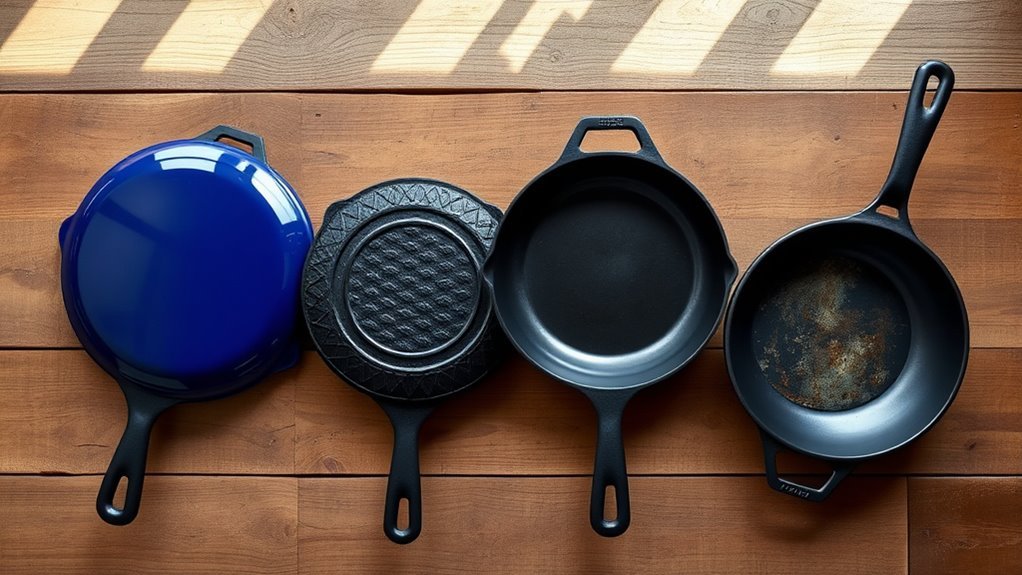
The main types of cast iron skillets are bare cast iron and enameled cast iron. You will also see pre-seasoned cast iron sold as a separate option, but it is actually bare cast iron with a protective layer already applied.
Each option has its own benefits. The right choice depends on the food you prepare, how you cook, and how much maintenance you prefer.
Bare or Raw Cast Iron
Bare cast iron has an exposed iron cooking surface. It develops a protective coating called seasoning when thin layers of cooking oil are heated until they bond to the metal.
As the seasoning improves, food usually releases more easily. This makes bare cast iron a strong choice for searing steaks, frying chicken, roasting vegetables, and baking cornbread.
Its main drawback is maintenance. Without proper drying and seasoning, exposed iron can rust. Long cooking times with acidic ingredients may also weaken the seasoning.
Enameled Cast Iron
Enameled cast iron has a porcelain enamel coating bonded to the iron. This protective layer prevents direct contact between food and the metal and eliminates the need for traditional seasoning.
It works especially well for tomato sauces, soups, stews, braised meats, and other dishes that contain acidic ingredients.
Cleaning is generally straightforward. You can wash the cooled pan with warm water, mild dish soap, and a soft sponge.
However, enamel can chip or crack if the pan is dropped, overheated, or exposed to sudden temperature changes. Unlike bare iron, damaged enamel cannot simply be restored through reseasoning.
Pre-Seasoned Cast Iron
Pre-seasoned cast iron is regular bare cast iron that receives its initial seasoning at the factory. Manufacturers bake a thin oil coating onto the surface before selling the cookware.
This means you can start cooking without performing the full seasoning process yourself.
For example, Lodge sells factory-seasoned skillets that are ready to use after a simple initial wash and dry. The seasoning continues to develop through normal cooking.
According to the Lodge cast iron product guide, seasoned cast iron suits high-heat cooking, while enameled options are particularly useful for soups, slow cooking, and acidic ingredients.
How Do Antique and Modern Cast Iron Pans Compare?
Antique and modern cast iron pans can both deliver excellent cooking results. The biggest differences often involve manufacturing methods, weight, surface finish, and condition.
Many older skillets have thinner walls and polished cooking surfaces. Modern pans range from heavy, rough-finished models to lightweight skillets with machined interiors.
Manufacturing Process Differences
Traditional cast iron cookware is made by pouring molten iron into molds. Manufacturers then remove the finished casting and may perform additional work on the cooking surface.
Many vintage skillets, including examples from Griswold and Wagner, received extra machining or grinding to create smoother interiors.
Some modern manufacturers leave more of the original sand-cast texture on the pan. This approach reduces finishing work and helps keep production costs down.
Other modern brands, including Field Company, use machining to create smooth cooking surfaces similar to those found on vintage cookware.
The Field Company comparison of vintage and modern cast iron explains that older manufacturing qualities can also be reproduced in newly made skillets.
As a result, age alone does not determine quality. A well-made modern skillet can perform just as effectively as an older one.
Weight and Feel Comparison
Many antique cast iron skillets are thinner and lighter than common modern models. This can make them easier to lift, tilt, and move around the stovetop.
Modern cast iron pans, such as traditional Lodge skillets, often have thicker walls and more weight.
That additional mass helps the cookware store heat. A heavier pan can experience a smaller temperature drop when you add cold food, although it may take longer to preheat.
Lighter skillets are often more comfortable when you need to move the pan between the stove and oven. Heavier models can feel more stable during cooking.
Neither design is automatically better. Consider how often you lift the skillet and whether you prefer a lighter pan or greater heat storage.
Surface Texture Variations
Vintage cast iron often has a smoother cooking surface because the metal was ground or machined after casting. Many affordable modern skillets retain a slightly rougher texture.
Both surfaces can develop effective seasoning and produce excellent results.
A smooth surface may help with delicate foods, such as eggs and fish, especially when the seasoning is still developing. However, texture does not determine whether a skillet can sear meat successfully.
A rough cast iron pan can produce a strong sear, and so can a smooth one. Preheating, available heat, food moisture, and proper oil use have a greater impact on browning.
Similarly, a thin vintage pan may heat more quickly than a thick modern pan, but that does not mean antique iron has inherently better heat conductivity.
Pro Tip: When buying a vintage skillet, place it on a flat surface and check whether it rocks or spins. Inspect the cooking surface and rim for cracks, deep rust damage, and pitting. A smooth vintage pan is only a good purchase if its condition is sound.
What Should You Look For When Buying a Cast Iron Skillet?
Choose a cast iron skillet based on its size, weight, cooking surface, and maintenance needs. A comfortable handle and a flat, stable base are also worth checking.
Before buying, think about the meals you cook most often and the type of stove you use.
Here is a practical comparison of the main features.
| Feature | Considerations |
|---|---|
| Weight & Thickness | Heavier pans store more heat. Lighter pans are easier to lift and maneuver. |
| Surface Texture | Both rough and smooth surfaces can sear well. Smooth finishes may help delicate foods release. |
| Pre-Seasoning | Factory-seasoned options, including Lodge skillets, are ready for cooking without initial oven seasoning. |
| Brand Reputation | Consider modern brands such as Lodge and Field Company, or vintage makers such as Griswold and Wagner. |
Choose the Right Size
A smaller skillet is useful for eggs, side dishes, and meals for one or two people. A larger skillet provides more cooking space for meat, vegetables, and family meals.
Common sizes include 10-inch and 12-inch skillets. A 10-inch model is often easier to handle, while a 12-inch model provides more room for cooking several portions.
Remember that the advertised skillet size usually refers to the diameter across the upper rim. The flat cooking surface inside may be smaller.
Check the Handles and Base
A skillet with a comfortable main handle is easier to control. A helper handle on the opposite side makes lifting a heavy pan safer and more comfortable.
Pour spouts can also be useful when removing grease or pouring sauces.
If you use a glass-top stove, look for a stable base that sits evenly against the cooking surface. Lift the skillet rather than sliding it to avoid scratches.
Cast iron works on gas, electric, and induction cooktops. However, always check the manufacturer’s instructions for lids, handles, and oven temperature limits.
Consider Your Cooking Habits
If you regularly sear steaks, fry foods, or bake skillet cornbread, seasoned bare cast iron is a practical choice.
If you frequently cook tomato sauces, braises, or stews, enameled cast iron may be more convenient.
For everyday use, a pre-seasoned skillet offers a straightforward starting point. If you prefer a lighter, smoother pan, consider a vintage or modern machined design.
Seasoning Your Cast Iron Skillet: A Step-by-Step Guide
Seasoning protects bare cast iron against rust and creates an easy-release cooking surface. It forms when a thin layer of oil is heated and changes into a hardened coating through a process called polymerization.
You generally do not need to season a new factory-seasoned skillet before its first use. However, oven seasoning can help restore a pan with damaged or worn seasoning.
Follow these steps for bare or pre-seasoned cast iron.
- Wash and dry the skillet. Clean the pan with warm, soapy water. Rinse it and dry it thoroughly with a clean towel.
- Apply a thin coating of oil. Use a neutral oil such as canola or vegetable oil. Rub it over the entire skillet, including the outside, then wipe away the excess until the surface looks almost dry.
- Preheat the oven. Set the oven to 450–500°F (about 232–260°C). Place aluminum foil on a lower rack to catch any drips.
- Bake the skillet upside down. Place the skillet on the center rack and heat it for one hour. This allows the oil to form a protective seasoning layer.
- Let the pan cool. Turn off the oven and allow the skillet to cool inside before handling it.
These temperatures and steps follow Lodge’s official cast iron seasoning instructions.
Once the skillet cools, the surface should feel dry rather than sticky. If it remains tacky, too much oil may have been applied or the seasoning may not have cured fully.
You can repeat the process when seasoning has worn away or when restoring a rusty skillet. For routine use, cooking with a little oil helps maintain the protective surface.
Do not season enameled cast iron. Its porcelain coating already protects the cooking surface, so the traditional oven-seasoning process is unnecessary.
Benefits of Bare, Enameled, and Pre-Seasoned Cast Iron
Each type of cast iron cookware offers useful advantages. Bare cast iron provides a repairable cooking surface, enameled cast iron simplifies maintenance, and pre-seasoned cookware offers immediate convenience.
Understanding these benefits makes it easier to choose a skillet you will enjoy using regularly.
Durability and Lifespan
Cast iron is known for its strength and long service life. With proper care, a quality skillet can remain useful for generations.
However, the expected lifespan also depends on the type of finish and how the cookware is handled.
- Bare Cast Iron: The iron body is highly durable. Its seasoning can be renewed if the pan becomes rusty or the surface wears down.
- Enameled Cast Iron: The coating protects the iron and resists acidic ingredients. However, chipped or cracked interior enamel cannot be repaired through normal seasoning.
- Pre-Seasoned Cast Iron: Provides the same durability as bare cast iron, with a factory-applied coating that improves through regular cooking.
- Heat Retention: All three options benefit from cast iron’s ability to store heat, making them useful for frying, roasting, and browning.
For long-term durability, avoid dropping your skillet, striking it against hard surfaces, or exposing it to sudden temperature changes.
Warning: Do not continue cooking in an enameled skillet with chipped interior enamel. Loose enamel fragments may enter food. Le Creuset recommends having damaged cookware assessed rather than continuing to use a pan with compromised interior enamel.
You can review the manufacturer’s guidance in the Le Creuset cookware safety and care FAQs.
Maintenance and Care Requirements
Bare and pre-seasoned cast iron need more attention than enameled cookware because their protective seasoning can wear away.
Enameled cast iron requires no seasoning, but you still need to clean it gently and protect the coating from damage.
| Type | Maintenance Tips |
|---|---|
| Bare Cast Iron | Wash, dry thoroughly, and maintain the seasoning. Reseason when needed. |
| Enameled Cast Iron | No seasoning required. Clean gently and avoid thermal shock or chipped enamel. |
| Pre-Seasoned Cast Iron | Use immediately after initial cleaning. Maintain the factory seasoning through normal care. |
A properly maintained seasoned pan should have a dry, protective cooking surface. It does not need to look perfectly smooth or uniformly black at every stage.
For enameled cookware, follow the Lodge enameled cast iron care recommendations. They explain how to clean the coating and protect it from scratches and heat damage.
Essential Maintenance Tips for Your Cast Iron Cookware
The most important maintenance habit for seasoned cast iron is keeping it clean and dry. Regular cooking and proper storage also help preserve its protective surface.
You do not need to perform a complete oven-seasoning process after every meal.
- Wash After Cooking: Allow the skillet to cool enough for safe handling. Clean it with warm water, a sponge or brush, and a little mild dish soap if needed.
- Remove Stubborn Residue: Use a pan scraper or a gentle scrub with coarse salt to loosen stuck-on food. Avoid aggressive scraping that removes the seasoning unnecessarily.
- Dry Thoroughly: Wipe the skillet dry immediately. You can briefly warm it on a low burner to remove remaining moisture.
- Apply Oil When Needed: Rub a tiny amount of cooking oil over the dry surface, then wipe away the excess. The pan should not feel sticky or greasy.
- Store in a Dry Place: Keep cookware away from standing moisture. If you stack skillets, use a paper towel or pan protector between them to reduce rubbing and trapped moisture.
One common misunderstanding is that dish soap ruins cast iron seasoning. Modern mild dish soap does not normally remove a properly bonded seasoning layer.
The Lodge cleaning guide confirms that ordinary soap is acceptable. It also warns against prolonged soaking and dishwasher cleaning because they can lead to rust.
If your skillet develops light surface rust, scrub away the rust, wash the pan, and dry it completely. Apply oil and reseason if the protective coating has been damaged.
For a sticky surface, clean off excess oil and inspect the seasoning. Thick oil layers can become tacky rather than forming a hard coating.
Keep in mind that enameled pans need a different cleaning approach. Use nonabrasive tools and let the cookware cool before washing it.
Best Cooking Techniques for Cast Iron Skillets
Cast iron skillets perform especially well when a dish benefits from steady heat and good browning. They are useful for searing, frying, roasting, and baking.
The key is to control the heat instead of automatically using your stove’s highest setting.
Preheat the Skillet Gradually
Place your bare cast iron skillet over low or medium heat and allow it to warm gradually. This helps reduce temperature differences across the cooking surface.
Once the pan is hot, add a suitable cooking oil before adding your ingredients.
For enameled cookware, follow the manufacturer’s preheating instructions. Many recommend warming the pan gently with oil or liquid rather than leaving it empty over high heat.
Sear Meat Without Crowding the Pan
Cast iron is excellent for developing a browned crust on steaks, chops, and other proteins.
Pat the surface of the meat dry before cooking. Extra moisture causes steaming and can prevent proper browning.
Leave space between pieces of meat. If the skillet is crowded, cook in batches instead.
Allow the meat to develop a crust before attempting to turn it. Food often releases more easily once its surface has browned.
Bake Bread, Pizza, and Cornbread
Cast iron works well for oven baking because its heavy base stores heat and supports crust development.
You can use a skillet for cornbread, pizza, skillet cookies, and other baked dishes.
Always confirm that the skillet and its handles are suitable for your oven temperature. Some cookware has handles, knobs, or other parts with lower temperature limits.
Prepare One-Pan Meals
A cast iron skillet can take a dish from the stovetop to the oven, reducing the number of pans you need.
For example, brown chicken pieces in the skillet, add vegetables and seasonings, then finish cooking in the oven.
Bare cast iron is especially convenient for this approach when the recipe does not require a long acidic simmer.
If your recipe includes plenty of tomato sauce, wine, or other acidic ingredients, an enameled skillet may be the better option.
Common Pitfalls to Avoid With Cast Iron
Most cast iron cooking problems come from improper heat control, cleaning, or maintenance. Fortunately, many are easy to prevent.
Avoid these common mistakes to keep your skillet working well.
- Assuming Rough Surfaces Are Better for Searing: Both smooth and rough cast iron can brown meat effectively. Focus on correct temperature, adequate oil, and proper food preparation instead of surface texture alone.
- Neglecting Seasoning: A bare skillet with damaged seasoning may become prone to sticking and rust. Maintain the surface through regular cooking and reseasoning when needed.
- Using the Dishwasher: Dishwasher cleaning can strip seasoning from bare cast iron and encourage rust. Hand washing is the safer approach.
- Overheating the Skillet: Excessive heat may burn food, damage seasoning, or stress the cookware. Increase heat gradually and avoid leaving a pan unattended.
- Cooking Acidic Foods Too Long: Extended simmering with tomatoes or vinegar can weaken seasoning and cause a metallic taste in bare cast iron.
- Using Cold Water on a Very Hot Pan: Sudden temperature changes can damage cookware, particularly enameled cast iron. Allow the pan to cool before washing.
Can You Cook Tomatoes in Bare Cast Iron?
Yes, you can cook acidic ingredients in a well-seasoned cast iron skillet for a limited time. You do not have to avoid every recipe containing tomatoes, lemon juice, or vinegar.
However, cooking time and acidity matter.
According to Lodge’s guidance on cooking acidic foods, brief cooking is generally acceptable in a well-seasoned pan. The manufacturer recommends avoiding direct contact with acidic ingredients for more than about 45 minutes.
For long-simmered tomato sauces, enameled cast iron is a better choice.
Also, remove acidic leftovers from bare cast iron after cooking rather than storing them in the skillet.
Frequently Asked Questions
Is There a Difference in the Quality of Cast Iron Pans?
Yes, cast iron pan quality varies by casting, thickness, surface finish, design, and manufacturing consistency. A higher price does not automatically mean better cooking performance. Affordable skillets can produce excellent results, while premium models may offer smoother surfaces, lighter construction, or more refined handles.
What Foods Cannot Be Cooked in Cast Iron?
Most foods can be cooked in cast iron, but some require extra care. Long-simmered acidic sauces are better suited to enameled cookware. Eggs, fish, pancakes, and creamy dishes may stick to poorly seasoned skillets. Proper preheating, enough cooking fat, and a well-maintained surface help reduce sticking.
Which Brand of Cast Iron Is Best?
The best cast iron brand depends on your budget and cooking preferences. Lodge is a practical option for affordable pre-seasoned cookware. Field Company offers lighter skillets with machined surfaces. Le Creuset is known for enameled cast iron, while vintage Griswold and Wagner pans appeal to collectors and cooks seeking older designs.
What Are the Downsides of Using Cast Iron Pans?
Cast iron pans can be heavy, slow to heat, and harder to maneuver than lighter cookware. Bare cast iron needs proper drying and occasional seasoning to prevent rust. Enameled pans are easier to maintain, but their coating can chip or crack. Both types also retain heat after cooking, so careful handling is essential.
Is Pre-Seasoned Cast Iron Different From Bare Cast Iron?
Pre-seasoned cast iron is bare cast iron with an initial protective oil coating applied by the manufacturer. It does not contain a separate nonstick material. You can use it after initial cleaning, but regular cooking and maintenance help the seasoning become more effective over time.
Can You Use Soap to Clean Cast Iron?
Yes, you can clean a seasoned cast iron skillet with mild dish soap and warm water. Ordinary soap does not normally remove properly bonded seasoning. Avoid prolonged soaking and dishwasher cleaning, then dry the pan thoroughly after washing. Apply a light coat of oil when needed to protect the surface.
Conclusion
Not all cast iron pans are identical, and choosing the right one depends on how you cook. Bare and pre-seasoned cast iron are excellent for searing, frying, and baking, while enameled cast iron provides easier care for acidic and slow-cooked dishes.
If you want a versatile everyday skillet, start with a size you can handle comfortably and a surface that fits your cooking style. With proper use and maintenance, a good cast iron pan can become a dependable part of your kitchen for many years.
Sources
- Lodge Cast Iron Product Guide: Differences between seasoned and enameled cast iron and their cooking applications.
- Field Company: Vintage Cast Iron vs. New Cast Iron: Manufacturing, surface finishes, weight, and vintage cookware inspection.
- Lodge: How to Season Cast Iron: Factory seasoning, oven temperature, oil application, and reseasoning steps.
- Lodge: How to Clean Cast Iron: Washing with soap, rust prevention, and cleaning methods.
- Lodge: Enameled Cast Iron Cleaning and Care: Maintenance, cooking temperatures, and protective care for enamel.
- Lodge: Cooking Acidic Foods in Cast Iron: Acidic ingredients, cooking duration, and seasoning protection.
- Le Creuset Cookware FAQs: Enameled cookware maintenance and guidance for damaged enamel.
