
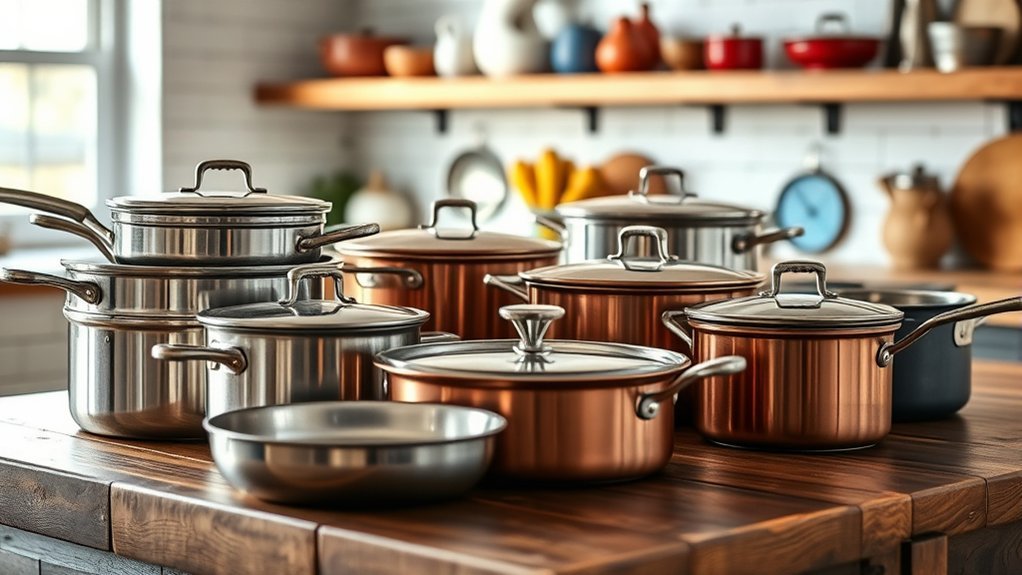
Cookware made in the USA includes cast iron, stainless clad, carbon steel, aluminum, and specialty cookware produced at American factories, but the country-of-origin claim often applies to specific product lines rather than an entire brand. Lodge, All-Clad, Smithey Ironware, Heritage Steel, and Nordic Ware all make qualifying cookware domestically, while their sourcing details and imported products vary. The safest approach is to verify the exact pan or set before buying.
Quick Answer
For cookware made in the USA, start with Lodge seasoned cast iron, All-Clad fully bonded cookware, Smithey cast iron and carbon steel, Heritage Steel stainless clad cookware, and qualifying Nordic Ware products. Check the exact product, because imported materials or imported collections can exist even within brands that operate U.S. factories.
Key Takeaways
- The FTC says an unqualified “Made in USA” claim generally requires a product to be “all or virtually all” made in the United States.
- Do not assume every product from an American cookware brand has the same country of origin.
- Lodge seasoned cast iron, All-Clad fully bonded cookware, and Heritage Steel cookware are manufactured in U.S. factories, but their sourcing details differ.
- Smithey makes both cast iron and hand-forged carbon steel; the Deep Farmhouse Skillet is carbon steel, not cast iron.
- Verify the exact SKU, manufacturer disclosure, packaging, materials, warranty, and country-of-origin wording before purchasing.
What Counts as American-Made Cookware?
The most useful definition comes from the Federal Trade Commission’s Made in USA guidance. For an unqualified “Made in USA” claim, a product must be “all or virtually all” made in the United States. Final assembly or processing must occur in the U.S., all significant processing must occur here, and foreign content should be absent or negligible.
For an unqualified Made in USA claim, the FTC applies an “all or virtually all” standard rather than a simple test based on a company’s headquarters.
This distinction matters because an American company can sell both domestic and imported cookware. A U.S. factory address by itself does not prove that every product from the brand is American-made.
A qualified claim such as “Made in USA with global materials” gives buyers additional information about imported inputs. An “Assembled in USA” claim is different again: it can indicate substantial U.S. assembly while some parts originate elsewhere.
Note: Treat country of origin as a product-level specification. Verify the exact skillet, saucepan, Dutch oven, or cookware set instead of assuming an entire brand has one manufacturing origin.
Brands such as All-Clad, Lodge, Nordic Ware, Smithey Ironware, Heritage Steel, and Made In illustrate why this product-level distinction is important. Each operates with a different mix of U.S. manufacturing, imported materials, or overseas product lines.
Notable American-Made Cookware Brands and Product Lines
Several manufacturers currently produce cookware in U.S. facilities, but their domestic-manufacturing claims differ in scope.
Lodge, founded in 1896 in South Pittsburg, Tennessee, manufactures its seasoned cast iron and seasoned carbon steel in its Tennessee foundries. Its USA Enamel collection is also made in the United States, although some pieces use imported hardware. Lodge’s Essential Enamel collection, by contrast, is made by partners in China or Vietnam.
All-Clad, founded in 1971, manufactures its fully bonded cookware and bakeware in Canonsburg, Pennsylvania. The company says these products are bonded, engineered, and assembled in the United States using U.S. and imported materials. Other All-Clad categories, including some tools, electrics, hard-anodized cookware, and other products, can be globally sourced.
Nordic Ware, based in Minneapolis, Minnesota, says it manufactures the majority of its products at its Minneapolis factory. Its catalog includes U.S.-made cookware and bakeware, although some products or components are globally sourced. Ceramic cookware lines such as Verde and Cardamom are marketed as being made without PFAS, PTFE, or PFOA.
Smithey Ironware is based in Charleston, South Carolina. The company states that its cast iron is sourced and poured in the United States and its carbon steel is U.S.-sourced. Its Farmhouse carbon-steel cookware is hand-forged by craftspeople in Charleston.
Heritage Steel, a family-owned manufacturer in Clarksville, Tennessee, forms, finishes, rivets, inspects, and packs its cookware at its Tennessee factory. The company accurately describes the cookware as “Made in the USA with Global Materials” and states that its five-ply clad steel is sourced from South Korea.
Other American-made cast-iron options include Field Company, which says all of its cast-iron cookware is made in the United States, and Stargazer, whose cast-iron skillets and braisers are American-made.
All-Clad, Lodge, Smithey, and Heritage Steel
All-Clad, Lodge, Smithey, and Heritage Steel cover four useful approaches to American cookware manufacturing: bonded stainless steel, traditional cast iron, machined cast iron and forged carbon steel, and five-ply stainless clad cookware.
The key difference is not simply which company operates a U.S. factory. Buyers should also compare the specific domestic product line, material, imported components, cooking performance, weight, maintenance, and warranty.
All-Clad’s U.S. Craft
All-Clad’s strongest U.S.-manufacturing claim applies to its fully bonded cookware. At its Canonsburg, Pennsylvania factory, bonded metal is formed into cookware, finished, polished, fitted with handles, inspected, and packaged.
Bonding stainless steel to conductive core materials such as aluminum allows the cookware to combine a durable cooking surface with more responsive heat distribution than a single thick layer of stainless steel would provide.
- All-Clad: fully bonded cookware produced in Pennsylvania using U.S. and imported materials.
- Lodge: seasoned cast iron and seasoned carbon steel manufactured in Tennessee.
- Smithey: U.S.-sourced and poured cast iron plus Charleston-forged carbon steel.
- Heritage Steel: cookware manufactured in Tennessee from globally sourced materials, including South Korean clad steel.
All-Clad backs its cookware with a limited lifetime warranty against qualifying manufacturing defects. That warranty can be important when comparing long-term value, but it should not be used as proof of country of origin.
Lodge Cast Iron Legacy
Lodge has produced cast iron in South Pittsburg, Tennessee since 1896. Its seasoned cast-iron cookware is melted, poured, molded, finished, seasoned, inspected, and packaged at its Tennessee operations.
| Brand / Line | U.S. Manufacturing | Important Sourcing Note | Good Fit For |
|---|---|---|---|
| Lodge Seasoned Cast Iron | South Pittsburg, Tennessee | Essential Enamel is a separate imported collection | Value, searing, baking, campfire cooking |
| All-Clad Fully Bonded Cookware | Canonsburg, Pennsylvania | Uses U.S. and imported materials; some other product categories are imported | Responsive stainless-steel cooking |
| Smithey | U.S. cast-iron production; carbon steel forged in Charleston | Cast iron and carbon steel use different manufacturing processes | Premium cast iron and artisan carbon steel |
| Heritage Steel | Clarksville, Tennessee | Made in USA with global materials; clad steel comes from South Korea | Five-ply stainless clad cookware |
Lodge is especially attractive to buyers who want inexpensive U.S.-made seasoned cast iron. However, shoppers looking for Lodge enamel should distinguish between the U.S.-made USA Enamel collection and imported Essential Enamel products.
Smithey and Heritage Steel
Smithey and Heritage Steel occupy different parts of the market. Smithey focuses on premium cast iron and hand-forged carbon steel, while Heritage Steel specializes in fully clad stainless-steel cookware.
Smithey’s Deep Farmhouse Skillet is a carbon-steel skillet hand-forged in Charleston, South Carolina. It should not be described as forged cast iron. Smithey’s cast-iron pieces are made from iron sourced and poured in the United States and are finished for a smoother cooking surface.
Heritage Steel manufactures its pans and lids at its Clarksville, Tennessee factory. Its sourcing disclosure is unusually clear: the finished cookware is made in the United States using global materials, and the company currently sources its clad cookware steel from South Korea.
- Smithey cast iron: U.S.-sourced and poured iron with premium finishing.
- Smithey carbon steel: U.S.-sourced steel hand-forged into cookware in Charleston.
- Heritage Steel: five-ply cookware manufactured in Tennessee from global materials.
- All-Clad: fully bonded cookware made in Pennsylvania from U.S. and imported materials.
- Lodge: seasoned cast iron and carbon steel manufactured in Tennessee.
How American-Made Cookware Is Manufactured
There is no single manufacturing process for American-made cookware. Cast iron may be melted and poured into sand molds, carbon steel may be forged or formed from sheet, aluminum can be spun or stamped, and clad stainless cookware is formed from multiple bonded metal layers.
What qualifies as American-made depends on where significant manufacturing occurs and how much foreign content is present, not on one universal production method.
Raw Materials Sourcing
Material sourcing varies substantially among U.S. cookware manufacturers. Domestic manufacturing does not automatically mean every raw material came from the United States.
- Lodge manufactures seasoned cast iron in Tennessee and closely controls the iron used in its foundry process.
- All-Clad says its fully bonded cookware is made at its Pennsylvania factory using U.S. and imported materials.
- Smithey states that its cast iron is sourced and poured in the U.S. and that its carbon steel is U.S.-sourced.
- Heritage Steel manufactures cookware in Tennessee but sources its clad steel from South Korea.
- Nordic Ware makes the majority of its products in Minneapolis while acknowledging that selected components are sourced globally.
- Made In manufactures products in several countries; its Stainless Clad collection can be made in Italy or the United States from domestic and imported components.
These differences are why the exact manufacturing statement matters more than a general assumption that an American brand uses only American raw materials.
Fabrication and Assembly
Fabrication converts raw or semi-finished metal into cookware. Depending on the material, this can involve casting, stamping, spinning, forging, bonding, machining, polishing, riveting, coating, seasoning, and final assembly.
Lodge melts and pours iron into molds before finishing and seasoning its traditional cast iron. All-Clad forms bonded metal into cookware at its Pennsylvania plant. Heritage Steel forms clad blanks, grinds and polishes rims, rivets handles, engraves pieces, inspects them, and packs finished cookware in Clarksville.
Smithey’s carbon-steel cookware uses a different process: pieces such as its Farmhouse skillets are hand-forged by blacksmiths in Charleston. Nordic Ware uses its Minneapolis manufacturing operation for a broad range of aluminum cookware, bakeware, and related kitchen products.
Quality Control Processes
Quality control can include material checks, dimensional inspection, surface finishing, bonding inspection, coating checks, handle attachment, and final visual inspection. The exact procedure varies by material and manufacturer.
For buyers, country of origin and quality control should be treated as separate questions. A U.S.-made pan is not automatically better simply because of its origin; construction, thickness, balance, handle design, heat behavior, maintenance requirements, warranty coverage, and long-term durability still matter.
What to Look for in U.S.-Made Cookware
Start by confirming the exact product’s origin statement. Avoid relying only on a company’s headquarters, an American flag graphic, or a statement that the cookware was “designed” in the United States.
Then compare the cookware itself:
- Material: cast iron retains heat well; clad stainless is more responsive and needs no seasoning; carbon steel combines relatively low weight with seasoning-based performance; aluminum heats quickly.
- Construction: look for a stable base, secure handles, smooth finishing, and construction appropriate for your stove.
- Induction compatibility: confirm the exact pan has a magnetic exterior if you cook on induction.
- Weight: heavy cast iron can be excellent for searing but difficult for some users to lift.
- Maintenance: bare cast iron and carbon steel require drying and seasoning; stainless steel generally requires less specialized care.
- Warranty: read what is actually covered. A “lifetime” warranty may exclude normal wear, overheating, misuse, scratches, or coating deterioration.
- Origin wording: distinguish “Made in USA,” “Made in USA with Global Materials,” “Assembled in USA,” and product-specific imported-country statements.
Pro Tip: Check the country-of-origin information on the exact product page immediately before ordering. Manufacturers can change suppliers, components, or production locations while keeping the same brand name.
Is American-Made Cookware Worth the Price?
American-made cookware can be worth a higher purchase price when its construction, performance, repairability, warranty, and expected service life fit your needs. Country of origin alone is not enough to determine value.
- Construction: durable cast iron or well-built clad metal can provide decades of service when used properly.
- Performance: choose the material for the cooking you actually do rather than assuming the most expensive pan will perform best for every task.
- Maintenance: consider whether you want low-maintenance stainless steel or are comfortable seasoning and drying bare iron or carbon steel.
- Warranty: compare coverage and exclusions, not just the word “lifetime.”
- Replacement cost: a durable pan that remains useful for many years can cost less over time than repeatedly replacing cheaper cookware.
Buying individual pieces can also make more sense than buying a large matching set. A stainless saucepan, cast-iron skillet, and carbon-steel frying pan may each handle different jobs better than one material used for every piece in the kitchen.
How to Verify U.S. Manufacturing Claims
Higher price, American ownership, or a U.S. headquarters does not establish domestic manufacturing. Use a product-level verification process.
- Read the exact wording. Look for “Made in USA,” “Made in USA with Global Materials,” “Assembled in USA,” or a named foreign country.
- Check the specific product page. Do not rely only on the manufacturer’s About page.
- Look for the factory location. Reliable manufacturers often identify where forming, casting, forging, assembly, finishing, or packaging occurs.
- Check material disclosures. Some cookware is manufactured domestically from imported metal or hardware.
- Inspect the packaging and product markings. Country-of-origin information on the item may be more specific than general brand advertising.
- Compare multiple pages when necessary. A brand may operate both domestic and imported collections.
- Contact the manufacturer for unclear SKUs. Ask where the specific model is manufactured and whether significant components are imported.
The FTC does not pre-approve Made in USA advertising before companies use it. Manufacturers are responsible for having a reasonable basis for their claims, which is another reason buyers should rely on precise, current disclosures rather than assumptions.
Which Brand Fits Your Kitchen Best?
The right U.S.-made cookware depends more on cooking style and material preference than on a single “best” brand.
- Lodge suits cooks who want affordable U.S.-made seasoned cast iron for searing, frying, baking, grilling, and campfire cooking. Confirm the collection when shopping for enamel because Essential Enamel is imported.
- Smithey Ironware suits buyers who want premium smooth-finished cast iron or hand-forged carbon steel and are comfortable paying more for craftsmanship and finishing.
- All-Clad is a strong option for cooks who want fully bonded stainless-steel cookware with responsive heating and a limited lifetime warranty. Confirm that the exact product belongs to a U.S.-made bonded line.
- Heritage Steel fits buyers who want five-ply stainless clad cookware manufactured in Tennessee and who are comfortable with its transparent use of globally sourced materials.
- Nordic Ware is especially relevant for U.S.-made bakeware and lightweight cookware. Verify each model because some components and products are globally sourced.
- Field Company or Stargazer are additional options for buyers seeking premium American-made cast iron with a smoother, more refined cooking surface than basic mass-market cast iron.
Made In requires more product-by-product checking. Its cookware is manufactured across the United States and Europe: Stainless Clad can come from Italy or the U.S., while other categories are produced in countries including Sweden and France.
Frequently Asked Questions
What cookware is made only in the USA?
There is no safe brand-wide answer without checking the exact product and what “only” means. Lodge seasoned cast iron is manufactured in Tennessee, while Smithey states that its cast iron is sourced and poured in the U.S. Some other cookware is manufactured domestically with imported materials or hardware, so verify the individual SKU when fully domestic sourcing matters to you.
Who makes the best cookware in the USA?
There is no single best brand for every cook. Lodge is a practical choice for value-focused cast iron; Smithey and premium American cast-iron makers suit buyers who want smoother finishing; All-Clad and Heritage Steel serve stainless-steel users; and Nordic Ware is particularly strong in American-made bakeware. Choose by material, weight, maintenance, stove compatibility, warranty, and budget.
Is Farberware still made in the USA?
Modern Farberware should not be assumed to be U.S.-made. Farberware cookware and bakeware are currently manufactured and distributed by Meyer Corporation U.S. under license, and modern cookware has commonly been manufactured in overseas Meyer-affiliated factories. Check the packaging or country-of-origin information for the exact Farberware product you are considering.
Is All-Clad actually made in the USA?
All-Clad’s fully bonded cookware and bakeware are bonded, engineered, and assembled at its Canonsburg, Pennsylvania factory using U.S. and imported materials. However, All-Clad also sells globally sourced products in other categories, so the claim should be checked against the exact cookware line rather than applied automatically to everything carrying the All-Clad name.
Does Made in USA mean every material is American?
Not necessarily in the literal sense of every upstream raw input. The FTC uses an “all or virtually all” standard for an unqualified Made in USA claim. Companies can also use qualified wording such as “Made in USA with Global Materials” when foreign content needs to be disclosed.
Is Made In cookware made in the USA?
Some Made In cookware is manufactured in the United States, but the brand also manufactures extensively in Europe. Its Stainless Clad cookware can be made in Italy or the U.S. from domestic and imported components, while carbon steel, copper, enameled cast iron, knives, and other categories have their own manufacturing countries. Check each product page.
Conclusion
American-made cookware remains available across cast iron, carbon steel, stainless clad, aluminum cookware, and bakeware, but the most important lesson is that country of origin is usually a product-level question. Lodge, All-Clad, Smithey, Heritage Steel, and Nordic Ware all maintain meaningful U.S. manufacturing, yet their imported materials, components, and product lines differ.
For buyers, the strongest approach is straightforward: identify the material you need, check the exact product’s origin statement, verify the manufacturer’s current factory and sourcing disclosure, review warranty exclusions, and compare performance rather than relying on an American brand name alone. That produces a more accurate purchase decision and avoids confusing U.S. ownership with U.S. manufacturing.
Sources
- Federal Trade Commission — Complying with the Made in USA Standard — U.S.-origin labeling requirements and the “all or virtually all” standard.
- Lodge Cast Iron — Cast Iron Product Guide — U.S.-made seasoned cast iron and carbon steel plus imported and domestic enamel distinctions.
- All-Clad — Customer Service and Manufacturing FAQ — Pennsylvania production, global materials, product-line exceptions, and warranty information.
- Smithey Ironware — U.S.-sourced and poured cast iron and U.S.-sourced carbon steel information.
- Heritage Steel — Made in USA Cookware — Clarksville manufacturing process and global-material sourcing disclosure.
- Nordic Ware — Our U.S. Factory — Minneapolis manufacturing and U.S.-made product information.

1 thought on “What Cookware Is Made in the USA: Brand Origin & Manufacturing Guide”