
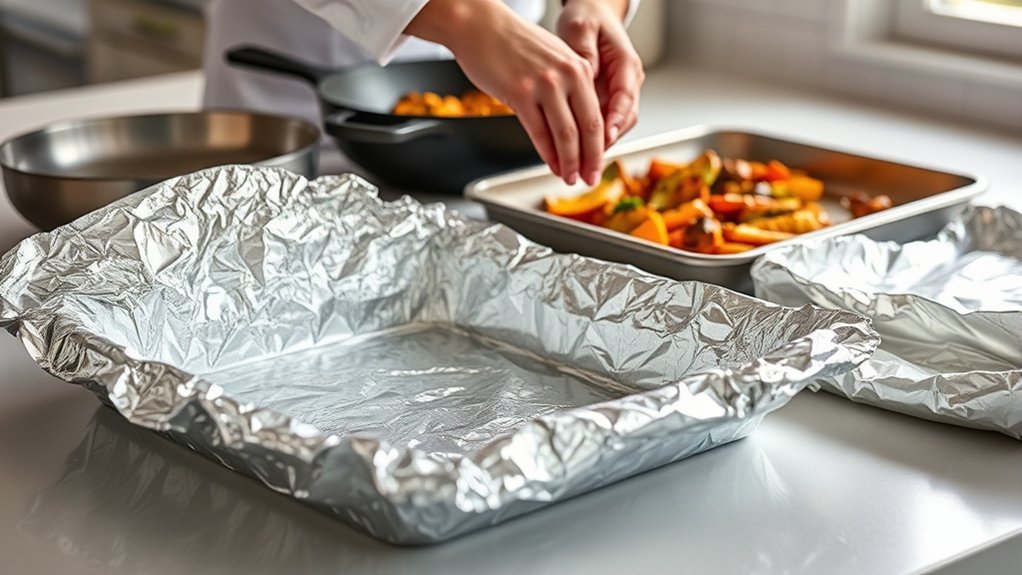
Cooking with aluminum foil is generally considered a practical option for everyday baking, roasting, and grilling when it is used correctly. Some aluminum can move from foil into food, and the amount varies with the food, acidity, salt, temperature, and contact time. The simplest approach is to use foil normally with low-acid foods, avoid prolonged direct contact with strongly acidic or salty mixtures, and follow the instructions for your oven, grill, or microwave.
Quick Answer
Cooking with aluminum foil is generally suitable for normal household use, but some aluminum can migrate into food. Migration tends to increase with acidic or salty foods and certain heating conditions. For tomatoes, citrus marinades, and similar foods, use parchment as a barrier or choose glass, ceramic, or stainless steel.
Key Takeaways
- Aluminum foil can transfer some aluminum to food, but the amount varies widely with the food and cooking conditions.
- Acidic ingredients, salt, marinades, heat, and longer contact can increase aluminum migration.
- Do not line the bottom of an oven or completely cover an oven rack with foil unless the appliance manufacturer specifically permits it.
- Use a food thermometer rather than color or appearance to judge whether meat, poultry, or fish in a foil packet is safely cooked.
- Glass, ceramic, stainless steel, parchment paper, and reusable baking products can reduce direct food-to-foil contact when appropriate.
Is Cooking With Aluminum Foil Safe?
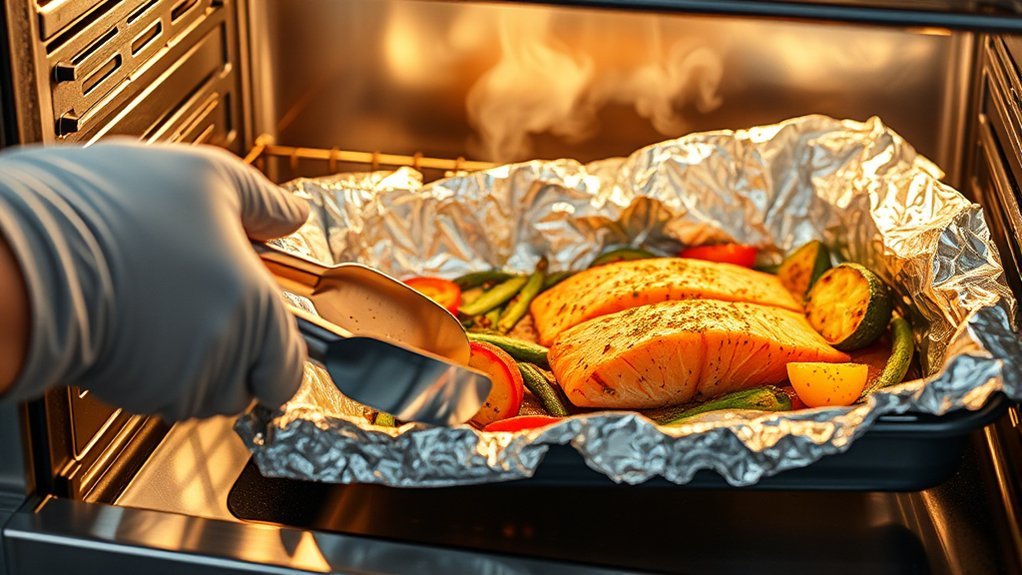
For most household cooking, aluminum foil can be used safely when the food and appliance instructions are appropriate. Aluminum is already present naturally in foods, and additional exposure can come from food additives, cookware, containers, and foil.
The Joint FAO/WHO Expert Committee on Food Additives (JECFA) established a provisional tolerable weekly intake of 2 mg of aluminum per kilogram of body weight per week. This benchmark covers total aluminum exposure from food sources; it is not a daily allowance specifically for aluminum foil.
That distinction matters because the amount contributed by a single foil-cooked meal can vary substantially. Food composition, marinade ingredients, salt, acidity, temperature, and cooking time can all affect migration.
Research therefore supports a balanced approach rather than treating foil as either completely inert or automatically dangerous. Low-acid foods cooked for ordinary periods are generally less reactive, while strongly acidic or salty dishes deserve more caution.
Note: Tolerable weekly intake values are population-level risk-assessment benchmarks for total dietary exposure. They are not a personalized medical limit for one meal or one cooking method.
What Makes Aluminum Foil Leach?
Aluminum migration from foil is affected by several conditions acting together. The most important practical factors are food acidity, salt, moisture, temperature, contact time, and the composition of the food itself.
Migration does not occur at one fixed rate, so it is more useful to reduce unnecessary direct contact with reactive foods than to rely on a single temperature or cooking-time cutoff.
Acidic Foods
Acidic foods such as tomatoes, citrus, and vinegar-based mixtures can react more readily with aluminum foil. This can increase aluminum transfer and may also cause pitting, discoloration, or a metallic note in some foods.
The USDA Food Safety and Inspection Service notes that salt, vinegar, highly acidic foods, and highly spiced foods can cause foil to pit or form a blue-colored reaction product. USDA describes the resulting aluminum salt as harmless, although the affected area can be trimmed for appearance.
For cooking quality and to reduce direct aluminum contact, strongly acidic foods are still better suited to glass, ceramic, stainless steel, or a parchment barrier where the cooking method permits parchment.
Salt And Moisture
Salt can make aluminum foil more reactive, especially when combined with moisture, acidity, marinades, and heat. Wet brines and salty marinades therefore deserve more attention than a dry, low-acid food that only briefly touches foil.
| Condition | Practical Effect | Best Approach |
|---|---|---|
| High salt | Can promote reaction with aluminum | Limit long direct contact |
| High moisture | Keeps the food in continuous contact with foil | Use a barrier when practical |
| Salt + acid + moisture | More favorable conditions for migration | Prefer glass, ceramic, steel, or parchment-lined foil |
Moisture alone does not make a food unsafe in foil. Foil packets intentionally use moisture and steam to cook food. The concern is the combination of moisture with more reactive ingredients and prolonged contact.
Heat And Time
Higher temperatures and longer contact can increase migration in some experimental conditions, but there is no universal household cutoff such as 220°C or 450°F at which foil suddenly becomes unsafe.
A 2019 Food Science & Nutrition study tested 11 foods baked in several types of foil. Migration varied substantially by food and preparation method, with marinated foods often showing greater increases than comparable non-marinated foods.
In that experiment, aluminum measured in marinated salmon and mackerel increased about 20-fold after marinating and heating. That result applies to those particular test conditions and should not be interpreted to mean that every piece of fish cooked in foil absorbs 20 times more aluminum.
A 2019 experiment found increases of up to 40-fold among some tested foil-cooked foods, but the researchers also found large differences between foods and preparations. Migration is condition-dependent, not a fixed multiplier.
Best Foods to Cook in Aluminum Foil
Foil works especially well for foods that benefit from moisture retention, gentle steaming, and protection from excessive browning. Low-acid vegetables, potatoes, corn, chicken, and many fish preparations can work well when heavily acidic or salty marinades are avoided.
Foil is also useful for making packets that contain both protein and vegetables. The packet traps steam, reduces moisture loss, and keeps small pieces from falling through grill grates.
Best Foil-Friendly Foods
| Food | Benefit | Practical Note |
|---|---|---|
| Chicken | Retains moisture | Cook to 165°F / 73.9°C |
| Fish | Stays tender | Cook to 145°F / 62.8°C |
| Bell peppers | Steam evenly | Cut to similar sizes |
| Potatoes | Hold moisture well | Allow enough time for the center to soften |
| Zucchini | Absorbs seasoning | Avoid overcooking |
For meat and fish, do not judge safety by color, steam, or how done the exterior looks. According to the USDA safe minimum internal temperature chart, poultry should reach 165°F (73.9°C), fish 145°F (62.8°C), and whole cuts of beef, pork, veal, and lamb 145°F (62.8°C) followed by at least a three-minute rest.
Foods To Avoid Foil
Some foods are less suitable for direct foil contact because of either chemical reactivity or cooking performance.
Tomatoes, citrus-heavy mixtures, vinegar marinades, and very salty foods are more reactive with aluminum. They are better cooked in glass, ceramic, stainless steel, or with an appropriate barrier between the food and foil.
Breaded and battered foods are poor choices for sealed foil because trapped steam softens the coating. If crispness is the goal, use an uncovered baking sheet, rack, air fryer, or another method that allows moisture to escape.
Large cuts of meat can be covered or tented with foil when a recipe calls for it, but foil does not replace proper cooking technique. Always check the center with a food thermometer.
Flavor And Texture Tips
The best results come from matching the cooking surface to the texture you want:
- For tender vegetables or fish: foil packets can trap steam and moisture effectively.
- For browned or crispy food: keep the food uncovered for at least part of the cooking time so surface moisture can escape.
- For acidic marinades: use glass or ceramic, or separate the food from foil with parchment if the parchment is rated for the required temperature and is not exposed to direct flame.
- For grilling small pieces: a grill basket can preserve airflow while preventing food from falling between the grates.
Pro Tip: If you want the shape and heat-shielding benefits of foil without having an acidic food touch aluminum directly, place food-safe parchment between the food and foil when the parchment manufacturer’s temperature and cooking-method limits allow it.
Foods to Avoid Wrapping in Foil
Wrapping is different from briefly lining a pan because wrapped food can remain in direct contact with the foil for a longer period. That makes ingredient choice more important.
Strongly acidic foods such as tomatoes, citrus mixtures, and vinegar-heavy dishes can react with the foil. Highly salted or brined foods can also promote reaction, particularly during extended storage or heating.
Dairy products are not automatically unsafe in foil, but salty or acidic cheeses and dishes can create the same reactive conditions as other salty or acidic foods. For longer storage, a sealed food-storage container is usually more practical.
High-moisture produce can also become soft when tightly wrapped because foil traps moisture. Breaded and crisp foods lose texture for the same reason.
If foil develops pinholes or dark or bluish discoloration after contact with salty, acidic, or heavily seasoned foods, USDA says the reaction product itself is not considered harmful. Even so, using a nonreactive container avoids the reaction and preserves appearance and flavor.
How to Use Aluminum Foil in the Oven
Aluminum foil is commonly used in conventional ovens for covering dishes, tenting food, wrapping selected items, and lining baking sheets. However, its metal melting point should not be treated as a safe operating temperature for an oven.
The correct limit is determined by your appliance and the way the foil is positioned. GE Appliances, for example, warns against lining an oven bottom or completely covering a rack because foil can trap heat, disrupt airflow, damage the oven, or create a fire or other safety hazard.
- Use foil to cover or tent food when you need to limit browning or moisture loss.
- Use foil on a baking sheet when appropriate instead of laying it directly across the oven floor.
- Leave adequate room for hot air to circulate around pans and food.
- Check your oven owner’s manual before using foil as a spill catcher or rack liner.
Warning: Do not line the bottom of an oven or completely cover an oven rack with aluminum foil unless your appliance manufacturer specifically permits it. Trapped heat and blocked airflow can damage the oven and may create fire, electrical, or combustion hazards.
Which Side of Aluminum Foil Should Face the Food?
For ordinary aluminum foil, the shiny side and dull side perform essentially the same in normal cooking. The difference comes from the manufacturing process, in which two foil sheets are rolled together during the final pass.
USDA guidance states that it does not matter which side of ordinary foil touches the food. The main exception is a specialty product such as nonstick foil, where the manufacturer may identify a specific food-contact side because of its coating.
Can Aluminum Foil Go in the Microwave?
Foil requires much more caution in a microwave than in a conventional oven. Completely wrapping food in aluminum foil prevents microwave energy from reaching the food properly and can damage the appliance.
USDA microwave guidance says small amounts of smooth foil may sometimes be used to shield portions of food from overcooking, but only when the microwave manufacturer permits it.
- Never completely cover food with foil in a microwave.
- Use only small, smooth pieces if the owner’s manual allows foil.
- Keep foil away from microwave walls and metal shelves or turntables.
- Stop the microwave immediately if you see arcing or sparks.
How to Use Aluminum Foil on the Grill
On a grill, foil can hold small foods, create packets, reduce sticking, and limit moisture loss. It can be particularly useful for vegetables, fish, potatoes, and foods that might otherwise fall between the grates.
For foil packets, place food in the center, fold the foil securely, and cook the packet on the grate according to the recipe and grill manufacturer’s instructions. A fully sealed packet traps more steam; a vented packet releases more moisture and may produce a less steamed texture.
Be careful when opening a hot packet. Trapped steam can escape suddenly and cause burns, so open the fold away from your face and hands.
For meat, poultry, and fish, use a food thermometer even if the outside appears browned. Foil can alter browning and make visual doneness cues less useful.
How to Reduce Aluminum Leaching
You do not need to avoid foil completely to reduce aluminum migration. A few practical choices can substantially reduce direct contact under the conditions most likely to promote transfer.
- Limit direct contact with acidic foods. Tomatoes, citrus juice, and vinegar marinades are better suited to nonreactive cookware.
- Reduce prolonged contact with very salty foods. This is especially useful for brined or marinated foods.
- Use a parchment barrier when appropriate. Keep parchment within its manufacturer’s temperature limits and away from direct flame or broiler elements.
- Use only as much cooking time and heat as the recipe requires. There is no scientifically established household rule that everything must stay below 450°F to prevent migration.
- Choose another material for long storage. Glass or food-grade containers are usually better for acidic leftovers.
Heavy-duty foil can be useful because it resists punctures and tearing better than thin foil. That improves packet durability, but it should not be treated as proof that less aluminum will migrate into a reactive food.
The main principle is simple: food chemistry and contact conditions matter more than an arbitrary temperature cutoff.
Best Alternatives to Foil
Several materials can replace foil when you want to avoid direct aluminum contact or need a different cooking result.
Parchment paper is useful for lining baking sheets and separating food from a pan or outer foil layer. Follow the parchment manufacturer’s maximum-temperature instructions, and do not expose it to direct flame or a broiler unless specifically approved.
Silicone baking mats are reusable options for lining baking sheets. Their permitted temperature range depends on the manufacturer.
Glass and ceramic baking dishes are particularly useful for tomatoes, citrus sauces, vinegar-based dishes, and other acidic preparations because the food does not directly contact aluminum.
Stainless steel cookware is durable and useful for roasting, sautéing, reheating, and storing many foods.
Grill baskets are good alternatives for vegetables and small pieces because they retain airflow while keeping food off the coals and preventing pieces from falling through the grate.
Beeswax wraps can replace disposable foil for some cold-storage tasks, but they are not intended for baking, grilling, or other high-heat cooking.
Frequently Asked Questions
Is It Safe to Cook Food on Aluminum Foil?
For normal household cooking, aluminum foil can be used for many foods when the appliance manufacturer permits it. Some aluminum can migrate into food, particularly under more reactive conditions involving acidity, salt, marinades, heat, and prolonged contact. Use glass, ceramic, stainless steel, or an appropriate parchment barrier for strongly acidic foods.
What Foods Should Not Be Cooked in Aluminum Foil?
Strongly acidic foods such as tomatoes, citrus-heavy mixtures, and vinegar marinades are better kept out of prolonged direct contact with foil. Very salty foods can also react more strongly. Breaded foods are not usually a chemical-safety problem, but sealed foil traps steam and makes them less crisp.
Does Aluminum Foil Give off Toxins When Heated?
Aluminum foil does not simply release a cloud of “toxins” during normal heating. The more relevant issue is migration of aluminum from the foil into food. The amount varies with the food and cooking conditions and can rise with reactive acidic or salty preparations.
Why Shouldn’t You Wrap Some Foods in Aluminum Foil?
Extended direct contact is less desirable for strongly acidic or salty foods because these conditions can promote reaction with the foil. Wrapping also traps moisture, so foods that depend on crispness often lose texture. Glass or sealed food-storage containers are better choices for many leftovers.
Does the Shiny or Dull Side of Aluminum Foil Face the Food?
With ordinary aluminum foil, either side can face the food. The shiny and dull finishes come from manufacturing and do not create a meaningful difference for normal cooking. Follow the label when using specialty nonstick foil because its coated side may need to face the food.
Can You Put Aluminum Foil in a Microwave?
Do not completely wrap food in foil or place large sheets of foil in a microwave. USDA says small, smooth pieces may sometimes be used for shielding if the microwave manufacturer’s instructions allow it. Keep foil away from oven walls and stop immediately if sparking or arcing occurs.
Is Food Unsafe if Aluminum Foil Develops Pinholes or Discoloration?
Not necessarily. USDA explains that salt, vinegar, highly acidic foods, and heavily spiced foods can cause pinholes or a bluish reaction product on foil and that the resulting aluminum salt is not considered harmful. Using nonreactive cookware can prevent the reaction and preserve appearance.
Conclusion
Aluminum foil remains a useful cooking material, but it is not chemically identical under every cooking condition. Aluminum migration can increase with acidic or salty foods, marinades, heat, and longer contact, while experimental results vary considerably from one food to another.
For routine use, focus on practical controls rather than fear or arbitrary temperature limits. Avoid prolonged direct contact with highly acidic foods, follow appliance instructions, never line an oven floor or completely block a rack with foil, and use a thermometer for meat, poultry, and fish. When direct aluminum contact is unnecessary, parchment, glass, ceramic, stainless steel, or reusable cookware can be better choices.
Sources
- WHO/JECFA — Aluminium evaluation — supports the provisional tolerable weekly intake of 2 mg/kg body weight.
- USDA FSIS — Meat and Poultry Packaging Materials — supports guidance on foil composition, shiny/dull sides, and reactions with salty or acidic foods.
- Food Science & Nutrition — Aluminum contamination during culinary preparation — peer-reviewed study on migration from foil into different foods during baking.
- USDA FSIS — Safe Minimum Internal Temperature Chart — supports thermometer-based cooking temperatures for poultry, fish, and meat.
- USDA FSIS — Cooking With Microwave Ovens — supports safe-use limitations for aluminum foil in microwave ovens.
- GE Appliances — Using Aluminum Foil in Ovens — supports warnings against lining oven bottoms or completely covering racks.

1 thought on “Can You Cook With Aluminum Foil? Safety & Best Uses”