
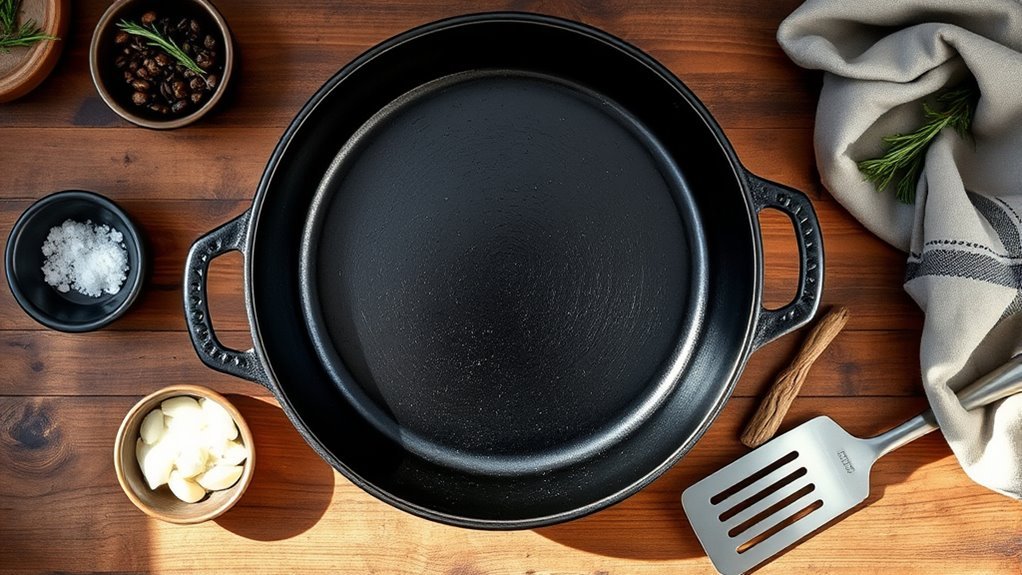
A cast iron pan is more than just a cooking tool; it’s a culinary companion that’s stood the test of time. Crafted from molten iron, these skillets are celebrated for their remarkable heat retention and versatility. Whether you’re frying, baking, or searing, a cast iron pan can elevate your dishes. But what truly sets it apart? Understanding its unique qualities and care can reveal a world of cooking potential that you might not have considered.
What Is a Cast Iron Pan and Why Use It?
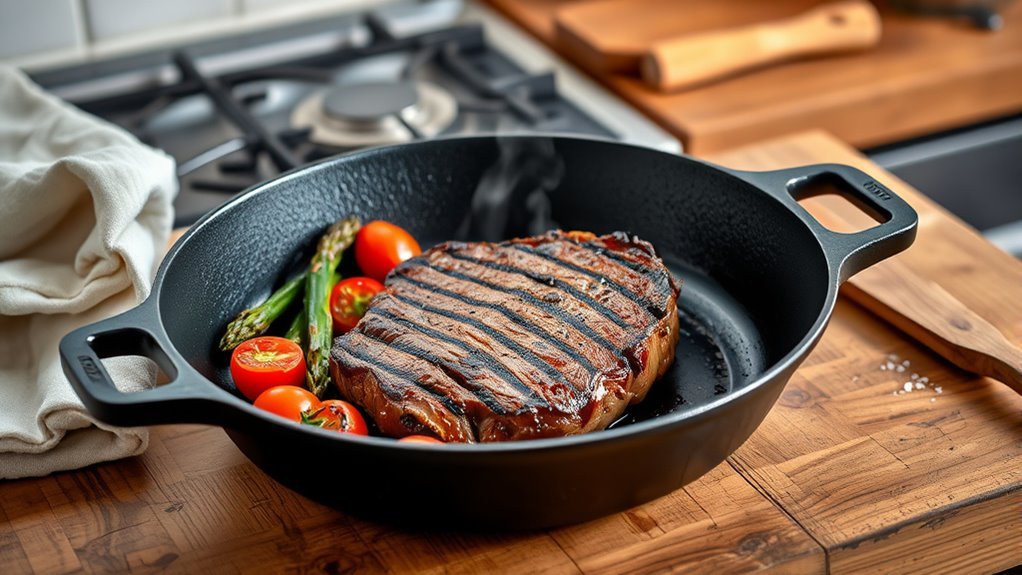
A cast iron pan is a timeless kitchen staple, revered for its unmatched durability and cooking prowess. This heavy-duty cookware, crafted from molten iron, excels in heat retention and promotes even cooking, making it perfect for frying, baking, and searing.
Over time, your cast iron skillet develops a natural non-stick surface through seasoning, enhancing its performance and flavor profile.
What sets this pan apart is its versatility; you can use it on stovetops, in ovens, or even over open flames. With proper care, it can last for generations, resisting warping or scratching unlike other cookware.
The magic lies in how it enhances your culinary creations, allowing for better browning and caramelization, which can elevate the taste of your dishes.
Whether you’re a novice or a seasoned chef, a cast iron skillet can truly liberate your cooking experience.
Benefits of Cooking With a Cast Iron Skillet
Cooking with a cast iron skillet brings a wealth of benefits that can elevate your culinary experience. Here are a few reasons to embrace this timeless cookware:
- Natural Non-Stick Surface: Over time, your skillet develops a non-stick coating that enhances flavor and performance.
- Exceptional Heat Retention: Enjoy even cooking and browning, no matter what you’re preparing.
- Nutritional Boost: Cooking with cast iron can add a small amount of iron to your food, supporting those with deficiencies.
Versatile and durable, cast iron skillets are perfect for everything from stovetop sautéing to oven baking and outdoor grilling.
With proper seasoning and care, these pans can last for generations, making them a sustainable choice for any kitchen.
You’ll find that cooking with a cast iron skillet not only improves your meals but also connects you to a rich culinary tradition.
What Makes Cast Iron Pans Unique?
While many cookware options exist today, cast iron pans stand out due to their remarkable ability to retain and evenly distribute heat. This feature allows your dishes to cook evenly and achieve that perfect browning you crave.
The porous surface of cast iron develops a natural non-stick patina over time, enhancing both its cooking performance and the flavors of your meals.
The porous surface of cast iron forms a natural non-stick patina, enriching both the cooking experience and the flavors of your dishes.
Versatile and durable, you can use these pans on stovetops, in ovens, or even over open flames, making them ideal for any cooking adventure.
They’re hot enough to withstand high temperatures without warping, ensuring longevity that often spans generations.
Plus, as your pan ages, it gains unique characteristics, like a distinct seasoning layer that elevates your culinary creations.
Embracing a cast iron pan means you’re investing in a kitchen companion that grows better with time, offering both flavor and functionality.
How to Care for Your Cast Iron Pan for Longevity
To guarantee your cast iron pan remains a reliable kitchen companion, proper care is essential.
Make sure you follow these key practices:
- Regularly season your pan after each use.
- Clean with coarse salt and a potato, avoiding soap.
- Store it in a dry place, using a paper towel to absorb moisture.
Top Recipes for Your Cast Iron Pan
When you think of versatile kitchen tools, a cast iron pan stands out for its ability to elevate everyday meals into something extraordinary.
One of the top recipes you can try is a perfectly seared steak. The high heat retention creates a delicious crust while locking in all those savory juices.
For a comforting side, bake cornbread in your skillet; it’ll develop a crispy bottom while keeping the center moist and fluffy.
If you’re in the mood for breakfast, whip up Dutch baby pancakes that puff beautifully in the oven, making for an impressive brunch dish.
Don’t forget one-pan meals—sauté your favorite proteins, toss in some veggies, and let the flavors meld.
Finally, indulge your sweet tooth with a skillet cookie, baked to perfection and served warm with a scoop of ice cream.
These top recipes showcase the true potential of your cast iron pan!
Frequently Asked Questions
Are Cast Iron Pans Healthy?
Yes, cast iron pans can be healthy for you. When you cook with them, you might boost your iron intake, especially beneficial if you have iron deficiency.
They excel in various cooking methods, allowing for high-heat searing without releasing toxic fumes.
Plus, when well-seasoned, they’re naturally non-stick, reducing the need for extra oils.
What’s the Difference Between a Cast Iron and a Regular Skillet?
Did you know that cast iron skillets can last over a century with proper care?
Unlike regular skillets, cast iron offers superior heat retention, making it ideal for various cooking techniques like searing and baking.
They develop a natural non-stick surface when seasoned, while regular ones usually need chemical coatings.
Plus, you can use cast iron on the stovetop, in the oven, or even over an open flame, giving you unmatched versatility in your kitchen.
Is Cast Iron Better Than Stainless Steel?
Yes, cast iron’s often considered better than stainless steel, especially for durability.
When you choose cast iron, you’re investing in a pan that can last a lifetime with proper care. It distributes heat evenly and develops a natural non-stick surface over time.
While it requires maintenance to prevent rust, its ability to enhance flavors and withstand high heat makes it a versatile kitchen companion.
You’ll enjoy cooking with a tool that truly elevates your culinary experience.
Which Is Better, Nonstick or Cast Iron?
When choosing between nonstick and cast iron, it really depends on your cooking techniques and preferences.
If you love searing and frying, cast iron’s heat retention can elevate your dishes, enhancing flavors while offering durability.
Nonstick, on the other hand, makes low-fat cooking a breeze and is lighter for daily use.
Embrace the unique benefits of both; they each have their place in your kitchen, empowering your culinary adventures!
Conclusion
Now that you know the ins and outs of your cast iron pan, imagine the tantalizing aroma of a perfectly seared steak or a golden cornbread emerging from the oven. Each meal becomes a delicious adventure, steeped in tradition and flavor. As you master the art of cooking with this timeless tool, it’s not just about the food—it’s about creating memories that linger long after the last bite. So, what will you cook first? The possibilities are endless!
