
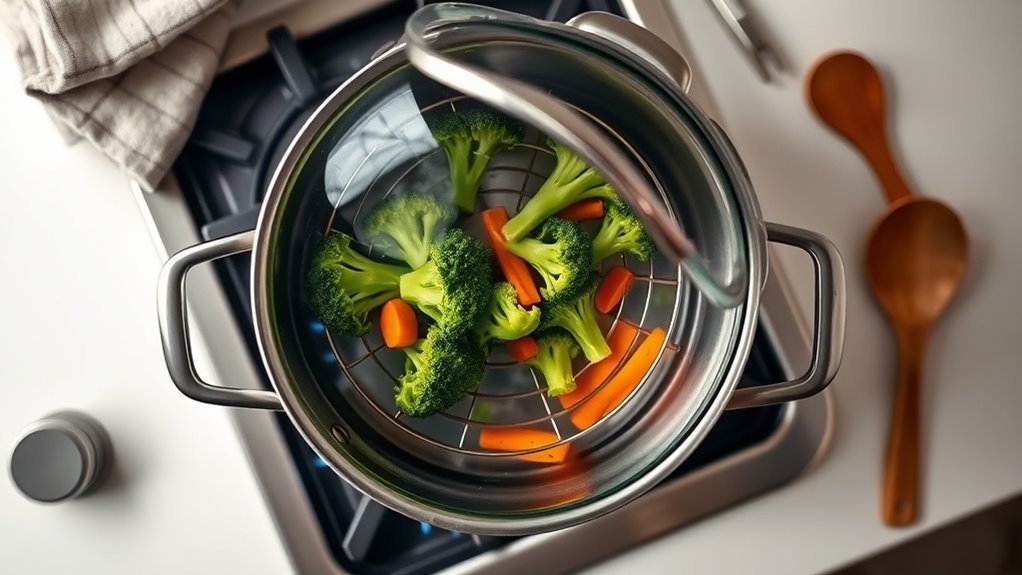
Learning how to steam vegetables in a pot is an easy way to cook tender, colorful vegetables without adding much fat. You only need a covered pot, a little water, and something to hold the food above it. The key is controlling the steam and adjusting cooking times for each vegetable.
Quick Answer
To steam vegetables in a pot, pour in 1–2 inches of water, keeping it below a steamer basket or raised heatproof plate. Bring the water to a boil, add evenly cut vegetables, and cover tightly. Reduce heat to maintain steady steam. Cook until tender-crisp, then carefully remove the vegetables.
At a Glance
| Time Required | About 2–12 minutes for many cut vegetables, plus water-heating time; larger pieces take longer. |
| Difficulty | Easy for beginners |
| Tools Needed | Pot with a tight-fitting lid, steamer basket or raised heatproof plate, knife, and tongs |
Steaming Basics: What You Need to Get Started
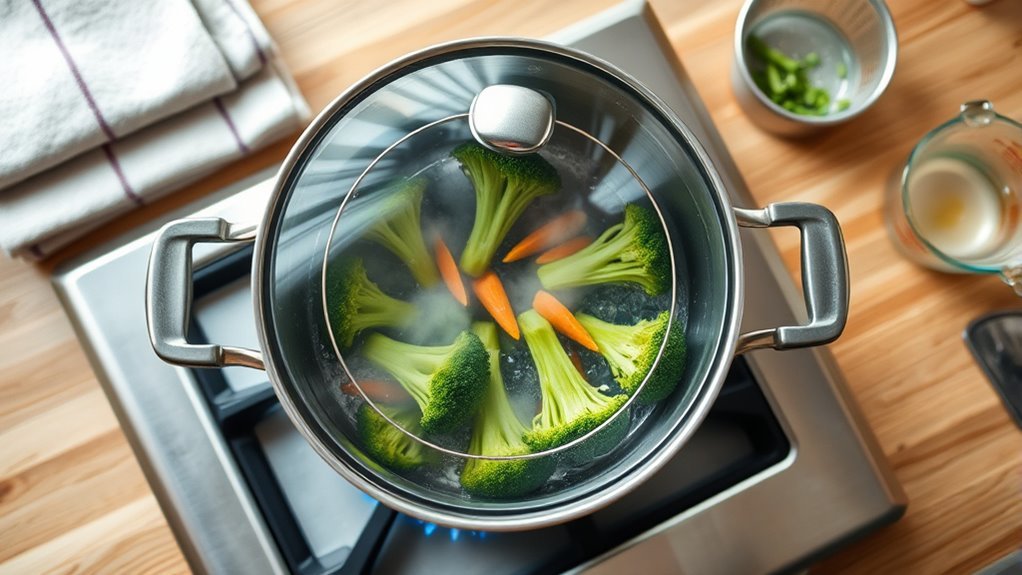
Steaming cooks food using hot water vapor rather than immersing it in boiling water. This gentle cooking method helps vegetables keep their shape, color, and natural flavor.
You don’t need an electric steamer or special cookware. A regular saucepan or stockpot works well if you can keep the food above the water.
Gather these basic tools:
- Pot: Choose one deep enough to hold your steamer insert and water without touching the vegetables.
- Tight-fitting lid: A lid traps steam and helps maintain a steady cooking temperature.
- Steamer basket: A collapsible metal basket or fitted insert allows steam to reach the food.
- Heatproof alternative: A metal colander or a stable, raised heatproof plate can replace a steamer basket.
- Kitchen tools: Use a knife, cutting board, tongs, and oven mitts for preparation and safe handling.
- Fresh ingredients: Choose vegetables, herbs, or other foods suitable for steaming.
Arrange vegetables loosely in a single layer when possible. Leave enough space around the insert for steam to circulate throughout the pot.
For longer cooking sessions, choose a pot that can hold enough water without letting it touch the basket.
How to Steam Vegetables in a Pot: Setting Up
Start with a stable steaming setup and enough water to produce continuous steam. The vegetables should sit above the water, not inside it.
Once the water boils, a covered pot creates the hot, moist environment needed for even cooking.
Preparing Your Pot
Follow these steps to prepare your pot and steam vegetables safely.
- Choose the pot. Select a saucepan or stockpot that fits your steamer basket. Make sure the lid closes properly and the basket sits securely.
- Add water. Pour about 1–2 inches of clean water into the bottom. Adjust the amount to your pot and basket so the water stays below the food.
- Position the insert. Place the steamer basket or raised heatproof plate inside the pot. Leave space between the food and the water.
- Heat the water. Cover the pot and bring the water to a boil over medium-high heat.
- Add the vegetables. Carefully open the lid and arrange the prepared vegetables in the basket. Avoid packing them tightly.
- Cover and cook. Replace the lid, reduce the heat enough to maintain a gentle boil, and start timing.
- Check for doneness. Test the thickest piece with a fork or knife. Remove the food when it reaches your preferred tenderness.
Keep the heat high enough to produce steady steam. You don’t need an aggressive rolling boil throughout cooking.
The University of Minnesota Extension’s steaming guidance also recommends keeping vegetables above the water and arranging them in a single layer for even heating.
Warning: Escaping steam can cause serious burns. Use oven mitts and lift the lid away from your face and hands. Never reach directly into rising steam or leave a heating pot unattended.
Water Level Importance
The correct water level keeps your vegetables steaming instead of boiling. About 1–2 inches works for many pots, but the height of your steamer insert matters more than a fixed measurement.
If the water touches the vegetables, pour some out before heating. Food submerged in water will cook by boiling rather than steaming.
For longer cooking sessions, make sure enough water remains in the bottom of the pot. A dry pot can overheat, burn residue, or damage cookware.
If you need to add water, use hot water carefully so the pot can return to steaming quickly.
A taller pot may require more water for extended cooking, while a shallow basket may need less. Always keep the waterline below the food.
Preparing Your Ingredients for Steaming
Good preparation helps vegetables cook evenly and taste better. Choose fresh produce, wash it properly, and cut it according to its texture and density.
You can also prepare herbs or seasonings before cooking so the finished food needs little extra work.
Selecting Fresh Vegetables
Fresh vegetables usually offer better flavor and texture than produce that has started to wilt or spoil. Look for firm stems, bright colors, and leaves without major damage.
Broccoli should have compact florets. Carrots should feel firm, while leafy greens should look fresh rather than limp or yellow.
Seasonal vegetables are often a practical choice because they can offer good flavor and freshness.
Wash produce under cool running water before cutting or cooking. The FDA’s produce safety recommendations advise against using soap, detergent, or commercial produce washes.
For leafy greens, remove damaged leaves and any tough stems you don’t plan to eat. Scrub firm vegetables when needed, and discard produce that looks rotten.
Cutting for Even Cooking
Cutting vegetables into similar-sized pieces helps them finish cooking together. For many vegetables, pieces around 1–2 inches are a useful starting point.
However, the best size depends on the ingredient. Dense carrots and potatoes usually need smaller pieces or more cooking time than tender broccoli florets.
- Broccoli: Divide into similar-sized florets. Cut thick stems into smaller pieces.
- Carrots: Slice thinly for faster cooking or cut into thicker chunks when you want a firmer texture.
- Potatoes: Cut large potatoes into even pieces rather than mixing whole potatoes with small cubes.
- Leafy greens: Remove tough stems and separate large leaves so steam can reach them.
- Green beans: Trim the ends and keep their thickness reasonably consistent.
Smaller pieces generally cook faster because heat reaches their centers more quickly. Larger pieces take longer but may hold their shape better.
Prepping for Flavor Enhancement
Steamed food doesn’t have to taste plain. A little seasoning before or after cooking can improve the flavor without covering up the vegetables’ natural taste.
Try these simple preparation methods:
- Season vegetables lightly with pepper, garlic, or your favorite herbs.
- Add dill or thyme to vegetables that pair well with fresh herbs.
- Keep the vegetable pieces similar in size to avoid mixing soft and undercooked pieces.
- Use smaller cuts for firm vegetables if you want a shorter cooking time.
- For fish or meat, prepare a suitable marinade ahead of time and keep the food refrigerated until cooking.
Avoid adding too much liquid directly to the vegetables. Excess sauce can collect in a solid plate and affect the final texture.
For a simple vegetable side dish, you can wait until steaming is finished and add most of the seasoning just before serving.
Steam Your Food to Perfection
Steaming times depend on the vegetable, the size of the pieces, and how tender you want the finished food. Thin vegetables usually cook faster than dense roots and tubers.
Start checking near the lower end of the recommended time. Continue cooking briefly if the center is still too firm.
How Long Should You Steam Different Vegetables?
The following times are practical starting points from the U.S. Department of Veterans Affairs vegetable cooking guide.
| Vegetable | Approximate Steaming Time | Doneness Check |
|---|---|---|
| Broccoli | 5–6 minutes | Bright green and tender-crisp |
| Sliced carrots | 4–5 minutes | Fork enters with slight resistance |
| Cauliflower | 5–10 minutes | Stems are tender |
| Green beans | 5–8 minutes | Tender with a little snap |
| Spinach | 5–6 minutes | Leaves are wilted and tender |
| Potatoes, cut into pieces | 10–12 minutes | Fork pierces the center easily |
| Zucchini | 4–6 minutes | Softened but still holding its shape |
| Bell peppers | 2–4 minutes | Slightly tender with some crunch |
These are guidelines, not exact cooking times for every size. Larger carrot pieces may need 10–15 minutes, while whole potatoes can take considerably longer than cut pieces.
Some delicate greens wilt in just a few minutes. Check them early rather than relying only on a timer.
For vegetables, the easiest doneness test is to pierce the thickest piece. It should feel tender but not fall apart unless you want a very soft texture.
Pro Tip: When steaming several vegetables together, start with the ingredients that take longest, such as potatoes or thick carrots. Add quicker-cooking vegetables later so everything finishes at about the same time.
Can You Steam Fish or Meat in the Same Pot?
Yes, you can steam fish, chicken, and other suitable foods in a covered pot. However, their cooking times and safety requirements differ from those of vegetables.
A food thermometer is more reliable than color or texture for checking whether meat and poultry are safely cooked.
According to the FDA’s safe food handling guidance, poultry should reach an internal temperature of 165°F (74°C). Fin fish should reach 145°F (63°C) or meet the FDA’s stated doneness guidance.
Note: Do not use vegetable cooking times to determine whether fish or meat is safe to eat. Keep raw animal foods separate from ready-to-eat vegetables, refrigerate marinades, and follow safe internal temperature recommendations.
Don’t Make These Common Steaming Mistakes
Most steaming problems come from too much water, poor steam circulation, or incorrect cooking times. Small adjustments can prevent vegetables from becoming watery, unevenly cooked, or mushy.
Watch out for these common mistakes:
- Using too much water: If the vegetables touch the water, they may boil rather than steam. Lower the water level or raise the basket.
- Letting the pot run dry: Without water, steam production stops and the cookware may overheat. Use enough water for the cooking period.
- Overcrowding the basket: A tightly packed basket restricts steam circulation. Cook large quantities in batches when necessary.
- Opening the lid repeatedly: Each time you lift the lid, hot steam escapes and the pot must heat up again.
- Using insufficient heat: Water must stay hot enough to produce steam. Adjust the burner rather than allowing the water to stop simmering.
- Overcooking vegetables: Long exposure to heat can soften their texture and change their color. Stop cooking once they reach the desired tenderness.
- Mixing very different piece sizes: Small pieces may become mushy before large pieces are ready. Cut ingredients evenly or cook them in stages.
If vegetables turn out soggy, check whether they were touching the water or cooked too long. For a firmer result next time, reduce the cooking time and remove them from the hot basket promptly.
If vegetables remain hard, replace the lid and continue steaming in short intervals until the center reaches the texture you want.
Flavor Tips for Steamed Dishes
Steaming preserves the natural taste of many vegetables, but a few finishing ingredients can make them more appealing. Herbs, citrus, and small amounts of oil or sauce work well.
You can build flavor before steaming or add seasoning immediately afterward.
- Fresh herbs: Sprinkle dill, thyme, parsley, or other suitable herbs over vegetables before steaming or just before serving.
- Garlic: Add a little minced garlic or garlic-infused seasoning to vegetables that need a stronger flavor.
- Lemon: Finish with lemon juice for brightness, especially on broccoli, green beans, or fish.
- Broth or aromatics: A little broth, a lemon slice, or a splash of vinegar in the steaming liquid may add a mild aroma. Seasoning the food itself has a more direct effect on taste.
- Soy sauce: Drizzle a small amount over cooked vegetables for a savory finish.
- Sesame oil: Add a few drops after steaming for a richer aroma.
- Salt and pepper: Season the finished vegetables lightly and adjust to your taste.
Adding salt only to the steaming water is not an effective way to season vegetables. Salt stays largely in the liquid rather than traveling with the water vapor.
For a simple side dish, try steamed broccoli with lemon, pepper, and a little olive oil. For carrots, a light coating of herbs or butter can complement their natural sweetness.
Does Steaming Preserve More Nutrients Than Boiling?
Steaming often reduces the loss of water-soluble nutrients compared with boiling because the vegetables are not submerged in cooking water. However, no cooking method preserves every nutrient perfectly.
A peer-reviewed study comparing vegetable cooking methods found that vitamin retention varied substantially by vegetable, nutrient, and preparation method.
The study also found that steaming generally retained more vitamin C than boiling, although results differed across vegetables.
There is no reliable universal rule that all steamed vegetables retain 90% of their vitamins or that boiling always removes 50%.
To limit unnecessary nutrient loss, avoid excessive cooking and use only the water needed for effective steaming.
Frequently Asked Questions
How Do You Steam in a Pot?
To steam in a pot, add 1–2 inches of water and place a steamer basket above it. Bring the water to a boil, add your vegetables, and cover tightly. Maintain steady steam until the food is tender. Broccoli commonly takes about 5–6 minutes, depending on its size.
How Much Water Do You Put in a Pot When Steaming?
Use about 1–2 inches of water for many stovetop steaming setups. The exact amount depends on the pot and basket height. Keep the water below the vegetables and maintain a gentle boil so it continues producing steam throughout cooking.
What Are Two Rules for Steaming?
First, keep the food above the water so steam cooks it without submerging it. Second, maintain steady steam under a properly fitting lid. These two rules help vegetables cook evenly while retaining their natural texture and flavor.
Do You Leave the Vent Open When Steaming in an Instant Pot?
It depends on the Instant Pot model and cooking program. Pressure-based steaming generally requires the sealing position, while the Instant Pot Pro’s non-pressurized Steam program uses venting. Follow your model’s instructions and never force the lid open while pressurized. The manufacturer’s official manual provides the relevant settings.
The Instant Pot Pro user manual specifically identifies its Steam program as non-pressurized and directs users to keep the venting control open during that mode.
Can You Steam Vegetables Without a Steamer Basket?
Yes, you can steam vegetables without a dedicated steamer basket. Use a heatproof metal colander that fits securely above the water, or place food on a stable, raised heatproof plate. Make sure the setup cannot tip and the pot lid closes properly.
How Do You Know When Steamed Vegetables Are Done?
Steamed vegetables are ready when they reach your preferred tenderness. Pierce the thickest piece with a fork or knife to check. For tender-crisp vegetables, the utensil should enter with slight resistance. Remove the vegetables promptly to prevent overcooking from residual heat.
Conclusion
Steaming is a simple way to prepare flavorful vegetables while limiting their contact with cooking water. The best results come from using a suitable pot, controlling the water level, cutting ingredients evenly, and checking their tenderness.
Start with an easy vegetable such as broccoli or green beans. Once you’re comfortable with the technique, try combining vegetables with different cooking times for a colorful, satisfying side dish.
Sources
- U.S. Food and Drug Administration — Selecting and Serving Produce Safely: Supports produce washing, handling, and preparation advice.
- University of Minnesota Extension — Blanching Vegetables: Supports steaming setup, steam circulation, and water separation techniques.
- U.S. Department of Veterans Affairs — Simple Guide to Cooking Vegetables: Source for the vegetable steaming-time chart.
- U.S. Food and Drug Administration — Safe Food Handling: Supports food thermometer use and safe internal cooking temperatures.
- Effect of Different Cooking Methods on the Content of Vitamins and True Retention in Selected Vegetables: Peer-reviewed research supporting the discussion of nutrient retention during cooking.
- Instant Pot — Pro User Manual: Supports the distinction between non-pressurized steaming and pressure-cooking vent settings.
