
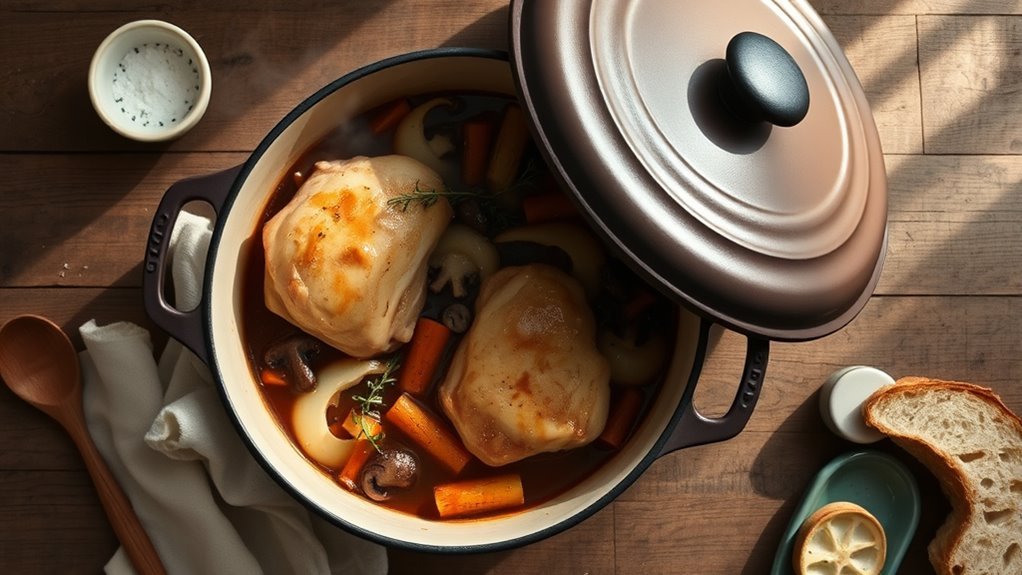
What do you use a braiser for? Mostly one-pan dishes that start with browning and finish gently covered: braised short ribs, chicken thighs with vegetables, braised cabbage, beans, saucy casseroles and baked pasta. If a recipe says “sear, then simmer covered”, a braiser is made for it.
Below are specific dishes by type, rough timing guides, and practical tips. For the basic method, read what a braiser is used for, and for the pan itself see what is a braiser.
Dishes to Make in a Braiser
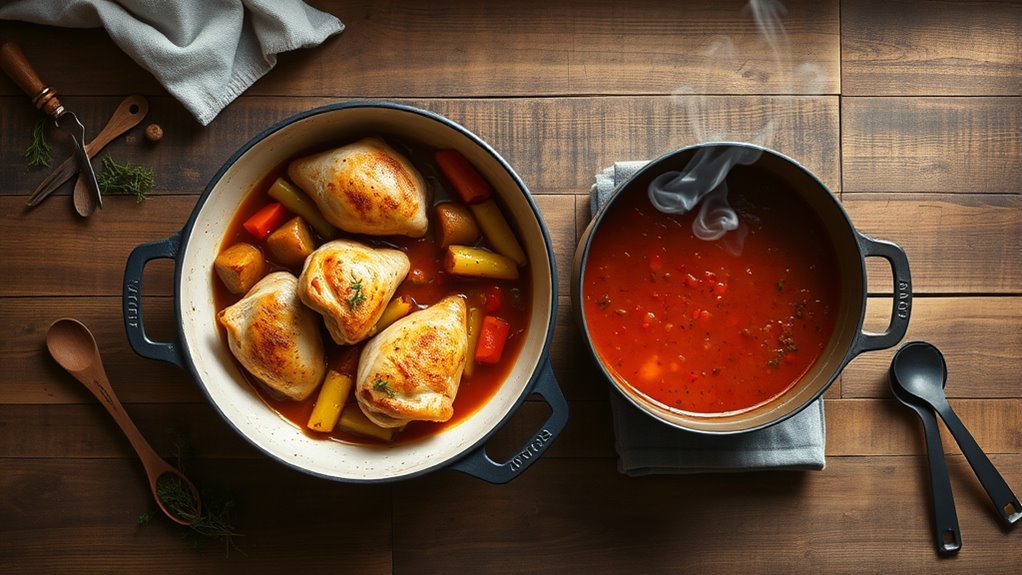
Braised Meats
- Beef short ribs in red wine or stock, served over mashed potatoes or polenta.
- Lamb shanks with tomatoes, garlic and herbs.
- Pork shoulder pieces with onions and apples or with chiles for tacos.
- Beef chuck for pot roast or a shallow stew, cut into large chunks.
- Chicken thighs or legs in a classic coq au vin or with lemon, olives and chickpeas.
Fast One-Pan Dinners
- Browned chicken thighs with potatoes and green beans, finished in the oven.
- Sausages simmered with peppers, onions and tomato sauce.
- Chicken and rice, where rice cooks in the seasoned braising liquid.
- Fish fillets poached gently in tomato broth, since the wide base keeps pieces in one layer.
- Meatballs simmered in sauce and served straight from the pan.
Vegetables and Plant-Based Meals
- Braised cabbage or red cabbage with vinegar and apples.
- Leeks, fennel and endive that turn sweet and tender when cooked slowly.
- Collard greens or kale braised in stock.
- Stewed white beans or chickpeas with tomatoes and herbs.
- Eggplant or squash cooked in a tomato sauce.
Baked and Saucy Dishes
- Baked pasta, mac and cheese or lasagna-style dishes that go from stovetop to oven.
- Gratins and scalloped potatoes.
- Shakshuka, where eggs poach in a simmered tomato sauce.
- Cobblers or baked fruit desserts, if your pan’s finish and lid are rated for the oven temperature.
Rough Time Guide (Starting Points Only)
Times vary with the cut, size of the pieces, temperature and how heavy your pan is. Use these as a first guess and test for tenderness.
| Food | Typical braising time | Doneness cue |
|---|---|---|
| Beef short ribs or shanks | About 2.5 to 3.5 hours | Meat pulls from the bone with a fork |
| Pork shoulder pieces | About 2 to 3 hours | Fork-tender |
| Bone-in chicken thighs | About 30 to 45 minutes | At least 165°F (74°C); more tender at higher temperatures |
| Cabbage wedges, leeks, fennel | About 30 to 60 minutes | Knife slides in easily |
| Soaked white beans | Varies widely | Creamy inside, skins intact |
Tips for Cooking With a Braiser
- Dry food before searing. Pat meat dry so it browns rather than steams.
- Sear in batches. A crowded pan drops in temperature and the food turns gray.
- Keep liquid halfway up. You want to braise, not boil.
- Add acid. Wine, vinegar, tomatoes or citrus brighten rich sauces and help balance fat.
- Skim the fat. Chill the dish and the fat will rise and set so it is easy to lift off.
- Make it ahead. Many braises taste even better the next day after the flavors blend. Reheat gently on the stovetop.
- Use the lid wisely. Keep it on for tenderness, take it off to thicken the sauce.
Common Mistakes to Avoid
- Skipping the sear and then wondering why the dish tastes flat.
- Using lean, quick-cooking cuts such as chicken breast for long braises. They dry out.
- Cooking at a hard boil instead of a bare simmer.
- Heating an enameled pan empty on high, which can damage the finish.
- Putting a hot braiser straight into cold water, which can crack enamel or warp thinner pans.
- Forgetting to check that lid knobs and handles can handle the oven temperature.
Braiser or Another Pan?
Choose a braiser when you want a wide surface for browning and a quick sauce in the same pan. Choose a Dutch oven when you need depth for soup, stock or bread. A deep skillet with a lid is a fair substitute for lighter braises. For the full comparison, see our braiser guide, and for how it compares with other cookware read the difference between pots and pans.
Care After Cooking
Let the braiser cool, then wash by hand with warm water, mild soap and a soft sponge. Soak stuck-on bits instead of scraping hard. Dry well. If your braiser is bare cast iron, re-oil it after drying, as explained in our cast iron care guide. For enameled pieces, follow the manufacturer’s care page, since dishwasher advice varies.
Frequently Asked Questions
What can you cook in a braiser?
You can braise short ribs, lamb shanks, pork shoulder and chicken thighs, simmer sausages and meatballs in sauce, cook beans and greens, make baked pasta or gratins, and poach eggs for shakshuka. It also sears and reduces sauces in the same pan.
What is the purpose of a braiser?
Its purpose is to let you brown food over direct heat and then cook it gently under a tight lid in a little liquid, in one pan. The wide base gives you room to sear in a single layer and the low sides help sauces reduce quickly.
Can you fry or bake in a braiser?
You can shallow fry in a braiser and bake or roast dishes in it if the pot, lid and knob are rated for your oven temperature. It is not meant for deep-frying. Check the manufacturer limits and avoid sudden temperature changes.
What is the difference between a pan and a braiser?
A regular pan is usually light, often has no lid and is built for fast cooking such as frying and sautéing. A braiser is heavier, has a tight lid and moderate depth, so it can hold liquid and cook food slowly on the stove or in the oven.
Conclusion
Use a braiser for tough cuts of meat, saucy one-pan dinners, tender braised vegetables and baked casseroles. Brown first, add liquid sparingly, and keep the heat low once covered.
