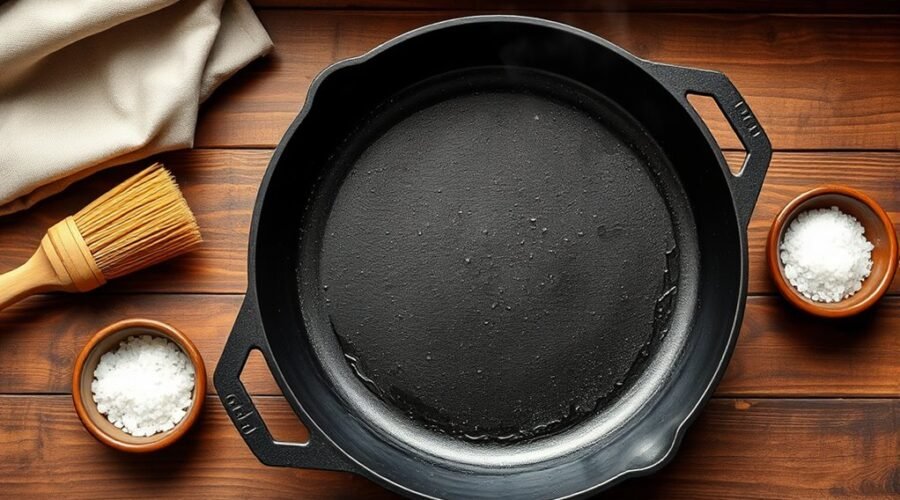
Imagine discovering a family heirloom cast iron pan, its surface dulled by years of neglect. With the right care, you can restore it to its former glory and enjoy delicious meals for years to come. Proper seasoning, cleaning techniques, and maintenance are vital to maximizing its performance. Curious about the best practices to guarantee your cast iron cookware lasts? Let’s explore the essential steps to keep it in top shape.
Why Cast Iron Cookware Is Essential: Key Benefits
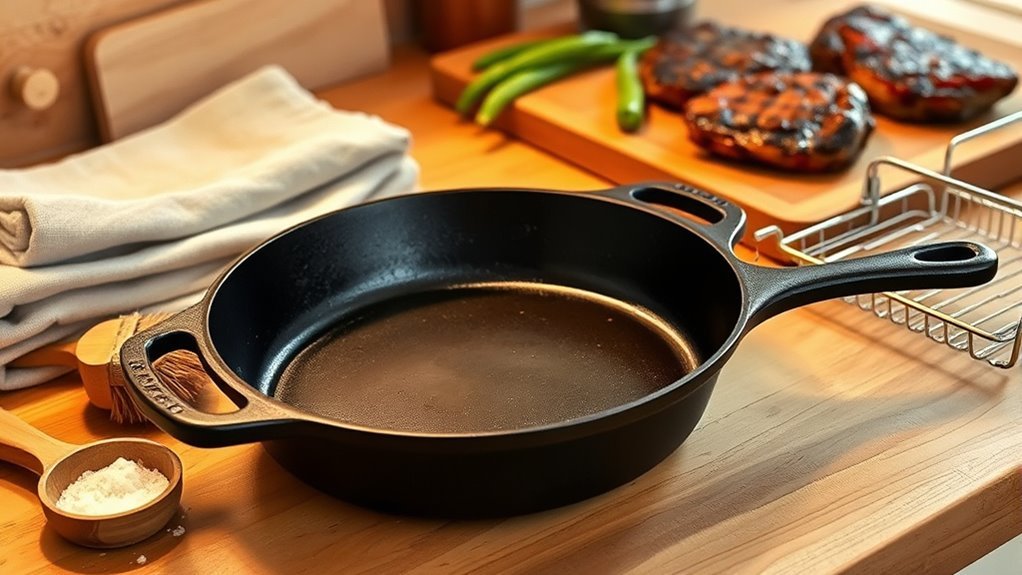
When you choose cast iron cookware, you’re investing in a kitchen essential that offers numerous benefits. A cast iron pan excels in heat retention, ensuring consistent cooking temperatures, perfect for searing and frying.
Investing in cast iron cookware means embracing superior heat retention for perfectly seared and fried dishes.
With proper care for cast iron, your pan can last for generations, making it a durable choice compared to other materials.
Its natural non-stick properties only get better with seasoning, as oil seeps into the tiny pores, enhancing both cooking performance and flavor development.
Whether you’re frying, baking, sautéing, or slow cooking, a cast iron pan proves to be incredibly versatile.
This unique ability to absorb and retain oils not only elevates its non-stick qualities but also enriches the dishes you prepare.
Embrace the liberation of cooking with cast iron, and enjoy the lasting benefits it brings to your kitchen adventures.
How to Properly Season Your Cast Iron Pan
To properly season your cast iron pan, start by choosing the right oil, as this can make all the difference in achieving that perfect non-stick surface.
Once you’ve coated the pan evenly, the baking process is essential; it activates the oil and sets the seasoning.
Let’s explore how to get it just right!
Choosing the Right Oil
Choosing the right oil is essential for properly seasoning your cast iron pan. Opt for oils with high smoke points, like flaxseed, grapeseed, or vegetable oil. These oils guarantee effective seasoning without burning.
Apply a thin, even layer to your clean, dry skillet to prevent sticky residue and enhance its non-stick properties.
After applying the oil, heat the skillet upside down in a preheated oven at 400°F (200°C) for one hour. This allows the oil to polymerize, bonding it to the cast iron.
Remember, after each use, lightly reapply oil to maintain that seasoning and guard against moisture and rust.
Steer clear of oils with low smoke points, such as olive oil, to avoid a degraded surface.
Baking Process Overview
Seasoning your cast iron pan is an essential step in ensuring its longevity and performance. Start by thoroughly cleaning your pan to remove any residue, then make sure it’s completely dry.
Apply a thin, even layer of high-smoke-point oil, like flaxseed or vegetable oil, to coat the surface. Preheat your oven to 400°F (200°C) and place the pan upside down on the middle rack. This allows excess oil to drip off during the baking process.
Bake your skillet for an hour, then turn off the oven and let it cool inside. This helps bond the protective layer.
Regularly re-season your pan after cleaning, especially if it looks dull or sticky, to maintain its non-stick properties and prevent rust.
Cleaning Your Cast Iron Pan: Step-by-Step
Cleaning your cast iron pan is essential to keeping it in top shape and ensuring it lasts for generations. Start by letting your pan cool slightly to prevent warping and make it easier to clean.
Use a spatula or stiff brush to scrape off any stuck-on food particles, then rinse with warm water. Avoid soaking your pan to prevent rust.
Use a spatula or stiff brush to remove stuck-on food, then rinse with warm water to keep your pan rust-free.
For stubborn residue, sprinkle coarse sea salt and scrub with a chainmail scrubber or stiff brush. This lifts food particles without damaging the seasoning.
After cleaning, thoroughly dry your pan with a towel and place it on low heat for a few minutes to evaporate any remaining moisture.
Finally, apply a thin layer of high-smoke-point oil to maintain the seasoning and enhance the non-stick surface.
With these steps, your cast iron cookware will remain a cherished tool in your kitchen for years to come!
Essential Tools for Your Cast Iron Pan Maintenance
To keep your cast iron pan in top shape, you’ll need a few essential tools.
From coarse sea salt for scrubbing to high-smoke-point oils for seasoning, each item plays a vital role in maintenance.
Let’s explore the must-have supplies that guarantee your skillet stays seasoned and ready to cook.
Essential Cleaning Tools
When it comes to maintaining your cast iron pan, having the right cleaning tools can make all the difference. A stiff brush is your go-to for scrubbing away stubborn food without damaging the seasoning of your cast-iron skillet.
Pair it with coarse sea salt for a gentle abrasive that helps lift stuck-on bits. Microfiber cloths or chainmail scrubbers are perfect for cleaning while preserving your pan’s integrity.
Don’t forget paper towels; they’re essential for wiping up food remnants and drying your pan thoroughly to prevent rust.
With these tools in hand, you’ll keep your cast iron in prime condition, ready for your next culinary adventure. Happy cooking!
Seasoning Supplies Needed
Properly seasoning your cast iron pan requires just a few essential supplies.
These tools not only enhance your skillet’s performance but also extend its life. Here’s what you’ll need:
- High-smoke-point oils (like flaxseed, grapeseed, or sunflower oil) for a durable non-stick surface
- Stiff brush or chainmail scrubber to remove stuck-on food without damaging the seasoning
- Coarse sea salt as a gentle abrasive to lift stubborn residue
- Paper towels for applying oil and drying the skillet thoroughly to prevent rust
With these seasoning supplies in hand, you’re ready to create a beautifully seasoned cast iron pan that serves you well for years to come.
Enjoy the liberation that cooking with cast iron brings!
Maintenance Accessories List
Once you’ve seasoned your cast iron pan, keeping it in top shape requires the right maintenance accessories. Here’s a handy list to help you:
| Accessory | Purpose | Usage Tips |
|---|---|---|
| Coarse Sea Salt | Gentle abrasive for scrubbing | Use to tackle stuck-on food |
| Microfiber Cloth | Safe cleaning without damaging seasoning | Ideal for everyday maintenance |
| Stiff Brush | Removes stubborn residue | Great for maintaining seasoning |
| High-Smoke-Point Oil | Re-seasoning your pan | Use flaxseed or sunflower oil |
| Paper Towels | Gathering remnants and drying | Prevents rust formation |
These essentials guarantee your skillet stays ready for delicious meals while preserving its non-stick charm.
Dealing With Stuck Food and Rust Issues
Dealing with stuck food and rust on your cast iron pan can feel challenging, but it’s easier than you might think. Here’s how to tackle these issues effectively:
- For stuck food: Heat the skillet and gently scrape off remnants with a spatula. Wipe it down with a paper towel.
- For stubborn food: Sprinkle coarse sea salt and scrub with a stiff brush or chainmail for better results.
- To manage rust: Soak the rusted area in a 50:50 mix of water and white vinegar for up to 8 hours, then scrub and neutralize with baking soda.
- Drying: Always dry your cast iron thoroughly by heating it on the stove for about 10 minutes to evaporate any remaining moisture.
After cleaning, apply a light coat of oil to enhance seasoning and prevent rust, ensuring your pan stays in top shape for years to come!
Myths vs. Facts: Understanding Cast Iron Care
When it comes to caring for your cast iron pan, separating myths from facts can make all the difference. Here’s a quick guide to help you navigate common misconceptions:
| Myth | Fact |
|---|---|
| Dish soap should never be used. | Modern dish soap is safe for well-seasoned cast iron and helps remove food stuck. |
| Cast iron is difficult to maintain. | With proper cast-iron care, it can last for generations and even improve with use. |
| You can’t cook acidic foods. | Short cooking times in well-seasoned pans are generally acceptable for acidic foods. |
| New cast iron comes pre-seasoned. | Most new cast iron requires seasoning to develop its non-stick properties. |
Understanding these facts guarantees your cast iron pan stays in peak condition, ready for all your culinary adventures. Embrace the joy of cooking with confidence!
Foods to Avoid in Cast Iron Cookware
To keep your cast iron pan in top shape, it’s important to know which foods can cause damage. Here are some key items to avoid:
To maintain your cast iron pan, avoid acidic foods, sticky dishes, delicate proteins, and prolonged dairy cooking.
- Highly acidic foods: Ingredients like tomatoes, vinegar, and citrus can break down your pan’s seasoning and lead to a metallic taste.
- Sticky or sugary foods: Caramelized fruits and sugary sauces can cling to the surface, complicating cleanup and harming the seasoning.
- Delicate proteins: While eggs and fish aren’t strictly off-limits, they can stick if your pan isn’t well-seasoned or heated properly.
- Dairy products: Cooking with milk or cream for extended periods can leave tough residues that are hard to clean.
How to Store Your Cast Iron Pan Like a Pro
Storing your cast iron pan correctly can extend its life and keep it in great condition. First, find a dry place for your pan to prevent moisture buildup, which can lead to rust.
If you stack your pans, place a paper towel or cloth between them to absorb any moisture and protect the seasoning layer.
Avoid sealing your cast iron pan in a plastic container, as this traps humidity and invites rust.
If your skillet is in a cabinet, make sure it has good airflow to stay dry.
Regularly check your cast iron for signs of rust or damage. If you notice any issues, address them immediately to maintain its longevity.
Tips for Long-Term Care and Maintenance
Caring for your cast iron pan is essential to confirm it stays in top shape for years of cooking enjoyment. To promote longevity, follow these tips for seasoning, cleaning, and maintenance:
- Season regularly: Apply a thin layer of high-smoke-point oil and bake upside down at 400°F for one hour to maintain non-stick properties and prevent rust.
- Clean after each use: Scrape off food debris with a spatula or stiff brush. Avoid prolonged soaking to reduce moisture exposure.
- Tackle stubborn residue: Use a salt scrub or chainmail scrubber to gently remove stuck-on food without damaging the seasoning.
- Dry thoroughly: Heat the pan on low for about 10 minutes after cleaning to evaporate moisture, and apply a light coat of oil to maintain seasoning.
Frequently Asked Questions
Is Dawn Dish Soap Good for Cast Iron?
Yes, Dawn dish soap is effective for cleaning cast iron. It helps lift stubborn residues without ruining your pan’s seasoning.
Just use a small amount and rinse thoroughly to avoid any soap taste in future meals. While there are soap alternatives like salt or baking soda, Dawn’s cleaning power makes it a solid choice.
Remember to avoid soaking your pan, and regularly season it to maintain that perfect non-stick surface.
What Ruins a Cast Iron Skillet?
Excess moisture, harsh cleaning tools, and neglecting seasoning can ruin your cast iron skillet. To prevent rust, always dry your pan thoroughly and use gentle cleaning methods.
When cooking, avoid highly acidic foods for long periods, as they can erode the seasoning. Regularly apply seasoning methods to maintain that non-stick surface.
Embrace these tips, and your skillet will serve you well, enhancing your cooking experience with every meal!
What Should You Not Clean Cast Iron With?
Imagine trying to scrub a cherished family photo with steel wool; you’d ruin it!
When it comes to cast iron cleaning, skip the dish soap, steel wool, and soaking. These can strip away your pan’s seasoning and invite rust.
Instead, use gentle scrubbing methods to protect that precious non-stick surface.
How Do You Remove Built-Up Crud From Cast Iron?
To remove built-up crud from your cast iron, heat the pan and scrape debris with a spatula.
For stubborn spots, use scrubbing techniques like a stiff brush with coarse sea salt or a chainmail scrubber. A baking soda and water paste can dissolve grime, too.
After cleaning, always dry the pan thoroughly and apply a light layer of oil as preventive measures to maintain seasoning and keep your pan rust-free.
Conclusion
Caring for your cast iron pan is like nurturing a fine wine; with attention and patience, it only gets better over time. By following these guidelines for seasoning, cleaning, and maintenance, you’ll guarantee your pan remains a reliable kitchen companion for years to come. Remember, a well-cared-for cast iron pan can elevate your cooking experience, making every meal a flavorful delight. So, treat it right, and it’ll reward you with delicious results!