
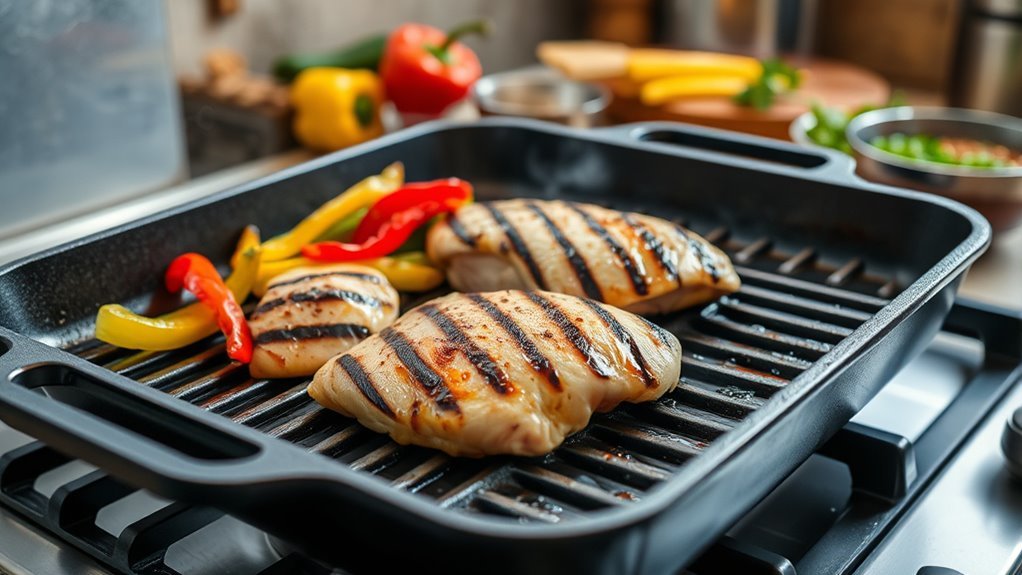
A grilling pan, also called a grill pan, is a stovetop pan with raised ridges across the cooking surface that gives food grill-style sear marks and lets fat run into the grooves. The words “grilling pan” and “grill pan” describe the same cookware. This page covers the definition, the main types, how to choose one, and how to use and clean it.
For what to cook, read what a grill pan is used for. For the honest pros and cons, see what grill pans are good for.
Grilling Pan Key Facts
| Question | Quick answer |
|---|---|
| What is it? | A ridged pan for searing food on the stovetop |
| Common shapes | Square, round, rectangular (stovetop griddle size) |
| Common materials | Cast iron, enameled cast iron, nonstick aluminum, stainless steel |
| Cooktops | Gas and electric; induction only with a magnetic base |
| Oven use | Often yes for cast iron; check the maker’s rating |
| Main benefit | Sear marks and fat drainage indoors |
| Main drawback | Smoke and grooves that are harder to clean |
Types of Grilling Pans
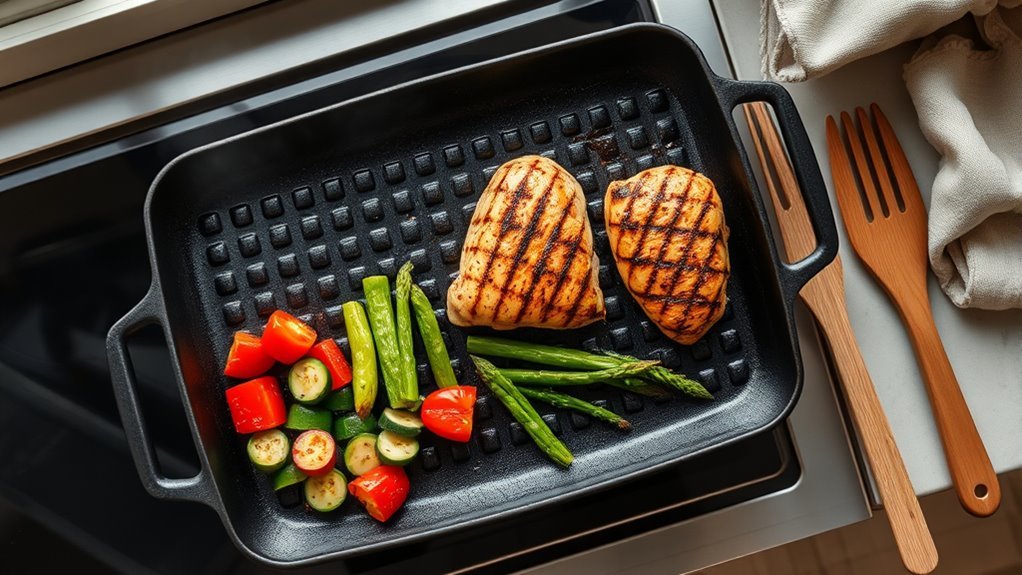
- Square grill pan: a common home size, easy to fit on a single burner, good for two portions.
- Round grill pan: a similar footprint to a skillet and handy for burners that suit round pans.
- Rectangular or stovetop griddle: spans two burners, offering more space for several steaks or vegetables.
- Reversible grill and griddle: one side ridged, one flat, so it also cooks pancakes and eggs.
- Grill pan with press: a weighted press flattens burgers, sandwiches and chicken for faster, better contact.
Grilling Pan Materials Compared
| Material | Strengths | Trade-offs |
|---|---|---|
| Cast iron | Excellent heat retention, strong sear, long life, usually oven-safe | Heavy; bare versions need seasoning |
| Enameled cast iron | No seasoning, easier cleaning | Enamel can chip; still heavy |
| Nonstick aluminum | Light, quick heating, easy cleanup | Coating wears; lower heat limit; may not work on induction |
| Stainless steel (clad) | No coating, durable | Food can stick |
Our guide to cast iron cookware explains the differences in more depth.
How to Choose a Grilling Pan
- Size: match it to your burner and your household. A pan that is much larger than your burner heats unevenly.
- Ridge height: taller ridges lift food higher and give deeper marks. Very low ridges act more like a flat pan.
- Spouts: a pour spout helps you drain fat.
- Handles: long, sturdy handles with a helper handle make heavy pans easier to lift.
- Cooktop fit: a flat, smooth base works best on glass and induction tops. Use a magnet test, as in how to tell if a pot is induction-ready.
- Oven rating: check the temperature limit for the pan and any handles.
- Weight and storage: think about how often you will lift and store it.
- Price: prices vary by material and brand. Compare specs, warranty and reviews on current listings.
How to Use a Grilling Pan
- Preheat over medium to medium-high until hot.
- Pat food dry and brush it with a thin coat of high smoke point oil.
- Place food on the ridges and leave it alone until it releases.
- Flip once, and rotate 90 degrees on the first side if you want crosshatch marks.
- Use a thermometer. USDA minimums include 165°F (74°C) for poultry and 160°F (71°C) for ground meat.
- Rest meat for a few minutes before serving.
Run your exhaust fan, because fat on hot ridges can smoke.
How to Clean and Store a Grilling Pan
- Clean while warm using a soft-bristle brush or non-scratch pad. Soak for a few minutes if food is stuck.
- Cast iron can be washed with a little mild soap. Dry it right away and wipe on a thin film of oil.
- Nonstick pans should avoid metal tools and abrasive scrubbers.
- Check the manufacturer’s care page before using a dishwasher. Even when allowed, hand washing helps most pans last longer.
- Store with a cloth or paper towel between stacked pans to prevent scratches.
Grilling Pan vs Skillet vs Griddle
| Pan | Surface | Best for |
|---|---|---|
| Grilling pan | Ridged | Grill marks, fat drainage, steaks, chicken, vegetables |
| Skillet | Flat | All-round frying, eggs, even browning |
| Griddle | Large and flat | Pancakes, sandwiches, many items at once |
If you are unsure how these pans fit into a kitchen, see the difference between pots and pans.
Frequently Asked Questions
Is a grilling pan the same as a grill pan?
Yes. Grilling pan and grill pan are two names for the same stovetop cookware with raised ridges that leave sear marks on food. Product listings may use either term, and some models are sold as reversible grill and griddle pans with one ridged side and one flat side.
What is the difference between a grill pan and a regular pan?
A grill pan has raised ridges that lift food off the surface, leave grill marks and let fat drain into grooves. A regular pan is flat, so food browns evenly across the surface and sits in its own juices or oil instead.
Can you use a grilling pan on an induction cooktop?
Only if the base is magnetic. Cast iron and magnetic stainless steel work on induction, while plain aluminum does not unless it has a magnetic plate in the base. Check the product details and test with a magnet. Flat, smooth bases sit best on glass or induction surfaces.
What can you cook in a grilling pan?
Steaks, chops, chicken, burgers, sausages, fish fillets, shrimp, zucchini, peppers, asparagus, halloumi, tofu, sandwiches and fruit slices all work well. Thick, quick-cooking foods that benefit from sear marks suit the pan best, while small or loose foods may fall through.
Conclusion
A grilling pan is a ridged stovetop pan that gives food sear marks and lets fat drain. Choose the material, size and cooktop fit that match your kitchen, preheat well, and clean it while warm.
