
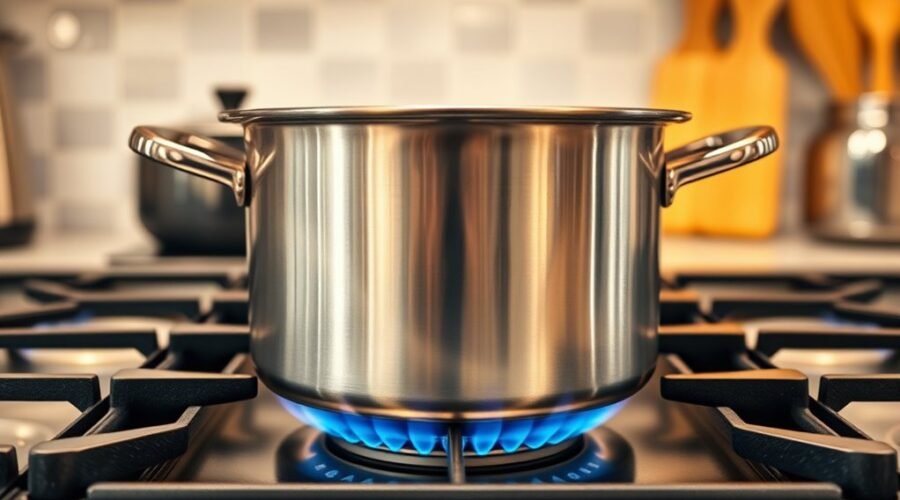
Imagine trying to use a high-performance sports car on a winding country road; it may not be the ideal setting for its capabilities. Similarly, you might wonder if induction pots, designed for specific heating methods, can work on a gas stove. While these pots can indeed be used, understanding the materials and properties involved is essential for ideal cooking results. What exactly makes cookware compatible, and how can you guarantee you’re using it effectively?
Why Induction Pots Aren’t Compatible With Gas Stoves
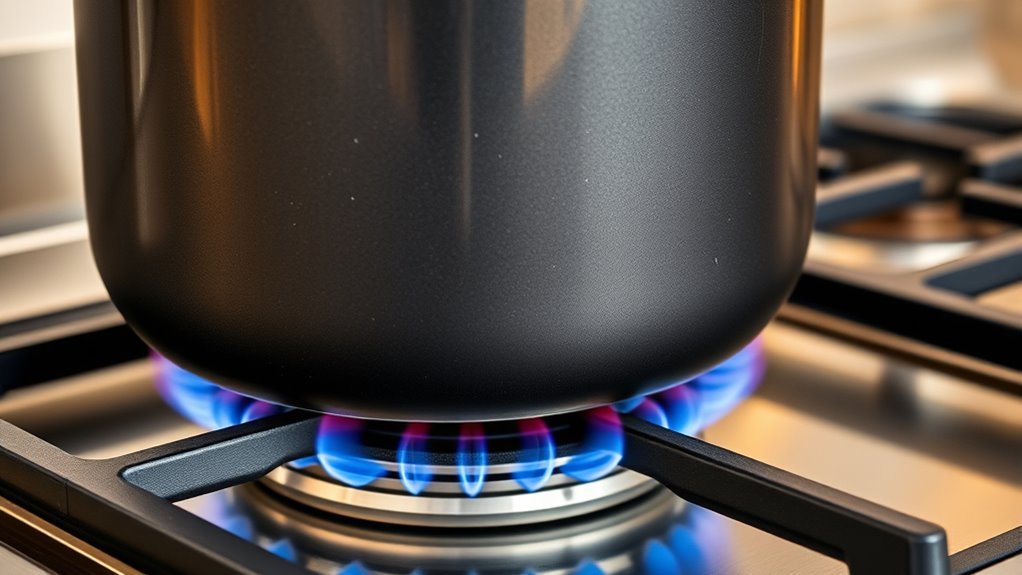
Induction pots aren’t compatible with gas stoves because they rely on magnetic fields to generate heat, a process that gas stoves simply can’t provide.
These induction pots are crafted from ferrous metals designed to respond to magnetic cookware, making them ineffective on gas burners, which heat around the pot rather than directly. This leads to inefficient cooking, as the flames can’t adequately transfer heat to the pot’s flat bottom, resulting in uneven cooking and longer cooking times.
Induction pots, made from ferrous metals, are ineffective on gas burners, leading to uneven cooking and longer preparation times.
Moreover, the thermal properties of induction pots differ considerably from those designed for gas.
Using them on a gas stove can cause warping or damage over time due to the inconsistent heat application.
If you’re aiming for liberation in your cooking experience, understanding this incompatibility is essential.
Embrace cookware that aligns with your stove type for ideal performance and delicious results, avoiding the frustrations of mismatched cooking technology.
Understanding Induction Cooking: How It Works
While many people are familiar with traditional cooking methods, understanding how induction cooking works can truly transform your culinary experience. Induction cooktops use electromagnetic energy to generate heat directly in compatible cookware, such as stainless steel or cast iron. This process relies on a magnetic field created by the cooktop, making it noticeably faster than gas cooking—boiling water up to 50% faster.
Additionally, induction cooktops feature a smooth ceramic glass surface that stays cool to the touch, enhancing safety. Their thermal efficiency is impressive, at approximately 93%, compared to just 50-60% for gas stoves, leading to lower energy consumption.
| Feature | Induction Cooking | Traditional Gas Cooking |
|---|---|---|
| Heat Source | Magnetic Field | Open Flame |
| Speed of Cooking | Up to 50% faster | Slower |
| Safety | Cool Surface | Risk of Burns |
Choosing the right cookware is essential for peak performance.
The Science Behind Induction Cookware: Magnetic Properties Explained
Understanding the magnetic properties of induction cookware reveals why it works so efficiently on induction cooktops. Made from ferrous metals like cast iron or stainless steel, this cookware interacts seamlessly with the magnetic field generated by the cooktops.
Here’s what you need to know:
- Eddy currents generate heat directly in the pot, enhancing cooking efficiency.
- Induction cookware converts 85-90% of energy into heat, considerably reducing cooking times.
- Non-magnetic materials such as aluminum, copper, and glass won’t work, as they don’t respond to the magnetic field.
- A flat, smooth bottom is essential for proper contact, maximizing energy transfer.
- The rapid heating process means less heat wasted and faster meals.
With these properties, induction cookware stands out for its remarkable cooking efficiency, making it a smart choice for modern kitchens.
Embrace the science and enjoy the benefits of quicker, more effective cooking.
Comparing Cooking Methods: Gas vs. Induction
When it comes to choosing between gas and induction cooking methods, it’s important to evaluate how each technology impacts efficiency and performance.
Gas stoves provide instant heat control, making them a favorite among many chefs. However, they lose 40-55% of energy to the surrounding air, leading to higher operational costs.
Gas stoves offer instant heat control, but they waste 40-55% of energy, increasing operational costs.
In contrast, induction cooktops heat cookware directly through electromagnetic energy, converting 85-90% of energy into heat, which enhances energy efficiency and comfort in your kitchen.
Induction cooktops can boil water up to 50% faster than gas, markedly cutting cooking times.
Plus, their safety features—like no open flames and automatic shut-off—reduce the risks of burns and fires, unlike gas stoves.
While both cooking methods have their merits, understanding these differences can help you make an informed choice that aligns with your cooking style and priorities.
Why Induction Cookware Is Better Than Traditional Options
Induction cookware stands out as a superior choice compared to traditional options, especially when considering its numerous advantages.
You’ll appreciate how induction cookware enhances your cooking experience with:
- Energy Efficiency: With about 93% thermal efficiency, it considerably reduces energy costs.
- Faster Cooking: It can boil water up to 50% faster than gas cookware, saving you time.
- Safety Features: The cooking surface stays cooler, minimizing burn risks associated with open flames.
- Cleaner Cooking Environment: It eliminates harmful emissions like carbon monoxide, improving indoor air quality.
- Compatibility with Modern Technology: Induction cookware offers precise temperature control, allowing for more accurate cooking.
What People Get Wrong About Induction Cooking
What misconceptions do you have about induction cooking? Many think all cookware can be used on induction cooktops, but only pots made from ferrous materials like cast iron and certain stainless steels are compatible.
You don’t need to buy special pots; existing cookware can work if it has a magnetic base, simplifying your shift.
Some believe induction can’t compete with gas stoves, yet it heats pots up to 50% quicker, delivering efficient cooking.
Plus, the smooth glass surface of induction cooktops is a breeze to clean compared to gas stoves, which trap food debris.
Safety is often a concern, but induction cooking eliminates open flames, greatly reducing fire risks.
Many models even feature automatic shut-off for added peace of mind.
Embracing induction means enjoying fast cooking and a safer kitchen environment without the hassle of traditional methods.
Identifying Induction-Compatible Cookware
To guarantee your cooking experience is seamless, it’s essential to identify cookware that works with induction cooktops.
Induction-compatible cookware must be made from ferrous materials, like cast iron or stainless steel, which interact with the magnetic properties of induction cooktops.
Here are key points to take into account:
- Use a magnet test: If it sticks, it’s compatible.
- Look for a flat-bottomed pot to guarantee efficient contact with the cooking surface.
- Avoid non-magnetic materials like aluminum, glass, or copper.
- Check for labels or symbols indicating induction compatibility.
- Take note of the thickness of the cookware; thicker pots often perform better.
Transitioning From Gas to Induction: Practical Tips
Switching from gas to induction cooking can feel challenging, especially when it comes to ensuring your kitchen is ready for the change.
First, check your induction cookware for compatibility—only pots and pans made from ferrous metals like cast iron or certain stainless steels will work. This is essential to avoid unexpected upfront costs.
Next, consider that your kitchen may need electrical upgrades; induction cooktops often require 220V, while standard outlets support only 120V. Hiring a professional for installation is recommended to navigate these upgrades safely and efficiently.
Your kitchen may require electrical upgrades for induction cooking; consider hiring a professional for safe installation.
Finally, adapt your cooking techniques; induction offers precise temperature control, which can enhance your cooking efficiency.
Embrace this shift as a chance to lower your electricity bills and explore new culinary possibilities. With the right preparation, you’ll enjoy the benefits of induction cooking in no time.
Frequently Asked Questions About Induction Cookware Compatibility?
Curious about whether your cookware is compatible with induction cooktops? Understanding induction cookware can clarify your options. Here are some key points to take into account:
- Induction cookware must be made of ferrous metals like cast iron or magnetic stainless steel to work on induction cooktops.
- You can safely use these pots and pans on gas stoves without compromising their performance.
- To check if your cookware is induction-compatible, simply use a magnet; if it sticks, you’re good to go!
- Non-magnetic materials, such as aluminum or glass, won’t work on induction but are fine for gas cooking.
- While induction cookware heats quickly on induction stoves, it performs normally on gas, utilizing the flame instead of electromagnetic induction.
Frequently Asked Questions
Do Chefs Prefer Induction Over Gas?
Chefs often find themselves in the induction efficiency debate versus gas stove tradition. While induction offers superior cooking speed and heat distribution, many chefs prefer gas for its ability to handle culinary technique variations, like charring.
Energy consumption differences also play a role in preferences, as induction can be more efficient. Ultimately, chef preferences reflect a blend of practicality and tradition, as each method has unique advantages that influence their cooking experiences.
What Are the Disadvantages of an Induction Cooker?
Induction cookers come with significant disadvantages. You might face issues with cookware compatibility, since only magnetic pots work.
While they boast induction efficiency and cooking speed, their reliance on electricity means you’re out of luck during power outages.
Plus, the initial investment can be steep, and energy consumption, though lower long-term, may require upgrades to your electrical system.
User experience can also suffer; digital controls often feel less intuitive than traditional gas knobs.
What Kind of Pots Can You Use on a Gas Stove?
You can use a variety of pots on a gas stove, including cast iron, stainless steel, aluminum cookware, and copper pots. Each offers unique benefits—cast iron retains heat well, while stainless steel provides durability.
Non-stick pans are also suitable, but handle them carefully to avoid damaging the coating.
Verify your cookware has a flat bottom for even heat distribution and good heat conductivity, preventing warping and guaranteeing efficient cooking.
Can I Use an Induction Pan on a Gas Stove?
Yes, you can use an induction pan on a gas stove. Notably, induction cookware can heat up 50% faster than traditional methods.
While the pan’s magnetic material guarantees compatibility with induction technology, it won’t utilize that on gas. You might experience differences in heat distribution efficiency, leading to uneven cooking.
However, the smooth base enhances contact, so you’ll still enjoy good cooking performance. Just remember, safety is key with any stove type!
Conclusion
So, you thought induction pots were off-limits for gas stoves, right? Ironically, they work just fine as long as they’re made from ferrous materials. While gas cooking might seem traditional, embracing induction cookware can elevate your culinary experience. It’s a shame to overlook the efficiency and speed they offer, even on an old-school flame. Don’t let misconceptions hold you back—your induction pot could be the secret ingredient you didn’t know you needed for your gas adventures!