
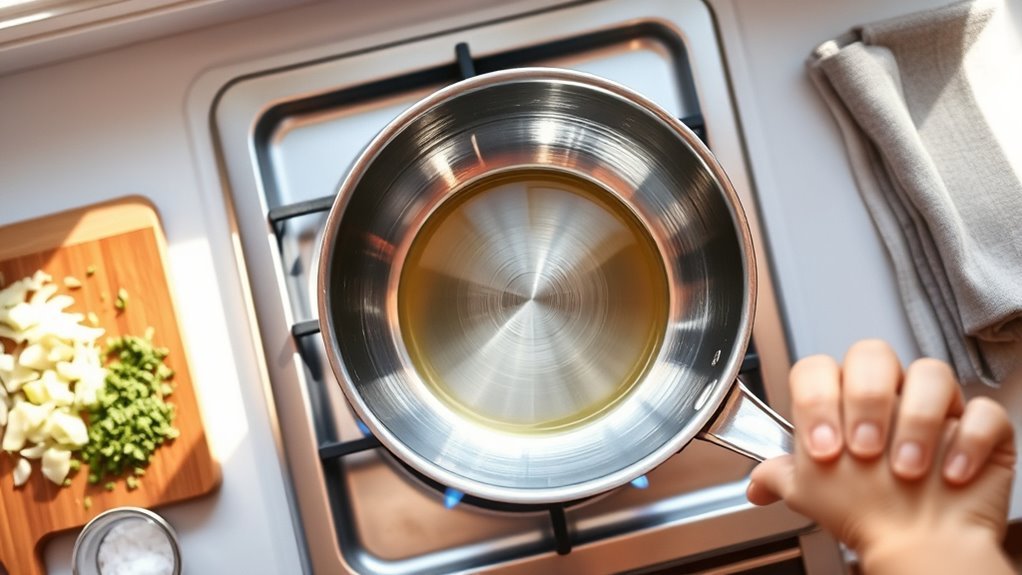
Cooking with a stainless steel pan can elevate your culinary skills, but it requires the right approach. You need to master preheating, oil selection, and cooking techniques to guarantee your food releases easily and cooks evenly. Many home cooks struggle with these details, leading to frustration and sticking. By understanding the essential methods and common pitfalls, you’ll access the full potential of your stainless steel cookware. Ready to find out how?
How to Perfectly Preheat Your Stainless Steel Pan
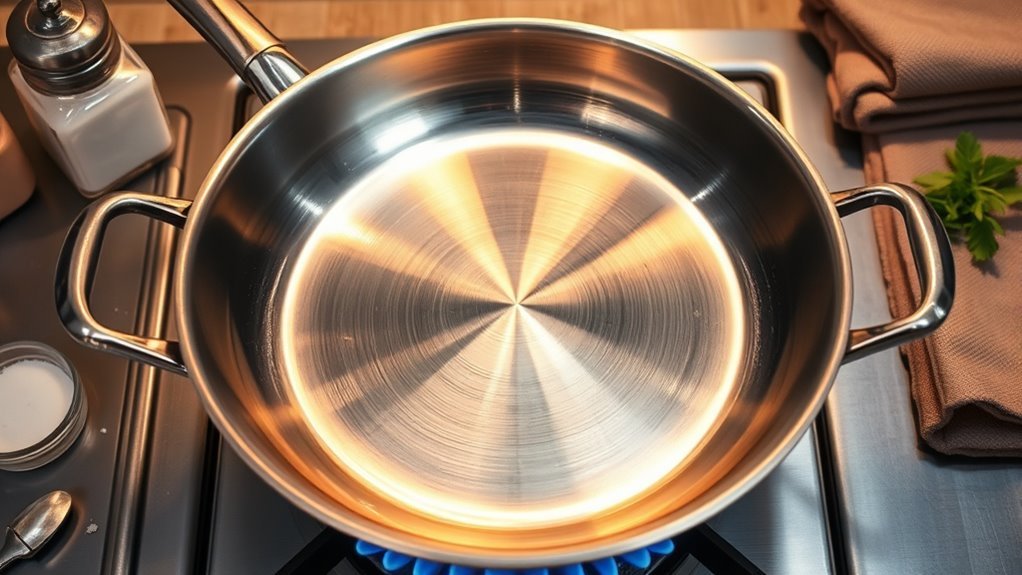
How can you guarantee your stainless steel pan is perfectly preheated for cooking? Start by heating your pan on medium-high for several minutes.
Patience is key here; this allows for even heat distribution, ensuring your food cooks consistently. To test the pan’s readiness, sprinkle a few drops of water onto the surface.
If the droplets dance and move freely, your pan is ready. However, if they stay compact and boil, it means the pan is still too cool, which can lead to sticking.
When the temperature’s just right, add a small amount of oil for ideal pan preparation. This step helps create a non-stick surface, enhancing your cooking experience.
How to Use the Water Test for Perfect Temperature?
Wondering how to guarantee your stainless steel pan is at the ideal temperature for cooking? The water test is an effective method for cooking surface analysis.
Discover the water test to ensure your stainless steel pan is perfectly prepped for cooking.
Simply sprinkle a few drops of water onto the pan. If the droplets boil and stay compact, the pan’s too cool for cooking.
When you see the water droplet behavior change, with droplets moving freely and dancing around, your pan has reached that ideal cooking temperature.
As it heats further, the droplets will merge into a single droplet, signaling that it’s time to add your food.
This technique guarantees even heat distribution, helping to prevent sticking and allowing you to achieve perfectly cooked meals.
Using this straightforward water test, you can liberate yourself from guesswork and confidently master your stainless steel cooking experience.
Choosing Oil for Stainless Steel Cooking
After ensuring your stainless steel pan is at the perfect temperature with the water test, it’s time to focus on the oil you’ll use for cooking.
Opt for oils with high smoke points, like canola, grapeseed, or avocado oil, to prevent burning and enhance your cooking performance. A small amount of oil or a spray oil helps achieve even coverage without excessive greasiness.
Consider the oil flavoring; neutral oils work well for most dishes, but flavored oils can elevate specific recipes.
Always preheat your pan before adding oil, allowing it to spread evenly and create a non-stick surface. Wait until the oil shimmers before adding food, which indicates it’s at the ideal temperature for cooking and minimizes sticking.
Essential Techniques for Non-Stick Cooking
To cook effectively with a stainless steel pan, mastering a few essential techniques is key.
Start by preheating your pan to the right temperature, then apply a light layer of oil for a non-stick effect.
Finally, let your food solidify before moving it, ensuring a perfect sear and effortless release.
Optimal Pan Temperature
How can you tell when your stainless steel pan is ready for cooking? Use the water droplet test. When droplets dance and glide across the surface, your pan has reached the ideal temperature.
If they remain compact, the pan’s too cool, risking food sticking due to poor heat retention. Once the droplets spread out, it indicates even heat distribution, vital for effective cooking.
Proper temperature management is important; cooking at too low a temperature leads to uneven results and sticking. By achieving and maintaining the right temperature, you enhance the texture and flavor of your dishes.
Proper Oil Application
Once your stainless steel pan is heated to the right temperature, the next step is applying oil correctly for ideal cooking.
Use a spray technique to apply a thin, even layer of oil, ensuring you have better control over the amount used. Wait until the pan is hot enough that water droplets dance before adding the oil; this enhances its non-stick properties.
Just coat the bottom of the pan; too much oil can make your food greasy and dull its flavor.
Allow your food to set briefly in the pan before moving it, as this helps develop a natural crust that further aids in non-stick performance.
Mastering oil application is key to liberating your cooking experience!
Food Solidification Technique
While cooking with a stainless steel pan, mastering the food solidification technique is crucial for achieving that perfect sear and preventing sticking.
Here’s how you can guarantee the best food release and develop a flavorful protein crust:
- Preheat the Pan: Heat it until water droplets dance on the surface.
- Use Oil: Apply a small amount of oil, ideally with a spray, to avoid excess greasiness.
- Be Patient: Allow the food to sit undisturbed; resist the urge to move it too early.
- Focus on Timing: Wait a few minutes for proteins like meat and fish to solidify and form a crust.
With a little patience, you’ll enjoy a delicious, perfectly cooked meal without the hassle of sticking.
Common Pitfalls When Cooking With Stainless Steel
When cooking with stainless steel, improper temperature control and excessive oil usage can lead to frustrating results.
If the pan isn’t hot enough, food sticks, while too much oil can turn your dish greasy.
Mastering these aspects is key to achieving that perfect sear and flavor.
Improper Temperature Control
Improper temperature control is one of the most common pitfalls when cooking with stainless steel pans, and it can lead to frustrating results.
Mastering heat distribution and temperature regulation is key. Here are some tips to avoid mishaps:
- Don’t Cook Too Low: Low heat causes food to stick as proteins bond with the pan.
- Avoid Overheating: High temperatures can burn food quickly, resulting in uneven cooking.
- Test the Temperature: Use water droplets; they should move freely and coalesce when the pan’s ready.
- Let Food Solidify: Allow proteins to form a crust before moving to prevent tearing.
Excessive Oil Usage
Mastering temperature control isn’t the only challenge in cooking with stainless steel pans; excessive oil usage can also undermine your efforts.
Using too much oil leads to uneven cooking and a greasy texture, making it hard to achieve that perfect sear. Instead, consider a small amount of spray oil for better oil distribution, allowing for effective non-stick properties without overpowering your dish.
Proper oil application enhances flavor and texture, while an oily pan can create a barrier that hinders browning and caramelization.
Remember to let the oil heat up before adding food; otherwise, your ingredients might slide around, disrupting cooking consistency.
Consistency matters, so avoid excessive oil to maintain your pan’s performance and ease of cleaning.
Resources for Enhancing Your Cooking Skills
To elevate your cooking skills, tapping into a variety of resources can make all the difference. Here are some effective ways to enhance your culinary journey:
- Online Classes: Enroll in courses that focus on stainless steel techniques, providing hands-on learning and direct feedback.
- Cooking Forums: Join communities where seasoned cooks share tips and personal experiences, making your learning process interactive.
- Video Tutorials: Explore cooking channels that demonstrate essential techniques for using stainless steel pans, helping you visualize proper methods.
- Cookbooks: Invest in cookbooks that explore the specifics of stainless steel cookware, offering insights on temperature control and oil application.
Frequently Asked Questions
How Do I Keep Food From Sticking to My Stainless Steel Pans?
To keep food from sticking to your stainless steel pans, start by preheating the pan until water droplets move freely.
Use a small amount of fat, like spray oil, for a non-stick surface.
Allow your food to solidify before moving it; this is key for achieving that perfect sear.
Patience is essential—resist stirring too early.
These cooking techniques will enhance your food preparation and guarantee a smooth cooking experience.
Enjoy your culinary freedom!
Do I Need to Put Oil in a Stainless Steel Pan?
Absolutely, you need to put oil in a stainless steel pan.
Think of oil as the magic elixir that transforms your cooking surface. It helps in pan seasoning, creating a barrier that keeps food from sticking.
Heat your oil until it shimmers, embracing those cooking temperatures for ideal results. Just a drizzle’s enough—too much can make your dish greasy.
How Do You Break in a New Stainless Steel Pan?
To break in your new stainless steel pan, start by washing it with warm, soapy water.
Preheat it over medium heat until water droplets dance on the surface.
Apply a bit of oil to create a non-stick layer.
As you cook, let food sear before moving it, using these seasoning techniques to develop that natural non-stick surface.
Regular pan maintenance will keep it in top shape, enhancing your cooking experience.
What Should I Not Cook in a Stainless Steel Pan?
You should avoid cooking delicate foods like eggs and fish in stainless steel pans, as they can stick and tear easily.
Curiously, about 70% of home cooks prefer non-stick alternatives for these items.
Strong cooking acids, like tomatoes, can react with the pan, negatively affecting flavor.
Also, steer clear of sticky ingredients like sugar; they can caramelize quickly, making cleanup a hassle.
Focus on foods that can sear well without constant flipping.
Conclusion
Cooking with a stainless steel pan can seem intimidating, but mastering it reveals a world of culinary possibilities. As you perfect your technique, you’ll discover the joy of creating beautifully seared dishes that release effortlessly. But remember, one misstep can lead to disaster. Will you take the plunge, embrace the challenge, and elevate your cooking game? The choice is yours—dare to conquer the stainless steel pan and unveil the secrets waiting just beneath its shiny surface.
