
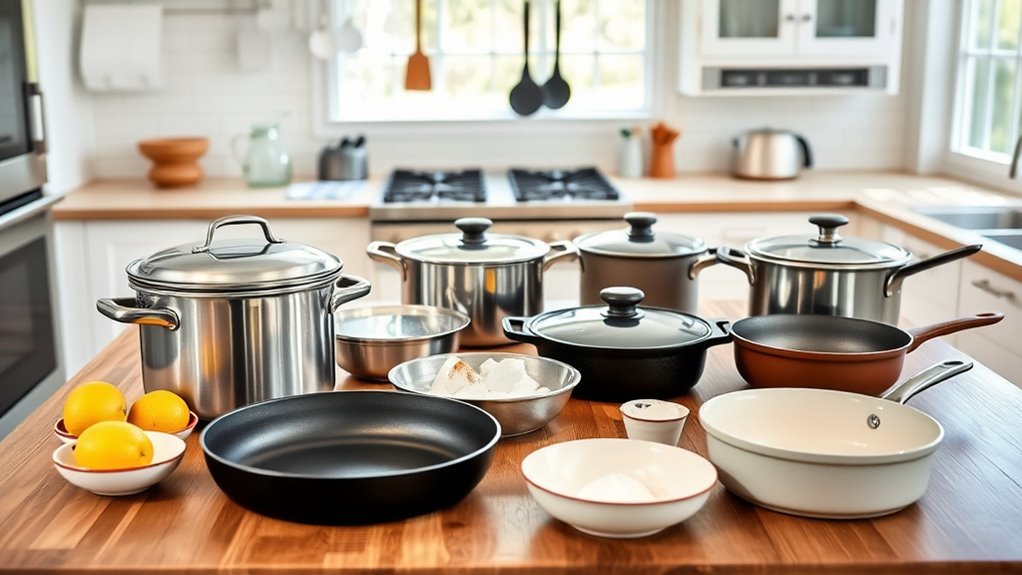
About 70% of home cooks worry that their pans leach chemicals into food, so choosing non‑toxic cookware matters more than aesthetics. You’ll want materials like stainless, cast iron, or hard‑anodized aluminum and to avoid PFAS/PFOA/PTFE risks, but there are tradeoffs in heat performance, maintenance, and cooktop compatibility. I’ll outline the key features, durable options, and practical buying checks to help you pick cookware that’s safe and built to last — starting with materials.
Best Non-Toxic Cookware Materials: Stainless, Carbon Steel, Hard‑Anodized, Cast Iron
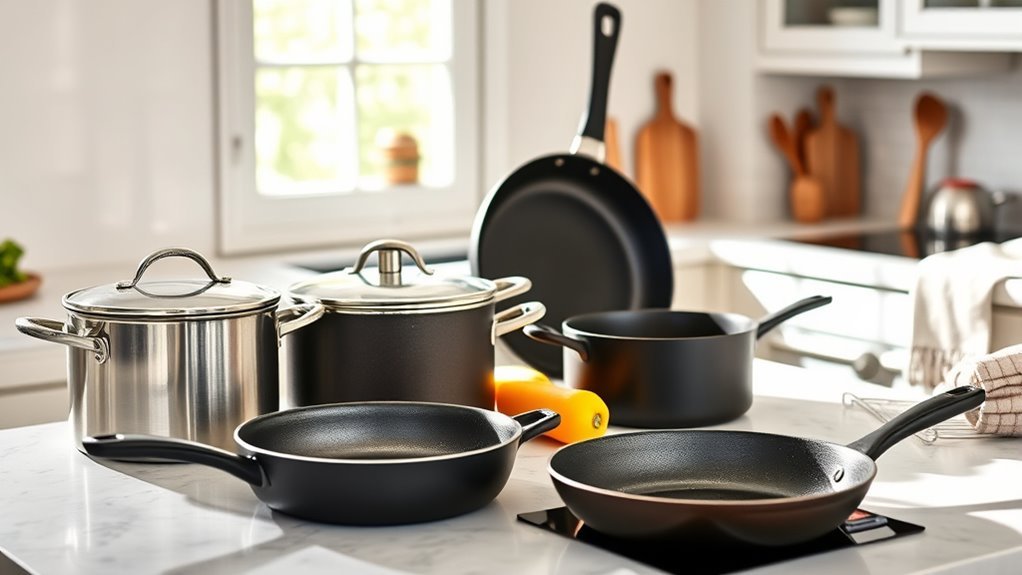
When you want cookware that’s safe, durable, and versatile, choose materials that won’t leach or break down with normal use: stainless steel, carbon steel, hard‑anodized aluminum, and cast iron each deliver reliable, non‑toxic performance.
You’ll pick stainless steel for its resistance to scratching, even heating, and proven inertness—it won’t leach chemicals and stands up to daily use, so you can cook confidently.
Choose carbon steel if you want a lighter, high‑heat workhorse that, when seasoned, builds a natural nonstick surface and rewards maintenance with greater control and longevity.
Choose carbon steel for a lighter, high‑heat workhorse that seasons into a durable, natural nonstick surface.
Hard‑anodized aluminum gives you a treated, nonreactive finish that resists wear better than raw aluminum, offering durability without reactivity.
Cast iron keeps heat exceptionally well and works across stovetop and oven, though it needs regular seasoning to maintain its nonstick layer.
Each option supports practical, empowered cooking—pick the one that matches your routine, maintenance willingness, and heat needs.
Why PFAS, PFOA, and PTFE Matter for Non‑Toxic Cookware
Because these chemicals stick around in the environment and in our bodies, you should care about PFAS (including PFOA and PTFE) when choosing non‑toxic cookware.
You want cookware that doesn’t trade convenience for long‑term harm: PFAS have been tied to hormonal disruption and fertility issues, and while PFOA was largely phased out of Teflon after 2013, many replacement PFAS still raise concerns.
You can push back by demanding transparency and choosing pieces that guarantee PFAS‑free construction. Avoid non-stick cookware labeled only as “PTFE” or vague about ingredients; seek clear certifications or manufacturer testing showing no PFAS/PFOA/PTFE.
Public pressure is working—consumer demand has driven safer options and better labeling—so your choices matter. Selecting verified PFAS‑free cookware reduces your body burden and supports a market shift toward cleaner, longer‑lasting cookware that aligns with your values of health, autonomy, and environmental justice.
Choosing a Non‑Stick Coating: Ceramic vs. Titanium/Diamond vs. PTFE Alternatives
When you compare ceramic, titanium/diamond, and PTFE-based alternatives, focus on trade-offs between safety, durability, and maintenance.
Ceramic coatings are PFAS-free and user-friendly but can wear faster, while titanium or diamond-reinforced surfaces offer superior scratch resistance and longer life.
If you’re uneasy about PTFE despite PFOA phase-out, consider modern non-PTFE options that balance non-stick performance with lower chemical concerns.
Ceramic Coating Pros/Cons
Curious which non‑stick coating best fits your kitchen habits?
Ceramic coatings offer a PFAS-free non-stick coating that reduces exposure to chemicals found in traditional PTFE options, so you can cook with more confidence. They distribute heat well and clean up easily with less oil, freeing you from greasy pans.
However, they’re softer than titanium or diamond-reinforced alternatives: expect more scratching, chipping, and gradual loss of non-stick performance with heavy use.
To keep them working, hand wash, avoid high heat, and use gentle utensils—small habits that protect your freedom to cook how you like.
If you need long-term toughness for daily heavy-duty cooking, ceramic’s tradeoffs may push you toward harder coatings.
Titanium/Diamond Durability
If you want cookware that stands up to heavy use, titanium- and diamond-reinforced coatings deliver noticeably greater scratch resistance and durability than most ceramic or traditional PTFE surfaces. You’ll get longer-lasting non-stick performance and reliable heat distribution, so dishes cook evenly and you waste less energy.
- Titanium offers strong heat conductivity for even cooking.
- Diamond-infused layers boost scratch resistance and longevity.
- Both resist wear better than many ceramic coatings.
- Look for certified absence of harmful chemicals when buying.
- Verify manufacturer testing for durability and non-stick retention.
Choose titanium or diamond when you want resilient, high-performance pans that free you from frequent replacements.
Prioritize brands that prove non-toxic claims and durability to protect your kitchen and budget.
PTFE Alternative Options
Many cooks now look beyond PTFE for safer non-stick options, and choosing between ceramic, titanium- or diamond-reinforced coatings comes down to trade-offs in durability, safety, and care. You’ll find ceramic coatings are PFAS-free and feel liberating—safer by design but prone to scratches. Titanium and diamond reinforced coatings boost scratch resistance and longevity, often paired with thick bases for even heat distribution. Both types need gentle utensils and hand washing to last. They’re generally compatible with all stovetops, including induction, so you’re not boxed in. Use the table to weigh core differences and pick what fits your cooking values and habits.
| Feature | What to expect |
|---|---|
| Safety | PFAS-free ceramic coatings |
| Durability | Titanium and diamond reinforced coatings |
| Heat | Even with thick bases |
| Care | Hand wash, gentle tools |
Heat Performance: Base Thickness, Hot Spots, and Even Heat Distribution
Thicker, well-constructed bases make a tangible difference in how your cookware performs: they retain heat longer, cut down on hot spots, and give you more consistent results across the pan.
You want cookware that supports your freedom in the kitchen by delivering predictable, efficient heat so you can cook boldly and without fear.
- Look for substantial base thickness and multi-layered or encapsulated bases for reliable heat retention.
- Choose forged aluminum or tri-ply stainless steel for fast, even heat distribution and durability.
- Inspect pans regularly for warping or damage; a warped base creates new hot spots and ruins consistency.
- Prefer designs that spread heat uniformly to prevent burning and reduce the need for constant adjustments.
- Seek magnetic or induction-ready bases if you need rapid responsiveness and efficient energy transfer.
These choices give you control: consistent temperatures, fewer ruined dishes, and cookware that serves your liberated, intentional cooking style.
Cooktop Compatibility and Oven Limits (Gas, Electric, Induction, Temperatures)
Because your stove type dictates how cookware performs, you should check compatibility before buying: gas and electric work with most materials, while induction requires a magnetic base for fast, efficient heating. When cookware buying, confirm the type of pan suits your cooktop so you don’t get stuck with gear that won’t perform. Stainless steel and hard-anodized aluminum offer even heat across gas, electric, and—if magnetic—induction surfaces.
| Cooktop | Best materials | Notes |
|---|---|---|
| Gas | Stainless, hard-anodized | Open flame tolerates most metals |
| Electric | Stainless, aluminum | Flat bottoms help contact |
| Induction | Magnetic stainless, iron | Requires magnetic base |
Oven limits vary: stainless steel tolerates higher temperatures than ceramic or many non-stick coatings. Always check manufacturer temperature ratings to avoid coating breakdown or warping. Choose cookware that matches your stove and intended oven use so your kitchen tools support freedom in cooking, not constraints.
Durability and Care: Scratch Resistance, Utensils, and Cleaning Best Practices
Once you’ve matched cookware to your cooktop and oven needs, look closely at how you’ll use and maintain those pieces—proper care keeps coatings intact and extends life.
Choose pans with titanium or diamond-reinforced coatings for superior scratch resistance and long-term non-stick performance. Don’t undermine that investment with metal tools or rough cleaning.
- Use silicone, wooden, or heat-resistant plastic utensils to protect surfaces.
- Hand wash with mild detergent and a soft sponge; avoid abrasive pads.
- Stack pans thoughtfully, using cloth or dividers to prevent chipping.
- Inspect regularly for scratches or nicks; retire compromised pieces to stay safe.
- Prefer reinforced coatings (titanium/diamond) for durable non-stick resilience.
You deserve cookware that frees you, not binds you to constant replacement.
With intentional utensil choices, gentle cleaning, and mindful storage, you’ll preserve non-toxic surfaces, maintain scratch resistance, and keep your kitchen efficient and liberated for years.
Health‑Forward Features to Prioritize: Low‑Oil Cooking, Vented Lids, Cool‑Touch Handles
Choose cookware that supports low-oil cooking—nonstick surfaces and good heat distribution let you sauté and sear with minimal fat, lowering calories without sacrificing texture.
Use vented glass lids to release steam and maintain stable temperatures, which preserves flavor and prevents soggy results.
Together these features make healthier, safer meals easier to prepare and handle.
Low-Oil Cooking Techniques
When you want to cook healthier without sacrificing texture, low-oil cookware makes it easy by combining effective non-stick surfaces, vented lids, and cool-touch handles that support safer, more efficient techniques.
You can free yourself from heavy fats by using cookware engineered for low-oil cooking and even heat distribution, so food releases cleanly and browns without sticking.
- Preheat pan briefly on medium, then add minimal oil or spray.
- Use high-quality non-stick or titanium/diamond-reinforced surfaces for reliable release.
- Rely on even heat from a thick encapsulated base to cook at lower temps.
- Stir or flip with silicone tools to protect coatings and maintain performance.
- Keep handles cool-touch to move pans confidently and prevent accidents.
These steps give you practical control and healthier results.
Vented Lids Benefits
A vented lid gives you the control to cook with less oil while avoiding messy spills, because its steam-release port prevents pressure buildup and lets excess moisture escape so foods brown and crisp more effectively.
When you choose pots or pans with vented lids, you get safer, low-oil cooking that preserves texture and flavor; steam release reduces splatters and promotes even cooking by balancing retained heat with moisture loss.
Look for snug-fitting vented lids that still allow airflow — they help trap heat yet prevent sogginess. If lids have cool-touch handles, you can check and adjust food without risking burns.
Pair vented lids with high-quality non-stick surfaces to free yourself from heavy fats and regain confidence in healthier, precise meal preparation.
Budget and Lifecycle: Repair vs. Replace and Getting Value for Money
Although durable, non-toxic cookware still wears over time, so you should weigh upfront cost against likely lifespan to get the best value. You’ll balance budget and quality: a mid- to high-end cookware set may cost more now but often lasts longer, cutting replacement frequency and waste.
Check warranties and brand reputation as proxies for durability, and read reviews to verify real-world performance. Maintain pans—gentle cleaning and avoiding metal utensils—to extend life and delay replacement.
- Compare initial price vs. expected years of use to judge true cost per year.
- Prefer products with solid warranties or satisfaction guarantees.
- Inspect customer reviews for reports of longevity and failure modes.
- Choose materials known for durability to reduce replacement cycles.
- Practice proper care to keep cookware functional and safe longer.
You’re buying freedom from churn: invest in quality, protect it, and you’ll maximize value while reducing environmental and financial costs.
Quick Buying Checklist and Model‑Selection Tips (What to Compare Before You Buy)
Why not start with a short checklist so you can compare models efficiently and confidently? Use this compact Buying Guide to free yourself from guesswork: verify a complete PFAS-free guarantee (no PFOA/PTFE), prefer forged aluminum or stainless steel for durability and heat control, check thick encapsulated bases for even cooking, guarantee stovetop compatibility (including induction), and review user feedback plus warranty.
| Feature to Compare | Why it Matters |
|---|---|
| PFAS-free guarantee | Protects health; avoids chemical off-gassing |
| Material (aluminum/stainless) | Durability, heat conduction, non-stick performance |
| Base thickness/encapsulation | Prevents hot spots; improves energy use |
| Stovetop compatibility | Versatility across gas, electric, induction |
| Reviews & warranty | Real-world reliability; repair/replace clarity |
When you compare models, prioritize verified safety and proven construction over bells. Choose cookware that empowers you to cook confidently, sustainably, and without compromise.
Frequently Asked Questions
What Brand Is the Safest Non-Toxic Cookware?
The safest non-toxic cookware brands include GreenPan, Caraway, Scanpan, All-Clad, De Buyer, and Naturepan.
You’ll choose based on eco friendly materials, durable stainless steel or PFAS-free ceramic, and verified brand certifications.
Trust brands with third-party testing and recycled-material claims to limit toxins.
You’ll liberate yourself from harmful coatings by picking certified, long-lasting pieces that match your cooking needs and values.
What Are the Best Non-Toxic Cookware According to Consumer Reports?
Funny enough, Consumer Reports names stainless steel and cast iron as top non-toxic picks, with hard-anodized aluminum and PFAS-free ceramic close behind.
You’ll want eco friendly materials and thick bases for even heat distribution, so you cook cleaner and longer.
Trust tested ratings and PFAS-free guarantees, pick brands that score high for durability and nonstick performance, and you’ll free yourself from worry while cooking safer, smarter meals.
Which Pans to Stay Away From?
Stay away from older Teflon and PTFE non-stick pans, aluminum cookware without secure coatings, and vague “non-stick” labeled products.
Don’t trust older ceramic coatings that may contain PFAS. Prefer stainless steel or verified ceramic coatings with clear safety testing.
You’ll protect your health and cooking freedom by choosing pans with transparent materials, avoiding overheating, and rejecting unverified brands that won’t disclose manufacturing or chemical safety.
What Should I Look for When Buying a Non-Stick Pan?
Think of your pan as a shield—choose eco friendly materials with a full PFAS-free guarantee, and you’ll protect your kitchen and health.
Look for titanium or diamond-reinforced coatings for scratch resistance and lasting non-stick performance.
Pick a thick encapsulated base for even heat resistance and fewer hot spots.
Guarantee induction compatibility, read user reviews, and favor brands offering solid warranties so you’re empowered and secure in your choice.
Conclusion
Think of your kitchen like a lab: choose stainless, cast iron, carbon steel, or hard‑anodized pieces that don’t off‑gas and sit flat on the flame. Pick PFAS‑free, thick‑based pans to spread heat evenly and avoid hot spots; prefer vented lids and cool‑touch handles for safer, calmer cooking. Match cookware to your cooktop, follow care instructions, and weigh repairability versus replacement—so your tools stay reliable, healthy, and ready when you need them.
