

A picture of a pan usually shows a round, shallow metal vessel with a flat bottom, low sides and one long handle sticking out from the rim. That is the classic frying pan or skillet. If your pan looks different, such as deeper, ridged or rectangular, it is probably another type of pan.
This guide describes what each common pan looks like in words, so you can identify the pan in your photo or choose the one you want. It also covers what a good pan should look like when you buy it and when an older one is worn out.
What a Basic Pan Looks Like
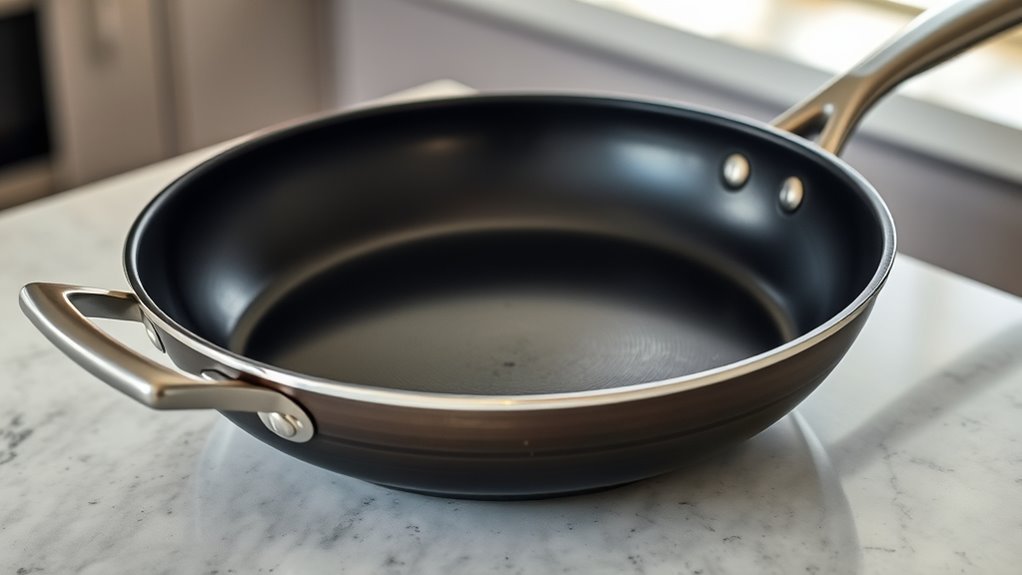
Every pan has the same basic parts:
- Cooking surface: the flat interior base where food touches the metal or coating.
- Sidewalls: low walls, usually 1.5 to 3 inches high, that are either flared outward or straight.
- Rim: the top edge, often with a slight curve or pouring lip.
- Long handle: attached with rivets or welded on, sometimes with a hole for hanging.
- Helper handle: a short loop opposite the main handle on larger pans, for lifting.
- Base: the flat bottom that sits on the burner. On induction-ready pans it is magnetic.
How to Tell Types of Pans Apart
| Pan | What it looks like | Usual use |
|---|---|---|
| Frying pan or skillet | Round, flared, sloping sides, one long handle | Frying, searing, eggs |
| Sauté pan | Round, straight vertical sides, often with a lid and a helper handle | Sautéing, braising, reducing sauces |
| Saucepan | Small, deeper, straight sides, one long handle and lid | Sauces, rice, small amounts of liquid |
| Saucier | Rounded, bowl-like bottom with no corner | Whisking sauces, risotto |
| Grill pan | Ridges on the cooking surface, often square or round | Grill marks indoors |
| Griddle pan | Flat with very low or no sides | Pancakes, flatbreads |
| Wok | Deep, bowl-shaped, sloped sides, often a rounded or small flat base | Stir-frying |
| Roasting pan | Large rectangle with tall sides and two handles | Roasting meats |
| Sheet pan | Flat rectangle with a shallow rim | Baking and roasting |
What Does a Skillet Look Like?
A skillet is the classic pan you see in most pictures. It is round, with a flat bottom and flared walls that angle outward, so you can slide a spatula under food. It has a single long handle. A cast iron skillet looks black and heavy, often with a small helper handle. A stainless skillet is silver, and a nonstick skillet has a dark gray or black interior. Learn more in what a cast iron skillet is.
Pan Sizes You Will See
Pan size is usually measured across the top rim, not the flat cooking surface. A 10 inch pan has a flat base closer to 7 or 8 inches wide. Common sizes are:
- 8 inch: small, for one egg or omelet.
- 10 inch: the all-purpose size for one or two people.
- 12 inch: large, for family meals and batch cooking.
Our guide to which pan sizes you need explains how to choose.
What a Good Pan Should Look Like
When you pick a pan, look for these signs of quality:
- Flat bottom. Set it on a counter. It should not rock. A warped base heats unevenly and spins on glass stovetops.
- Solid handle. Rivets or welds should be tight, with no wobble.
- Even surface. No bubbles, blisters or flaking in the coating or enamel.
- Substantial base. It should feel thick enough that it will not bend. Clad pans show layered metal edges.
- Sensible weight. You should be able to lift it with one hand when full.
When a Pan Looks Worn Out
- The nonstick coating is scratched deeply, flaking or peeling. Replace the pan.
- The base is warped and rocks on a flat surface.
- The handle is loose or cracked.
- Rust or pitting has formed on carbon steel or cast iron. Light rust can be scrubbed off and re-seasoned; see how to care for a cast iron pan.
Which Pan Should You Choose?
If you want one pan, buy a 10 to 12 inch skillet. Choose stainless steel for searing and sauces, nonstick for eggs, or cast iron for heat retention. Check that the handle and lid can handle the oven temperature you plan to use, and compare shapes in our guide to the difference between pots and pans.
Frequently Asked Questions
What does a pan look like?
A pan is a shallow, round cooking vessel with a flat bottom, low sides and one long handle. Frying pans have flared sides, sauté pans have straight sides, and saucepans are deeper. Some pans are rectangular, like roasting pans and sheet pans.
What should I look for in a pan?
Look for a flat, even base, a sturdy handle, a smooth surface without flaking, a weight you can handle and compatibility with your stove. Check the manufacturer’s oven rating if you plan to use it in the oven.
What are the different shapes of pans?
Pans come in round, square and rectangular shapes. Round pans include skillets, sauté pans, saucepans and woks. Square pans include many grill pans, and rectangular pans include roasting pans and sheet pans.
What does a skillet pan look like?
A skillet is round with a flat bottom, sloped sides that flare outward and one long handle. The sloped sides make flipping and sliding food out easier. It may be cast iron, stainless steel or nonstick.
Conclusion
A standard pan is round and shallow with one long handle, but the exact look depends on the type: flared for a skillet, straight for a sauté pan, ridged for a grill pan. Look at the sides, handle and size, and you can identify or choose the right pan.
