
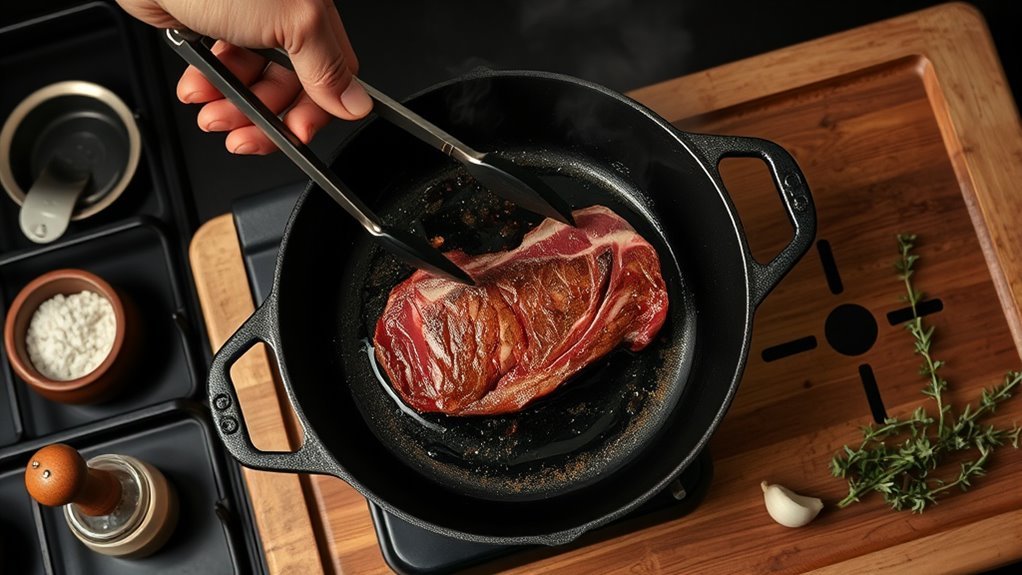
A cast iron skillet is like a trusty companion in the kitchen, ready to transform simple ingredients into culinary delights. To get the most out of this versatile tool, understanding its quirks and techniques is essential. From choosing the right oils to mastering the perfect sear, every step matters. You’ll soon discover that how you treat your skillet can make all the difference in your cooking journey. Are you ready to reveal its full potential?
Getting Started With Cast Iron: Why It Matters
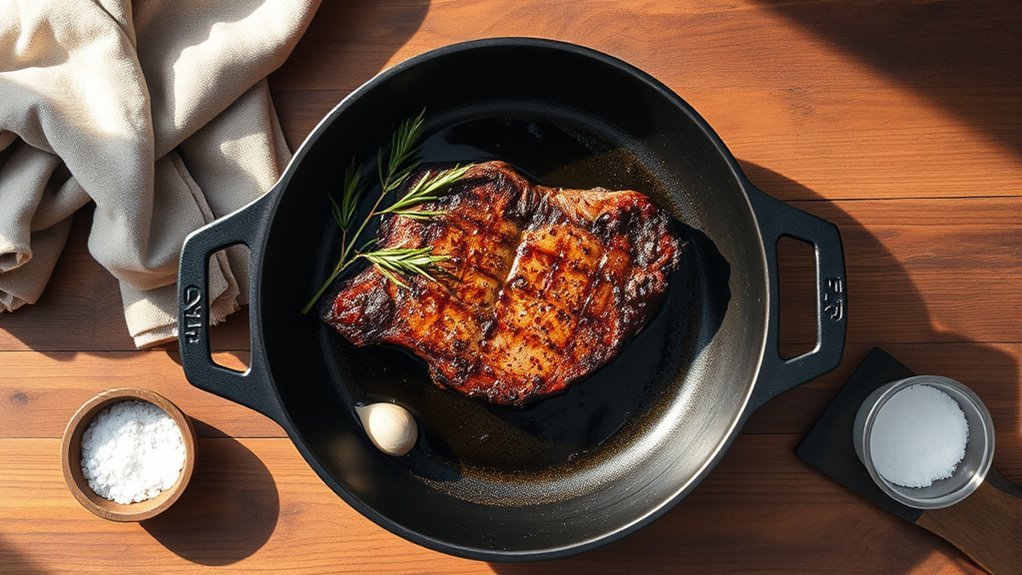
When you start cooking with a cast iron skillet, you’re not just choosing a pan; you’re investing in a timeless piece of kitchen heritage that elevates your culinary experience.
Cast iron skillets excel in heat retention and distribution, allowing you to achieve that perfect sear on meats while ensuring even cooking throughout your dishes. Their versatility means you can fry, bake, sauté, or roast with ease.
Cast iron skillets provide exceptional heat retention and versatility, ensuring perfect sears and even cooking for all your favorite dishes.
The magic lies in their seasoning; each time you cook, you enhance the skillet’s natural nonstick properties.
And contrary to common myths, these skillets handle acidic foods beautifully, making them adaptable to various recipes.
Plus, with brands like Lodge made in the USA, you’re choosing affordable, durable cast iron cookware that can last a lifetime.
Embrace the liberation of cooking with cast iron, and let your culinary dreams flourish!
Choosing the Right Fats: The Key to Non-Stick Success
Choosing the right fats can make all the difference in achieving that coveted non-stick surface in your cast iron skillet. Opt for cooking fats like vegetable oil or canola, which boast high smoke points, perfect for high-heat cooking.
These oils not only help prevent stuck-on food but also enhance your skillet’s nonstick coating over time. When cooking delicate items like eggs or pancakes, don’t skimp on the fat; a generously oiled pan creates a barrier that markedly reduces sticking.
Remember, regularly using these fats contributes to the seasoning process, improving both longevity and performance of your cast iron pans. Avoid olive oil for high-heat applications, as its lower smoke point can lead to burning and sticking issues.
Embrace the right fats, and watch your cooking transform into a seamless, liberating experience!
Preheating Your Skillet: Essential for Perfect Cooking
Achieving a non-stick surface with the right fats sets the stage for the next significant step: preheating your skillet. Preheating your cast iron skillet is essential for even heat distribution, ensuring your food cooks perfectly. Start by placing your skillet on medium-low heat for 5 to 10 minutes. This gradual process helps prevent thermal shock and warping. Once it’s heated, add a bit of oil to enhance its non-stick properties and build up the seasoning layer.
To check if it’s ready, sprinkle a few drops of water—if they sizzle and evaporate immediately, you’re good to go!
| Step | Purpose |
|---|---|
| Preheat on medium-low | Gradual heating prevents warping |
| Add oil | Enhances non-stick properties |
| Test with water | Confirm proper preheating |
| Adjust heat | Achieve desired cooking temperature |
Now you’re ready to cook!
Cooking Techniques: Mastering Eggs, Meats, and Vegetables
Mastering cooking techniques with your cast iron skillet can elevate your culinary skills, especially when it comes to eggs, meats, and vegetables.
For Cooking Eggs, preheat your pan on medium-low and add a generous amount of butter or oil. This prevents sticking and guarantees rich, flavorful fried or scrambled eggs.
When Searing Meats, pat the meat dry for better browning and heat your skillet until it’s smoking hot. This creates a delicious crust while the cast iron retains heat for even cooking.
To Sauté Vegetables, use high heat and ample oil, stirring frequently to reveal their natural sweetness—think caramelized onions or vibrant bell peppers.
Finally, don’t forget that cast iron can handle oven temperatures, perfect for dishes like frittatas.
Skillet Cleaning and Maintenance: Essential Tips for Longevity
While cooking with your cast iron skillet can be a joyful experience, keeping it in top shape is just as important.
To clean your skillet, stick to warm water and a scrub brush. Avoid soapy water unless absolutely necessary, as this can strip away the seasoning that makes your skillet nonstick.
To clean your skillet, use warm water and a scrub brush—reserve soap for emergencies to protect its seasoning.
After you wash and dry it—either towel-drying or heating it briefly on the stovetop to evaporate any moisture—apply a light layer of cooking oil to maintain its seasoning.
When storing your skillet, choose a dry place and consider placing a paper towel inside to absorb any residual moisture.
Regularly using your cast iron not only enhances its seasoning but also prevents rust buildup, making maintenance easier.
Frequently Asked Questions
What Is the Trick to Cooking With Cast Iron?
The trick to cooking with cast iron lies in mastering heat management and seasoning techniques. Preheat your skillet, use quality cooking oils, and choose recipes that complement its unique flavor enhancement.
Stick to medium-low heat to prevent burning. Avoid excessive movement of your food for a perfect crust.
For cleaning, embrace gentle methods that maintain your skillet’s seasoning. Regular maintenance keeps it in top shape, ensuring delicious meals every time.
Happy cooking!
What Ruins a Cast Iron Skillet?
To ruin a cast iron skillet, neglect rust prevention, and ignore proper storage solutions.
Using metal utensils can scratch the seasoning, while excessive soap during cleaning can degrade it.
Cooking highly acidic foods in a poorly seasoned skillet strips away flavor and protection.
For longevity, focus on effective seasoning techniques, heat management, and regular maintenance tips.
Treat your skillet with care, and it’ll serve you delicious meals for years to come!
How Do I Keep Food From Sticking to My Cast Iron Skillet?
To keep food from sticking to your cast iron skillet, embrace the art of seasoning techniques and choose your cooking oils wisely.
Preheat your skillet and manage the heat carefully, ensuring it’s not too high. Opt for food choices that complement each other, and avoid overcrowding.
Lower cooking temperatures work wonders for delicate items.
Prioritize skillet maintenance and use gentle cleaning methods to preserve that beautiful nonstick surface.
Enjoy your culinary freedom!
Do You Oil a Cast Iron Before Cooking?
Yes, you should definitely oil your cast iron before cooking! Using oils with high smoke points, like vegetable or canola, enhances flavor and prevents sticking.
Apply a thin layer and heat the skillet to bond the oil, improving seasoning techniques. Remember, a little goes a long way—too much oil can create a sticky mess.
Regular maintenance routines, including proper cleaning and storage solutions, will keep your skillet performing at its best for years!
Conclusion
Using a cast iron skillet not only elevates your cooking but can also enhance your health—did you know cooking in cast iron can increase your dietary iron intake by up to 20%? By mastering the techniques shared, you’ll create delicious, perfectly seared meals while enjoying the benefits of this versatile cookware. Remember, with the right care and attention, your cast iron skillet can last a lifetime, becoming a cherished staple in your kitchen. Happy cooking!
