
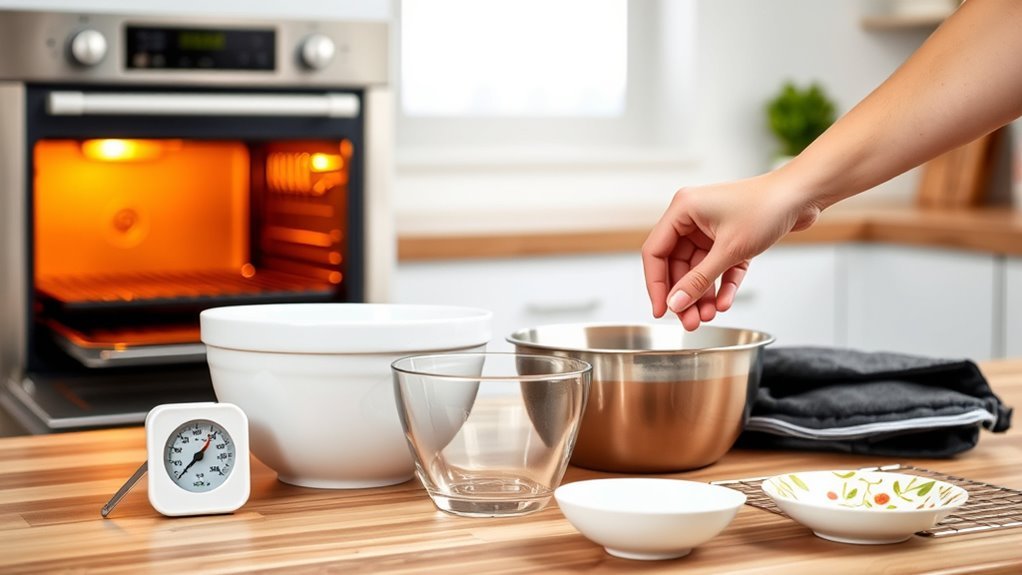
Ever wondered if that bowl you love is actually safe for the oven? Understanding oven safety isn’t just about looking for labels; it requires knowing the materials and their heat limits. Many bowls can withstand various temperatures, but some can’t. Before you risk a kitchen disaster, it’s essential to identify specific characteristics that determine oven safety. Let’s explore how to make sure your bowls are up to the task without compromising quality or safety.
How to Identify Oven-Safe Symbols on Bowls
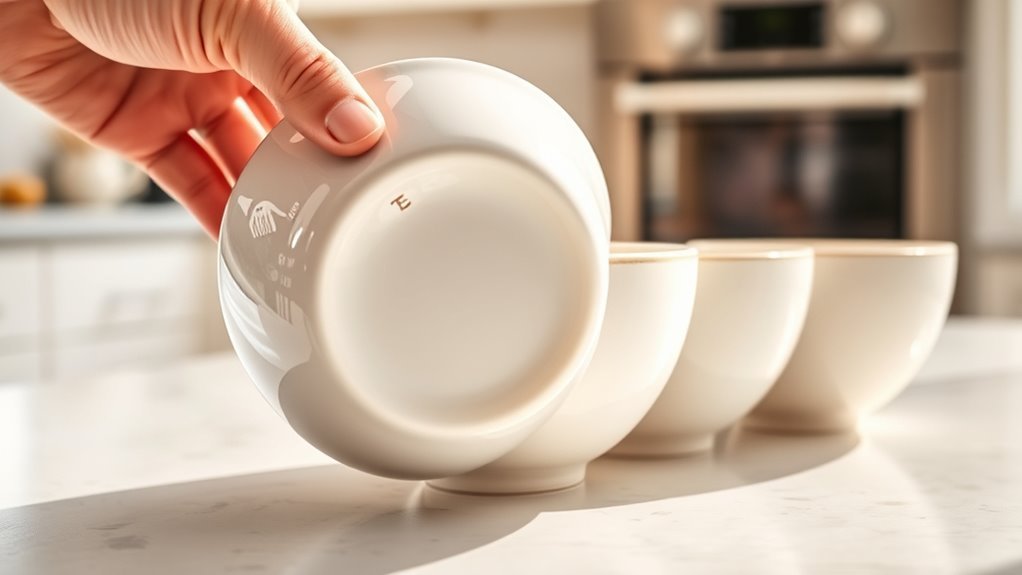
How can you tell if a bowl is oven-safe? Start by inspecting the bottom for oven-safe symbols, often an outline of an oven with wavy lines. This marking indicates that the bowl can endure high temperatures without damage.
Manufacturers sometimes label their bowls explicitly with “oven-safe,” making identification straightforward.
Look for bowls explicitly labeled “oven-safe” for easy identification and peace of mind while cooking.
Be cautious with bowls featuring metallic decorations, as they may not be oven-safe and can cause sparking or melting.
It’s also critical to check specific temperature limits; many oven-safe bowls, including ceramic plates, can typically withstand temperatures between 250°F and 450°F.
If you find no markings, consider performing a heat test. Start at lower temperatures to observe how the bowl reacts before exposing it to hotter conditions. This method helps guarantee that your bowl remains intact while you explore your culinary creativity.
What Materials Are Generally Oven-Safe?
Identifying the right materials for oven-safe bowls is crucial to guarantee your cooking goes smoothly.
Ceramic bowls are generally oven-safe, with most able to withstand temperatures up to 400°F (200°C). Stoneware can endure even higher heat, exceeding 1200°F.
Porcelain bowls might be suitable for oven use, but confirm they’re labeled as oven-safe, as some can’t handle high temperatures.
Tempered glass bowls are typically safe, but regular glass can shatter under thermal stress, so always check for oven-safe labels.
Metal bowls often offer heat resistance, and certain silicone types are also oven-safe, though it’s important to review manufacturer guidelines for specific temperature limits.
Lastly, before using any bowl, inspect for cracks or chips.
Damaged dishes may not withstand heat and could break, compromising your cooking efforts.
Signs Your Bowl Is Not Oven-Safe?
When evaluating whether your bowl is oven-safe, look for visible damage like cracks or chips, as these can lead to breakage under heat.
Additionally, check for the absence of an oven-safe label; without it, the bowl likely wasn’t designed for high temperatures.
Recognizing these signs is essential for ensuring safe use in the oven.
Visible Damage Indicators
Before using a bowl in the oven, you should examine it for visible damage indicators that could signal it isn’t safe for high temperatures. Look for cracks, chips, or hairline fractures; these can compromise structural integrity and lead to breakage during oven use.
Discoloration or crazing on ceramic surfaces may indicate wear, increasing the likelihood of failure under high heat. Additionally, check for a protective glaze; missing or damaged glaze elevates the risk of moisture absorption, making thermal shock more probable.
Rough or uneven surfaces can also be more susceptible to cracking when exposed to extreme temperatures. Always consult the manufacturer’s guidelines for any specific warnings about oven safety.
Lack of Oven-Safe Markings
How can you be certain a bowl is oven-safe? A lack of oven-safe markings often signals that the bowl can’t handle high temperatures, increasing the risk of cracking or shattering.
If you can’t find manufacturer guidelines, steer clear, especially for temperatures exceeding 350°F. Here are some signs to watch for:
- No oven-safe label
- Unclear material composition
- Metallic decorations that may melt
- Poor heat distribution characteristics
- No known oven-safe material like stoneware or heat-resistant glass
Always prioritize bowls designed for high-heat cooking.
When in doubt, avoiding bowls without proper markings reduces your risk of accidents while cooking. It’s essential to verify your kitchenware can withstand the maximum temperature you plan to use.
How to Conduct a Heat Test on Your Oven-Safe Bowls
To guarantee your bowls can withstand oven temperatures, conducting a heat test is essential. Start by preheating your oven to a low temperature, around 250°F. Place the bowl inside for 15 minutes, observing its reaction to heat.
Conduct a heat test by preheating your oven to 250°F and observing your bowl’s reaction for 15 minutes.
After this initial test, gradually increase the temperature, monitoring the bowl for any signs of cracking or warping at each increment. Before you begin, verify the bowl is free of visible damage, like chips or cracks, as these can compromise its integrity.
If your bowl lacks oven-safe markings, it’s wise to limit its exposure to under 350°F until you confirm its temperature limits through testing.
After removing the bowl from the oven, allow it to cool down slowly to prevent thermal shock, which can also lead to cracking. This methodical approach verifies you safely determine your bowl’s oven capabilities.
Common Mistakes to Avoid With Oven-Safe Bowls
When using oven-safe bowls, it’s essential to avoid common mistakes that can lead to dangerous outcomes. Ensuring safety and durability starts with being mindful of your choices.
- Ignoring Temperature Limits: Always stick to the manufacturer’s recommended temperatures; many budget ceramic bowls are only safe up to 350°F.
- Neglecting Material Type: Different ceramics have varying heat resistance; earthenware is generally less robust than stoneware or porcelain.
- Overlooking Glaze Safety: Check that the glaze is heat-resistant; decorative finishes may crack or release harmful substances at high temperatures.
- Failing to Inspect for Damage: Never use cracked or chipped bowls, as they can fail under heat.
- Making Sudden Temperature Changes: Avoid transferring bowls from freezer to oven; allow them to acclimate to room temperature to prevent thermal shock.
How Hot Can Your Bowl Handle?
Knowing how hot your bowl can handle is essential for safe cooking. Different materials have varying temperature limits, so it’s important to check manufacturer guidelines. Here’s a quick reference:
| Material | Max Temperature | Notes |
|---|---|---|
| Ceramic | 350°F | Check for specific limits |
| Stoneware | 450°F+ | Suitable for high-heat tasks |
| Unglazed Ceramic | Variable | Less heat-resistant; may crack |
Ceramic bowls generally handle up to 350°F, while stoneware can withstand 450°F or more. Avoid using unglazed ceramic at high temperatures, as they can absorb moisture and fail. Always inspect your bowls for cracks or chips, as damaged ceramics are more likely to crack under heat. To prevent thermal shock, preheat your ceramic bowls alongside the oven. This guarantees safety and maintains the integrity of your cookware.
Safe Oven Temperatures by Material
When choosing a bowl for oven use, it’s essential to understand the temperature limits based on the material.
Ceramic and porcelain bowls usually handle temperatures between 350°F and 500°F, while stoneware can withstand up to 450°F.
Always check the manufacturer’s guidelines to guarantee safe usage and avoid potential damage.
Ceramic Material Guidelines
While many ceramic bowls are versatile kitchen tools, understanding their heat tolerance is essential for safe oven use. Here are some guidelines to keep in mind:
- Most ceramic dishes are safe up to 350°F; high-quality stoneware can handle 450°F or more.
- Earthenware should stay below 400°F to prevent cracking.
- Glazed ceramics offer better heat resistance than unglazed options.
- Always check for manufacturer guidelines or oven-safe symbols on the bottom.
- Avoid sudden temperature changes to prevent thermal shock.
For best results, hand wash your ceramic bowls to maintain their integrity.
Temperature Limits Overview
Understanding the temperature limits of different materials is essential for safe oven use.
Most ceramic bowls are oven-safe up to 350°F, while stoneware can handle higher temperatures, typically around 450°F to 500°F.
Earthenware should be limited to 350°F to 400°F due to its lower heat resistance.
In contrast, porcelain bowls are among the most resilient, rated for oven use between 450°F and 500°F.
Always check manufacturer guidelines or oven-safe symbols to verify the specific temperature limits for your bowl.
Additionally, be cautious of sudden temperature changes; thermal shock can lead to cracking, especially in lower-fired ceramics like earthenware.
Adhering to these guidelines guarantees your cooking experience remains safe and enjoyable.
How to Prevent Thermal Shock When Using Bowls
To prevent thermal shock when using bowls, it’s crucial to manage temperature changes carefully. Sudden shifts can lead to cracks or breakage, especially with ceramic bowls.
Managing temperature changes is essential to prevent thermal shock in ceramic bowls, as sudden shifts can cause cracks or breakage.
Here are some tips to keep in mind:
- Avoid placing frozen or cold bowls directly into a hot oven.
- Preheat your ceramic bowl alongside the oven to acclimate to rising temperatures.
- Never transfer a hot bowl to a cold surface like a countertop or refrigerator; let it cool naturally.
- Check for any cracks or chips before use, as damaged ceramics are more vulnerable to thermal shock.
- Follow manufacturer guidelines, typically keeping oven temperatures between 350°F to 500°F for ceramic bakeware.
Alternative Oven-Safe Cookware Options
When it comes to alternative oven-safe cookware options, you’ve got several reliable choices that can elevate your cooking experience.
Glass baking dishes are often tempered for high temperatures, easily withstanding up to 500°F, which makes them perfect for various baking needs.
Stoneware is another excellent option; typically labeled as oven-safe, it endures high temperatures around 450°F while providing outstanding heat retention and even cooking.
Metal bakeware, like aluminum or stainless steel pans, is generally oven-safe and well-suited for roasting and baking tasks due to its ability to handle high heat.
Finally, silicone bakeware offers flexibility and non-stick properties, safely usable in the oven up to 500°F, ensuring easy release for your baked goods.
Always check for specific oven-safe labels or symbols to guarantee safety and prevent damage during cooking.
Embrace these cookware options for a more liberated culinary journey!
Frequently Asked Questions About Oven-Safe Bowls
How can you guarantee your bowls are safe for the oven? To verify your cooking experience is both enjoyable and safe, follow these guidelines:
- Check for labels: Look for oven-safe symbols on the bottom of your bowls.
- Know your materials: Ceramic typically withstands up to 350°F, while stoneware and porcelain can endure 450°F to 500°F.
- Inspect for damage: Avoid bowls with cracks or chips, as they may break under heat.
- Minimize thermal shock: Preheat your bowl along with the oven to prevent sudden temperature changes.
- Refer to guidelines: Always consult manufacturer recommendations for specific oven-safe temperatures.
Taking these steps will help you confidently use your bowls in the oven, allowing you to focus on creating delicious meals without worry.
Frequently Asked Questions
How to Tell if Your Bowl Is Oven Safe?
To tell if your bowl is oven safe, check for safety symbols or labels on the bottom.
Consider the bowl materials; ceramic and porcelain are generally reliable, but not all can handle high heat.
Avoid bowls with metallic decorations, as they mightn’t be safe.
Conduct a heat test by starting at lower temperatures and gradually increasing.
Always follow manufacturer guidelines for heat resistance to guarantee safe use in the oven.
Can I Put a Pyrex Bowl in the Oven at 400 Degrees?
Sure, you can put a Pyrex bowl in the oven at 400 degrees—if you enjoy living on the edge of heat resistance!
Pyrex, crafted from durable glass, handles such temperatures well. Just remember, not all bowl materials share this heat tolerance, so always check labels.
Avoid sudden temperature shifts to keep your bowl intact. Mastering cooking techniques with the right tools can elevate your culinary adventures—just don’t push your luck with extreme heat!
Can Ceramic Go in the Oven at 400 Degrees?
Yes, most ceramic bowls can go in the oven at 400 degrees, but you should know about ceramic types and their heat resistance.
Stoneware typically handles higher temperatures, while unglazed or low-fired ceramics may crack. Always check for cracks or chips before using them for baking.
To prevent thermal shock, let frozen bowls reach room temperature before placing them in a hot oven.
These baking tips will help guarantee safe and successful cooking.
Is Porcelain Oven Safe at 350 Degrees?
Yes, porcelain is oven-safe at 350 degrees. With various porcelain types, you’ll find most offer solid heat resistance up to this safe temperature.
Always check for an oven-safe label on your bowl, as individual products may have specific limits.
Conclusion
In summation, ensuring your bowl is oven-safe is nothing short of culinary wizardry! By meticulously examining symbols, materials, and conducting heat tests, you can elevate your cooking with confidence. Avoid common pitfalls like thermal shock, and you’ll be well on your way to creating masterpieces worthy of a Michelin-starred restaurant. Remember, the right bowl can transform your baking experience from mundane to extraordinary—so choose wisely and let your culinary creations dazzle!
