
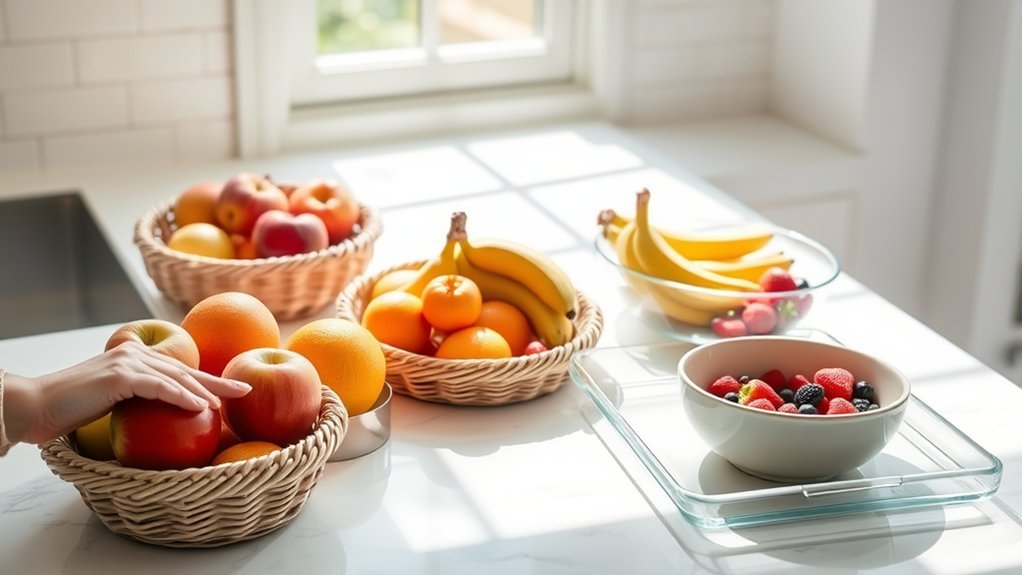
Storing fruit on the kitchen counter allows climacteric varieties—including avocados, bananas, stone fruits, and tomatoes—to develop their full sweetness, juiciness, and aromatic profile at room temperature. However, countertop storage requires a careful balance of ambient airflow, temperature control, and ethylene gas management to prevent rapid decay, mold proliferation, and fruit fly infestations.
Quick Answer
Store only unripe or ripening climacteric fruits (such as bananas, avocados, mangoes, peaches, and tomatoes) on the counter in a single layer using a breathable wire or wicker basket. Keep them out of direct sunlight and separate high-ethylene producers like bananas and apples. Transfer fruit to the refrigerator once fully ripe, and never wash fruit until immediately before eating.
Key Takeaways
- Only climacteric fruits ripen on counters: Fruits like avocados, bananas, and peaches continue to sweeten and soften after harvest; non-climacteric fruits like citrus and berries only spoil.
- Prioritize breathable storage: Use wire mesh, bamboo, or wicker containers rather than solid glass or ceramic bowls to ensure 360-degree air circulation and disperse trapped moisture.
- Isolate ethylene emitters: Apples and ripe bananas emit significant volumes of ethylene gas, which triggers premature decay in nearby sensitive produce.
- Never wash before storage: Introducing moisture to unchilled fruit skins fuels fungal spores (such as gray and blue mold). Wash under cold running water strictly prior to cutting.
- Refrigerate at peak ripeness: Transfer softened fruit to the refrigerator crisper drawer to halt senescence and extend shelf life by an additional 3 to 7 days.
At a Glance
| Time Required | 1–2 minutes of daily inspection and rotation |
| Difficulty | Beginner (simple household habit) |
| Tools Needed | Slotted wire or wicker basket, banana hook, brown paper bag, produce brush |
| Optimal Ambient Temp | 65°F to 72°F (18°C to 22°C); away from direct sun and heat vents |
Why Some Fruit Belongs on the Counter
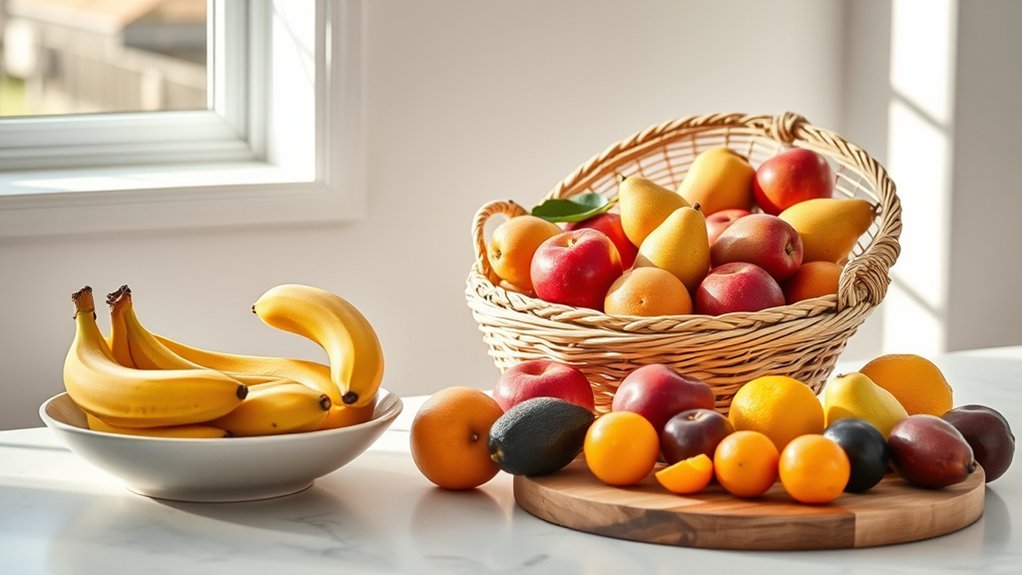
Fruits belong on the counter primarily due to their postharvest biology. Botanists classify fleshy produce into two broad physiological groups: climacteric and non-climacteric fruits.
Climacteric fruits undergo an internal burst of respiration accompanied by an increased synthesis of ethylene gas (a natural hydrocarbon plant hormone, $C_2H_4$). This hormonal shift triggers the conversion of complex starches into free sugars, softens pectin cellular walls, reduces harsh fruit acids, and activates aromatic volatile compounds. If you chill an unripe climacteric fruit too early, low temperatures can cause “chilling injury”—inactivating essential ripening enzymes, suppressing aroma development, and creating a mealy, water-soaked internal flesh.
Countertop storage at moderate room temperature provides the thermal energy required for enzymatic ripening to proceed uninhibited. Simultaneously, an open counter environment allows ambient air movement, preventing the dangerous pockets of trapped humidity that encourage fungal germination.
Which Fruits to Store on the Counter (And Which to Chill)
Sorting produce correctly as soon as you unpack your groceries is the single most effective way to eliminate food waste. Not all fruit benefits from ambient room conditions.
| Storage Category | Fruit Varieties | Primary Reason |
|---|---|---|
| Counter First, Then Fridge | Avocados, bananas, mangoes, papayas, peaches, nectarines, plums, kiwis, melons | Needs ambient warmth to convert starches to sugars; chill once soft to touch. |
| Counter Exclusively (Avoid Fridge) | Whole tomatoes, uncut winter squash | Chilling damages cell membranes below 50°F (10°C), irreversibly ruining aroma and texture. |
| Short-Term Counter Tolerant | Apples, oranges, lemons, limes, grapefruits, clementines | Stable for 7–10 days on the counter for quick access; lasts 3–4x longer in the crisper drawer. |
| Direct to Fridge (Never Counter) | Strawberries, blueberries, raspberries, blackberries, grapes, cut melons | Non-climacteric; high respiration rates cause mold and collapse within 24–48 hours at room temp. |
Warning: Never store uncut whole fruit directly against raw root vegetables. Onions release volatile sulfur gases that accelerate sprouting in potatoes and impart pungent off-flavors to porous fruit rinds nearby.
How to Arrange Fruit for Airflow and Ethylene Control
Improper layout causes more premature countertop spoilage than ambient heat. Piling heavy fruits directly on top of delicate produce creates localized pressure points, crushes subsurface cellular walls, and releases moisture that feeds latent spores.
To establish an optimal countertop station:
- Maintain a single-layer depth: Avoid deep, solid-walled display bowls. Arrange softer fruits in a single layer so weight is evenly distributed and air moves across all surfaces.
- Select open-weave materials: Choose wire mesh, slotted bamboo, or natural wicker. These permeable surfaces prevent condensation from gathering at the bottom of the fruit.
- Isolate heavy ethylene emitters: Position bananas and apples in a separate secondary vessel or on a hanging tree hook away from stone fruits and avocados.
- Keep clear of appliance heat exhausts: Refrigerators, dishwashers, and ovens discharge warm, dry air that can bake surrounding fruit, driving rapid moisture loss and shriveling.
Pro Tip: Wrap the crown (pedicel cluster) of your banana bunch tightly with plastic wrap or aluminum foil. Bananas release the majority of their ethylene gas from the stem joint. Wrapping this area retards the release of the hormone, extending the yellow, spotless phase of the bunch by 2 to 4 days.
How to Store Each Fruit on the Counter
Individual fruits require customized care based on their specific skin thickness and ethylene sensitivity:
- Bananas: Suspend them from a dedicated banana hanger. Hanging prevents pressure bruises on bottom fingers and ensures uniform air circulation. Keep them well separated from citrus and avocados unless you intentionally wish to speed up their neighbors’ ripening.
- Avocados: Place firm, unyielding avocados directly on the counter out of the path of direct sun. Check firmness each morning by gently pressing the top near the stem with your thumb pad. Once the flesh yields slightly under gentle pressure, eat immediately or refrigerate.
- Tomatoes: Store ripe tomatoes stem-end down on a smooth, flat plate or tray at room temperature. Setting them stem-side down blocks air from entering the stem scar and prevents internal moisture from evaporating, keeping the flesh firm and plump. Never refrigerate fresh whole tomatoes unless fully cooked; chilling below 55°F (13°C) breaks down flavor compounds (Z-3-hexenal) and degrades their texture into a mealy paste.
- Mangoes and Stone Fruits (Peaches, Nectarines, Plums): Rest them on their shoulders (stem-side down) on a breathable surface. They are ready to enjoy when their skin emits a sweet, rich fragrance and gives gently under light pressure.
- Apples: While apples tolerate the counter for 7 to 14 days, they release high concentrations of ethylene. Store them in a separate decorative bowl. If you need them to remain crisp for several weeks, transfer them to the refrigerator crisper drawer, which dramatically slows their respiration rate.
How to Speed Up Ripening Safely
When you purchase rock-hard avocados, unyielding mangoes, or green pears that you plan to prepare within 24 to 48 hours, you can harness natural plant physiology to speed up the process without chemical treatments.
The standard culinary approach relies on capturing the produce’s self-generated ethylene gas while allowing respiratory carbon dioxide and moisture to escape:
| Step | Action | Scientific Mechanism |
|---|---|---|
| 1 | Place fruit into a brown paper bag | Kraft paper is semi-permeable; it concentrates ethylene gas while allowing oxygen in and letting excess moisture vent. |
| 2 | Add one ripe banana or apple | Ripe climacteric fruit acts as an active bio-generator, elevating internal chamber ethylene levels significantly. |
| 3 | Loosely roll down the top | Avoid airtight clamping; fruit requires ongoing oxygen exchange to fuel normal metabolic ripening. |
| 4 | Inspect every 12 to 24 hours | High-ethylene microclimates can advance fruit from green to overripe within a single day. |
Note: Never use sealed plastic bags to ripen fruit. Non-breathable plastic traps both moisture and carbon dioxide. High carbon dioxide levels inhibit ethylene receptors, while trapped moisture causes produce to rot before it ripens.
When to Move Ripe Fruit to the Fridge
The kitchen counter is a ripening station, not a permanent holding vault. Once fruit reaches its peak eating state, you must change its environment to arrest the decline toward senescence.
Move whole climacteric produce (avocados, peaches, plums, mangoes, kiwis) into the refrigerator crisper drawer as soon as they yield to gentle touch and smell aromatic. Temperatures between 34°F and 40°F (1°C to 4°C) slow down the plant’s respiration and ethylene production, locking the fruit at peak ripeness for an extra 3 to 7 days without degrading flavor.
“Cold temperatures effectively put a fruit’s ripening engine into hibernation, allowing you to lock in peak flavor for days after counter ripening completes.”
Crucial Food Safety Distinction: Keep in mind the difference between whole and cut fruit. Whole, unblemished fruit can sit safely at room temperature throughout its ripening cycle. However, according to FDA and USDA food safety standards, once you slice through the protective outer skin of any melon, tomato, or fresh fruit, you must refrigerate it at or below 40°F (4°C) within 2 hours. Cutting introduces knife-blade pathogens directly into nutrient-rich pulp, creating ideal conditions for rapid bacterial growth (such as Salmonella enterica and Listeria monocytogenes).
How to Keep Fruit Baskets Fresh Longer
Maintaining a fresh countertop setup requires managing three environmental vectors: ventilation, neighbor compatibility, and physical rotation.
Breathable Basket Materials
Solid ceramic, polished metal bowls, and plastic tubs look attractive, but they pool condensed water vapor at the bottom. As fruit respires, it transpires water vapor into the air. If that moisture cannot escape, it settles against the bottom fruit layer, causing soft rot and attracting mold.
Choose wire mesh, slotted natural bamboo, or woven wicker. These materials ensure continuous airflow under and around each piece, maintaining consistent humidity without heat buildup.
Separate Ripening Fruits
Keep your fruit organized by ethylene production. Sensitive fruits like stone fruits, mangoes, and leafy produce should not share a container with mature apples or ripe bananas. Stagger your display across two separate vessels placed at least 12 to 18 inches apart across your counter space.
Daily Rotation and Spacing
Incorporate a quick daily inspection into your kitchen routine:
- Rotate each piece so it does not rest continually on the same contact point.
- Reposition older, ready-to-eat pieces to the top or front edge of the basket so they are consumed first.
- Immediately quarantine and compost any piece showing skin tears, soft sunken spots, or fuzzy mold growth. A single damaged fruit can spoil an entire basket within 48 hours.
What Not to Store Together on the Counter
Cross-commodity chemical interference causes produce to spoil far faster than it should. Keep the following pairs well separated:
- Apples and Bananas: Both are heavy ethylene emitters. When placed together, they accelerate each other’s breakdown, resulting in mushy apples and blackened bananas within days.
- Onions and Potatoes: Onions emit ethylene and sulfurous volatiles that cause potato tubers to sprout eyes rapidly and turn green (producing bitter, toxic solanine). Keep both in cool, dark, well-ventilated pantries, but never in the same bin.
- Avocados and Ripe Tomatoes: Off-gassing from avocados pushes ripe tomatoes past their prime, softening their pericarp walls and inviting skin splits.
- Citrus and Deciduous Tree Fruits: Oranges and lemons are sensitive to high ethylene concentrations; prolonged exposure to apples can cause citrus rinds to brown prematurely and develop bitter off-flavors.
How to Wash Fruit Before Eating
Washing fresh produce is essential for food safety, but washing at the wrong time can ruin your fruit. Never wash fruit before placing it on the counter. Washing removes the fruit’s natural protective cuticle wax and leaves residual moisture in the stem cavity, creating an ideal breeding ground for mold and bacteria.
Rinse Under Running Water
Wash your produce immediately before peeling, cutting, or eating. Rinse pieces thoroughly under clean, cold running tap water. Never use soaps, detergents, bleach, or commercial produce washes. As the FDA Center for Food Safety and Applied Nutrition notes, fruits have porous skins that can absorb cleaning chemicals, which can cause gastrointestinal distress.
Scrub Firm Produce
For firm-skinned fruits such as apples, melons, and pears, scrub the skin with a clean, dedicated produce brush under running water. This physical friction dislodges stubborn dirt, surface waxes, and pesticide residues trapped in skin crevices.
Dry Before Cutting
After rinsing, dry the fruit with a clean paper towel or a freshly laundered lint-free dish cloth before cutting. Drying eliminates residual surface tap water and removes any remaining loosened bacteria so your knife blade does not drag surface contaminants into the interior pulp.
Frequently Asked Questions
What is the best container for storing fruit on the counter?
The best container is an open wire mesh, slatted bamboo, or woven wicker basket. These materials allow air to circulate freely around the produce, preventing heat and humidity buildup while stopping condensation from pooling beneath the fruit. Avoid solid glass, plastic, or deep ceramic bowls, which trap moisture and speed up decay.
How long can you leave fruit on the counter?
Shelf life depends on the fruit’s ripeness and variety. At typical room temperatures (68°F–72°F / 20°C–22°C), unripe avocados take 4 to 7 days to soften and should be eaten within 2 to 3 days once ripe. Bananas last 3 to 5 days once yellow. Whole tomatoes remain in prime condition for up to 7 days. Apples can stay on the counter for 1 to 2 weeks, though they retain crispness far longer if transferred to the refrigerator.
How to store fruit on the counter to avoid fruit flies?
To prevent fruit flies (Drosophila melanogaster), inspect your fruit daily and immediately remove any piece with broken skin or signs of overripening. Wash your fruit basket regularly with hot soapy water to remove dried sugary secretions. You can catch lingering flies by setting out a small ramekin filled with two tablespoons of apple cider vinegar mixed with three drops of liquid dish soap; the vinegar attracts the flies, while the soap breaks the surface tension, causing them to drown.
What fruits should be left on the counter?
Only climacteric fruits that need to finish ripening belong on the counter. This includes bananas, avocados, mangoes, kiwis, peaches, nectarines, plums, and whole tomatoes. Non-climacteric produce, such as berries and grapes, should go straight into the refrigerator, as they do not sweeten after harvest and will quickly mold at room temperature.
Conclusion
Mastering countertop fruit storage comes down to understanding basic plant biology: let climacteric varieties ripen in open, breathable containers at room temperature, keep ethylene producers separate, and move fruit into cold storage once it reaches peak flavor. By making a habit of daily inspection, keeping your storage areas well-ventilated, and washing produce only right before you eat it, you can enjoy delicious, perfectly ripe fruit every day while cutting down on kitchen waste.
Sources
- U.S. Food and Drug Administration (FDA) — Safe handling, washing, and temperature safety guidelines for fresh produce.
- University of California Davis Postharvest Technology Center — Postharvest biology, ethylene sensitivity, and optimal commodity storage conditions.
- University of Nebraska-Lincoln Extension — Best practices for managing flavor retention and shelf life across fresh vegetables and fruits.
- USDA Food Safety and Inspection Service (FSIS) — Guidance on preventing cross-contamination and managing perishable produce.