
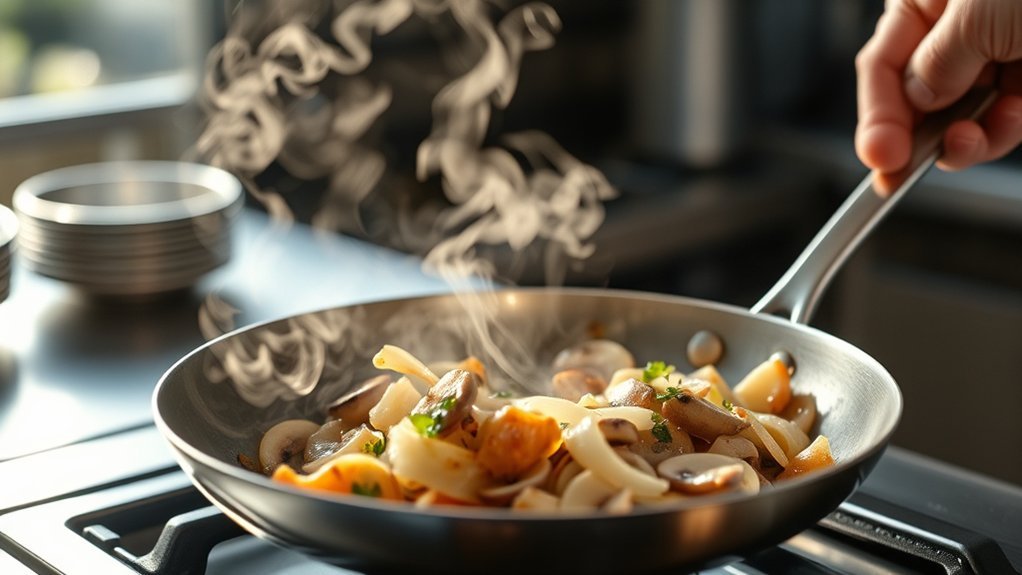
Sautéing is a quick stovetop cooking method that uses a small amount of fat and a hot pan to brown and cook food efficiently. It works especially well for vegetables, aromatics, seafood, and small or thin pieces of meat. Good sautéing depends on four basics: dry ingredients, enough pan space, controlled medium-high heat, and the right cooking order.
Quick Answer
Sautéing means cooking relatively small pieces of food quickly in a hot pan with a small amount of fat, usually over medium-high heat. For better browning, preheat the pan, dry the food, avoid crowding, let each side make contact with the pan, and adjust the heat before the oil begins to smoke.
Key Takeaways
- Sauté with a small amount of fat over medium-high heat rather than partially or fully submerging food in oil.
- Pat ingredients dry and leave space between pieces so moisture can escape instead of steaming the food.
- Use a wide skillet or sauté pan and choose a cooking fat appropriate for the temperature.
- Cook ingredients in stages when their cooking times differ; quick-burning garlic usually goes in later than dense vegetables.
- Use a food thermometer when sautéing meat, poultry, or seafood rather than judging safety by color alone.
At a Glance
| Time Required | Usually 5–20 minutes after ingredients are prepared |
| Difficulty | Beginner to intermediate |
| Tools Needed | Wide skillet or sauté pan, spatula or tongs, knife and cutting board; food thermometer for meat, poultry, and seafood |
| Cost | No special cost beyond the ingredients and a small amount of cooking fat |
What Is Sautéing?
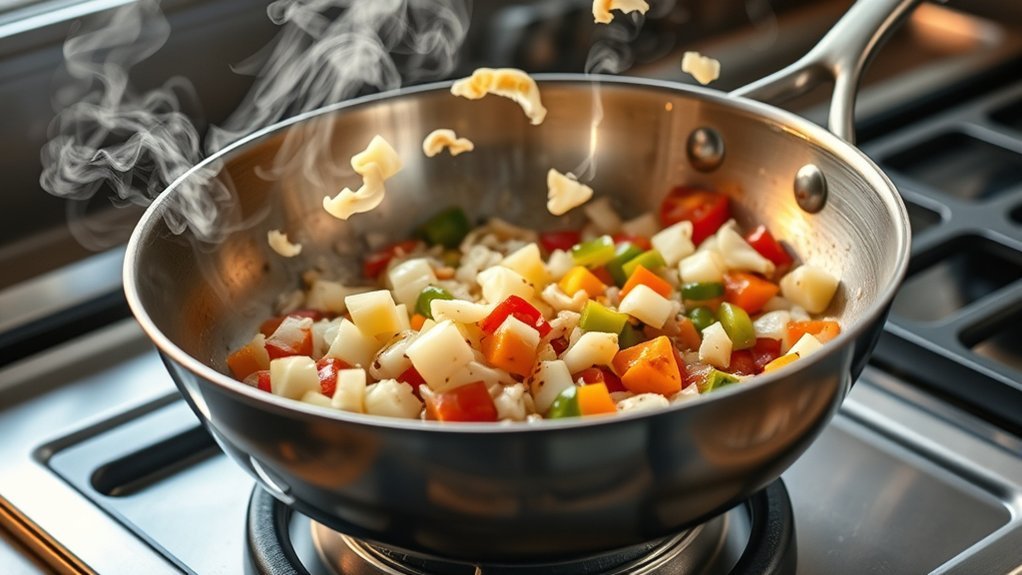
Sautéing is a cooking technique that cooks food relatively quickly in a small amount of fat over direct stovetop heat. Utah State University Extension describes sautéing as cooking quickly in a small amount of fat over medium-high heat.
The word comes from the French verb sauter, meaning “to jump.” The name reflects the traditional motion of shaking or tossing food in the pan, although constantly flipping the food is not required for successful sautéing.
In practice, ingredients are usually cut into small, thin, or evenly sized pieces so the outside can brown before the inside overcooks. Tender vegetables, mushrooms, seafood, thin pieces of meat, and aromatics all work well with the method.
The goal is not simply to expose food to maximum heat. Good sautéing balances enough heat for browning with enough control to prevent the fat, garlic, seasonings, or food itself from burning.
Utah State University Extension identifies medium-high heat and a small amount of fat as defining features of sautéing.
How Sautéing Differs From Frying
Sautéing uses a thin coating or small amount of fat and depends mainly on direct contact between the food and the pan. Pan-frying generally uses more oil, while deep-frying completely or substantially surrounds the food with hot oil.
Sautéed ingredients are commonly small, thin, or naturally quick-cooking. They may be stirred, turned, or tossed several times as they cook. Pan-fried foods are often larger or breaded and may remain undisturbed longer so a crust can develop before they are turned.
Sautéing is also different from stir-frying. Both are fast methods, but stir-frying traditionally uses very high heat and almost continuous movement, often in a wok. Sautéing usually gives food slightly longer contact with the pan between turns so browning can develop.
Searing describes intense surface browning rather than a complete cooking method. A cook may sear an ingredient as part of sautéing, braising, roasting, or another technique.
The practical difference is oil contact: sautéing uses just enough fat to coat the pan and food, while frying relies on a noticeably deeper layer of hot oil.
How to Sauté Step by Step
Successful sautéing is easiest when everything is prepared before the pan gets hot. The cooking stage moves quickly, so chop, dry, season, and organize the ingredients first.
- Cut ingredients evenly. Similar-size pieces cook at similar rates. Slice thick vegetables more thinly or give dense ingredients a head start.
- Dry the surface. Pat washed vegetables, mushrooms, seafood, and proteins dry when appropriate. Surface water must evaporate before efficient browning can occur.
- Preheat the pan. Heat a wide skillet or sauté pan over medium to medium-high heat. Extremely high heat is not necessary for every ingredient.
- Add a small amount of fat. Use enough to lightly coat the cooking surface. Canola, grapeseed, peanut, refined avocado, and other appropriate cooking oils can work. Do not deliberately heat oil until it smokes.
- Add food without crowding. Arrange ingredients in a single layer when browning matters. Cook in two batches if necessary.
- Give the food time to brown. Avoid immediately stirring everything nonstop. Let one surface contact the hot pan, then turn or toss as needed.
- Adjust the heat. Lower it if the oil smokes, spices scorch, or food darkens before the center can cook. Increase it slightly if ingredients are releasing water and barely sizzling.
- Add quick-burning aromatics later. Onions may need several minutes, while minced garlic may need only a short time before it becomes bitter.
- Check doneness. Vegetables should reach the texture you want. Meat, poultry, and seafood should also reach safe internal temperatures.
- Deglaze if desired. After removing the food, a small amount of stock, water, wine, or another suitable liquid can loosen flavorful browned bits from an uncoated stainless-steel or cast-iron pan and form the beginning of a pan sauce.
Warning: Hot fat can spit when wet food enters the pan. Dry ingredients where appropriate, place food into the pan carefully, keep the handle turned away from the edge of the stove, and reduce the heat if the oil begins smoking heavily.
Pro Tip: If the first batch browns well but a full pan turns watery, the problem is probably crowding rather than insufficient heat. Divide the food into smaller batches so steam can escape.
How Much Oil Do You Need for Sautéing?
There is no universal tablespoon measurement because pan diameter, ingredient quantity, and food absorption vary. Use enough fat to form a thin film across the active cooking surface without creating a deep pool.
For higher-temperature cooking, choose a fat that tolerates the intended heat. The USDA lists grapeseed oil at an approximate smoke point of 445°F, while Harvard’s Nutrition Source notes that avocado oil can have a particularly high smoke point. Actual smoke points vary with refining, age, and product quality.
See the USDA FSIS cooking-oil guidance and Harvard Nutrition Source’s avocado overview for additional context.
Why Dry Food Browns Better
Water on the surface absorbs heat as it turns to steam. Until much of that moisture has evaporated, the food’s surface has more difficulty reaching the temperatures needed for strong browning. Excess moisture also cools the pan.
This is why washed mushrooms, vegetables, seafood, or meat often sauté better after excess surface water is removed. Drying does not mean dehydrating the food; it simply means avoiding unnecessary water on the outside.
When to Stir or Toss Food
You do not need to keep food moving every second. Constant stirring can actually slow browning because no surface stays against the pan long enough to develop color.
Let ingredients sit briefly, then stir, turn, or toss them so new surfaces contact the pan. Delicate foods may be easier to turn with a spatula or tongs instead of tossing the entire pan.
Best Pans for Sautéing
A proper sauté depends on both heat control and usable cooking area. Sauté pans, skillets, and frying pans can all work, but their shapes behave differently.
Sauté Pan
A traditional sauté pan has a broad flat base and straight sides. The straight walls contain splatter and liquids and provide useful capacity for deglazing, simmering, and pan sauces. For example, All-Clad describes its stainless sauté pan as having a wide surface for browning with straight sides that hold liquids and reduce splatter.
A sauté pan can also provide more usable flat cooking area than a strongly sloped skillet of a similar overall diameter, but the actual base dimensions vary by model. Nominal pan diameter should not be treated as the exact diameter of the flat cooking surface.
Skillet or Frying Pan
A skillet normally has lower, sloped sides. This shape helps steam escape and makes it easier to slide a spatula underneath food or toss ingredients with a forward-and-back pan motion.
For mostly dry sautéing and quick vegetable dishes, a skillet is often extremely convenient. For dishes that will finish with broth, wine, cream, or another sauce, the straighter walls of a sauté pan can be useful.
Stainless Steel
Clad stainless-steel cookware is excellent for browning because it tolerates substantial heat and develops visible fond that can later be deglazed. Its heating performance depends heavily on construction; quality clad pans normally use a conductive core such as aluminum between stainless-steel layers.
Cast Iron
Cast iron retains heat well and can produce strong browning. Its main disadvantage for classic tossing is weight, and it responds more slowly when you change the burner setting. It is still a strong choice for mushrooms, meat, and other foods that benefit from sustained heat.
Nonstick
A nonstick pan is useful for delicate foods and easier release, but it should be used within the manufacturer’s temperature limits. Many nonstick pans are better suited to low or medium heat than aggressive high-temperature searing.
Note: A lid is useful for simmering or briefly finishing thicker food, but leaving the pan covered during the main browning stage traps steam and can soften the surface.
Best Foods to Sauté
The sauté method works best with ingredients that can cook in a relatively short time or can be cut into quick-cooking pieces.
Vegetables
Zucchini, bell peppers, asparagus, green beans, snap peas, mushrooms, spinach, kale, onions, and similar vegetables are good choices. Dense vegetables such as carrots may need thinner cuts, a head start, or brief precooking if you want them tender inside without burning the surface.
When several vegetables are combined, add slower-cooking vegetables first and delicate greens near the end rather than putting everything into the pan simultaneously.
Aromatics
Onions, shallots, garlic, ginger, and similar aromatics build flavor quickly. They should not automatically enter the pan at the same time. Onions usually tolerate longer cooking, while minced garlic can scorch rapidly at medium-high heat and is often better added later.
Chicken, Meat, and Seafood
Thin chicken pieces, pork strips, beef strips, shrimp, scallops, and suitable fish portions can all be sautéed. Patting the surface dry can help browning, while cooking in batches prevents excess liquid from cooling the pan.
Appearance alone cannot confirm that animal proteins are safe. According to the USDA FSIS Safe Minimum Internal Temperature Chart, poultry should reach 165°F (73.9°C), fish and shellfish 145°F (62.8°C), ground meats 160°F (71.1°C), and whole cuts of beef, pork, veal, and lamb 145°F (62.8°C) followed by at least a three-minute rest.
Common Sautéing Mistakes and How to Fix Them
Food Is Steaming Instead of Browning
Likely causes: too much food in the pan, wet ingredients, or insufficient heat.
Fix: dry the surface, give ingredients more space, and cook in batches. Allow excess liquid to evaporate before expecting substantial browning.
The Oil Is Smoking
Likely cause: the pan is hotter than the fat can tolerate.
Fix: lower the burner, briefly remove the pan from the heat if necessary, and use a cooking fat appropriate for the intended temperature. Oil does not need to smoke for food to sauté properly.
Garlic or Spices Burn Before the Food Is Done
Likely cause: delicate ingredients were added too early or the pan is excessively hot.
Fix: start slower-cooking ingredients first and add minced garlic, delicate herbs, or vulnerable spices later.
Food Sticks to Stainless Steel
Likely causes: the pan or food was not prepared correctly, or the food was moved before a browned surface had time to form.
Fix: preheat the pan, add fat, place relatively dry food into the pan, and allow the first side time to cook before forcing it loose. Some sticking and fond are normal when browning in stainless steel.
The Outside Burns Before the Inside Cooks
Likely causes: pieces are too thick or the heat is too high.
Fix: use smaller or thinner pieces, lower the heat, or finish thicker food with a gentler cooking method after browning.
Frequently Asked Questions
What Is Meant by Sauté in Cooking?
To sauté means to cook relatively small or thin pieces of food quickly in a hot pan with a small amount of fat. The food is stirred, turned, or tossed enough to cook evenly while still spending enough time against the pan to brown.
Is Sauté the Same as Pan Fry?
No. The terms are sometimes used loosely, but traditional sautéing uses only a small amount of fat and quick-cooking ingredients, while pan-frying usually uses a deeper layer of oil and often larger or breaded pieces that remain in place longer before being turned.
What Is Another Word for Sauté?
There is no exact culinary synonym that preserves every detail of sautéing. “Pan-cook” or “fry quickly in a little fat” may describe it informally, while “pan-fry” is related but technically uses more fat in many culinary definitions.
Is Sauté Low or High Heat?
Medium-high heat is a practical starting point for many sautéed foods, although the correct setting depends on the pan, stove, ingredient, and cooking fat. The pan should be hot enough to create an active sizzle and browning without rapidly burning the food or smoking the oil.
Why Does My Food Steam When I Try to Sauté It?
The most common causes are overcrowding, excess surface moisture, or a pan that is not hot enough. Dry the ingredients, leave more open space between pieces, and cook in batches so moisture can escape.
Do You Have to Toss Food in the Pan When Sautéing?
No. Tossing is traditional and explains the method’s French name, but a spatula or tongs work just as well for most home cooks. What matters is exposing different surfaces to the hot pan while still allowing enough uninterrupted contact for browning.
Conclusion
Sautéing is simple once the heat, moisture, space, and timing are under control. Preheat the pan, use only a small amount of suitable fat, dry the ingredients, avoid crowding, and let food contact the pan long enough to brown before moving it. Add ingredients according to how quickly they cook, and use a thermometer when food safety depends on internal temperature. With those habits, sautéing becomes a reliable method for fast vegetables, proteins, aromatics, and pan sauces.
Sources
- Utah State University Extension — Skillet Cooking — supports the basic definition of sautéing as quick cooking in a small amount of fat over medium-high heat.
- USDA Food Safety and Inspection Service — Safe Minimum Internal Temperature Chart — supports safe temperatures for poultry, meat, fish, and shellfish.
- USDA Food Safety and Inspection Service — Cooking Oil Smoke Points — provides approximate smoke-point information for common cooking oils.
- Harvard T.H. Chan School of Public Health — Avocados — provides information about avocado oil and its high smoke point.
- All-Clad — D3 Stainless Sauté Pan — supports the description of a sauté pan’s broad cooking surface and straight sides.