
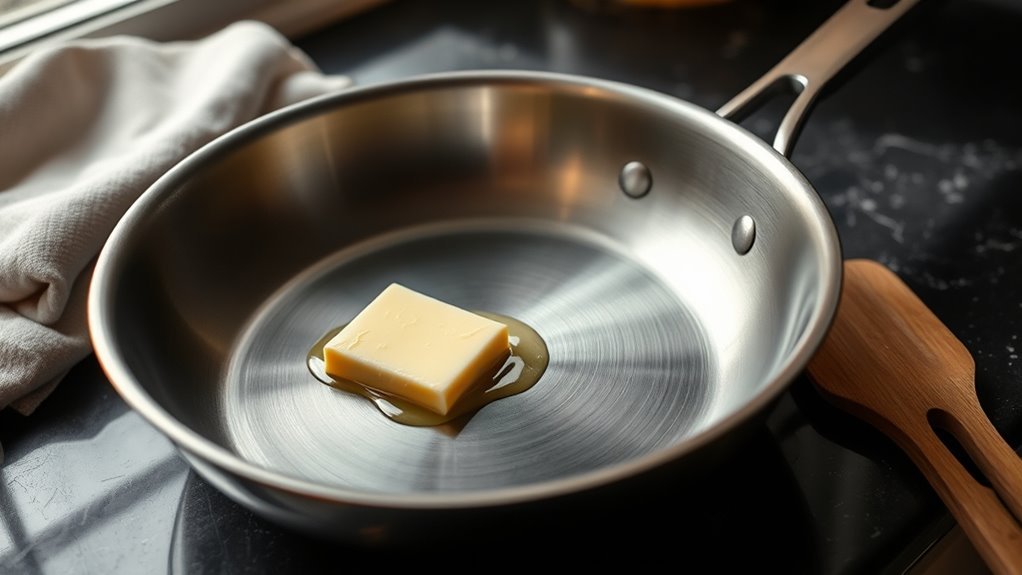
Did you know that over 70% of home cooks prefer stainless steel cookware for its durability and versatility? Using butter in these pans can elevate your dishes, but it requires some finesse. Understanding how to preheat your pan and manage temperatures is vital. If you’re not careful, you might end up with burnt butter instead of a rich, flavorful base. So, what’s the secret to mastering this technique? Let’s explore the essentials.
Can You Cook With Butter on Stainless Steel?
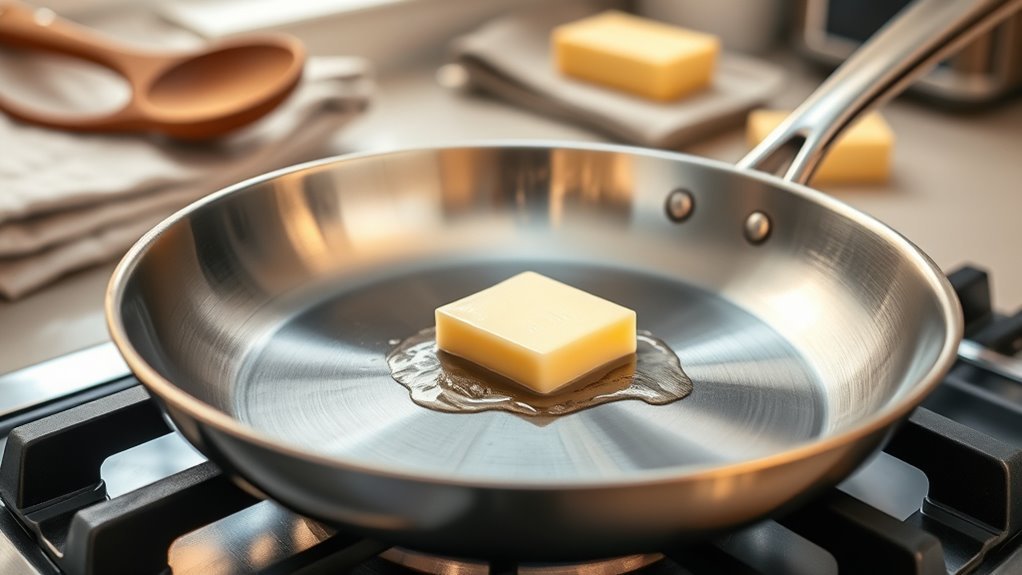
Can you really achieve perfectly cooked dishes using butter on stainless steel? Absolutely, but it requires a bit of finesse.
Start by preheating your stainless steel pan; this step is essential. It helps create a sort of nonstick coating that allows your food to release more easily.
Preheating your stainless steel pan is crucial; it creates a nonstick surface for easier food release.
Once the pan’s hot, lower the heat to medium or medium-low before adding butter. Remember, butter has a lower smoke point than many oils, so managing the temperature is key to prevent burning.
If you see smoke rising, quickly remove the pan to maintain that rich buttery flavor.
For those high-heat cooking moments, consider using clarified butter, which can handle higher temperatures without compromising taste.
With these techniques, you can liberate your cooking and enjoy the rich flavors that butter brings to your stainless steel cookware.
How to Use Butter Effectively in Stainless Steel Cookware
To use butter effectively in stainless steel cookware, understanding the nuances of heat management is essential. Start by preheating your pan to guarantee even heating. After reaching the desired temperature, lower the heat slightly to prevent burning, as butter has a lower smoke point than most oils.
| Step | Action |
|---|---|
| Preheat | Heat the stainless steel pan first. |
| Add Butter | Allow it to melt and shimmer. |
| Monitor Heat | Lower heat if butter starts to smoke. |
For higher cooking temperatures, consider using clarified butter or ghee, which have higher smoke points. This enhances the nonstick properties of your cooking surface, allowing for a seamless cooking experience. If you notice the butter smoking, act quickly by lowering the heat or removing the pan from direct heat to avoid imparting a bitter flavor to your dish.
Preventing Burnt Butter: Temperature Tips
While cooking with butter in stainless steel pans can elevate your dishes, managing the temperature is essential to preventing burnt butter. Butter has a lower smoke point—around 350°F—so if your preheated pan is too hot, it’ll burn quickly. Always lower the heat before adding butter; this simple step can save you from that unpleasant burnt flavor.
To guarantee your pan is at the right temperature, try the mercury ball test, but be careful not to exceed the ideal range. If you notice your butter starting to smoke, immediately remove the pan from the heat to avoid both flavor loss and health risks.
For those looking to cook at higher temperatures, consider clarifying butter, which raises its smoke point and enhances stability. With these temperature tips, you can unleash the full potential of butter in your cooking adventures!
How Butter Enhances Flavor in Your Dishes
When you incorporate butter into your cooking, you’re not just adding fat; you’re infusing your dishes with a rich, creamy flavor that elevates even the simplest of ingredients.
Butter enhances flavor in remarkable ways, thanks to its unique emulsifying properties. This means it helps create smooth sauces and gravies, allowing flavors to meld beautifully. When heated, butter also triggers the Maillard reaction, resulting in complex flavors and a golden-brown crust on proteins and vegetables.
The natural fats in butter carry and amplify the essence of spices and herbs, making them pop in your cooking. By using butter, you transform basic dishes into gourmet experiences, enriching the overall taste profile.
Whether you’re sautéing veggies in stainless steel or creating a luscious sauce, butter’s presence is undeniable. It’s more than an ingredient; it’s a flavor enhancer that brings your culinary creations to life.
Fixing Common Problems When Cooking With Butter on Stainless Steel
Cooking with butter on stainless steel can be a delightful experience, but it often comes with its share of challenges. To tackle sticking, always preheat your pan before adding butter. This helps create a nonstick effect, allowing your food to glide rather than cling.
Keep an eye on the heat, too; butter’s smoke point is around 350°F (175°C). If it starts to smoke, remove the pan immediately to prevent burning and off flavors.
For better results, consider using clarified butter, as it has a higher smoke point and reduces the likelihood of burning. You can also mix butter with a high smoke point oil for a stable cooking medium that enhances flavor while minimizing sticking.
Alternatives to Butter: Other Fats for Stainless Steel Cooking
When cooking with stainless steel, you might want to explore alternatives to butter that can enhance both flavor and performance.
Oils like olive, canola, and avocado not only offer high smoke points for high-heat cooking but also bring unique tastes to your dishes.
High Smoke Point Oils
While butter adds a rich flavor to dishes, high smoke point oils can be your best bet for cooking at elevated temperatures on stainless steel cookware. These oils allow you to heat at medium-high without the risk of burning, which can lead to food stick. Here’s a quick comparison of some excellent options:
| Oil | Smoke Point (°F) | Best Uses |
|---|---|---|
| Avocado Oil | 520 | Searing, frying |
| Refined Olive Oil | 465 | Sautéing, roasting |
| Peanut Oil | 450 | Stir-frying, frying |
| Coconut Oil | 450 | Baking, frying |
| Canola Oil | 400 | Versatile cooking |
Using these high smoke point oils enhances your cooking experience while keeping your stainless steel cookware in top shape!
2. Flavorful Alternatives To Butter
Exploring flavorful alternatives to butter can elevate your cooking while keeping your stainless steel cookware in top shape. Here are some excellent options to take into account:
- Olive Oil: Versatile with a high smoke point, it enriches dishes with a robust flavor profile.
- Ghee: This clarified butter has a nutty flavor and a higher smoke point, making it perfect for sautéing.
- Coconut Oil: Withstand high temperatures, it adds a subtle sweetness, ideal for stir-frying.
- Avocado Oil: Known for its high smoke point and mild taste, it enhances nutrition in your meals.
- Vegetable Oil: A cost-effective, neutral option that works well for frying and baking in stainless steel pans.
These alternatives not only protect your cookware but also enrich your culinary creations.
Frequently Asked Questions
What Not to Cook on Stainless Steel?
You should avoid cooking delicate foods like eggs and fish on stainless steel, as they often stick without proper seasoning.
High-moisture foods can also lead to problems if your cookware isn’t preheated or greased adequately. Overcrowding prevents even heat distribution, increasing the chance of food sticking.
Instead, consider non-stick alternatives for sugary dishes or gentle recipes.
Remember to use safe utensils and follow maintenance tips for the best cooking experiences.
Is It Better to Use Butter or Oil on a Stainless Steel Pan?
It’s often better to use oil on a stainless steel pan due to its higher smoke point, which helps prevent burning at high cooking temperatures.
However, if you crave that rich butter flavor, consider combining butter with oil. This technique not only enhances flavor absorption but also raises the overall smoke point.
Always remember to preheat your pan properly for ideal seasoning and food compatibility, making your cooking both delicious and health-conscious.
What Should I Never Use to Clean Stainless Steel?
You should never use abrasive cleaners, steel wool, or scouring pads on stainless steel, as they create scratches that mar the surface.
Avoid bleach solutions and harsh chemicals, as these can cause pitting and corrosion.
Acidic substances like vinegar can leave residue that dulls the finish.
Stick to mild dish soap and a soft cloth for cleaning, ensuring your stainless steel stays pristine and free from damage.
What Do Chefs Use to Clean Stainless Steel?
Chefs clean stainless steel using various techniques. They recommend a mix of warm water and mild soap for routine cleaning, while baking soda paste works wonders for stain removal.
For surface protection, using a specialized stainless steel cleaner can enhance shine. Regular maintenance tips include drying immediately to prevent spots and storing carefully for scratch prevention.
Eco-friendly options like vinegar serve as effective disinfecting solutions, ensuring your cookware remains both clean and polished.
Conclusion
To sum up, using butter on stainless steel can be a game-changer, bringing rich flavor and texture to your dishes. Yet, if you’re not careful, it can quickly turn into a burnt mess. Master the art of temperature control, and you’ll elevate your cooking from mediocre to exceptional. Remember, while butter adds a delightful creaminess, exploring alternatives like ghee or olive oil can offer new dimensions. Embrace the versatility, and enjoy the journey of culinary discovery!
