
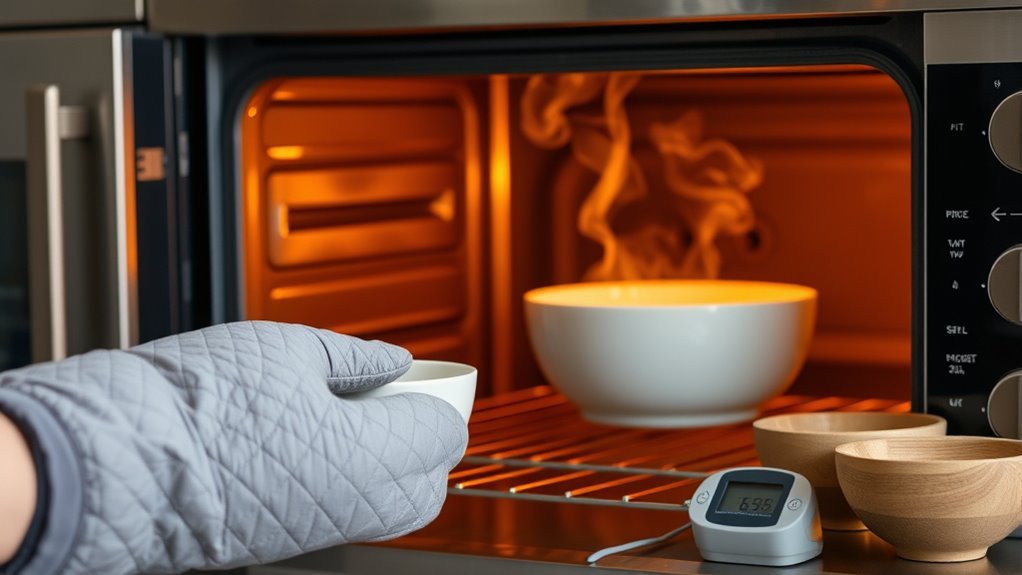
A cracked shell won’t protect you from heat—your bowl can do the same if it’s meant for oven use. You’ll want to know how to check the label, what materials tolerate which temperatures, and how to avoid thermal shock so the dish and its contents stay intact. Keep going to learn quick tests, safe temperature ranges for ceramics, glass and metal, and smart alternatives when a bowl shouldn’t go near the oven.
Is This Bowl Oven-Safe? Quick Answer and Top Caveats
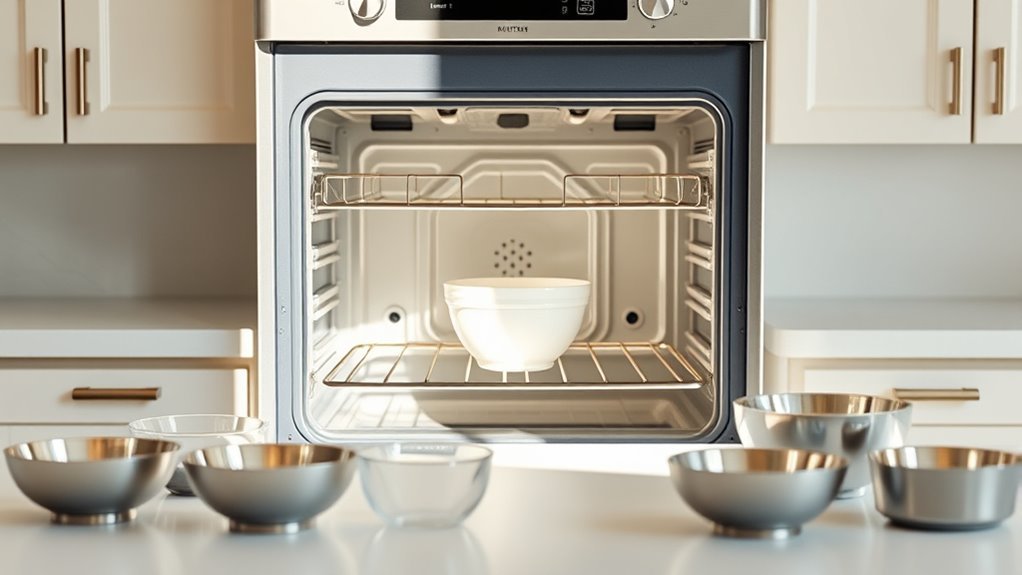
Wondering if that bowl can go in the oven? You’ll want a clear, evidence-based check before you heat anything. Look for an “oven safe” mark—manufacturers label items that tolerate high heat.
Ceramic plates and true stoneware usually handle oven temps, but low-fired or unglazed pieces are riskier; they can crack under stress. Don’t use bowls with decorative glues or non-heat-resistant paints, since adhesives can melt or emit toxins when hot.
Inspect closely for hairline cracks or chips; damage undermines structural integrity and raises breakage risk. To protect fragile ceramics from thermal shock, avoid sudden temperature swings—preheating with the bowl inside helps.
When in doubt, opt for cookware explicitly rated for oven use rather than guessing. You’re protecting your food, your kitchen, and your freedom to cook boldly without unnecessary hazards.
How to Check If a Bowl Is Oven-Safe?
Now that you know the common markers and risks, here’s how to check a bowl before tossing it in the oven.
First, inspect the bottom for an “oven safe” or manufacturers label; that’s your clearest confirmation it can withstand heat. If you see a temperature limit, trust it—most labeled bowls handle up to about 350°F (175°C), but some go higher.
Check the bottom for an “oven safe” label and heed any temperature limits—most handle around 350°F (175°C).
If there’s no label, don’t guess. Avoid homemade or unidentified pieces and skip suspect glass that isn’t marked for ovens. Prefer ceramic tableware or stoneware when you need reliability, and remember some branded glassware is oven-rated while generic glass may shatter.
Finally, examine the bowl closely for chips, hairline cracks, or crazing; any damage weakens structure and increases breakage risk.
When in doubt, choose a clearly labeled dish. That’s a small act of care that keeps you safe and preserves your freedom to cook boldly.
What Temperatures Common Bowl Materials Can Handle
Different materials tolerate very different oven temperatures, so check what your bowl is made of before heating it. If it’s labeled oven safe, ceramic bowls usually handle up to about 400°F (200°C); still inspect for hairline cracks that weaken them.
Stoneware is rugged — it can endure extremely high temperatures (well over 1200°C) when dry, so it’s a liberating, reliable choice for roasting and baking.
Porcelain may be oven-safe if specified, but it’s more delicate and can crack under high heat, so use caution and stick to moderate temperatures.
Glass dishes like Pyrex are generally safe for oven use at typical baking temperatures, while ordinary glass can fail and shatter if heated too much.
Never put plastic or melamine in the oven — they’ll melt and release toxins regardless of microwave-safe claims.
Match the bowl’s material and labeled temperature limits to your recipe to protect your food and freedom to experiment.
Prevent Thermal Shock: Safe Heating and Cooling Tips
To prevent thermal shock, let ceramic and glass bowls reach room temperature and heat them gradually by preheating the oven with the dish inside.
Don’t move bowls straight from freezer or refrigerator into a hot oven, since cold-to-hot transfers can cause cracking or shattering.
After baking, set hot bowls on a heat-resistant surface and let them cool slowly to avoid rapid temperature changes that weaken the material.
Gradual Temperature Changes
If you want to avoid thermal shock and cracked ceramics, gradually acclimate your oven-safe bowl to room temperature before heating and preheat the oven with the bowl inside so temperature changes are slower and more even.
You’ll protect your baking dishes by respecting temperature changes and manufacturer guidelines: don’t rush a cold bowl into heat or expect all ceramics to tolerate high temps. Let frozen or chilled pieces come fully to room temperature first.
After baking, set bowls on a heat resistant surface—like a wooden board—and let them cool gradually rather than plunging into cold water or a cool countertop.
These practical steps reduce breakage, extend the life of your cookware, and give you more freedom to bake without fear.
Avoid Cold-To-Hot Transfers
Because sudden temperature swings can crack or even shatter ceramic, avoid moving bowls straight from cold to hot or vice versa; always let them reach room temperature first and, when possible, preheat the oven with the bowl inside so heating is gradual and even.
You’ll reduce thermal shock and protect any oven safe dishware by never placing frozen or chilled bowls into a blazing oven. Treat extreme temperatures as threats: slow changes prevent hairline cracks or catastrophic failure.
Follow manufacturer guidelines for temperature limits and safe heating practices—those specs matter for longevity and safety.
This approach lets you use versatile cookware confidently, freeing you from fear of breakage while keeping your kitchen safe and your dishes intact.
Cool Slowly After Baking
When you take bowls out of the oven, let them cool gradually on a heat-resistant surface—like a wooden board or fabric trivet—instead of setting them on cold countertops or plunging them into the fridge.
You’ll cool slowly to avoid thermal shock, which can crack ceramics and undermine structural integrity. For safe oven use, resist the urge to speed things up: don’t transfer hot bowls to cold surfaces or run them under cold water.
Let dishes reach room temperature before washing or storing; that natural cooldown protects glaze and body. This habit preserves your cookware’s strength, reduces breakage, and gives you freedom from replace-and-repeat cycles.
Simple, deliberate cooling extends lifespan and keeps your kitchen tools reliable.
Oven Tasks and Limits: Baking, Broiling, Reheating Safely
Although oven-safe bowls are sturdy, you should still confirm the manufacturer’s temperature rating (typically up to about 450°F/230°C) before baking, broiling, or reheating to avoid cracks or melting.
When you bake, use a labeled baking dish or bowl that can withstand the oven’s heat; thin ceramics or plastics aren’t reliable.
For broiling, pick vessels specified for broiler use—proximity to the element concentrates heat and can warp or melt materials not designed for it.
Reheating works best in glass or ceramic marked oven safe; they tolerate dry heat and keep food integrity.
Always preheat the oven so the bowl heats gradually and avoid thermal shock, which causes sudden cracking.
Monitor temperatures and never exceed the manufacturer’s limit: pushing past specs risks structural failure and injury.
Choosing appropriate, rated cookware lets you reclaim control in the kitchen—cook boldly, but respect material limits for safety and longevity.
If a Bowl Isn’t Oven-Safe: Safe Alternatives and When to Replace
If your bowl isn’t labeled oven-safe, don’t risk using it—opt instead for proven substitutes like oven-safe glass or ceramic, metal, or cast iron that handle high heat reliably.
When you need an alternative, choose materials marked oven safe or known to be heat resistant: tempered glass (Pyrex), stoneware rated for baking, stainless steel, or seasoned cast iron.
These alternatives reduce the chance of thermal shock and avoid off-gassing from unknown coatings.
Inspect any bowl before use: visible cracks, hairline fractures, or chipped glaze mean you should replace it; damaged pieces are far more likely to fail under temperature changes.
Always consult the manufacturer’s guidelines for temperature limits and recommended uses.
Always check the manufacturer’s instructions for safe temperature limits and proper use before oven cooking.
If you want freedom from worry, build a small kit of verified oven-safe dishes for baking and reheating.
That way you won’t gamble with sentimental or mixed-material bowls, and you’ll confidently swap in safe, heat-resistant cookware whenever a recipe calls for oven use.
Frequently Asked Questions
How Do I Know if My Bowl Is Oven Safe?
Check the bowl’s label and manufacturer info to confirm oven-safe status.
You’ll assess material types (stoneware, tempered glass, metal are usually safe), verify heat resistance limits, and avoid microwave-only or unmarked pieces.
Inspect for chips or cracks and follow safety guidelines like gradual temperature changes and recommended max temps.
Practice proactive bowl care to preserve integrity, and if unsure, don’t risk it — choose cookware clearly rated for ovens.
Which Bowls Can Go in the Oven?
You can use glass bowls, metal bowls, and silicone bowls only if they’re labeled oven-safe and made from safe materials. You’ll rely on oven-safe marks and manufacturer guidelines; tempered glass and heavy-duty metal handle high heat, while silicone tolerates moderate oven temperatures.
Avoid plastics, melamine, thin ceramics. You’ll also prevent thermal shock by warming bowls gradually. Choosing certified oven-safe pieces lets you cook boldly and stay free from breakage or toxins.
Can Ceramic Go in the Oven at 400 Degrees?
Yes — if your ceramic types are labeled oven-safe, you can usually use them at 400°F.
Think of it like a trusted ship weathering a storm: check heat resistance symbols, avoid unglazed or cracked pieces, and use gentle cooking methods like baking rather than broiling.
Preheat the oven with the piece inside to reduce thermal shock.
These oven safety steps free you to cook boldly while protecting your cookware and your freedom to create.
Can I Put a Ceramic Bowl in the Oven?
Yes — you can put a ceramic bowl in the oven if it meets oven safety guidelines.
Check the ceramic bowl materials and manufacturer specs for temperature limits (often up to 400°F/200°C or higher). Avoid unglazed or cracked pieces.
Use cooking techniques that prevent thermal shock: preheat oven with the bowl inside and don’t set hot bowl on cold surfaces.
Follow evidence-based oven safety guidelines to protect your freedom to cook boldly.
Conclusion
You can put a bowl in the oven only if it’s labeled oven-safe and free of cracks—don’t guess. Check the maker’s stamp, material (ceramic, stoneware, tempered glass are safer than plastic or thin metal), and recommended max temp. Want to avoid a shattered casserole or ruined meal? Let dishes come to room temperature, avoid sudden temperature changes, and skip the broiler unless explicitly allowed. When in doubt, use a proper baking dish.

