
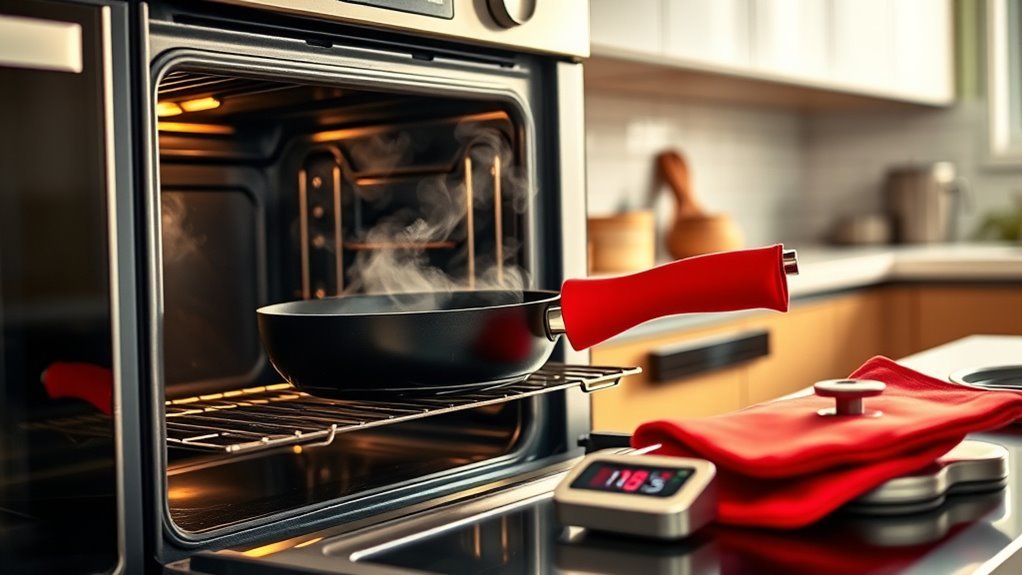
You might think it’s perfectly safe to toss your Teflon pan in the oven without a second thought, but that could spell disaster. Understanding the limits of Teflon cookware is essential for maintaining safety and performance. What temperatures can your pan handle, and how can you guarantee it’s oven-ready? Let’s explore the ins and outs of using Teflon pans in the oven and what you need to know to cook confidently.
What You Should Know About Teflon Coating
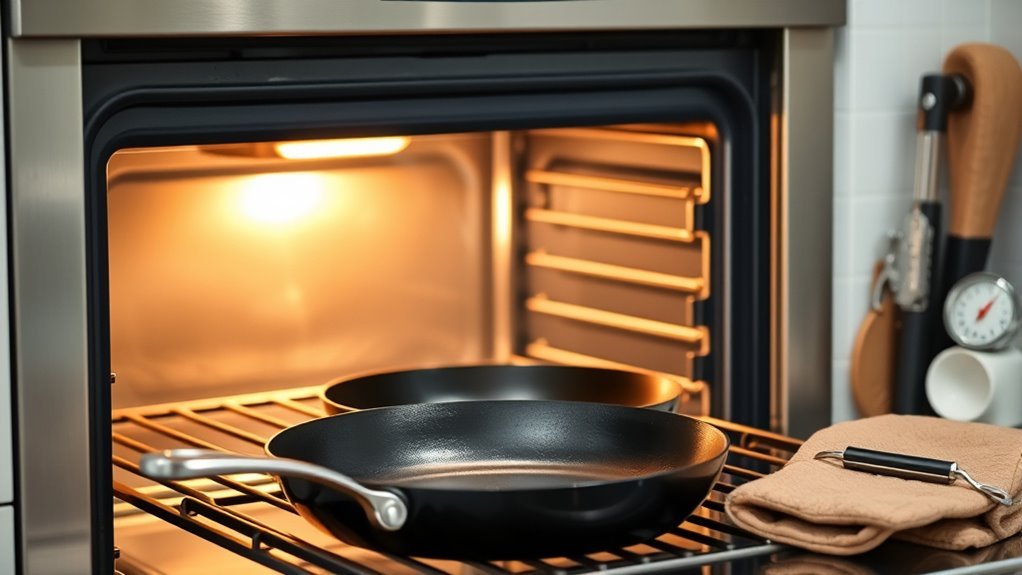
When you’re cooking with Teflon, or polytetrafluoroethylene (PTFE), it’s essential to understand its properties to secure a safe and effective experience.
Teflon durability is one of its standout features, allowing it to withstand temperatures up to 500°F (260°C) without degrading. However, exceeding this limit can lead to the release of harmful fumes, so keep your cooking temperatures in check.
Teflon’s durability allows for high-heat cooking, but temperatures over 500°F can release harmful fumes. Stay below this limit for safety.
To guarantee non-stick longevity, treat your Teflon pans with care. Avoid metal utensils that can scratch the surface and compromise the coating.
Over time, if not properly maintained, Teflon pans may lose their non-stick properties, impacting your cooking experience. Most manufacturers recommend hand washing instead of using a dishwasher, as this helps preserve the integrity of the coating.
What Oven Temperatures Are Safe for Teflon?
Knowing how to handle Teflon pans in the oven is key to maintaining their performance and safety. Generally, you can safely use Teflon pans at temperatures up to 500°F (260°C). However, always check the manufacturer’s guidelines for specific limits.
Here are some essential oven temperature guidelines and Teflon safety tips:
- Avoid temperatures exceeding 600°F (316°C) to prevent harmful fumes.
- Steer clear of high broiler settings, as direct heat can breach safe limits.
- Verify any plastic or rubber components are oven-safe, as they often tolerate lower temperatures.
- For best results, use Teflon pans for baking rather than high-heat cooking.
How to Tell If Your Teflon Pan Isn’t Oven-Safe?
How can you determine if your Teflon pan is safe for the oven? Start by checking for any signs of damage, like scratches or peeling. These can compromise the Teflon coating, making it unsafe for oven use.
Next, look at the handle material; if it’s plastic or has non-metal elements, it likely won’t withstand high temperatures and could melt or warp.
Additionally, consult the manufacturer’s guidelines for the maximum oven-safe temperature—usually around 350°F (175°C). If your pan isn’t explicitly marked as oven-safe or is an older model, it’s best to play it safe and avoid the oven altogether.
Best Practices for Oven Use With Teflon
Ensuring your Teflon pan is oven-safe sets the stage for successful baking and roasting.
To maximize Teflon durability and manage temperatures effectively, follow these best practices:
- Check the manufacturer’s guidelines for maximum temperature limits, usually between 350°F and 500°F (175°C to 260°C).
- Avoid using your Teflon pans under the broiler; the intense heat can damage the coating.
- Place your pans on the middle rack for even heat distribution and to prevent warping.
- Inspect your Teflon cookware regularly for scratches or wear; damaged coatings can release harmful chemicals when heated.
Alternatives to Teflon for Oven Cooking
If you’re looking for alternatives to Teflon for oven cooking, you’ve got some fantastic options.
Ceramic cookware offers a natural non-stick surface, while cast iron is known for its versatility and heat retention.
Stainless steel, on the other hand, is durable and perfect for high-temperature roasting and baking.
Ceramic Cookware Benefits
While many cooks rely on Teflon for its non-stick properties, ceramic cookware offers a compelling alternative that enhances your oven-cooking experience. With its impressive ceramic durability and excellent heat distribution, you can enjoy healthier and more efficient cooking.
- Free from harmful chemicals like PFOA and PTFE
- Can withstand oven temperatures up to 500°F (260°C)
- Guarantees even cooking, reducing hot spots
- Generally dishwasher safe for easy cleanup
Switching to ceramic not only liberates you from toxic coatings but also elevates your culinary adventures.
With proper care, you’ll find that ceramic maintains its non-stick qualities over time, making it a smart and eco-friendly choice for your kitchen.
2. Cast Iron Versatility
For those seeking alternatives to Teflon, cast iron cookware stands out as a versatile option that excels in oven cooking. Its ability to withstand high temperatures, often exceeding 500°F, makes it perfect for baking, roasting, and broiling.
One of the key cast iron benefits is its natural non-stick surface, which develops through proper seasoning techniques. This not only enhances flavor but also improves cooking performance.
Additionally, cast iron retains heat exceptionally well, ensuring even cooking and browning for your dishes. You can use it on the stovetop, in the oven, or even over an open flame, making it suitable for various cooking methods.
With regular maintenance, your cast iron cookware can last a lifetime, outperforming Teflon alternatives.
3. Stainless Steel Options
When you’re looking for reliable alternatives to Teflon for oven cooking, stainless steel cookware should be at the top of your list.
With its durability and ability to withstand high temperatures, it’s perfect for various cooking techniques.
Here are some stainless steel benefits that you’ll appreciate:
- Exceptional heat distribution, especially with aluminum or copper cores
- Better browning and searing of foods, thanks to the lack of non-stick coatings
- Dishwasher-safe and resistant to scratching and warping
- Ideal for both oven and stovetop cooking
Just remember to use oven mitts, as those handles can get extremely hot.
Debunking Teflon Myths for Oven Use
Have you ever wondered about the safety of using Teflon pans in the oven? Let’s debunk some common Teflon myths and safety misconceptions.
Teflon pans, coated with polytetrafluoroethylene (PTFE), can typically handle temperatures up to 500°F (260°C) without breaking down. However, exceeding this limit can release harmful fumes, so it’s essential to stick to moderate baking temperatures.
Always check the manufacturer’s guidelines, as specifications can vary. Many believe Teflon pans are universally safe for oven use, but that’s not entirely accurate; broiling or high-heat methods can damage the non-stick coating.
By understanding the limits and using your Teflon pans wisely, you can enjoy the benefits of non-stick cooking while ensuring safety.
Maintenance Tips for Your Teflon Cookware
To keep your Teflon cookware in top shape, focus on proper cleaning methods, avoid high heat, and follow smart storage practices.
Always hand wash with warm, soapy water and use gentle tools to protect the non-stick surface.
Proper Cleaning Methods
Proper cleaning methods are essential for maintaining the longevity of your Teflon cookware. By using the right cleaning tools and washing techniques, you can keep your pans in great shape. Here are some tips to help you:
- Use silicone, wood, or plastic utensils to avoid scratching the non-stick surface.
- Clean with soft sponges or cloths and mild dish soap; abrasive cleaners can damage the coating.
- Let your cookware cool down before washing to prevent warping.
- For stubborn stains, soak the pan in warm, soapy water to loosen grime gently.
Regularly inspect your Teflon pans for wear or damage.
Avoiding High Heat
Keeping your Teflon pans clean sets the stage for proper maintenance, but managing heat is just as important.
To preserve the non-stick longevity of your cookware, avoid exposing it to high heat. While Teflon pans are generally safe up to 500°F (260°C), prolonged exposure to extreme temperatures can cause heat damage, degrading the coating and risking your health.
Always check the manufacturer’s guidelines for specific heat limits. For high-temperature baking, opt for oven-safe alternatives instead.
Regularly inspect your pans for scratches or damage, as these imperfections can compromise the non-stick surface.
Storage Best Practices
While you might think storing your Teflon cookware is a simple task, it’s essential to follow some best practices to confirm their longevity. Proper Teflon storage and cookware organization can save you frustration and preserve your favorite pans.
- Store in a cool, dry place to prevent moisture damage.
- Use soft, non-abrasive materials like dishcloths between stacked pans to avoid scratches.
- Avoid placing heavy items on top to prevent dents and deformation.
- Keep sharp utensils and metal tools away to protect the non-stick coating.
Regularly inspect your Teflon pans for any signs of wear.
Taking these steps will help maintain their performance and confirm your cooking experience remains enjoyable and worry-free.
Frequently Asked Questions
Is Teflon Safe at 350 Degrees?
Yes, Teflon’s safe at 350 degrees Fahrenheit, making it suitable for most baking tasks.
Its durability holds up well at this temperature, so you can enjoy hassle-free cooking. Just verify you follow the manufacturer’s guidelines for oven safety.
Avoid temperatures above 500 degrees, as that’s when Teflon can break down and release harmful fumes.
Always cook in well-ventilated areas to keep your kitchen healthy while you whip up your favorite dishes.
Is Teflon Safe if Scratched?
Oh, the irony of trusting scratched Teflon pans for your culinary masterpieces!
While Teflon safety is often touted, scratched pans can compromise nonstick durability and pose health risks. If you notice scratches, it’s time to reconsider your cooking methods.
Those tiny imperfections might release particles or fumes that aren’t so appealing.
Can I Put a Nonstick Pan in the Oven at 400 Degrees?
Yes, you can put a nonstick pan in the oven at 400 degrees, but keep oven safety in mind.
Always check the manufacturer’s guidelines for your specific cookware. While it’s generally safe, be cautious—exposure to prolonged high temperatures can diminish its nonstick properties.
To prevent damage, avoid using it under a broiler and opt for silicone or wooden utensils when cooking.
Proper ventilation is essential to keep your space safe, especially for pets.
How Can I Remove Baked-On Grease From My Teflon Pans?
To remove baked-on grease from your Teflon pans, start by soaking the pan in warm, soapy water for at least 30 minutes.
For tougher grease removal, create a paste with baking soda and water, gently scrubbing it on the stains.
Avoid abrasive cleaners or steel wool, as these can scratch the non-stick surface.
You can also try a vinegar and baking soda mix; just let it sit before rinsing thoroughly and drying.
Conclusion
In summary, when using Teflon pans, prioritize proper precautions. By sticking to safe temperatures and steering clear of scratches, you safeguard your health and enhance your cooking experience. Remember, while Teflon can be convenient, consider complementary cookware like cast iron or ceramic for high-heat tasks. Stay savvy, select wisely, and savor your culinary creations. With the right choices, you’ll guarantee your kitchen remains a safe, satisfying space for delicious dishes.

