
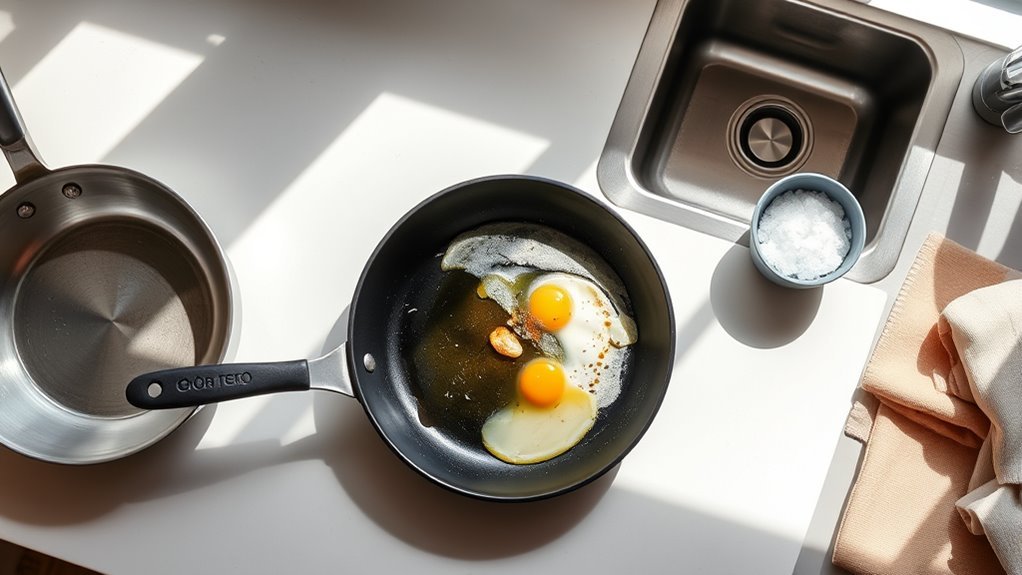
Nonstick cookware offers the convenience of easy food release, but it can also become a frustrating challenge when food sticks. Understanding how these coatings work and the reasons behind sticking is essential for any home cook. From high temperatures to improper utensil use, several factors can lead to issues. So, what can you do to rescue your favorite pan and guarantee it lasts? Let’s explore the solutions that can keep your cooking experience smooth and hassle-free.
What Is Nonstick Cookware and How Does It Work?
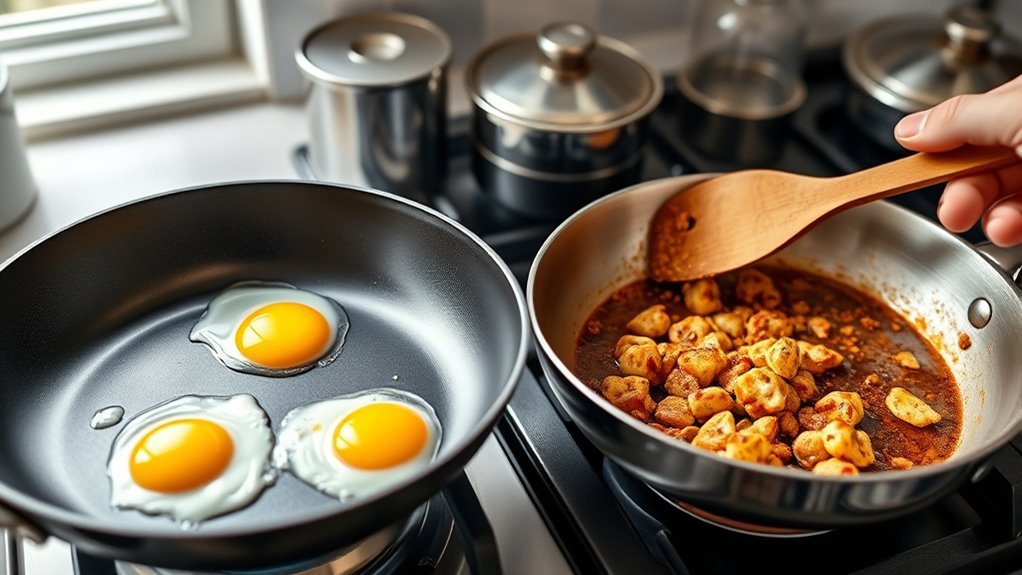
Nonstick cookware is a game-changer in the kitchen, designed to make cooking and cleanup a breeze. The secret lies in its special non-stick coating, typically made from Teflon™ or ceramic. This coating creates a low-friction barrier, preventing food from sticking and allowing for effortless food release. You’ll love how it minimizes the need for added fats, making your meals healthier and cleanup simpler.
Many modern nonstick cookware options are PFOA-free, addressing health concerns linked to older products, while ceramic varieties steer clear of PFAS, lead, and cadmium. The cookware often features a durable stainless steel exterior, ensuring even heat distribution for ideal cooking performance.
To maximize your nonstick experience, remember to use low to medium heat and avoid metal utensils. With proper care, your nonstick cookware can last, liberating you from the stress of stubborn food remnants and giving you more time to enjoy your culinary creations.
Common Causes of Nonstick Cookware Sticking
Even the best nonstick cookware can sometimes let you down, and several factors can contribute to food sticking unexpectedly. High temperatures can damage non-stick interiors, making food cling stubbornly. Using metal utensils can scratch the coating, worsening the sticking issue. If you skip the oil or cooking fat, delicate items like eggs and fish are especially prone to adhering to the surface. Additionally, residue buildup from improper cleaning can create a sticky layer, complicating your cooking experience. Not preheating your pan sufficiently can also lead to sticking, as food is more likely to bond to a cold surface.
| Cause | Impact |
|---|---|
| High temperatures | Damages non-stick interiors |
| Metal utensils | Scratches coating, increasing sticking |
| Lack of cooking fat | Causes food to adhere |
Awareness of these factors helps you maintain your cookware effectively.
Effective Solutions for Fixing Stuck-On Food
When food sticks to your nonstick cookware, it can feel frustrating, but there are effective ways to tackle this issue.
Start by soaking your frying pan in warm, soapy water for at least 15 minutes to loosen stubborn residues. Gently scrub with a soft sponge to avoid damaging the nonstick surface.
If you’re facing tougher residues, mix baking soda and water into a paste, apply it to the affected area, and let it sit for 15-20 minutes before wiping clean.
For burned food, fill the pan with water and simmer for about 10 minutes; this can lift stuck-on bits quite effectively.
Remember to steer clear of abrasive cleaners or steel wool, as they can ruin your pan’s coating.
Finally, recondition your nonstick cookware by applying a light layer of cooking oil after cleaning, helping to maintain its nonstick properties and extend its lifespan.
Caring for Your Nonstick Cookware: Tips and Tricks
How can you guarantee your nonstick cookware lasts longer and performs better? Start by hand-washing it with warm, soapy water and a soft sponge. This simple step prevents damage to the coating, ensuring longevity.
Hand-wash your nonstick cookware with warm, soapy water and a soft sponge to ensure its longevity and optimal performance.
When you’re cooking, reach for silicone, nylon, or wooden utensils. These materials protect the nonstick surface from scratches, letting you express your culinary creativity without worry.
Avoid high heat; sticking to low to medium temperatures helps preserve the coating’s integrity while enhancing food release. After each clean, recondition the interior with a light layer of cooking oil to maintain those essential nonstick properties.
And remember, never submerge hot cookware in cold water—this can warp the material and ruin your beloved kitchen companion.
With these tips, you can elevate your everyday cooking experience and enjoy the freedom that comes with perfectly nonstick results!
Key Factors in Selecting Nonstick Cookware
Maintaining your nonstick cookware enhances its performance, but choosing the right pieces is just as important. Start by prioritizing options with PFOA-free coatings, like ceramic or high-quality Teflon™, to keep your cooking safe and healthy.
Durability is key—look for titanium cookware that withstands high temperatures and resists chipping or peeling. This guarantees that your investment lasts longer and performs better.
Ease of cleaning is another crucial factor; nonstick surfaces allow for quicker cleanup and require less oil, making them perfect for daily use.
Don’t forget to check for user-friendly features too, such as comfortable handles and a lightweight design, which can elevate your cooking experience.
Finally, review warranty and maintenance guidelines, as proper care can greatly extend the lifespan of your nonstick cookware.
Make informed choices, and enjoy the freedom of effortless cooking!
Frequently Asked Questions
Is Nonstick Cookware Safe?
Yes, nonstick cookware can be safe, especially if you choose modern, PFOA-free options or ceramic alternatives.
To guarantee cookware longevity, follow maintenance tips like avoiding high heat and using non-metal utensils.
Regularly inspect your pans for wear, replacing them every 3-5 years to maintain performance.
By staying mindful of these practices, you can enjoy the convenience of nonstick surfaces without compromising your health.
Embrace safe cooking without worries!
Which Non-Stick Coating Is Safe for Health?
For a safe non-stick coating, consider Teflon alternatives like ceramic or titanium cookware.
These materials are free from harmful chemicals and offer excellent coating durability.
Ceramic options, such as Thermakind®, guarantee a healthier cooking experience without PFAS, lead, or cadmium.
If you prioritize safety, these alternatives provide peace of mind while cooking.
Regularly check and replace your cookware to maintain its integrity, and enjoy the freedom of healthier meal preparation!
Is It Better to Get Stainless Steel or Nonstick?
When it comes to cookware, think of stainless steel as a steadfast warrior and non-stick as a graceful dancer.
If you crave durability and high-heat cooking performance, stainless steel’s your champion. However, if you prefer effortless food release and low-fat meals, non-stick shines.
For maintenance, remember to preheat stainless steel and avoid metal utensils on non-stick.
Choose based on your culinary adventures; each has its own magic waiting to unfold in your kitchen.
What Is Healthier, Ceramic or Nonstick?
When it comes to health, ceramic cookware often edges out nonstick options. Its durability means it can handle high heat without releasing harmful chemicals, while nonstick maintenance can be tricky, especially with high temperatures.
You’ll enjoy great cooking performance with both, but ceramic typically requires a bit more oil for that smooth food release.
If you’re looking for a safer choice, ceramic’s free from harmful substances makes it an appealing option.
Conclusion
In the culinary world, nonstick cookware can feel like a modern-day Excalibur—powerful yet temperamental. By understanding its nuances, you can wield it with confidence. Remember, the right care and techniques not only preserve its magic but also elevate your cooking experience. Embrace these tips, and you’ll transform potential sticking woes into seamless meals, allowing you to create culinary masterpieces with ease. So, gear up and let your nonstick cookware shine!
