
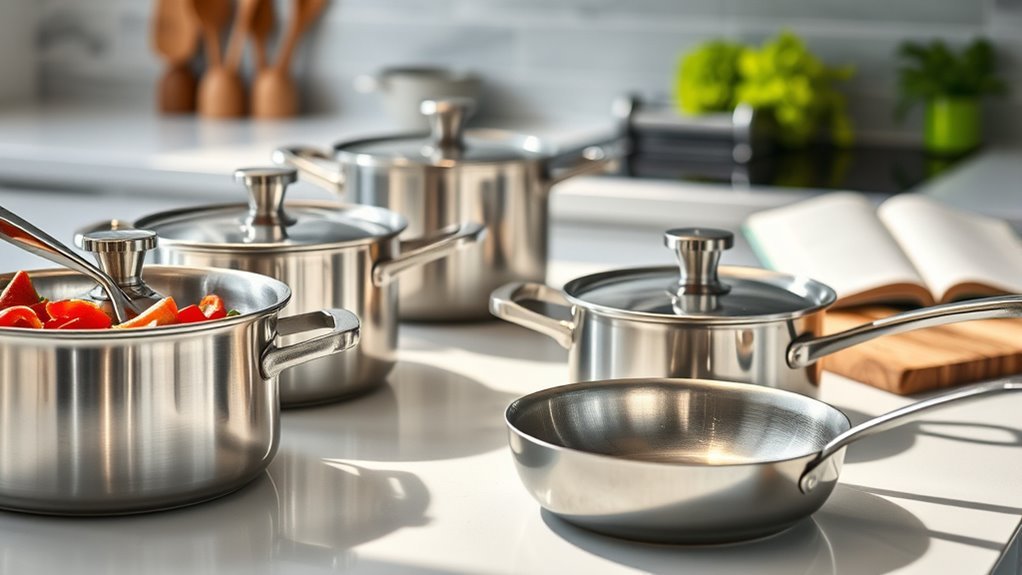
If every kitchen utensil were secretly poisoning you, you’d want to know the truth—luckily, stainless steel is mostly harmless and widely used because it resists corrosion and leaching. You’ll still need to understand grades like 304 and 316, how nickel and chromium can matter for some people, and simple habits that cut any risk. Keep this in mind so you can choose, use, and care for utensils with confidence.
Are Stainless Steel Utensils Safe? (Quick Answer)
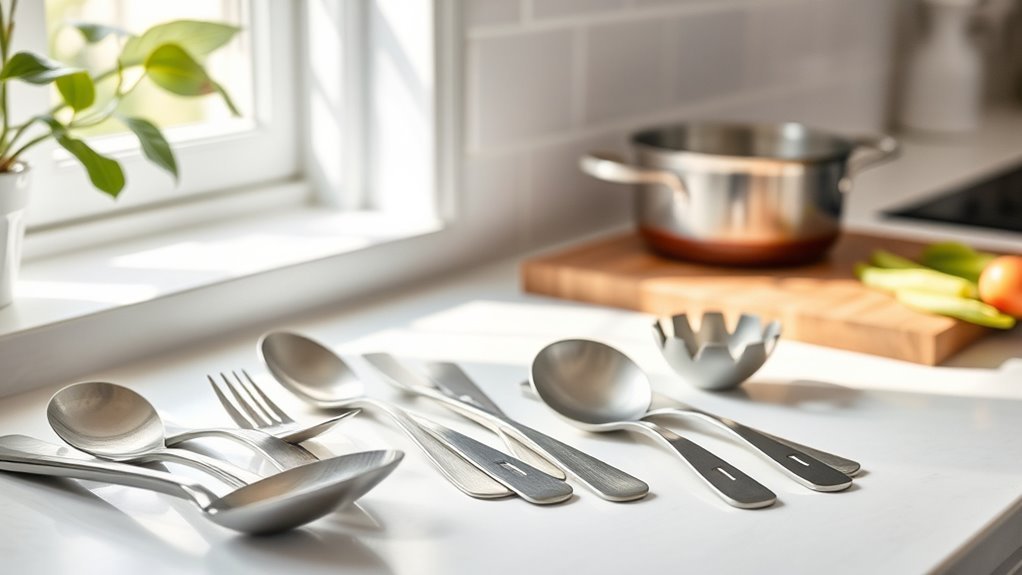
Although some people worry about metal in the kitchen, stainless steel utensils are generally safe: they’re non-reactive, don’t leach harmful chemicals like PTFE/PFAS, and high-quality grades (for example, 304 or 18/10) resist corrosion and maintain a non-porous surface, so they won’t absorb or transfer contaminants into your food.
You can use stainless steel cookware and utensils confidently because they don’t contain the synthetic coatings that break down under heat. Small amounts of nickel and chromium can migrate when exposed to acidic foods or wear, but those trace levels are usually well below safety limits for most people.
If you have a metal allergy, you’ll want to choose alternatives, but otherwise stainless steel offers durable, low-maintenance safety. Practice simple care—clean promptly, avoid long acidic soaking, and replace heavily damaged pieces—to minimize corrosion and keep your utensils non-reactive and reliable for cooking and serving.
Stainless Steel Grades Buyers Should Know (304, 316, 18/10, 201, 430)
When you’re comparing 304 and 316 stainless steel, the key difference is that 316 includes molybdenum and typically offers better corrosion resistance in acidic or salty conditions.
304 (often labeled 18/8 or 18/10) has higher nickel content than lower-cost grades like 201, which helps with durability and rust resistance, while 430 is magnetic but less corrosion-resistant.
Verify the stamped grade and prefer fully clad constructions so you get the nickel and alloy benefits where they matter most.
304 Vs 316 Differences
If you’re choosing between 304 and 316 stainless steel, focus on composition and intended use:
304 Stainless Steel (18/8 or 18/10) gives you reliable corrosion resistance and durable cookware for everyday use because it balances nickel and chromium levels.
316 Stainless Steel adds molybdenum, boosting performance when cooking acidic foods or working in salty environments — it’s the marine-grade option.
- Choose 304 for general cooking, longevity, and affordability.
- Choose 316 when you frequently cook tomato-based or citrus dishes.
- Prioritize grade verification to avoid lower-cost alternatives like 201 or 430.
- Remember: proper care extends lifespan and preserves safety.
Know your needs, verify the grade, and select the alloy that frees you from unnecessary replacement.
Nickel Content Explained
Because nickel strongly influences stainless steel’s corrosion resistance and feel, knowing how much is in a utensil helps you pick the right grade for your cooking needs.
You’ll find 304 Stainless Steel (18/8 or 18/10) contains about 8–10.5% nickel, giving excellent corrosion resistance and a smooth cooking surface that suits durable cookware and everyday stainless steel cookware.
316 adds molybdenum for extra resistance to acidic or salty foods but’s rarer in consumer items.
Lower-nickel grades like 201 or 430 cut costs but compromise corrosion resistance and longevity; 430 may be magnetic and less resilient.
If you have nickel sensitivity, choose low-contact finishes or verify grade labeling.
Prioritize quality stainless marked 304 for reliable performance and freedom from frequent replacement.
Health Risks: Nickel, Chromium, Allergies, and Testing
You should be aware that nickel and chromium can leach from stainless steel utensils into food, especially with acidic ingredients and long cooking times.
If you have a nickel allergy, even small releases can trigger inflammation or dermatitis, so allergy testing and avoiding high-release grades is prudent.
Verify cookware composition and choose higher-quality 18/10 or certified products to stay within safe exposure limits.
Nickel And Chromium Release
When you cook acidic foods like tomato sauce in stainless steel, the metal can leach measurable amounts of nickel and chromium into the food, sometimes raising nickel by as much as 26-fold and chromium several-fold in studies.
You should know that nickel and chromium release depends on stainless steel grade, time, and acidity. This matters if you want freedom from avoidable exposures and health issues.
- Choose 18/10 stainless steel cookware when possible — it usually releases less nickel.
- Acidic ingredients, long simmering, and pitting boost metal leaching.
- Those prone to allergic reactions or chronic inflammation should use caution.
- If concerned, get cookware tested and limit prolonged cooking with acidic foods.
Allergy Testing And Limits
Having covered how stainless steel grade and cooking conditions affect nickel and chromium release, let’s look at how to assess and limit health risks for people with metal sensitivities.
You can seek allergy testing—skin prick or blood tests that measure specific IgE—to confirm nickel or chromium sensitivity and guide choices. If testing shows sensitivity, avoid lower-grade stainless steel (201, 430) and acidic cooking that raises nickel in food.
High quality stainless steel (18/10, 304) reduces leaching for most, but sensitive individuals may need nickel-free alternatives and dietary moderation to prevent accumulation.
Watch for contact dermatitis or systemic symptoms and limit prolonged exposure. Testing empowers you to choose safer utensils and reclaim control over your kitchen and wellbeing.
Safest Cookware & Utensils for Everyday Use (Low‑Leach Options)
Because high-quality stainless steel like 18/10 (304) is largely non-reactive, it’s one of the safest everyday choices for cookware and utensils, posing minimal risk of leaching under normal use.
High-quality 18/10 stainless (304) is largely non-reactive, making it a safe, low-leach choice for everyday cookware.
You can choose tools that protect your health and freedom in the kitchen by prioritizing durable, plain metal over coated options. Follow these low-leach picks:
- 18/10 stainless cookware and solid stainless utensils — proven non-reactive, safe for most meals.
- Single-piece stainless utensils (no glued handles) — fewer seams, less corrosion risk.
- Uncoated stainless pans instead of PTFE/PFAS nonstick — avoids chemical leaching at high heat.
- Heavier-gauge stainless with polished interiors — resists scratches that can raise leaching.
Inspect regularly for damage, avoid prolonged contact with highly acidic or salty foods, and prefer hand washing when possible to maintain integrity.
These choices reduce exposure to nickel and chromium for sensitive people while keeping your kitchen practical, empowering, and aligned with evidence-based safety.
Cooking Habits to Reduce Metal Leaching From Stainless Steel
Now that you’ve picked high-quality, uncoated stainless steel and sturdy single-piece utensils, adjusting how you cook will further cut the small risk of nickel and chromium getting into your food.
Favor 18/10 or 304-grade high-quality stainless steel for better corrosion resistance; it’s your first line of defense against metal leaching.
Avoid simmering acidic foods like tomatoes or vinegar for long periods—acidic foods accelerate nickel and chromium release.
Lower your cooking temperature when possible; extreme heat can break down surfaces and increase leaching.
Use oil to season stainless steel pans occasionally to create a quasi non-stick barrier that reduces direct metal contact with food.
When you must cook acidic dishes, do so briefly and consider finishing with low heat.
Be mindful about salt and acid contact time, and rinse or clean cookware promptly after use to preserve surface integrity.
These practical habits give you control—reducing exposure while keeping your meals flavorful and freeing you from unnecessary worry.
Cleaning, Seasoning, and Storage to Prevent Corrosion and Contamination
If you want your stainless steel utensils to last and stay safe, wash them by hand with mild soap and a non-abrasive sponge right after use.
Dry them thoroughly, and store them somewhere dry to prevent moisture-related rust and pitting.
You’ll avoid corrosion and contamination by limiting contact with acidic foods and salty water, and by inspecting utensils for scratches that can harbor bacteria.
Seasoning can boost non-stick performance: apply a thin layer of oil, heat until it smokes, then cool.
- Clean: use mild soap and non-abrasive pads; stronger cleaners like Bar Keeper’s Friend can remove stains without harming the metal.
- Season: thin oil coating heated to smoking point builds a resilient surface.
- Inspect: check for scratches, dents, and pitting; damaged items compromise safety.
- Storage: keep utensils dry and ventilated to prevent moisture buildup and corrosion.
Follow these steps to reclaim control over your kitchen tools and protect health, function, and safety.
How to Buy Low‑Nickel or Medical‑Grade Stainless Steel Utensils
Choosing low‑nickel or medical‑grade stainless steel utensils starts with checking labels and specifications so you know what you’re buying: look for 316 or 304 stainless and explicit “low‑nickel” or “medical‑grade” claims, and confirm nickel content is below about 8% for allergy‑sensitive use.
You should prioritize brands that specialize in health-focused cookware and publish material specs and sourcing details. Check product pages or contact manufacturers to verify nickel content and any third‑party testing.
Choose utensils with a smooth surface and polished finish to limit crevices where food and corrosive agents can settle, reducing potential leaching.
Inspect items on receipt and routinely for scratches, pits, or discoloration; even high-quality stainless steel can corrode and raise nickel exposure over time.
If you have severe allergies, prefer medical‑grade options with documented nickel limits and certifications.
Buying informed gives you control over your kitchen and your health, aligning practical choices with your desire for bodily autonomy and safety.
Frequently Asked Questions
Are Stainless Steel Utensils Non-Toxic?
Yes — stainless steel utensils are non-toxic. You’ll benefit from stainless steel safety, as high-quality grades resist food reaction and rust resistance while avoiding BPA concerns common in plastics.
You’ll enjoy utensil longevity with proper cleaning methods and maintenance, and you’ll handle heat conductivity confidently when cooking. Stick to gentle cleaners to preserve the surface; that keeps your tools hygienic, durable, and aligned with a liberating, evidence-based approach to cookware.
What Are the Downsides of Using Stainless Steel Utensils?
Imagine your spoon staging a tiny protest sign: “Metallic taste now!”
You’ll face durability concerns with low-grade steel, plus heat retention that can burn fingers.
Surface scratches can mar cookware and release bits; weight factors make long stirring tiring.
Cost comparison favors cheaper sets but they age worse.
Aesthetic appeal may fade with stains.
You’ll need regular maintenance requirements to avoid corrosion and protect guests with metal sensitivities.
What Is the Healthiest Material for Utensils?
The healthiest material depends on your needs: you’ll often choose bamboo utensils or silicone spoons for low-toxicity, glass serving for inert surfaces, and ceramic knives for sharp, chemical-free cutting.
Wooden forks can be safe if maintained; compostable forks suit short-term use, and reusable straws reduce waste.
Pick items that resist leaching, are easy to sanitize, and align with your values for durability, minimal chemicals, and environmental liberation.
What’s the Downside of Stainless Steel Cookware?
Yes — you’ll face trade-offs: stainless steel offers great corrosion resistance and aesthetic appeal, but you’ll notice poorer heat conductivity versus copper, weight factors that tire your arm, and durability concerns if it’s low-grade or scratched.
You may get metal leaching with acidic foods, and maintenance requirements are higher to avoid sticky residue or corrosion.
If you want freedom in cooking, pick higher grades and care for them properly.
Conclusion
You can trust stainless steel like a well-made shield in your kitchen: 304 or 316 wink at corrosion, while lower grades ask for more care. If you’re sensitive to nickel, picture choosing lighter armor—medical‑grade or low‑nickel options—to keep irritation at bay. Cook acidic foods briefly, avoid scratched pans, and clean and store utensils dry. These small habits lock in safety and longevity, letting your cookware serve reliably, day after day.
