
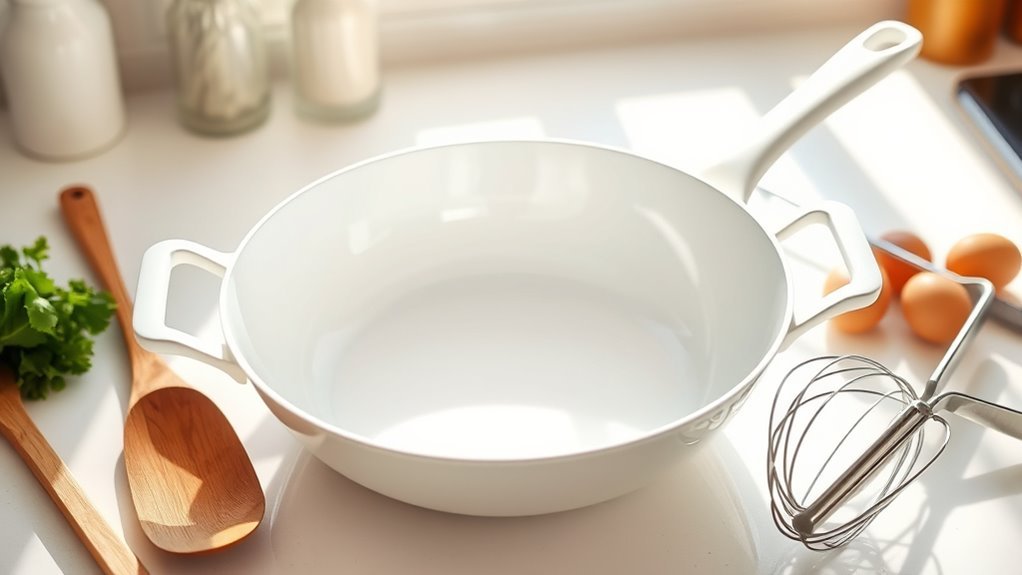
Picture a gleaming set of ceramic cookware, its vibrant colors promising culinary adventures. You might wonder, though, can these beautiful pots and pans withstand the rigors of daily cooking? While ceramic cookware is generally more scratch-resistant than traditional nonstick options, it’s not invincible. Understanding how to care for it can make all the difference in maintaining its appeal and functionality. Let’s explore what you need to know to keep your cookware looking new.
Can Ceramic Cookware Scratch?
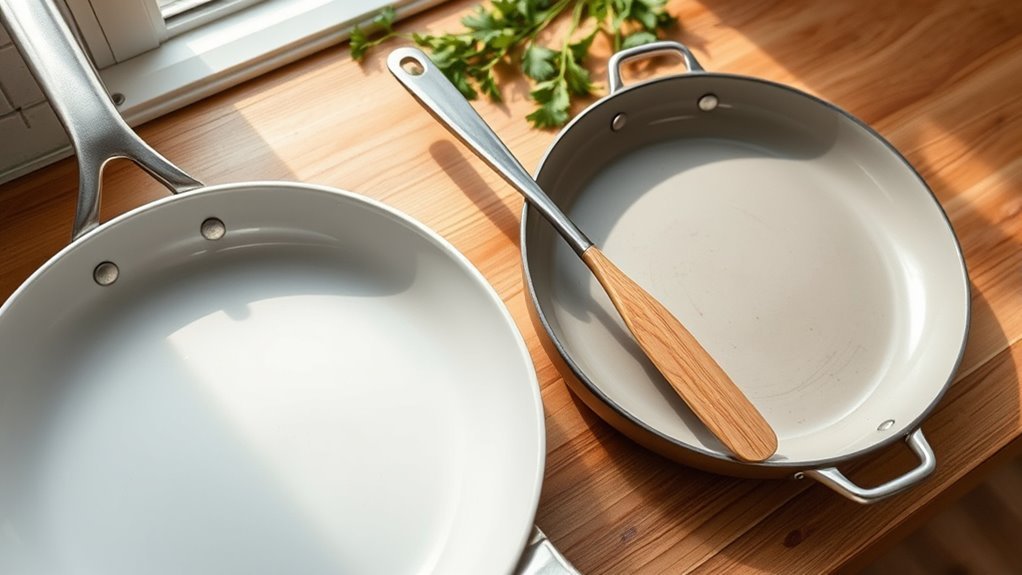
While ceramic cookware is generally more resistant to scratches than traditional nonstick options, it can still be susceptible to damage. The use of metal utensils increases the likelihood of scratching, so opt for silicone or wooden tools instead.
Minor scratches may only affect the appearance, but deeper gouges can compromise the cookware’s nonstick properties and cooking performance. To maintain the integrity of your durable ceramic, avoid high heat and practice gentle cleaning techniques—soft sponges and mild detergents work best.
Regular maintenance, like proper storage techniques, can considerably extend your cookware’s lifespan and reduce scratch risks. When stacking pots and pans, use protective layers to prevent friction.
Types of Ceramic Cookware: What to Choose
While ceramic-coated options are more scratch-resistant than standard nonstick cookware, they still require care to avoid scratches.
Think about your cooking style; if you often cook at higher temperatures or desire a more resilient option, ceramic-coated cookware is the way to go.
Ultimately, the right choice depends on your needs and aesthetic preferences, as both types come in a range of colors and designs that can liberate your kitchen’s look.
What Causes Scratches on Ceramic Cookware?
Scratches on ceramic cookware often occur due to everyday cooking habits and care practices. To guarantee your pots and pans maintain their integrity, be mindful of the following:
- Metal utensils: They can scrape the surface and compromise the ceramic coating.
- Stacking: Without protective layers, friction between stacked cookware increases the risk of scratches.
- Abrasive cleaning tools: Using steel wool or hard scrubbers can damage the ceramic coating, leading to unsightly scratches.
- High temperatures and acidic foods: These can weaken the ceramic layer over time, making it more vulnerable to scratches and decreasing its longevity.
How to Prevent Scratches: Essential Tips for Care
To keep your ceramic cookware in top shape, adopting proper care techniques is key. Start by using non-metal utensils, like silicone or wood, to prevent scratches on the surface.
When cooking, avoid high heat; excessive temperatures can degrade the ceramic coating and increase the risk of damage.
After each use, clean ceramic pans with a soft sponge and mild dish soap, steering clear of abrasive cleaners that could scratch.
When storing, place protective layers, such as cloth or paper towels, between stacked pieces to avoid friction damage.
Regularly inspect cookware for signs of wear; catching minor scratches early can help maintain nonstick properties.
Utensils That Won’t Scratch Your Ceramic Cookware
Choosing the right utensils is essential for maintaining the longevity of your ceramic cookware. Using the wrong tools can lead to scratches and diminish its nonstick coating.
Choosing the right utensils is crucial for preserving your ceramic cookware and its nonstick coating.
To keep your cookware in top shape, consider these utensil options:
- Wooden Utensils: Gentle on ceramic surfaces, they prevent scratching while cooking.
- Silicone Spatulas: Flexible and heat-resistant, these are perfect for stirring and flipping without damage.
- Nylon Utensils: Non-abrasive and safe, they help maintain the nonstick coating of your cookware.
- Avoid Metal Utensils: These can scrape and gouge the surface, leading to reduced functionality.
Store Your Cookware Scratch-Free
While storing your ceramic cookware, keeping it scratch-free is essential to maintaining its performance and appearance. Always use protective layers, like cloth or paper towels, between stacked pieces to prevent scratches caused by friction.
Avoid storing ceramic cookware under heavy items, as this can pressure the nonstick surface and lead to damage. Instead, consider dedicated storage solutions such as drawer dividers or pot racks to keep your pots and pans separate.
Regularly inspect your cookware for any signs of wear before storage; addressing minor issues can prevent further damage.
Additionally, keep your ceramic cookware in a cool, dry place to avoid moisture buildup, which can degrade the ceramic coating over time.
Maintain Your Ceramic Cookware for Longevity
To keep your ceramic cookware in top shape, always choose non-metal utensils like wood or silicone to prevent scratches.
Stick to low to medium heat when cooking, as high temperatures can damage the ceramic coating.
Finally, clean your cookware gently with mild soap and soft sponges, and consider protective layers when storing to avoid friction.
Proper Utensil Selection
Using the right utensils is essential for protecting your ceramic cookware from scratches and extending its lifespan. To guarantee you’re making the best utensil selection, follow these tips:
- Use non-metal utensils like wooden, silicone, or plastic tools to avoid damaging the coating.
- Regularly inspect utensils for sharp edges that might inadvertently scratch the ceramic surface.
- Store your cookware with protective layers such as cloth or paper towels to minimize scratches from stacking.
- Adopt gentle cleaning practices by using a soft sponge and mild soap, preserving the nonstick properties of your ceramic cookware.
Safe Cleaning Methods
Maintaining the longevity of your ceramic cookware hinges on safe cleaning methods that protect its delicate surface. Here’s how to keep your cookware in top shape:
| Cleaning Tip | Details |
|---|---|
| Use Non-Abrasive Cleaners | Opt for mild dish soap to maintain the ceramic coating. |
| Soft Sponges | Always use soft sponges to prevent scratches. |
| Hand Wash Only | Avoid dishwashers; they can damage the cookware. |
| Cool Before Cleaning | Let your cookware cool to prevent thermal shock. |
Additionally, remember to avoid metal utensils, and use protective layers during storage. Following these practices guarantees your ceramic cookware remains beautiful and functional for years to come.
Storage Techniques
Proper storage techniques are essential for ensuring your ceramic cookware remains in excellent condition. By following these guidelines, you can protect your investment and enjoy long-lasting cookware:
- Use a protective layer: Always place cloth or paper towels between stacked pans to prevent friction and scratches.
- Store in a cool, dry place: Avoid moisture exposure, which can deteriorate the nonstick coating.
- Choose the right storage solution: Avoid hanging pans with metal hooks, which can cause scratches; instead, secure them to prevent movement.
- Inspect cookware regularly: Check for any signs of wear or damage to catch issues early.
Frequently Asked Questions
What Is the Downside of Ceramic Cookware?
Ceramic cookware has several downsides. Its durability can be questionable, often leading to diminished cooking performance and non-stick properties over time.
You might find that it doesn’t retain heat as well as other materials, and maintenance tips are vital to prolong its life.
While it offers aesthetic appeal and eco-friendliness, you’ll also face cost comparisons and weight differences among brand options.
Ultimately, it’s important to weigh these factors before choosing ceramic cookware.
What Is Healthier, Ceramic or Stainless Steel?
When it comes to health, ceramic cookware often edges out stainless steel due to its nonstick properties and lack of harmful chemicals. You get ceramic benefits like easy cleanup and low-fat cooking.
However, stainless steel pros include durability and excellent heat retention, making it ideal for high-heat applications. Both are safe for food reactions, but consider price differences and environmental impact when choosing.
For maintenance tips, remember to care for each type appropriately.
Is It Safe to Cook With a Scratched Ceramic Pan?
Cooking with a scratched ceramic pan is generally safe, but you should consider a few factors.
While minor scratches don’t pose safety concerns, they can affect nonstick properties and heat distribution. To maintain your cookware, use non-metal utensils and gentle cleaning methods.
If deep gouges appear, they might lead to food sticking, impacting cooking techniques and durability. For best performance, evaluate lifespan comparison and consider alternative options if damage worsens.
Why Can’t You Use Olive Oil on Ceramic Pans?
Using olive oil on ceramic pans is like pouring water on a grease fire—it can lead to sticky residues and damage. Its low smoke point can compromise the cooking surface and non-stick properties, making cleanup a nightmare.
For better heat stability and flavor infusion, opt for oil alternatives like avocado or grapeseed oil. This way, you’ll maintain ceramic durability and guarantee food safety while minimizing maintenance tips for your cookware.
Conclusion
To summarize, while ceramic cookware can withstand the test of time, it’s not immune to scratches. By treating your cookware with care—just as you would a cherished heirloom—you can guarantee it stays in top shape. Choose the right utensils, store wisely, and maintain it regularly, and you’ll enjoy its beauty and functionality for years to come. Remember, a little attention goes a long way, keeping your culinary adventures smooth and scratch-free.
