
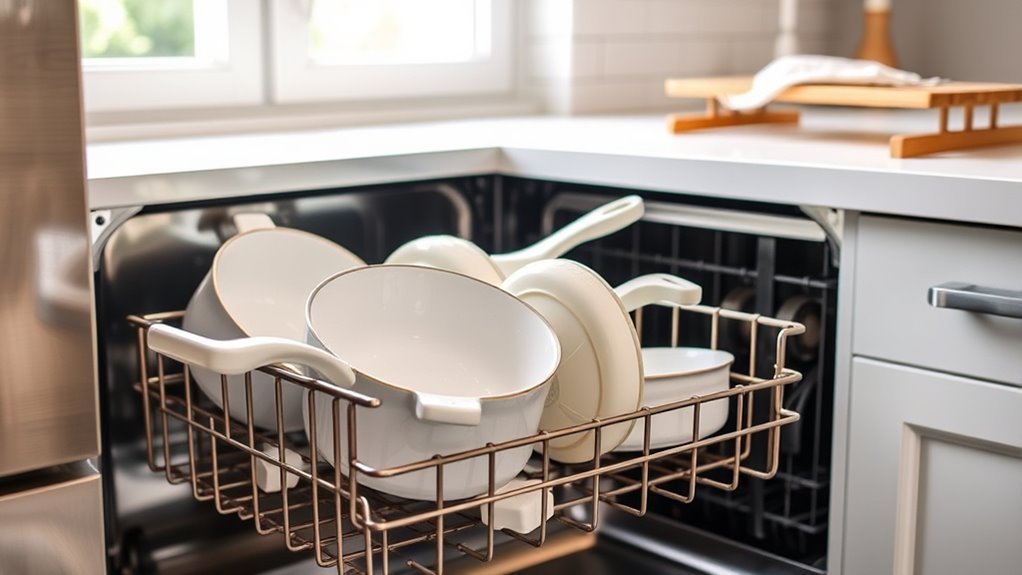
You might think ceramic pans are perfectly fine in the dishwasher, but that’s not the whole story. While they’re often labeled as dishwasher-safe, the reality is that harsh detergents and high-pressure water can compromise their nonstick coating. This can lead to food sticking and visible wear over time. So, what’s the best way to care for your ceramic cookware? Let’s explore the essential tips for keeping your pans in top shape.
Understanding the Dishwasher Safety of Ceramic Cookware
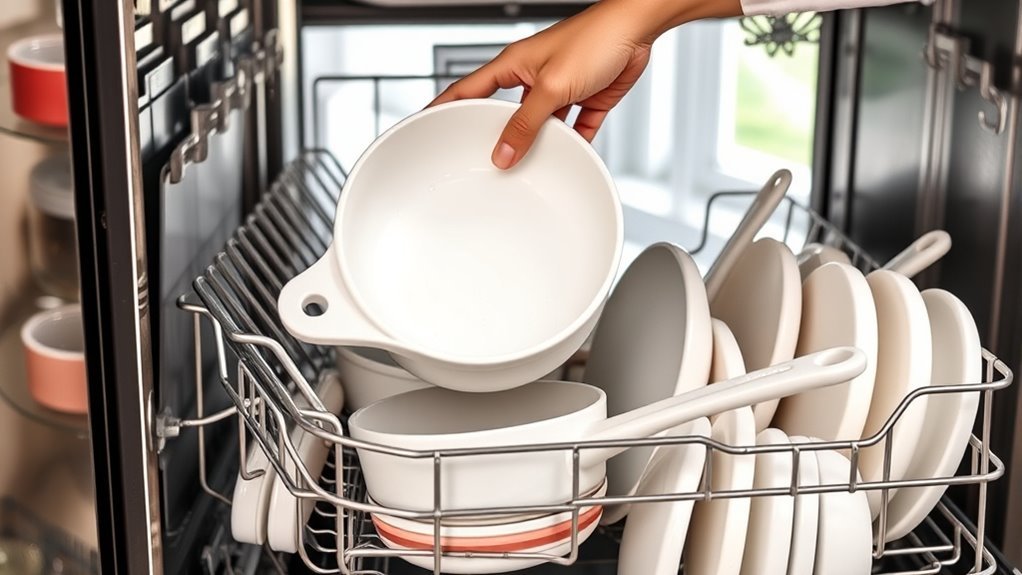
When it comes to ceramic cookware, you might think tossing your pans into the dishwasher is a convenient option, but it’s important to understand the potential risks involved.
While many ceramic pans are technically dishwasher-safe, handwashing is strongly recommended to preserve their nonstick properties and overall integrity.
Dishwashers use aggressive detergents and high water pressure, which can wear down ceramic surfaces over time. This deterioration often leads to food sticking to the surface, making cooking more frustrating.
Risks of Washing Ceramic Pans in the Dishwasher
Although ceramic pans might seem like a low-maintenance option, washing them in the dishwasher poses significant risks. Regularly using the dishwasher can degrade the ceramic coatings, leading to food sticking and poor cooking performance over time.
Washing ceramic pans in the dishwasher can degrade their coatings, leading to sticking and diminished cooking performance.
Harsh dishwasher detergents and high water pressure wear down your nonstick cookware faster than handwashing ever would.
Even if some ceramic cookware is labeled as dishwasher-safe, prolonged exposure to the dishwasher can accelerate coating deterioration. You might also notice visual damage, such as grayish stains from aluminum corrosion, especially with uncoated aluminum ceramic pans.
To maintain the integrity and longevity of your ceramic cookware, opt for handwashing with a soft sponge and warm water. This simple practice can save you from the pitfalls of dishwasher use, ensuring your pans stay in top shape for years to come.
Benefits of Handwashing Ceramic Pans
Handwashing your ceramic pans is one of the best ways to extend their lifespan and maintain their nonstick coating.
By using a soft sponge and warm, soapy water, you guarantee better cooking performance without risking damage from a dishwasher.
Plus, this simple practice keeps your cookware in top shape for years to come.
Extends Lifespan of Cookware
To extend the lifespan of your ceramic pans, handwashing is the way to go. Unlike dishwashers, which can degrade the ceramic surface with harsh detergents and high pressure, handwashing keeps your cookware in prime condition. By using warm water and a soft sponge, you can easily clean your pans without scratching them. Simmering soapy water in the pan can help loosen stubborn food residue, making the process even quicker. Here’s a quick comparison of handwashing versus dishwashing for your ceramic pans:
| Method | Pros | Cons |
|---|---|---|
| Handwashing | Preserves coating, easy to clean | Takes more time |
| Dishwashing | Convenient | Can damage ceramic over time |
Embrace handwashing to keep your ceramic pans functional and beautiful for years!
2. Preserves Nonstick Coating
When you choose to handwash your ceramic pans, you actively preserve the nonstick coating that makes cooking a breeze.
Dishwashers can expose these pans to harsh detergents and high-pressure water, which may degrade that precious nonstick surface over time.
By opting for gentle handwashing with a soft sponge and warm soapy water, you guarantee easy removal of food residues without scratching the ceramic.
Simmering soapy water can even help loosen stubborn bits, making the process efficient.
This simple choice not only protects the nonstick properties but also extends the lifespan of your cookware, allowing you to enjoy ideal cooking results for years to come.
Embrace handwashing and keep your ceramic pans performing at their best!
3. Ensures Better Cooking Performance
Choosing to handwash your ceramic pans not only preserves their nonstick coating but also enhances their cooking performance.
When you take the time to clean your ceramic skillet by hand, you’re preventing damage from harsh dishwasher detergents and high-pressure water. This means your non-stick pans will maintain their smooth surface, guaranteeing food slides off effortlessly.
Soaking your pans in warm, soapy water loosens stuck-on food without harsh scrubbing, keeping the integrity of the nonstick surface intact.
By opting for handwashing, you extend the lifespan of your cookware, allowing for consistently excellent results in the kitchen.
Ultimately, handwashing is a simple choice that guarantees your ceramic pans deliver the best cooking experience possible.
Effective Cleaning Techniques for Ceramic Cookware
Maintaining the integrity of your ceramic cookware is essential for its longevity and performance. To keep your pans in top shape, handwashing with a soft sponge and warm, soapy water is your best bet. This gentle approach preserves the nonstick coating and avoids scratches that can compromise the smooth surface.
If you encounter stubborn, stuck-on food, simmering soapy water in the pan works wonders, loosening residues without harsh scrubbing. This method not only saves your cookware but also makes cleaning a breeze.
Avoid long-term use of the dishwasher, as it can degrade the ceramic coating, leading to food sticking and diminished cooking performance.
Regular handwashing is practical and efficient, ensuring your ceramic cookware remains visually appealing and functional over time. By embracing these effective cleaning techniques, you’ll enjoy the full benefits of your ceramic pans for years to come.
Signs It’s Time to Replace Your Ceramic Pan
It’s essential to recognize the signs that indicate your ceramic pan needs replacing.
If food starts sticking more often, or you notice visible scratches and chips, it’s time to take action.
These issues can compromise your cooking experience and safety, so don’t wait until it’s too late.
Signs Of Wear And Tear
Ceramic pans can be a great addition to your kitchen, but knowing when to replace them is crucial for best performance. Look out for these signs of wear and tear:
| Sign | Description |
|---|---|
| Visible Scratches | Indicates the nonstick coating is wearing down. |
| Sticking Food | An increase in sticking food suggests coating deterioration. |
| Discoloration | Significant staining may compromise surface integrity. |
| Warping | A warped pan doesn’t heat evenly, affecting results. |
| Chipping | Chips in the coating can release particles into food. |
If you notice any of these issues, it’s time to think about a replacement. Keeping your ceramic cookware in good condition guarantees safer and more enjoyable cooking experiences.
Food Starts Sticking
When food starts sticking to your ceramic pan, it’s a clear sign that the nonstick coating may be degrading. This issue often arises from regular dishwasher use, where harsh detergents and high water pressure wear down the ceramic surface.
Once the nonstick properties diminish, your cooking performance will decline. Here are some key indicators that it’s time to contemplate replacing your ceramic cookware:
- Frequent sticking, despite thorough cleaning
- Unpleasant cooking experiences and frustration
- Increased effort needed for food release
- Reduced overall cooking satisfaction
To prolong the life of your ceramic pan, opt for hand washing instead.
If sticking becomes a regular nuisance, it’s time to liberate yourself with a new, efficient ceramic pan.
Noticeable Scratches Or Chips
Frequent sticking can lead to a closer inspection of your ceramic pan’s surface. If you notice scratches or chips, it’s time to evaluate replacement.
These noticeable scratches can compromise the pan’s nonstick properties, making cooking a hassle. Chips not only mar the appearance but can also lead to further deterioration, increasing the risk of food contamination.
If the ceramic coating is peeling or flaking, it’s a clear sign that your pan is past its prime. Regularly checking for wear is vital for maintaining the longevity of your ceramic cookware.
A pan with significant damage may not only perform poorly but could also release harmful particles into your food, making timely replacement essential for both health and safety.
Choosing the Best Detergents for Ceramic Cookware
To keep your ceramic cookware in top shape, it’s essential to choose the right detergents. Selecting the appropriate soap not only maintains the nonstick coating but also extends the life of your cookware. Here are some tips to guide you:
- Opt for mild, non-abrasive formulas to avoid damaging the ceramic surface.
- Avoid harsh detergents containing bleach or strong enzymes that can degrade the coating over time.
- Look for dishwashing soaps labeled as “safe for nonstick cookware” for gentle cleaning.
- Choose detergents free from phosphates and phosphonates to prevent buildup on ceramic surfaces.
Always follow the manufacturer’s recommendations regarding detergents to maximize performance and lifespan.
Quick Cleaning Methods for Ceramic Cookware
Keeping your ceramic cookware clean doesn’t have to be a hassle. Handwashing with warm water and a gentle sponge is your best bet; it effectively removes food residue without damaging the nonstick surface.
If you’ve got stubborn bits stuck on, simmer some soapy water in the pan. This method loosens the food, making cleanup a breeze without the need for intense scrubbing.
Always opt for a soft sponge or cloth to prevent scratches, as they can compromise the ceramic coating’s effectiveness. You’ll find that a drop of dish soap and a quick rinse are usually all it takes to maintain the quality of your ceramic cookware.
Top Tips for Long-Lasting Ceramic Cookware
While you might love the convenience of ceramic cookware, taking a few extra steps can greatly extend its lifespan. Proper care guarantees your nonstick pan remains a reliable kitchen companion.
Here are some top tips to keep your ceramic cookware in top shape:
- Handwash your pans with a soft sponge and mild dish soap to preserve the nonstick coating.
- Simmer soapy water in the pan to loosen stuck-on food for easier cleanup.
- Avoid metal utensils; opt for wood or silicone to prevent scratches on the surface.
- Limit dishwasher use, as aggressive detergents can degrade the ceramic coating, leading to food sticking over time.
Frequently Asked Questions
What Is the Downside of Ceramic Cookware?
Ceramic cookware has durability concerns, especially if you’re using it frequently.
While it offers good heat retention, it can wear down over time, leading to issues like food sticking and visual damage. The nonstick properties may degrade with regular use, and older coatings are particularly prone to deterioration.
To keep your ceramic pans performing well, consider hand washing them and avoid exposing them to harsh conditions like dishwashers.
How to Tell if Ceramic Is Dishwasher Safe?
To tell if your ceramic pan is dishwasher safe, check the manufacturer’s guidelines.
While many ceramic pans boast ceramic durability, their nonstick coatings can wear down over time in the dishwasher.
If you want to preserve their performance, consider using gentle washing techniques, like handwashing with warm water and a soft sponge.
This’ll help maintain their nonstick properties and guarantee your cookware lasts longer, giving you the freedom to cook without worry.
Why Can’t You Use Olive Oil on Ceramic Pans?
You shouldn’t use olive oil on ceramic pans because its low smoke point can damage ceramic durability.
When heated too high, it can create a sticky residue that affects the nonstick surface.
Instead, opt for oils with higher smoke points, like avocado or grapeseed oil.
This choice not only preserves the integrity of your cookware but also enhances your cooking experience.
Prioritizing oil selection will keep your ceramic pans in great shape longer.
Which Is Healthier, Ceramic or Stainless Steel?
When it comes to health, ceramic cookware shines like a beacon. Its non-toxic, leach-free properties offer you peace of mind, while stainless steel boasts durability and heat retention.
You’ll find ceramic benefits like superior nonstick qualities that promote healthier cooking without excess oil. On the other hand, stainless steel’s advantages include resistance to scratching and longevity.
Ultimately, choosing between them depends on your cooking style and health priorities. Embrace your culinary freedom!
Conclusion
In the world of cookware, think of your ceramic pans as delicate flowers. Just as a flower thrives with gentle care and attention, your pans will flourish with handwashing. While they may be labeled dishwasher-safe, harsh detergents and high pressure can quickly wilt their nonstick properties. By taking a moment to wash them by hand, you’re not just preserving their beauty and functionality—you’re nurturing your culinary garden for delicious meals to come. Treat them right, and they’ll serve you well!
