
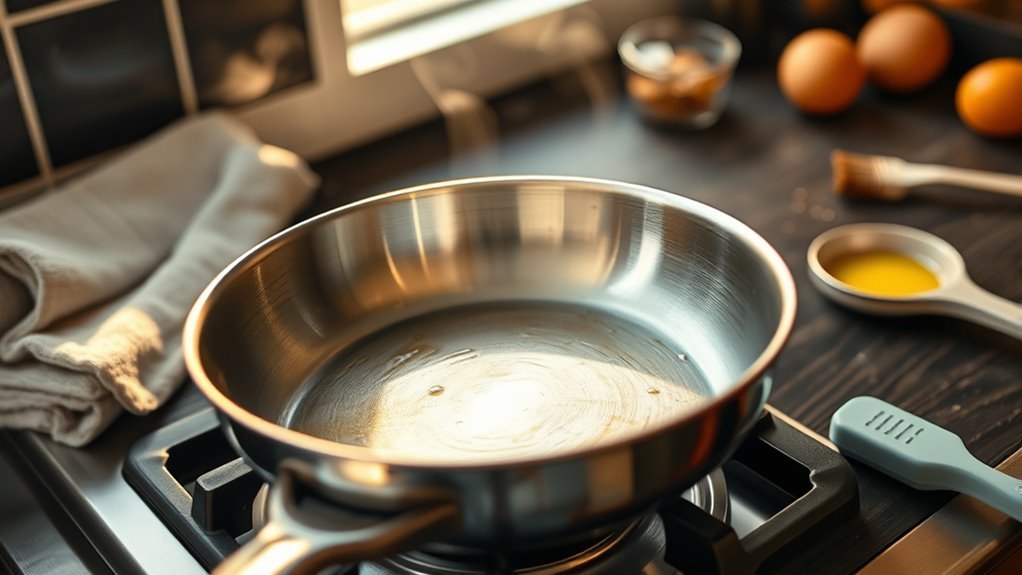
Imagine your stainless steel pan as a canvas, waiting for the right strokes to enhance its beauty and functionality. While these pans don’t need seasoning like cast iron, adding a layer can transform your cooking experience, making it smoother and more efficient. Have you ever faced stubborn sticking with delicate foods? Understanding when and how to season your pan might just be the secret ingredient you’ve been missing. Let’s explore the nuances of this often-overlooked technique.
The Basics of Seasoning Stainless Steel Pans
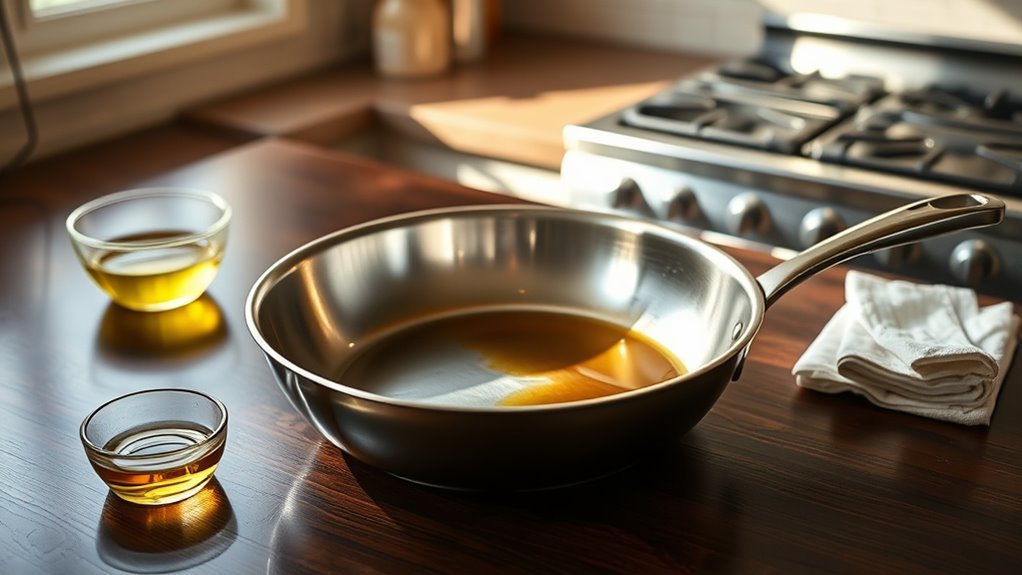
Have you ever wondered how to make your stainless steel pans perform like non-stick cookware? Seasoning stainless steel is the key to revealing that nonstick surface you crave, especially for delicate foods like eggs and fish.
Start by preheating your pan on medium heat—this step’s essential for effective seasoning. Once it’s warm, add a small amount of high smoke-point oil, like canola or avocado oil. Swirl it around to create a thin film, ensuring even coverage.
Avoid using too much oil or skipping the preheating, as these common mistakes can hinder the seasoning process. While stainless steel won’t retain seasoning like cast iron, regular seasoning can dramatically enhance your cooking experience, particularly with lean or sticky foods.
How Seasoning Stainless Steel Pans Improves Cooking Performance
Seasoning your stainless steel pans can transform your cooking experience by creating a smooth, non-stick surface that enhances food release.
This simple process fills in tiny imperfections, making it easier to cook delicate items like eggs and fish without them sticking.
As you continue seasoning, you’ll notice improved cooking efficiency, better browning, and richer flavors in your dishes.
Enhanced Non-Stick Surface
When you season stainless steel pans, you’re not just adding a layer of oil; you’re enhancing their cooking performance considerably.
This process creates an enhanced non-stick surface that’s especially beneficial for delicate foods like eggs and fish. By heating the pan to achieve the Leidenfrost effect, then applying a thin layer of high smoke-point oil, you fill microscopic imperfections in the stainless steel.
This smooths the cooking area and reduces sticking, making it easier to flip and turn your dishes. While the seasoning isn’t permanent, regular seasoning practices lead to improved food release and better overall cooking results over time.
Embrace this simple technique, and liberate your culinary creations from the confines of sticking!
Improved Food Release
Although many cooks see stainless steel pans as tricky to use, seasoning them can transform your cooking experience by greatly improving food release.
When you apply a thin layer of oil and heat the pan, the polymerization process creates a temporary non-stick surface. This is especially beneficial for delicate items like eggs and fish, making flipping and browning a breeze.
The Leidenfrost effect, achieved by preheating, adds an initial barrier, further enhancing food release.
Over time, consistent seasoning builds up layers that amplify your pan’s natural cooking qualities.
With improved food release, you’ll enjoy a more liberating cooking experience, allowing you to focus on creativity rather than struggle with sticking.
Embrace seasoning, and elevate your culinary adventures!
Better Cooking Efficiency
While many may overlook the importance of seasoning, doing so can greatly enhance your cooking efficiency. Here’s how:
- Improved Heat Distribution: Seasoning helps your cooking surface distribute heat evenly, minimizing those pesky hot spots that can ruin a dish.
- Better Food Release: A well-seasoned pan creates a temporary non-stick surface, making it easier to cook delicate items like eggs and fish.
- Enhanced Flavor: With the right seasoning, you’ll achieve better browning and flavor retention, especially when searing meats at high temperatures.
When Is Seasoning Necessary for Stainless Steel Pans?
Seasoning stainless steel pans can considerably elevate your cooking experience, especially if you often tackle lean or delicate foods like eggs and fish. When should you consider seasoning? Here are some scenarios:
| Scenario | Reason | Outcome |
|---|---|---|
| Cooking lean proteins | Prevents sticking | Smoother cooking experience |
| High-heat methods | Reduces food adhesion | Better food release |
| Frequent sticking issues | Enhances non-stick properties | Improved cooking results |
Top Mistakes to Avoid When Seasoning Stainless Steel
When you’re seasoning stainless steel pans, it’s easy to overlook key steps that can make or break the process.
Avoiding these common mistakes can help you achieve that liberating nonstick surface you crave.
1. Neglecting Preheating: Skipping this step prevents the Leidenfrost effect, leading to food sticking.
Always verify your pan is hot enough before you begin.
2. Using Excess Oil**: Drizzling too much oil during seasoning creates a sticky residue** instead of the smooth finish you want.
A little goes a long way.
3. Failing to Wipe Down: Not spreading the oil into a thin film can ruin the seasoning.
After applying oil, make sure to wipe it evenly across the surface.
How to Properly Season Your Stainless Steel Pan
To properly season your stainless steel pan, you’ll want to follow a few essential steps for the best results.
Pay attention to common mistakes that can hinder your efforts, and choose the right high smoke-point oil for a successful seasoning.
With the right technique, your pan will develop a beautiful, non-stick surface that enhances your cooking experience.
Essential Seasoning Steps
Properly seasoning your stainless steel pan can greatly enhance its cooking performance and longevity. Follow these essential steps to achieve a beautifully seasoned surface:
- Clean & Dry: Start by thoroughly cleaning and drying your pan to remove any residues.
- Heat: Place the pan over medium-high heat until you see the Leidenfrost effect—water droplets skimming across the surface.
- Oil Application: Add a small amount of high smoke-point oil, like vegetable or canola, and spread it into a thin, even film using a folded paper towel.
Allow the oil to heat until it smokes slightly, then remove from heat and cool.
This process not only enhances your cooking experience but also helps maintain a non-stick surface, especially for delicate foods.
Common Mistakes To Avoid
Seasoning your stainless steel pan can greatly improve its performance, but many cooks make common mistakes that hinder the process.
One major error isn’t preheating the pan; doing so creates the Leidenfrost effect, allowing food to glide smoothly.
Also, avoid using too much oil—just a small amount is enough. Excess oil can burn and create a sticky residue instead of a nice seasoning cast.
After heating, remember to wipe the oil into a thin film; a thick layer won’t adhere properly.
Finally, don’t skip washing your pan with soap and water after cooking. This essential step removes any food residue that could interfere with your seasoning efforts and keeps your cookware looking great.
Best Oils For Seasoning
Choosing the right oil is essential for effectively seasoning your stainless steel pan. Using high smoke-point oils helps you build a durable, non-stick surface without burning.
Here are some of the best oils for seasoning:
- Canola Oil – Affordable and versatile, it withstands high temperatures well.
- Avocado Oil – Rich in healthy fats, it has an impressive smoke point and adds a subtle flavor.
- Ghee or Bacon Grease – These not only season but also infuse your pan with delicious taste.
Apply a thin, even layer to avoid stickiness, and heat until you achieve the Leidenfrost effect.
Stick to one oil for consistency, and watch your stainless steel pans transform into culinary liberators!
Other Non-Stick Cooking Techniques
How can you guarantee your stainless steel pans perform like non-stick surfaces? Master a few essential cooking techniques. Start by preheating your pan, allowing it to reach ideal heat before adding high smoke-point oils like canola or avocado oil. This creates a natural barrier against sticking.
Here’s a simple guide to elevate your non-stick experience:
| Technique | Description | Benefits |
|---|---|---|
| Preheat the Pan | Heat until hot before adding oil | Creates a non-stick effect |
| Use High Smoke-Point Oils | Choose oils that withstand high temps | Enhances cooking performance |
| Allow Food to Rest | Avoid stirring immediately | Food releases naturally |
| Avoid Overcrowding | Cook in batches | Guarantees even heat distribution |
Cleaning and Maintaining Your Seasoned Stainless Steel Pan
To keep your seasoned stainless steel pan in top shape, regular cleaning and maintenance are essential. By following these simple steps, you can maintain its surface and extend its life:
- Clean with care: Use warm, soapy water and a non-abrasive sponge to remove food residues, preventing sticking.
- Dry promptly: Hand dry the pan immediately after cleaning to avoid water spots and preserve its polished appearance.
- Restore shine: Periodically polish the surface with olive oil or a specialized cleaner to enhance its non-stick properties.
Avoid harsh chemicals and metal scrubbing pads that can scratch or dull your pan’s surface.
For stubborn, burnt-on food, a gentle scrub with a vinegar and baking soda mix can work wonders without damaging your beloved cookware.
What Do People Think About Seasoning Stainless Steel Pans?
What makes seasoning stainless steel pans a topic of heated debate among cooks? Opinions diverge, with some insisting that a well-seasoned pan enhances non-stick properties and cooking performance, especially for delicate dishes like eggs and fish. Others argue that the inherent design of stainless steel negates the need for seasoning. Here’s a breakdown of common perspectives:
| Opinion Type | Pros of Seasoning | Cons of Seasoning |
|---|---|---|
| Experienced Cooks | Improved non-stick performance | Unnecessary for everyday cooking |
| Community Enthusiasts | Personal success stories | Skepticism about user advice |
| Oil Aficionados | Best oils for seasoning (e.g., avocado) | Confusion over oil effectiveness |
Ultimately, while many find value in seasoning, others prefer to stick to manufacturer recommendations. Your cooking style will dictate your approach—are you ready to experiment?
Frequently Asked Questions
How Do You Keep Food From Sticking to Stainless Steel Pans?
To keep food from sticking to stainless steel pans, master some non-stick techniques.
Preheat your pan until you see the Leidenfrost effect, then add a thin film of high smoke-point oil. Choose oils like canola or avocado for better results.
Avoid overcrowding the pan; give your food space to breathe. Let proteins naturally release as they cook, and always clean your pan gently afterward to maintain its cooking performance.
Enjoy your liberation in cooking!
What Should You Not Cook in Stainless Steel?
You’ll want to steer clear of cooking highly acidic foods like tomatoes or vinegar-based sauces in stainless steel; they can leave unwanted marks and flavors.
Delicate items, such as eggs and fish, mightn’t fare well either without proper heating techniques.
Also, sugary delights like caramel can turn into a sticky mess.
Overcrowding your pan can lead to steaming instead of that glorious sear you crave, so keep it simple for better pan maintenance.
Do I Need to Do Anything to a Stainless Steel Pan Before Using It?
Before your first use, you should definitely prepare your stainless steel pan. Start with an initial cleaning using warm, soapy water to remove any residues.
Dry it thoroughly to enhance performance. Preheat the pan over medium-high heat until it’s hot, then add a thin film of high smoke-point oil.
This simple preparation tip not only helps create a temporary non-stick surface but also guarantees even cooking, making your cooking experience more enjoyable.
Can I Use Olive Oil to Season My Stainless Steel Pan?
Yes, you can use olive oil to season your stainless steel pan. When employing this seasoning technique, opt for high-quality extra virgin olive oil for better results.
Heat your pan until you notice the Leidenfrost effect, then spread a thin layer of oil evenly.
While olive oil enhances your pan’s non-stick properties over time, remember that it has a lower smoke point than other oil types, so consider your pan maintenance needs during cooking.
Conclusion
To sum up, seasoning your stainless steel pan can transform your cooking experience, making it smoother and more efficient. Imagine whipping up a delicate omelet that effortlessly slides from the pan, thanks to a well-seasoned surface. By embracing this simple technique, you’ll not only enhance food release but also add longevity to your cookware. So, next time you’re prepping for a meal, consider giving your stainless steel pan a little love—it’ll make all the difference!
